

Company blog can still do the job. Only today it works differently than it did a few years ago, because chatbots and AI Overviews are taking over more and more simple questions, and traffic from the search engine is no longer the only measure of whether publishing makes sense. What matters is something else. It is whether the content helps people understand the offer, prepares the client for a conversation and gives AI systems a reliable source of answers. A blog makes sense when it is the company’s practical knowledge hub, not a collection of texts written only for keywords. The greatest value comes from materials based on real implementations, customer questions, technical conditions and the team’s experience. And that is not a cliché. Those are exactly the kinds of content that are hardest to be covered over by a generic AI answer.
The role of the company blog in the era of chatbots and AI Overviews
Company blog still makes sense. Instead of chasing clicks, it increasingly comes down to building a trustworthy source of knowledge that can be revisited and cited. A user may not visit the site for every simple question, because they will already see part of the answer in the search results or in a chat. But note, that does not mean the content stops working. It means the blog should provide clear, specific and well-structured information that can be summarised, tied to the company’s offer and interpreted without pain.
In practice, the blog now supports several goals at once. It helps the search engine and AI systems understand what the company does, what services it offers and in which situations a given solution makes sense. At the same time, it educates leads, organises the most common pre-sales questions and takes pressure off customer support after purchase. It sounds broad. A good blog post should work not only for SEO, but also for sales, support and the consistency of knowledge across the company.
The biggest change is simple. Content must be useful even without a click, because more and more often it functions as a quote, a summary or a fragment of an answer given by AI. AI systems make better use of materials that have precise headings, unambiguous answers, consistent service names and clear FAQ sections. If an article is rambling, generic or mixes several topics at once, it is harder to interpret correctly. The data makes it clear. In a world of AI-generated answers, what wins is not the length of the text, but its clarity, credibility and connection to the real offer.
The blog is especially valuable at the mid-funnel and bottom-funnel stages. That is exactly when the client compares options, checks requirements and tries to assess the risk of implementation, and the question is: what exactly will I get and where are the catches? This is where content explaining the differences between service variants, describing the cooperation process, technical limitations and typical decision-making mistakes works well. Broad encyclopaedic texts make far less sense if the company does not bring its own experience into them and cannot connect them to the next business step. Not a description of the world, but a signpost. That is the point.
Signals of credibility also support the blog’s value. A visible author or expert, an update date, consistency with the offer, correct HTML structure and sensible internal linking make it easier for both the user and the systems to assess the quality of the content. When contradictory information is mixed on the site, old service descriptions are left hanging around or anonymous texts appear without context, the blog loses value regardless of how many publications there are.
What content is valuable for a company blog?
Value comes from content that grows out of real customer questions, implementation processes and the hard limitations of the service. The best-performing materials are the ones that cannot be copied from generic sources, because they are backed by the company’s practice and specific cases. They can show what delivery looks like, what the scope of work depends on, when the solution does not fit and what needs to be prepared before launch. If a topic does not come from sales, support, implementation or offer experience, it usually has less business value.
The strongest content is the kind that takes a specific task off the user’s hands. Today, clients rarely hunt for a definition of a term on its own, because they will get the definition in a second. Far more often they want to know how to choose a service, how much work implementation requires, what the technical conditions are, what affects the cost and what mistakes appear most often. The data makes it clear: these are questions to which AI often gives a general answer, while the company can answer precisely.
In practice, the following formats work particularly well:
- implementation preparation checklists,
- sales FAQs answering objections and doubts,
- step-by-step descriptions of the delivery process,
- comparisons of use cases and service variants,
- lists of technical requirements, limitations and dependencies,
- “when this solution makes no sense” type content,
- explanations of mistakes made at the selection or implementation stage.
That kind of content is valuable because it is easy to attach it to a specific entity: a service, an industry, a project stage, a problem or a purchase decision. And that is not a cliché. As a result, it supports not only the blog, but also service pages, sales conversations, client onboarding and the knowledge base. The best blog article can be used in several places without changing its meaning.
Generic posts written solely for a keyword are of little value. Without an author, without sources and without a link to the offer, such a text may temporarily collect views, but it usually closes the purchase decision poorly and easily loses to an AI-generated answer. The problem is that topics that are too broad hurt as well, because they do not lead to any next step: a consultation, a service page, a form, a conditional quote or supporting material.
The form also needs to be thought through earlier, not at the end. The article should include a short answer to the main question, then an expansion with conditions and limitations, plus a clear link to the service, rather than padding. Such a structure is convenient for the reader and simply better suited to use by search engines, chatbots and the company’s internal knowledge systems.
The impact of AI on blog content strategy
AI is shifting the strategy of the company blog. The priority is no longer simply chasing clicks, but content that can be understood, summarised and tied to a specific service or a real customer problem quickly. As a result, the point of publishing broad, encyclopaedic posts is diminishing, while the value of materials that help people make a decision is increasing. The biggest gains come from texts that answer questions such as: how to choose a solution, what determines the scope, what the limitations are and when a given option simply makes no sense.
In practice, AI takes away some simple informational visits. Traffic from short queries can drop even when the brand is still highly visible. That does not mean the blog stops working. Its role changes: it is meant to provide structured knowledge that is used by the user, search engine, AI Overview, chatbot and sales team. If a post does not help at a real stage of the purchase decision, its business value is usually low.
That is also visible in the writing itself. An article should answer the question quickly, name the service clearly, show the conditions and limitations, and lead to the next step. Speed is key. For AI systems, content with a clear structure is especially useful: specific headings, concise opening paragraphs, FAQ sections, consistent terminology and no contradictions between the blog and service pages.
Requirements around credibility are also rising. A visible author or expert, an update date, alignment with the current offer and a correct HTML structure help not only people, but also systems that “read” the content on their behalf. And that raises the question: why should AI cite a text that anyone could have written. Generic content, without internal sources and without a connection to the service, is much easier to replace with an AI answer today.
That is why a sensible content strategy shifts budget and attention away from mass-produced texts towards publications that are hard to copy. Instead of “another article about everything” — practical specifics. The best-performing content includes process descriptions, checklists, technical requirements, the most common mistakes, questions from the proposal stage, implementation scenarios and interpretations drawn from the company’s practice. It is precisely this kind of content that builds an advantage, because it comes from operational experience rather than rewriting the internet.
Practical steps in creating blog content
Creating effective blog content starts with auditing customer questions and mapping topics to business goals. First, you need to separate materials that support sales, implementation or support from those that only deliver random traffic. Intent matters. A good blog topic answers a real customer question at the same time as leading to a specific service or the next stage of the conversation.
- Gather topic sources. Draw on questions from sales, support, Search Console, implementation calls and advertising. This is a far better base than a list of generic phrases from SEO tools.
- Assign each topic a role. An article can explain a process, compare variants, clarify requirements, address objections or prepare the client for implementation. Without that one decision, it is easy to publish a text that sounds fine but genuinely supports nothing.
- Prepare the brief before writing. The brief should include user intent, funnel stage, mandatory questions, an expert to consult, internal links and the expected CTA. This is not bureaucracy, but order that keeps the topic in check and cuts out vagueness.
- Write in layers. First give a short answer to the main question. Then expand on the procedure, conditions and examples, and at the end connect the topic to the service, consultation or another piece of content. This way the text works not only for the quick reader, but also for a more advanced audience.
- Take care of structure and indexing. The content must be available in HTML, sensibly divided with headings, easy to scroll on mobile and embedded in internal linking. If an article is hidden, chopped up or cut off from the offer, its potential drops, sometimes dramatically.
- Set an update plan. A post is not closed once published. You need to regularly check changes in the offer, merging similar topics, the relevance of examples and whether the content still answers current customer questions.
Producing the text alone is not enough if there are no subject-matter experts involved along the way. A simple but airtight setup matters: the topic owner, the person approving the substance and the person responsible for SEO and UX. Then the article is not only correct, but also useful and aligned with the offer.
It is worth designing content so that it lives beyond the blog alone. From one good piece you can create an FAQ section on the service page, answers for salespeople, a knowledge base for support, material for the newsletter or a source for an internal chatbot. The best blog post works in several places, not just in search results.
In the end, you need to measure the impact of content more broadly than by page views alone. What matters are transitions from the blog to service pages, the quality of engagement, the role of posts in conversion paths, the use of content by sales and growth in visibility for business-critical topics. If content does not help the client understand the offer faster and does not make the team’s work easier, then even good traffic does not yet mean the blog is performing well.
Optimising the blog for AI and users
Blog optimisation for AI and users starts with one thing. The content must be readable at the same time for a person, a search engine and answer-generating systems, that is, without fluff and without guesswork. In practice, clear headings, unambiguous answers at the start of sections and consistent naming of services and problems win out. AI “carries” best those fragments that can be quickly quoted, summarised and attached to a specific topic. If an article does not answer the user’s question precisely, it usually will not help with either SEO or AI answers.
A layered model works well. First a short answer to the main question, then an expansion with conditions, limitations and the process flow, and finally a link to the service or the next step. Why this order? Because the user decides within a few seconds whether the topic is “theirs”, and the systems get a clear signal as to what this page is about and where to assign it.
Semantics matter too. And that is not a cliché. The article should stick to the same service names, implementation stages and technical requirements that appear on the offer pages, instead of juggling synonyms. Inconsistent vocabulary between the blog and the offer weakens content understanding and makes it harder to connect the article with conversion. It is also crucial to explain industry terms simply, rather than assuming the reader already knows everything.
Technically, the matter is simple. The content should be available in clean HTML, load quickly on mobile and sit properly within the site structure, without gimmicks. But beware: if you hide important information in graphics, sliders or elements that are difficult for crawlers to read, their value simply drops. Sensible internal linking also helps, that is, from the article to the service, from the service to the FAQ, from the FAQ to materials that go deeper into the topic.
Signals of trustworthiness carry more weight today than they used to. An author or subject matter expert, the update date, alignment with the current offer and the absence of contradictory information build trust not only with the user, but also with the systems assessing page quality. The question is whether the content can say something more than the definition itself. The best-performing content shows not only “what”, but also “when it makes no sense”, “what the scope depends on” and “what the limitations are”.
You can also implement structured data, as long as it genuinely suits the format of the content. Schema such as Article, FAQPage or HowTo can make it easier to interpret the page, but it will not turn weak material into good material. First the substantive and technical order, then structural add-ons.
Avoiding the typical mistakes in running a company blog
Avoiding the typical mistakes in running a company blog is, above all, about cutting publications that create “volume” but do not deliver value. The most common sin is writing texts stitched together solely for keywords, detached from real customer questions, the offer and the sales process. Such a blog may have dozens of posts and still not help with purchase decisions. The fact is this: what matters is not the number of articles, but their usefulness.
The mistake is choosing broad, almost encyclopaedic topics when the company does not add its own experience to them. In the world of AI, such content can be swapped in a minute for generic answers pieced together from many sources, and the reader will not even notice. If the company does not show its own procedures, implementation conditions, deployment errors and specific use cases, its blog becomes replaceable.
What usually breaks is not the text, but the process. The article is created without a brief, without consultation with an expert and without a clear plan for which stage of the customer journey it is meant to support. The result is a text that is linguistically correct but commercially weak, because it does not address objections, does not organise the decision and does not lead to the next step. The question is: why should such a post exist at all, other than “being on the internet”.
- publishing many similar posts on related topics that cannibalise each other instead of reinforcing one another,
- lack of links to service pages, a form, a consultation or the next stage of the decision,
- not updating content after changes to the offer, process or technical requirements,
- using vague generalities instead of specific conditions, examples and limitations,
- hiding important information in graphics, PDFs or elements that are poorly accessible to the user and crawlers.
The problem is that there is often no content owner either. If nobody is responsible for reviewing the currency of posts, contradictions between the blog, the offer and sales communication quickly come to the surface. This cuts trust and makes it harder for sales, support and in-house AI tools to use the content. Instead of one coherent message, you end up with a patchwork.
Traffic is not value. An article can attract visits from simple queries and at the same time support no important customer decision, and that is not a cliché. A good company blog does not need the biggest traffic; it needs to provide content that helps explain the offer, shorten the sales process and prepare the customer for a conversation.
Measuring blog effectiveness in a business context
The effectiveness of a company blog is measured by its impact on purchase decisions, traffic quality and real sales support, not just by the number of page views. In practice, a rise in visits alone means little if the articles do not lead the user to the service page, contact or the next step (one that can be measured). In the world of AI Overviews and zero-click answers, part of the blog’s value will not be visible in a simple session report. That is why a blog has to be assessed by the business role it plays in the funnel, not by organic traffic alone.
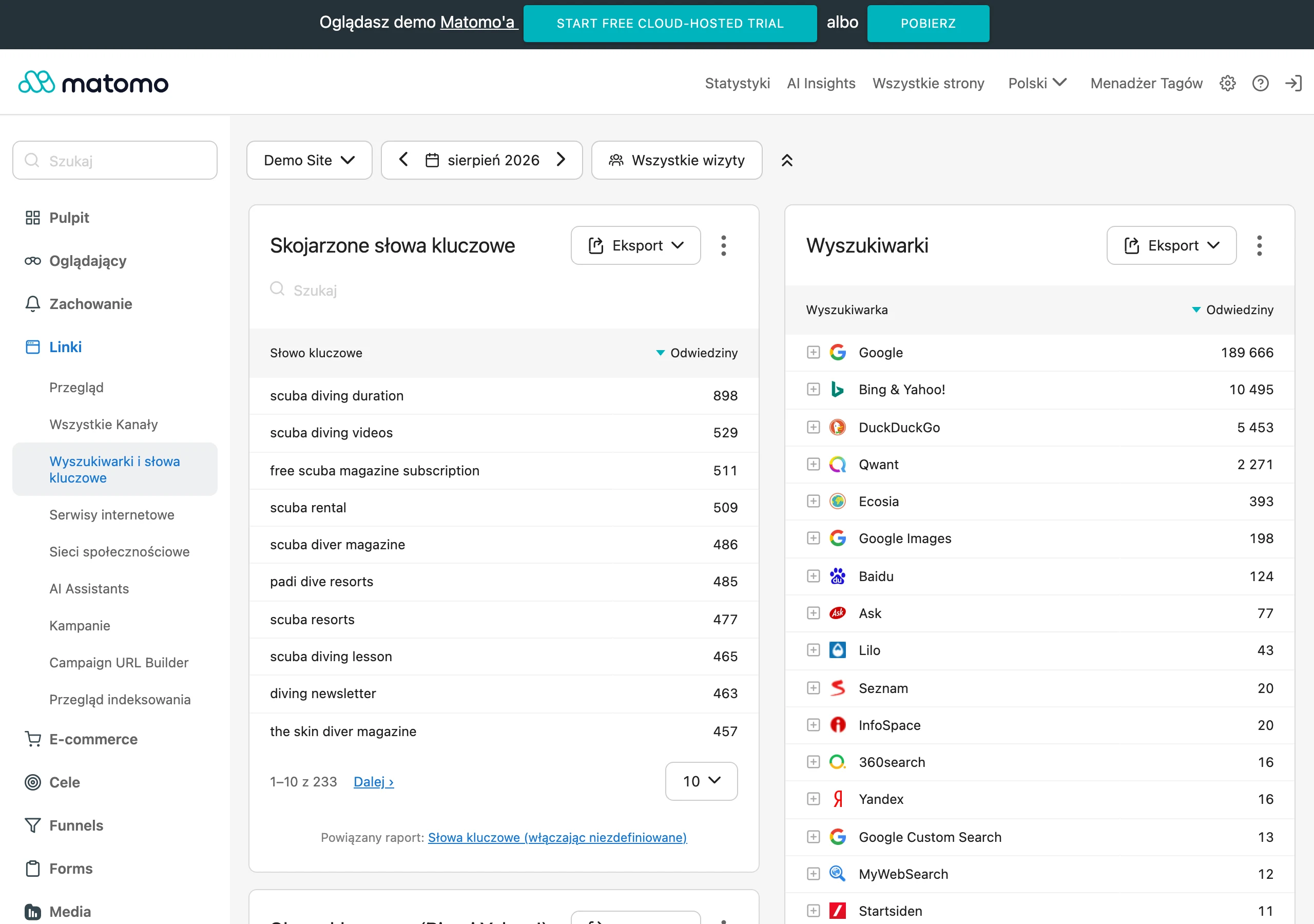
First assign a specific goal to each content type. Process-explaining articles are meant to prepare the user for a sales conversation, comparison content is meant to organise the choice of service variant, and FAQs are meant to reduce repetitive questions and objections. The key is not to lump these formats together and not to measure them with one metric. If you assess all posts in the same way, you usually draw the wrong conclusions and promote topics that generate cheap traffic but do not help the business.
The most useful metrics are simple. They show the move from informational content to action, that is, whether the blog actually “pushes” the user to the next step. In practice, monitor visits to service pages from the blog, clicks on CTAs, quotation requests preceded by a visit to the blog, the share of articles in conversion paths, and the quality of those leads. A good article does not have to drive huge traffic if it regularly supports sales of a more difficult and more valuable service.
You also need to check whether the content is being consumed at all. And then whether it is understood. Scroll data, engagement time, transitions to related materials, clicks on FAQ sections and traffic to the next stages of the journey all help with this. If users land on an article and do not move on, the problem may lie in the topic, the structure of the answer or the lack of a clear link to the offer.
Visibility is not impact. Visibility covers indexing, the number of queries in Search Console, the presence of articles on important topics and the alignment of content with user intent. Business impact starts where the blog helps close sales, shortens conversations, makes lead qualification easier and reduces the number of questions the team has to explain from scratch. Rather than confusing these two areas, it is better to separate them and measure them independently.
Attribution analysis requires a cool head. A user rarely converts immediately after reading a single post; more often, the blog acts as a supporting touchpoint: it organises the topic, builds trust, prepares them for the conversation and directs them to the service page at the next step. If you look only at last click conversions, you usually underestimate the real impact of expert content.
A good measurement model does not rely on a single source. It combines data from several places: web analytics, Search Console, CRM and information from salespeople or support, because that is where you can see what actually “works” in conversations with customers. It is worth knowing which articles sales send to clients, which answer the most common questions, and which genuinely speed up the move to an offer or consultation. This is especially important for mid-funnel and bottom-funnel content, where traffic volumes may be lower, but the business significance is much greater.
In practice, a simple dashboard works best. Built around several groups of metrics: visibility, engagement, transitions to services and impact on leads. Such a report should show not only the best articles, but also content to improve, update or merge, because a “nice result” without an effect is just decoration. If a post has rankings and impressions but does not move the user further, it is usually not an SEO problem, but a problem with the business function of the content.
Measurement should end with an operational decision. On this basis, old posts are updated, internal linking is strengthened, sections answering real objections are added, and topics that support neither the user nor the business are removed. Then the blog stops being a publication archive and becomes a tool that genuinely supports marketing, sales and customer service.
FAQ
Frequently asked questions
What content on a company blog is most valuable today in the era of AI Overviews?
The best-performing materials are based on real implementations, customer questions, service limitations and the team’s experience. They are hard to replace with a generic AI answer because they come from the company’s practice.
Does a company blog still make sense if some questions are handled by chatbots and search?
Yes, because a blog can still build a credible source of knowledge and support purchasing decisions. Its role is shifting from traffic alone to education, sales, support and a better understanding of the offer.
Why should blog articles be short, specific and well structured?
Because AI systems make better use of content that has clear headings, unambiguous answers and a coherent structure. Lengthy or general texts are harder to interpret and summarise.
When does a company blog deliver the greatest business value?
It works most strongly at the mid-funnel and bottom-funnel stages, when the client is comparing options, checking requirements and assessing implementation risk. At that point, the content helps answer exactly what they will get and what the limitations are.
What content formats work best on a company blog?
Preparation checklists, sales FAQ pages, step-by-step process descriptions, comparisons of service variants and lists of technical requirements work well. It is also worth publishing content about mistakes, limitations and situations where the solution does not make sense.
What trust signals help a company blog in assessing content quality?
A visible author or expert, an updated date, alignment with the offer, correct HTML structure and sensible internal linking all matter. When there is contradictory information on the site or anonymous texts without context, the blog loses value.