

Running a private or company blog is quite a complex process, which does not consist solely of adding content and waiting for results. It is important to take care of many important elements, such as the value delivered, answers to different questions, linking, as well as the right structure and readability of the texts. Blog posts can be optimised in many ways using the various SEO tactics presented below.
Using additional keywords and their variants
Thanks to the large amount of search data and improvements in machine learning, Google Search increasingly understands natural language. Google is an expert at determining what people actually search for, regardless of the words used in the query.

Research shows that synonyms play a significant role in search results. Search engines rely on synonyms and close variants within a post to determine the topic, intent and entities involved in the search.
Moreover, we know that algorithmic technologies such as Hummingbird and many others rewrite queries using synonyms. In other words, you can use the query “jak robić SEO?” in search, and the response will be a result titled, for example: “SEO guidelines for beginners”.
In other words, if you want to achieve a high position for the query “jak robić SEO?”, it is necessary to carry out extended research and use keywords that accurately cover this topic, rather than using the phrase “jak robić SEO” in every heading and paragraph. Broad topical coverage is necessary, because it will allow us to be unique and competitive. And sometimes one article is not enough here, but a well-thought-out information architecture.
You should look for synonyms and close variants together with the relevant supporting topics that create a logical connection. In the case of a post about SEO for beginners guidelines, you can include the use of phrases and words such as:
- how to carry out search engine optimisation,
- driving organic traffic to the site,
- improving positions in search rankings,
- search engine optimisation.
The above “supporting keywords” are worth including in headings, content and internal link anchors within the post being created.
Tips for looking for additional keywords when optimising a blog post:
- Using synonyms and related words throughout the post.
- Creating headings with related supporting topics and search queries.
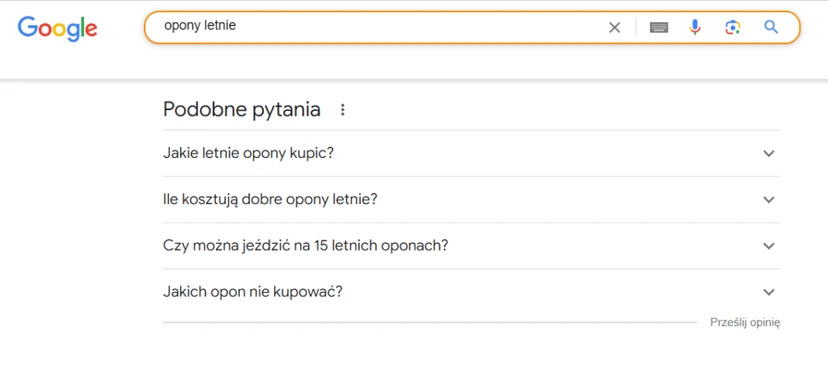
- Checking People Also Ask, to identify related queries.
- Paying attention to Google autocomplete to identify related supporting topics.
- 01Understanding intentNatural language analysis
- 02The role of synonymsDetermining topic and intent
- 03Algorithmic rewritingMatching more relevant results
Search engines use synonyms to better match results to users’ real needs, even with different query formulations.
Internal linking related to the right topic
Internal linking performs better if a link to a page on a given topic comes from a thematically related post (e.g. linking to a post about orange juice from a section on a similar topic, included within a post about drinks consumed at breakfast).
Tips on internal linking:
- It is worth limiting the number of links to one “per heading”.
- Internal linking should take place between thematically related pages.
- Diversify the anchor text – sometimes you can use an exact match phrase, and sometimes synonyms.
- Create groups covering the internal linking structure.
Using structured data markup to unify entities
Structured data allows the search engine to understand the topic of a given page. The markup is not a direct ranking factor, but it offers some indirect benefits, such as:
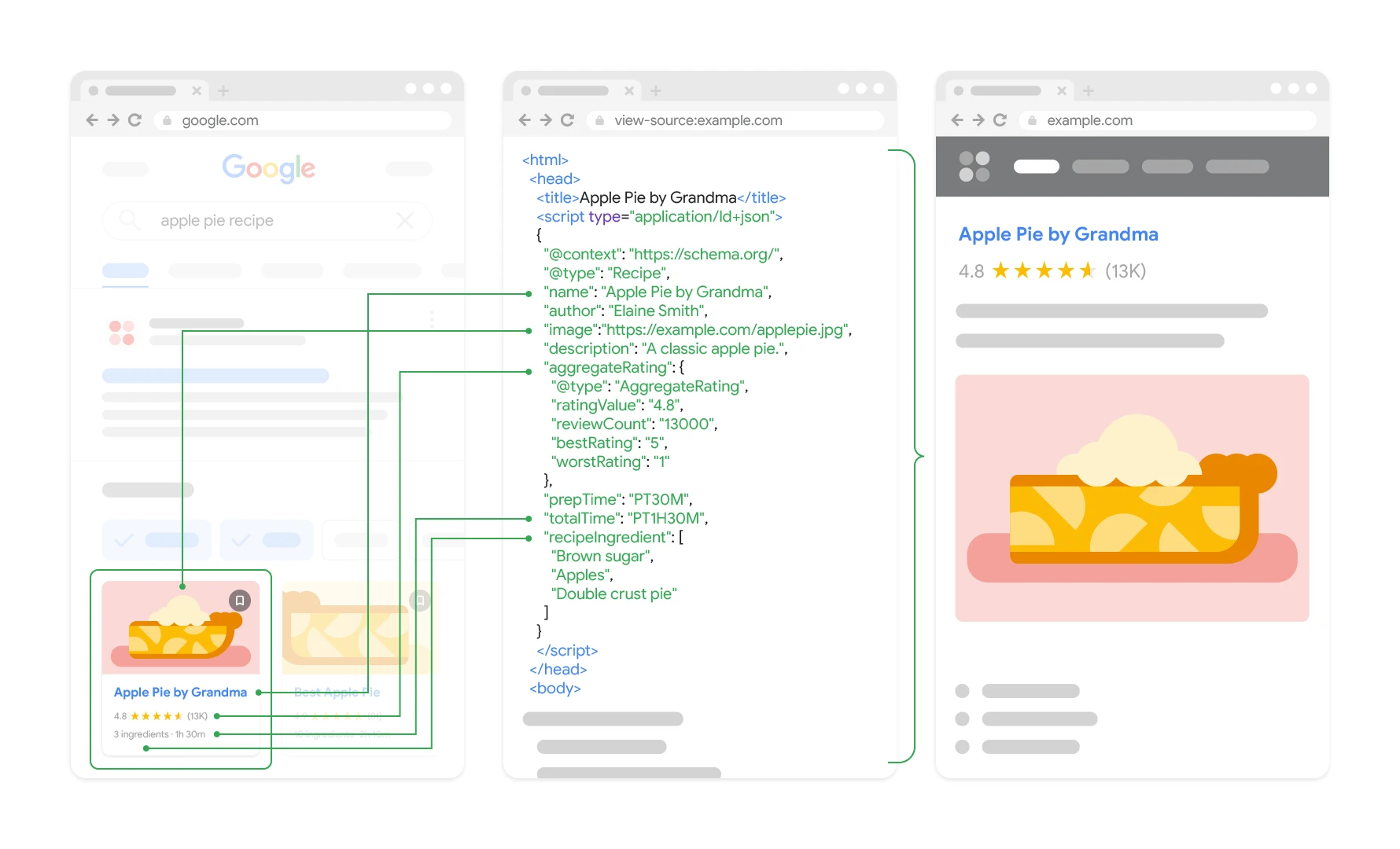
- It enables search engines to better understand the content.
- It makes it possible to obtain better Knowledge Graph features.
By using the “relationships” function, you can define your own entities and align them with entities that are well understood by Google.
What is worth knowing about structured data?
- The basis is to check schema.org and familiarise yourself with JSON-LD.
- Always before any publication, it is a good idea to use help related to structured data.
- It is worth considering using a structured data markup generator such as Merkle or InLinks.
- 01Better understandingSearch engines understand the topic.
- 02Entity unificationConnect your own entities with Google.
- 03Knowledge GraphGain better visibility.
Indirect benefits for better understanding of the content by search engines.
Using a logical heading hierarchy
There are several important rules related to headings. Here they are:
- They should be arranged in a logical order from the most important to the least important.
- Use HTML headings such as H1, H2, H3, etc.
- Each heading should focus on different information.
- If necessary, you can combine parent and subordinate content by using H3 and H4 headings.
- If the title is in the form of a question, it should be answered as soon as possible.
- It is worth analysing the competition’s heading structure and considering what can be done better.
Using the Google NLP API demo to analyse competitors’ entities
Using the Google NLP API demo version is a free and one of the best methods for checking which entities Google extracts from blog posts. This tool also makes competitor analysis possible.
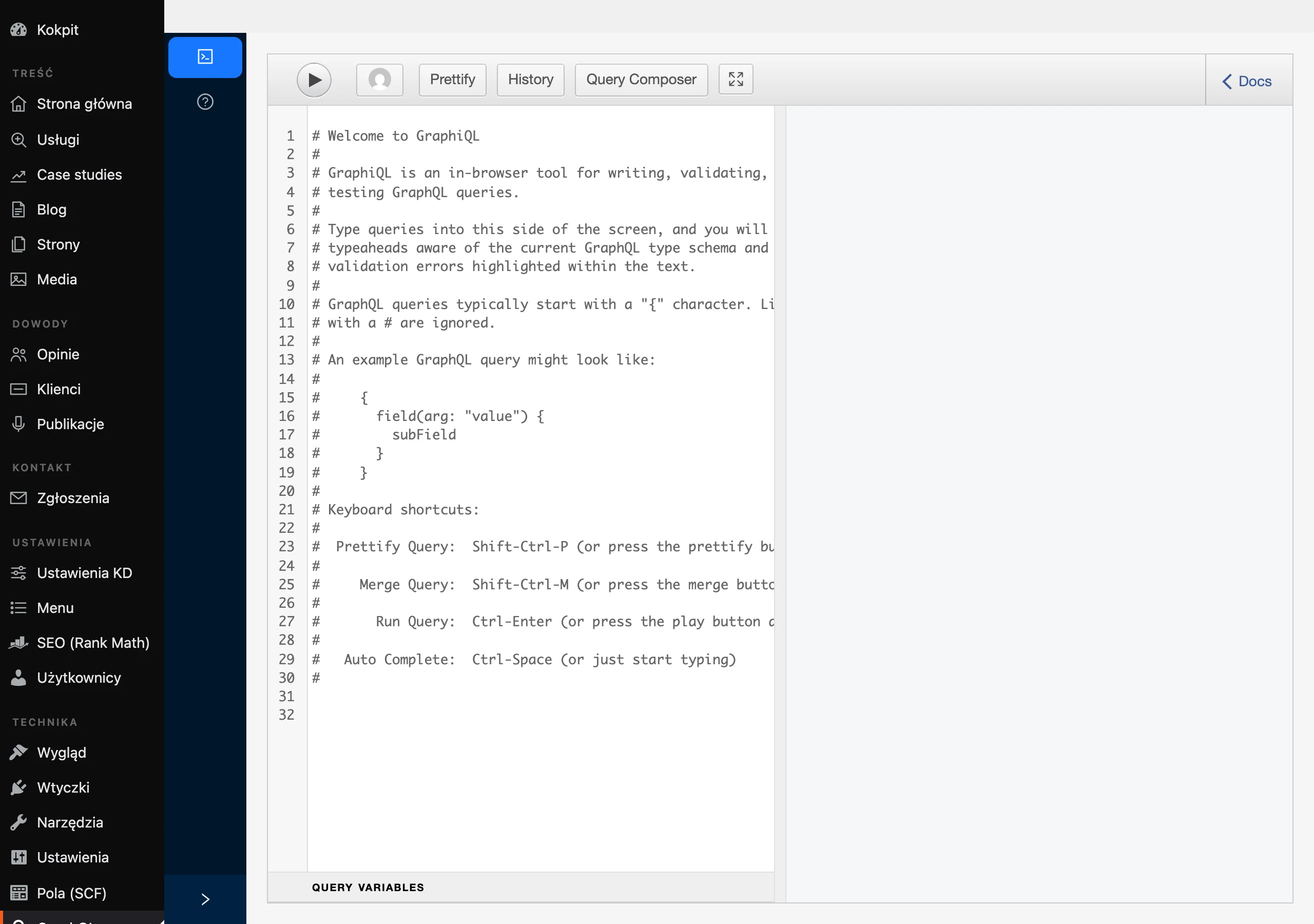
To use this solution, you need to go to the natural language page, copy the content and paste it into the demo section. First, the demo will indicate which known entities exist in the post, and then it will show the occurrence of each entity.
It is worth paying attention to the entities for which the competition achieves the best results and:
- Include them in your posts.
- Use variants and synonyms of entities in the sections where they are covered.
- Read the related articles on Wikipedia to know how to talk about entities.
- 01Competitor analysisFree NLP demo
- 02Paste contentCopy and paste
- 03Entity identificationKnown entities and mentions
- 04Content strategyInclude, synonyms, Wikipedia
Conclusion: the Google NLP demo is the key to strategic content optimisation based on competitor analysis.
Expanding the content to cover more topics
It is worth expanding the content so that it covers more topics. One article can improve rankings for thousands of keywords.
A good idea is to write a blog post and monitor it for new opportunities. For this purpose, it is worth supporting yourself with various keyword research tools: Senuto, Ahrefs and/or Semrush.
FAQ
Frequently asked questions
How do you optimise a blog post for SEO so that it better matches search intent?
You need to cover the topic broadly rather than repeating one phrase in every heading and paragraph. Synonyms, related keyword variants and supporting topics connected with the main subject all help.
Why is it worth using synonyms and additional keywords in a blog post for SEO?
Google is increasingly good at understanding natural language and recognising synonyms and query variants. As a result, the content can better match the topic and search purpose, even if the user enters different words from those in the article.
How can you use internal linking in a blog article so that it makes SEO sense?
Links are best placed between pages that are topically related. It is also worth limiting them to one per heading and varying the anchor text, using the exact phrase once and a synonym another time.
What do structured data do in optimising a blog post for SEO?
Structured data help search engines better understand the page topic and unify entities. They are not a direct ranking factor, but they can bring indirect benefits, for example better understanding of the content by Google.
How should headings be arranged in a blog article to make them SEO-friendly?
Headings should have a logical hierarchy, from the most important to the less important, using H1, H2, H3 and H4. Each heading should cover different information, and if the title is a question, it is worth answering it as quickly as possible.
How can you expand the content of a post so it can rank for more keywords?
It is worth expanding the article with additional related topics and monitoring new opportunities after publication. Keyword analysis tools such as Senuto, Ahrefs and Semrush are also helpful.