

Semantic SEO is a content optimisation strategy that focuses not only on selecting the right keywords, but above all on understanding and applying the semantic context of words and phrases. Thanks to this approach, content becomes more valuable both for search engines and for real users. Using semantic SEO techniques is the key to creating content that is not only attractive to readers, but also optimally indexed by search engine algorithms, thereby ensuring better SEO and reach.
Semantic SEO – what is it?
Semantic SEO is about creating web content with an emphasis on understanding the whole topic or context, rather than focusing solely on individual keywords. In this approach, the key role is played by understanding how different elements of the topic (such as entities – entities, terminology and facts) are connected and how they are interpreted by search engines. As a result, pages are better aligned with intent and users’ needs, which translates into higher quality and relevance of content in search results. Semantic SEO focuses on building rich, complex content that is well structured and understandable for both users and search engine algorithms.
By focusing on topics and their meaning rather than on words, the aim of semantic SEO is to more effectively satisfy user intents and gain authority in the eyes of real people, as well as search engines, for a specific topic.
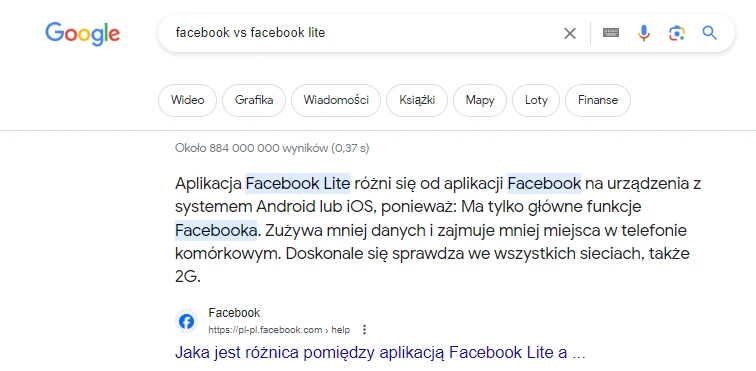
In the old days, when search engines were not as advanced as they are today, finding precise answers to queries with one click was a rarity. For example, searching for “Facebook vs Facebook Lite” would probably have taken users directly to specific subpages, rather than providing a clear comparison between them from the SERP.
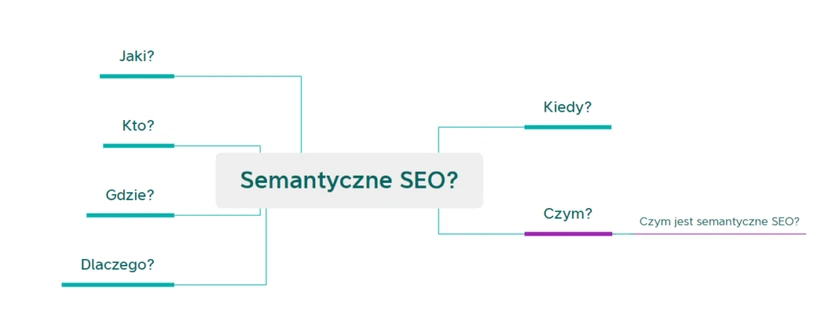
- 01Understanding the topicContext, not just words
- 02Related elementsEntities, facts, relationships
- 03Better relevanceMatch the intent
- 04Rich contentUnderstandable to everyone
A focus on building rich, well-organised content that meets users’ needs and is understandable for search engines.
What else is worth knowing about semantic SEO?
The aim of semantic SEO is not to answer a single question about a given topic, but to provide answers to all the questions a user may need that fall within the same topic. Another goal of this SEO strategy is to present the necessary information in a hierarchical structure.
As a result, many user search intents are satisfied and more authoritative pages covering the topic in full are created. Semantic SEO is used to produce complete, comprehensive content with relevant guidance.
Of course, content created with semantic SEO techniques can be supplemented with various web applications, graphic and video materials, text or surveys, or PDF files that meet the user’s needs.
Different elements of the same topic are arranged hierarchically in the page URL, breadcrumbs, internal links, headings and footer. In this way, they build the image of a company that is a specialist in a given field.
Semantic SEO ensures organised user experience related to using the site, as opposed to randomly generated standalone pieces of content. The result of specialising in a given topic will be that Google, Yandex, Bing and other search engines will make sure after some time that the user will find on a given site content that fulfils the purpose of their search within that topic.
Proper use of Semantic SEO is important for achieving better positions in search engine rankings. It also builds brand awareness and an expert image in the eyes of customers and business partners.
Semantic search and its impact on Click-Through Rate (CTR)
In practically every case, the website owner should care about improving CTR, i.e. the click-through rate. This refers to the percentage of people who clicked the link to a given page in search results.
A high CTR shows Google that a given page is relevant and useful, and this translates into a higher position in the rankings. Semantic search is important in terms of the aspects below:
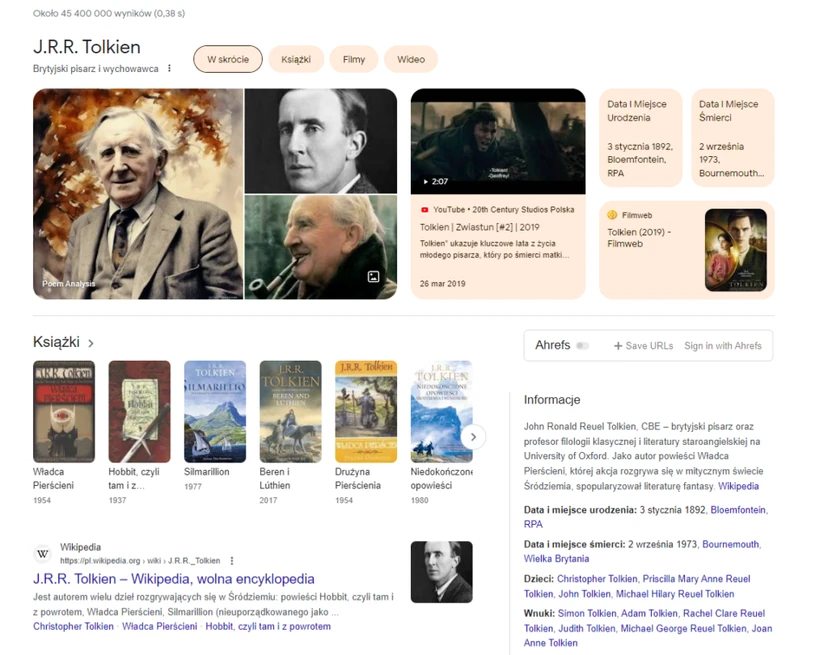
- Google’s semantic search algorithm also has a positive effect on Knowledge Graph (knowledge graph). This is a special field appearing on the right-hand side of search results and it contains information on a specific topic. If a given result appears in Knowledge Graph, there is a good chance of increasing the number of clicks. People prefer information provided by Google rather than information from random websites.
- Semantic search also allows links to subpages appearing under the main result to be created. Thanks to such links, click-through rates also increase significantly.
- 01Higher Ranking PositionGreater website visibility
- 02Increase in Click-Through Rate (CTR)More targeted traffic
- 03Reaching Interested UsersPrecise user intent
- 04Increase in Leads and SalesEffective traffic conversion
Focusing on user intent translates into quality, not just quantity, of traffic, increasing the chances of a sale.
Generating more leads and sales through semantic search
Semantic search can also be very helpful in generating leads (lists of contacts of potential customers) and sales through higher positions in search results.
The principle is simple. The higher the page’s ranking position, the greater the likelihood that people will click on a given search result. This, in turn, translates into a greater chance of generating leads and sales.
It is also about showing the page to people for whom it will be most useful. In other words, when running an e-commerce website, it will be shown to people who intend to make a purchase, not just to get information about the product. Even with slightly less traffic, a significant portion of it will convert.
Best optimisation practices for semantic search
There are certain important practices worth implementing on your website in the context of semantic search:
- Using natural language when creating content. This will allow Google’s semantic algorithm to understand the meaning of words.
- It is worth thinking like a customer when choosing keywords. It is a good idea to think carefully about what they may be searching for when looking for specific products and services.
- Submitting the website to directories, i.e. lists of companies operating in a given industry. This refers to directories such as Google Business Page, Yelp or TripAdvisor, for example.
- It is worth using structured data that allows information on the website to be properly organised. This helps Google’s algorithms better understand the content. Structured data is worth using in snippets and the knowledge graph.
- Using social media can also significantly help achieve a better position in search rankings. Google takes signals from social media services into account when evaluating websites.
- Creating topic clusters (topic clusters) allows you to signal to Google that a given website is an expert resource related to a given topic.
- 01Create a query hierarchyOrganise topics and keywords.
- 02Group thematic entitiesPeople, places, dates and institutions.
- 03Analyse search intentUnderstand user intent.
- 04Plan the structure and linkingDefine the hierarchy and content relationships.
The key to higher positions: understanding the context, hierarchy and relationships between content.
How to create content using semantic SEO?
Creating content using the principles of semantic SEO is therefore very important in terms of gaining higher positions in search engine rankings. There are certain semantic SEO principles that should be followed. They are presented below:
- A hierarchical list of queries related to the topic should be created.
- Entities such as people, institutions, countries, laws, places, cities and dates that form part of the topics should also be grouped in the list.
- An analysis of the intent of queries entered into the search engine should be carried out.
- It should be determined how many separate pieces of content will be created on a given topic.
- It is also necessary to determine the hierarchy in which the content will be linked to one another and to establish how they will be linked with anchor text content.
- To ensure that the content is completely differentiated by the search engine, it should be determined how much of a given topic will be covered in each piece of content.
- The browser should be informed about which content fulfils the search intent. This is done using meta tags, headings, keywords and anchor text content in the URL structure.
- It is worth examining the layout, content and features of competitors’ pages in the SERP for the most important queries, as well as the history of their rankings.
- The content should be created so that it answers the user’s queries and needs and is easy for the browser to understand.
Semantic SEO and semantic search
The role of semantic SEO has become important because search engines now use semantic search methods. Such search aims to understand the user’s actual intent when entering a query into the search box.
In other words, the search engine understands what the user is really looking for and delivers the best-matched results. For example Google search relies on Knowledge Graph (knowledge graphs) using data from many sources to provide users with information about people, places and things.
Thanks to the constantly developing Knowledge Graph and semantic search, Google has become better at understanding the relationships between concepts. This translates into more relevant and better-matched results presented in response to users’ queries.
Semantic search relies on artificial intelligence (AI), which is responsible for identifying data patterns, as well as natural language processing (NLP), which is responsible for understanding content.
How to conduct keyword research for semantic SEO?
Conducting keyword research for semantic SEO requires taking into account several key steps that are somewhat different from the traditional approach to SEO. Instead of focusing on a single query, you should focus on many interrelated queries in order to capture the whole topic.
Here are the steps that should be taken:
- An important element of semantic SEO query research is grouping users’ questions and queries by specific search intent.
- Tools such as Google Keyword Planner, Ahrefs Keyword Explorer, SEMRush Keyword Magic Tool, Moz Keyword Research can be used for semantic SEO research.
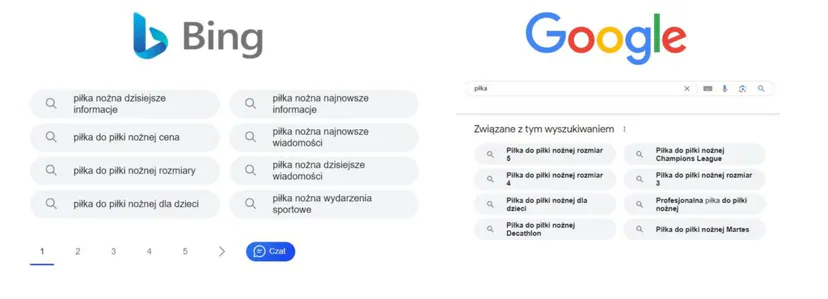
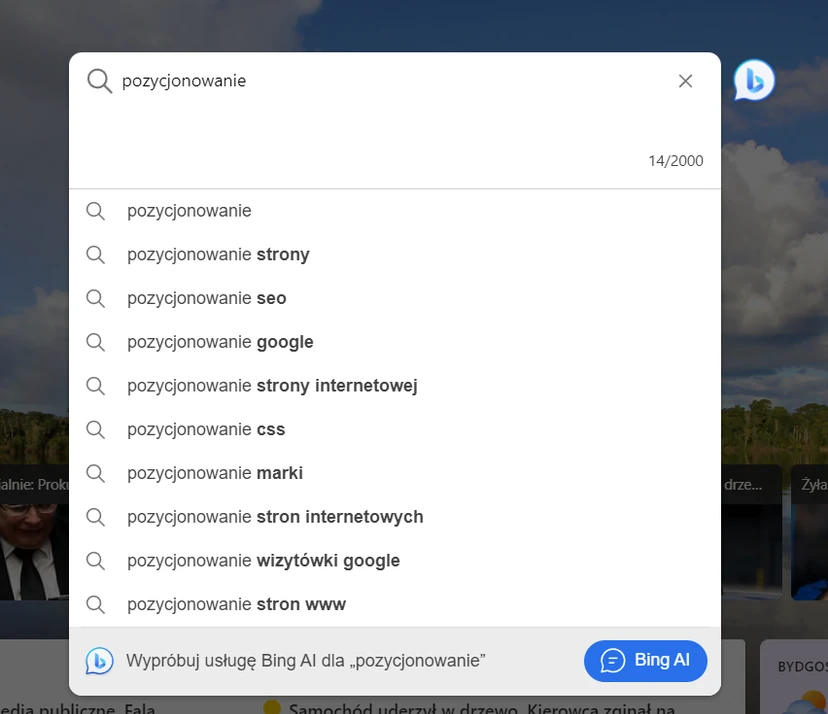
- Other helpful tools include Google Autocomplete, Google People Also Ask, Google Suggested Queries, Google Knowledge Graph, Google Knowledge Panel Semantic, which are used for SEO research.
- You can also use resources such as Wikipedia, Wikidata, Wikihow to research semantic SEO keywords.
- Sources such as Youtube Autocomplete, Youtube video titles, comments, forum threads, customer questions (for example a helpline) or sources of information can also be used to research semantic SEO keywords.
FAQ
Frequently asked questions
How does semantic SEO work compared with traditional SEO?
Semantic SEO focuses on the whole topic, its context and the relationships between concepts, not just on one keyword. As a result, the content better matches user intent and is better understood by search engines.
Does semantic SEO help improve CTR in search results?
Yes, because better-matched results more often attract clicks. The article also highlights that visibility in the Knowledge Graph and sitelinks under the main result can additionally increase click-through rate.
Why are user questions important in semantic SEO?
Because the aim of this strategy is to answer not just one question, but all needs related to a given topic. This makes it possible to create more complete and in-depth content.
How do you create content in line with semantic SEO principles?
You need to build a hierarchy of queries related to the topic, group entities and define search intent. Headings, meta tags, keywords, anchors and logically connecting content together are also important.
Can semantic SEO help generate leads and sales?
Yes, because a higher position in the results increases the chance of a click and reaching people with the right intent. In the case of e-commerce, content can be shown to users who want to buy, not just those looking for information.
What tools and sources can be used to research keywords in semantic SEO?
The article mentions, among others, Google Keyword Planner, Ahrefs, SEMRush, Moz, Google Autocomplete and Google People Also Ask. Wikipedia, Wikidata, YouTube, forums and customer questions can also be useful.