
Understanding how consumers perceive your brand is the key to an effective marketing strategy. Measuring brand awareness is based on analysing metrics such as TOM (Top of Mind), spontaneous and aided awareness, Presence Score, and sentiment analysis. Thanks to these, companies can accurately assess their recognisability and tailor their activities to market expectations, building lasting relationships with customers. Find out how to measure these important aspects!
How to measure brand awareness – key metrics
Measuring brand awareness is the foundation of an effective marketing strategy. It makes it possible to assess how well consumers recognise and remember a given brand. To track this aspect, businesses use various key performance indicators (KPIs). One of the key ones is the TOM (Top of Mind) indicator, which shows whether the brand is the first one mentioned by customers in a given product category. A high TOM score is a signal that the brand holds a strong position in the audience’s minds.
Another important metric is spontaneous awareness, which shows whether consumers can recall a brand without any prompts. In turn, aided awareness examines brand recognition after presenting its name or logo. Comparing these two metrics makes it possible to assess the effectiveness of marketing activities in building a lasting brand presence in customers’ minds.
In the world of digital marketing, Presence Score plays an important role. This metric assesses a brand’s online visibility, taking into account elements such as organic traffic from search engines, content impressions or activity on social media. In addition, analysing the quantity and quality of mentions of the brand helps to understand how often and in what context it is discussed by users.
Also extremely important is sentiment analysis, which examines the tone of statements about the brand – whether they are positive, neutral or negative. By monitoring social media and traditional sources, you can gain valuable insights into how audiences perceive a given brand.
Combining all these metrics gives a full picture of brand awareness. This allows companies to tailor their marketing activities to current market needs and customer expectations, which translates into greater strategy effectiveness.
- 01Top of mind (TOM)First to mind
- 02Spontaneous awarenessWithout a prompt
- 03Aided awarenessWith a prompt
Key indicators of a brand’s position in the audience’s mind.
Brand awareness indicators and key performance indicators (KPI)
Brand awareness indicators and key performance indicators (KPIs) play a key role in assessing the effectiveness of marketing strategies. One of the most important is TOM (Top of Mind), which indicates whether the brand is the first one that comes to consumers’ minds in a given product category. A high TOM score is a signal that the brand holds a strong position in the audience’s minds.
Another important metric is spontaneous awareness, which shows whether customers can recall the brand on their own without any prompts. On the other hand, aided awareness examines brand recognition after presenting its name or logo. Comparing these two metrics makes it possible to assess how deeply the brand sticks in consumers’ memory.
In the world of digital marketing, Presence Score is extremely important. This metric measures a brand’s visibility on the internet, taking into account organic traffic from search engines, content impressions and activity on social platforms. In addition, analysing the quantity and quality of mentions of the brand helps to understand how often and in what context users talk about it.
Also crucial is sentiment analysis, which examines the tone of statements about the brand – whether they are positive, neutral or negative. By monitoring social media and traditional sources, you can gain valuable insights into how audiences perceive a given brand.
Combining all these metrics creates a comprehensive picture of brand awareness. This allows companies to tailor their marketing activities to current market trends and customer expectations.
Top of Mind indicator and its significance
The TOM (Top of Mind) indicator is one of the most important brand awareness measures, identifying which company consumers name first in a given product category. It is not only a tool for assessing a brand’s market position, but also a way to understand how strongly it has lodged in the minds of audiences. A high TOM score signals that marketing activities are delivering results and that the brand is well recognised.
In a competitive world, this indicator matters hugely. Brands with a high TOM score stand a greater chance of being chosen by customers when shopping. Research shows that consumers more often reach for products or services from companies they know well and can easily recall from memory.
Measuring the TOM indicator is based on survey research. Participants are asked to name the first brand that comes to mind in a specific product category. The results of such research provide companies with valuable information about their position relative to the competition and help them adjust marketing strategies to the current needs of the market.
What is more, the TOM indicator is also used to monitor changes in brand perception over time. Regular measurements make it possible to track the impact of advertising campaigns and other promotional activities on consumer awareness. This enables companies to respond quickly to changing trends and customer expectations, which translates into better business results.
In short, the TOM indicator is a key tool for any company that wants to build a strong market position. Its analysis provides valuable data on the effectiveness of marketing activities and the level of brand recognition among audiences.
- 01Traffic analysisTrack website traffic, visits
- 02Traffic sourcesOrganic, paid, direct
- 03Social listeningMonitor mentions and opinions
- 04Behaviour monitoringAnalyse user interactions
The key to assessing marketing effectiveness and understanding audiences.
First-mentioned brand indicator
The first-mentioned brand indicator is a key element of brand awareness measurement, showing which company consumers associate with fastest in a given product category. It is not only a tool for assessing market position, but also a way to understand how the brand is perceived by audiences. A high score on this indicator shows a strong presence of the brand in customers’ awareness, which often translates into their purchase decisions.
The research is based on surveys in which participants are asked to name the first company that comes to mind in a given category. Such data provides valuable insight into brand competitiveness and recognition. Companies most often mentioned first have a greater chance of being chosen by consumers when shopping.
In the context of market competition, this indicator plays a key role. Brands with a high score enjoy an advantage because they are easier for customers to remember. Regular monitoring of this metric also makes it possible to assess the effectiveness of marketing activities and adapt strategies to current trends and market expectations.
Analysing this indicator is essential for building a strong market position and increasing brand recognition. It provides valuable information on how the brand is perceived by audiences and how it compares with the competition.
Aided awareness vs. spontaneous awareness
Aided and spontaneous awareness are two key indicators that make it possible to assess how well a brand is recognised. Aided awareness checks whether consumers associate the brand when they see its name or logo. This matters because it shows whether the brand is linked to a specific product category. By contrast, spontaneous awareness refers to situations where customers mention the brand themselves without any prompts – a sign that the brand has stuck in their minds.
Comparing these two indicators provides valuable insight into the effectiveness of marketing activities. High spontaneous awareness points to a strong embedding of the brand in consumers’ minds – it often comes to them first in a given category. Meanwhile, high aided awareness suggests that the brand is recognisable, but may require more promotion to become more present in audiences’ everyday lives.
Research confirms that brands with high spontaneous awareness have a greater chance of being chosen by customers. For example, if someone names a company on their own as the first in the carbonated drinks category, there is a strong probability that they will reach for that product. That is why businesses invest in consistent advertising campaigns and branding activities to strengthen both types of awareness.
In practice, these indicators are measured using surveys or market research. Participants first name brands from a given category (unaided awareness), and then select them from a prepared list (aided awareness). The results of such analyses help companies assess their position against the competition and adapt marketing strategies to the current needs of the market.
In summary, both aided and unaided awareness play a key role in building a strong market position. Their analysis provides valuable data on how consumers perceive the brand and on the effectiveness of promotional activities.
Presence Score in the context of digital marketing
Presence Score is a key metric in digital marketing that assesses a brand’s visibility across different online channels. The higher this parameter is, the greater the brand’s presence online, which directly affects its recognition and audience engagement.
In practice, this metric takes several important factors into account:
- organiczny ruch from search engines,
- the number of content views,
- activity on social media.
By analysing this data, you can determine how often and in what contexts the brand appears in users’ discussions.
A high score often indicates the effectiveness of marketing activities – whether thanks to well-optimised SEO, valuable content marketing or effective advertising campaigns. Companies use this parameter not only to monitor their position in the market, but also to adapt their strategies to changing trends and customer expectations.
What is more, Presence Score is a valuable tool for comparing a brand’s competitiveness. Regularly analysing this metric allows companies to react quickly to market changes and maintain a strong position in consumers’ minds. It is precisely thanks to it that building long-term success in the world of digital marketing becomes possible.
The importance of quality and quantity indicators for mentions
Indicators relating to the quality and quantity of brand mentions are crucial for assessing its reputation and how consumers perceive it. Mention frequency shows how often the brand appears on social media, forums or in the press. The more such references there are, the greater the chance of reaching a wide audience. However, numbers alone are not enough – the quality of those mentions is equally important.
Quality refers to the tone of comments about the brand, which can be positive, neutral or negative. Positive reviews build trust and attract new customers, while negative ones can undermine brand credibility and affect its image. Quality analysis enables companies to better understand consumer reactions and identify areas that need improvement.
These indicators are monitored using social media analytics tools and social listening techniques. They make it possible not only to track how often the brand name appears, but also to analyse the context of the discussion. For example, a predominance of negative mentions may signal issues with product quality or customer service.
In today’s digital age, these indicators take on particular importance. Consumer opinions have a huge impact on the purchasing decisions of other users. Research shows that 93% of people check online reviews before making a purchase. That is why maintaining positive reviews and responding quickly to criticism is the foundation of effective brand reputation management.
In summary, both the quantity and the quality of mentions are essential for a comprehensive assessment of how the brand is perceived by the market. Their analysis helps companies adapt their communication strategy and build lasting relationships with customers.
Sentiment analysis and media monitoring
Sentiment analysis and media monitoring are indispensable tools in building and protecting a brand’s image. The first focuses on examining the emotions expressed in comments, posts or articles about the company – both on social media and in traditional sources. It makes it possible to assess whether opinions are favourable, neutral or critical. Media monitoring, on the other hand, allows these mentions to be tracked on an ongoing basis, making it possible to react quickly to changing audience sentiment.
In practice, sentiment analysis is based on advanced algorithms and natural language processing (NLP) technologies. These tools classify statements according to their emotional tone. For example, a predominance of positive opinions may indicate a high level of customer trust in the brand, while a dominance of negative comments often points to problems related to product quality or service.
Media monitoring goes beyond social platforms – it also includes blogs, discussion forums and traditional media. This allows companies to gain a comprehensive picture of how their brand is perceived by different target groups. Regular analysis of this data makes it possible to adapt the communication strategy to current market trends and consumer expectations.
It is, however, worth remembering that effective sentiment analysis is not just a matter of technology. Interpretation of the data by experienced specialists is also crucial. Without it, it is easy to make mistakes resulting from the ambiguity of language or the context of a statement. For example, sarcasm or irony can be incorrectly classified as positive opinions without a thorough analysis of the situation.
Sentiment analysis and media monitoring are the foundation of modern brand management. They provide valuable information about how the brand is perceived by consumers, and also make it possible to react quickly to changing trends and market needs.
Website traffic and tracking direct traffic growth
Website traffic is a key metric that shows how many people visit a brand’s website. Growth in so-called direct traffic, when users type the website address into their browser themselves, often indicates rising brand awareness. It is a signal that more and more people associate the brand well enough to remember its name or URL.
Monitoring this type of visit is extremely important for building brand awareness. A high level of direct traffic suggests that marketing activities are delivering results and that consumers can easily recall the company from memory. It is also an excellent tool for assessing the effectiveness of advertising campaigns and branding strategies.
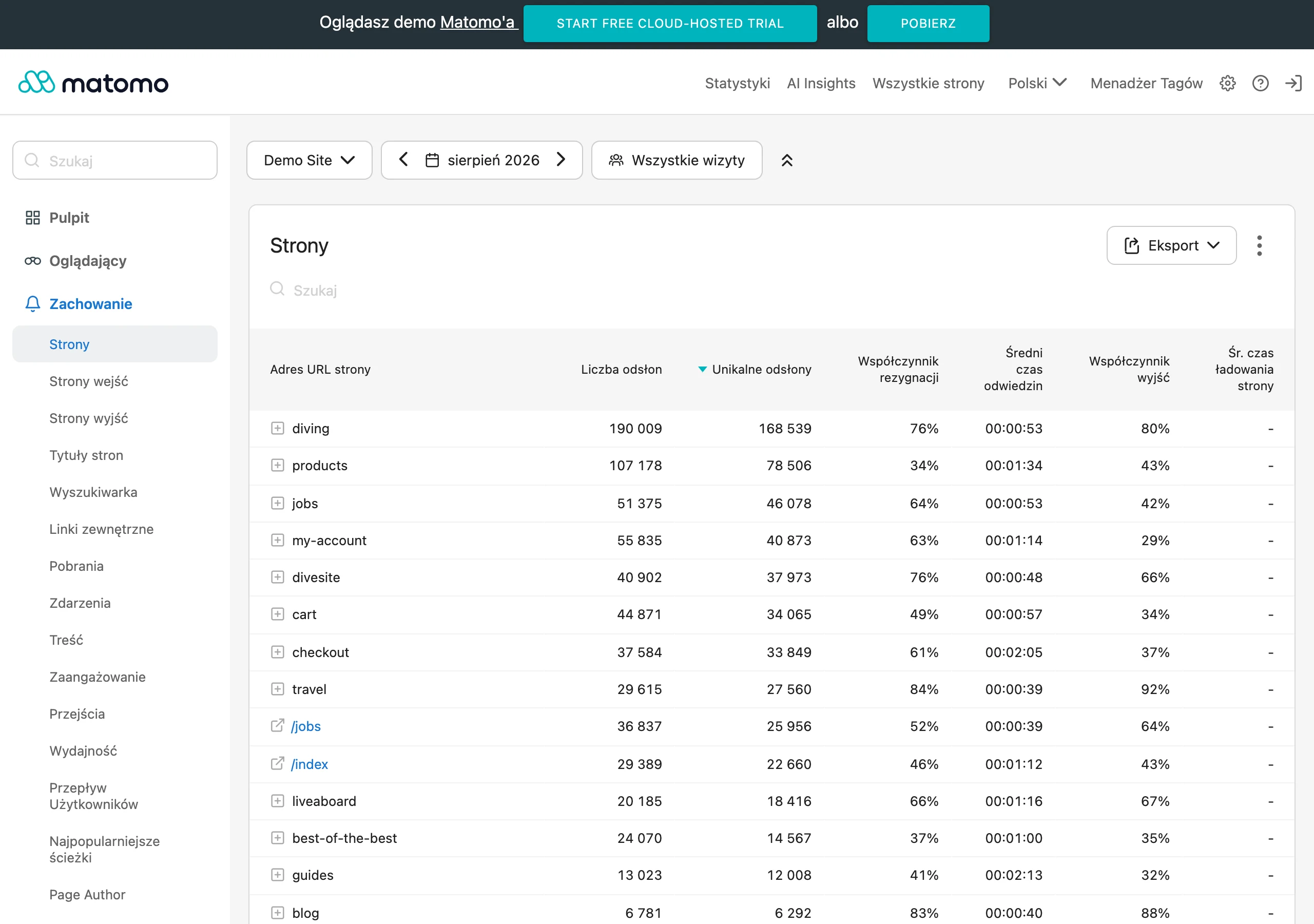
With analytics tools such as Google Analytics, it is possible to precisely track traffic sources on the site. This makes it possible to determine what percentage of visits comes from manually entered addresses. Regular analysis of this data enables companies to adjust their marketing strategies to changing market needs and customer expectations.
Interestingly, growth in direct traffic often correlates with other brand awareness indicators. This may include, for example, a high TOM (Top of Mind) score or increased activity on social media. Combining this data gives a fuller picture of the brand’s position in the market and how it is perceived by audiences.
Tools for measuring brand awareness
Brand awareness measurement tools play a key role in assessing the effectiveness of marketing activities. Among them, analytical solutions are particularly important, as they make it possible to track website traffic, analyse visit sources and monitor user behaviour. One of the most popular tools is Google Analytics, which provides detailed data on where traffic comes from – whether from organic results, paid advertising campaigns, or direct address entries.
No less important is social listening, that is monitoring social media. Thanks to it, you can track brand mentions, analyse the tone of comments and identify trends and consumer opinions. Tools such as Brand24 or Hootsuite collect information from various social platforms, forums and blogs, enabling a comprehensive assessment of a brand’s image online.
In digital marketing, it is impossible to overlook the importance of SEO (Search Engine Optimization). Website optimisation for search engines increases its visibility in organic results, which translates into more visits and greater recognition. Solutions such as Ahrefs or SEMrush support analysis of keywords, competition and the effectiveness of SEO activities.
Equally important are PPC (Pay-Per-Click) campaigns, which make it possible to measure advertising effectiveness precisely by analysing clicks, conversions and customer acquisition costs. Tools such as Google Ads offer detailed reports that help tailor the advertising strategy to current market needs.
Combining these tools provides a full picture of brand awareness. Thanks to them, companies can continuously monitor the effectiveness of their marketing activities, respond quickly to changing trends and adapt strategy to consumer expectations.
The role of analytical tools and social listening
Analytical tools and social listening play a key role in assessing brand awareness and the effectiveness of marketing activities. Thanks to them, companies can collect and interpret data on website traffic, social media activity and campaign results. For example, Google Analytics provides information on traffic sources, user behaviour and conversion metrics, which helps to determine precisely which initiatives bring the greatest benefits.
By contrast, social listening is the process of tracking brand mentions in real time – on social platforms, forums or blogs. Solutions such as Brand24 or Hootsuite make it possible to monitor tone of voice, spot trends and respond quickly to changing consumer opinions. This is extremely important in the context of reputation management – both positive and negative comments can significantly affect how audiences perceive a brand.
Integrating data from analytical tools with social media monitoring enables companies to gain a complete picture of the situation. This makes it possible to adapt marketing strategies to current market requirements and build long-term relationships with customers.
Using SEO and PPC to track activities
SEO and PPC are two fundamental tools in digital marketing that make it possible not only to monitor campaign effectiveness, but also to influence brand visibility. Search engine optimisation (SEO) contributes to growth in organic traffic to the site, which directly translates into greater recognition. On the other hand, paid advertising (PPC) enables precise effectiveness analysis by tracking clicks, conversions and customer acquisition costs.
In SEO, it is crucial to monitor a website’s positions in search results for relevant keywords. Tools such as Ahrefs and SEMrush provide detailed insights into organic traffic, keyword competitiveness and the effectiveness of implemented optimisations. This enables businesses to quickly identify areas that need improvement and adapt their strategies to current market trends.
PPC, on the other hand, offers the ability to test different advertising strategies quickly. Platforms such as Google Ads provide detailed reports that help assess which campaigns deliver the most conversions at the lowest cost. In addition, data analysis from PPC allows you to track user behaviour after clicking an ad, which is essential for optimising purchase paths and increasing the effectiveness of the entire campaign.
Combining SEO and PPC gives a complete picture of marketing performance. This allows companies to manage their advertising budget more effectively, increase brand visibility and build lasting relationships with consumers. A consistent presence in both organic results and paid ads is the key to long-term success in the digital world.
Brand awareness research: how to conduct it?
Brand awareness research is a key element in assessing the effectiveness of marketing activities and how well a brand stays in the minds of its audience. To obtain reliable data, it is worth using a range of research methods, each of which provides unique insights into brand recognition and perception.
One of the most commonly used tools is surveys. These can take the form of quantitative research, such as online or telephone questionnaires, which make it possible to gather data from a broad group of respondents. Such studies often include questions about unaided and aided brand awareness as well as the TOM (Top of Mind) indicator. For example, participants may be asked to name the first brand that comes to mind in a given product category.
Another effective tool is social media data analysis. Thanks to social listening techniques, it is possible to monitor brand mentions on platforms such as Facebook, Twitter or Instagram. Tools such as Brand24 and Hootsuite make it possible not only to track how often a brand name appears in online discussions, but also to analyse the sentiment of those statements. This allows you to assess not only the volume of mentions, but also their quality and impact on consumer perception of the brand.
In the context of digital marketing, monitoring website traffic is also important. Using analytics tools such as Google Analytics, you can identify traffic sources – whether they come from organic results, paid advertising campaigns or direct website visits. Growth in direct traffic often suggests increasing brand recognition among users.
It is also worth considering the use of qualitative research, such as individual interviews or focus groups. These methods allow for an in-depth exploration of consumer motivations and opinions about the brand. They not only help you understand customers’ views, but also the reasons behind those views.
By combining different methods – from surveys through social media analysis to qualitative research – companies can gain a comprehensive picture of their brand awareness. This, in turn, makes it possible to better adapt marketing strategies to current market needs and customer expectations.
Simple brand awareness research
Simple brand awareness research can be conducted using surveys aimed at consumers. Their purpose is to understand how well the audience knows the brand and how they perceive it against the competition. Surveys can be carried out in different ways:
- online,
- by phone,
- in person.
This makes it possible to reach a broad audience and collect varied data.
In such studies, questions about both unaided awareness and aided awareness are key. Participants may be asked to:
- name brands from a given category without prompts (unaided awareness),
- choose from a prepared list (aided awareness).
It is also worth asking about brand associations, its strengths and weaknesses, and consumers’ overall feelings.
Thanks to such surveys, it is possible to gain valuable insights into the effectiveness of marketing activities. These studies help assess whether advertising campaigns are delivering the intended results and how the brand compares with competitors in customers’ eyes. Conducting these analyses regularly makes it possible to track changes in brand perception and quickly adapt the strategy to current market trends.
Evaluating the effectiveness of marketing activities
Assessing the effectiveness of marketing activities requires analysing key indicators that help determine whether campaigns are delivering the intended results, especially in the context of increasing brand recognition. One of the first steps is to compare data before and after the campaign, which makes it possible to assess its actual impact on brand awareness.
In this process, metrics such as the TOM (Top of Mind) indicator, which shows whether the brand is the first one mentioned by consumers in a given product category, are extremely important. A high TOM score indicates a strong position for the brand in the minds of the audience. It is equally important to track unaided awareness and aided awareness, which provide information on how deeply the brand stays in customers’ memory.
In digital activities, Presence Score plays a key role, measuring brand visibility online. Analysing this metric covers organic traffic from search engines, content impressions and activity on social media. A high score indicates the effectiveness of SEO, content marketing or advertising campaigns.
It is also worth monitoring the quality and quantity of mentions of the brand and carrying out sentiment analysis. These data show how often and in what context the brand appears in users’ discussions and what emotions it evokes. Regular analysis of these factors allows you to adapt your marketing strategy to the current needs of the market and consumer expectations.
A comprehensive assessment of the effectiveness of marketing activities enables companies to better manage their advertising budget, optimise strategy and build a lasting brand presence in the minds of audiences. This is the foundation of long-term success in the market.
FAQ
Frequently asked questions
How can you measure brand awareness in practice?
Most often, this is done by analysing several indicators: TOM, spontaneous and aided awareness, Presence Score and sentiment analysis. Together, they show how the brand is recognised, remembered and assessed by audiences.
Does the TOM indicator show whether a brand is first in customers’ minds?
Yes, TOM (Top of Mind) indicates whether a brand is the first one mentioned by consumers in a given product category. A high score means a strong position for the brand in audience awareness.
How does spontaneous awareness differ from aided awareness?
Spontaneous awareness checks whether a customer can name a brand unaided. Aided awareness measures recognition after showing the name or logo.
Why is Presence Score important in digital marketing?
Presence Score measures a brand’s visibility online, taking into account, among other things, organic traffic, content impressions and social media activity. This makes it possible to assess how strongly the brand is present online.
How does sentiment analysis help assess a brand?
Sentiment analysis shows whether statements about the brand are positive, neutral or negative. This makes it easier to understand how audiences perceive the brand in comments, posts and articles.
When is it worth monitoring the quantity and quality of brand mentions?
It is worth doing regularly, because the number of mentions alone is not enough — tone and context matter too. Such analysis helps assess brand reputation and respond more quickly to issues or criticism.