
Creating content that is valuable both for real users and for search engines is currently a major challenge because of the development of modern technologies. There are certain strategies that make this work easier. One of them is Natural Language Processing (natural language processing, NLP).
Natural Language Processing – the basics
NLP is a certain type of artificial intelligence that processes written and spoken words (which are perceived by analysts as “unstructured data”) into structured data that a machine is able to interpret. NLP platforms are able to analyse vast amounts of words and phrases to find the right meaning, patterns and context. NLP is now very widespread. Alexa, Siri and Google voice assistants use NLP.
Recently obtained scientific data have made it possible to develop “transformer models”. They efficiently use the latest NLP techniques that are able to process language data faster. They also allow developers to create powerful “large language models” using content that comes from various sources. These sources include search engines, social media posts, news and chatbots.
One of the most popular transformer models is GPT-3.5, an NLP model that impressed its users with its ability to create fluent content in response to basic language prompts (prompts). GPT-3.5 is currently a core language model for many language tools.
- 01Data processingWords into structured data
- 02Language analysisMeaning, patterns, context
- 03Ubiquity of NLPAlexa, Siri, voice assistants
- 04Transformer modelsLarge language models
NLP, as a class of AI, transforms unstructured human language into data that machines can interpret, learning from huge datasets and powering modern assistive tools.
How can thinking about NLP improve SEO?
The main change that NLP will bring for many organisations will be a reactive one. For websites to rank highly in Google today, it is essential to ensure that they are easy for NLP systems to understand. As a result, many emerging tools use NLP to positively influence user experience.
Structuring data
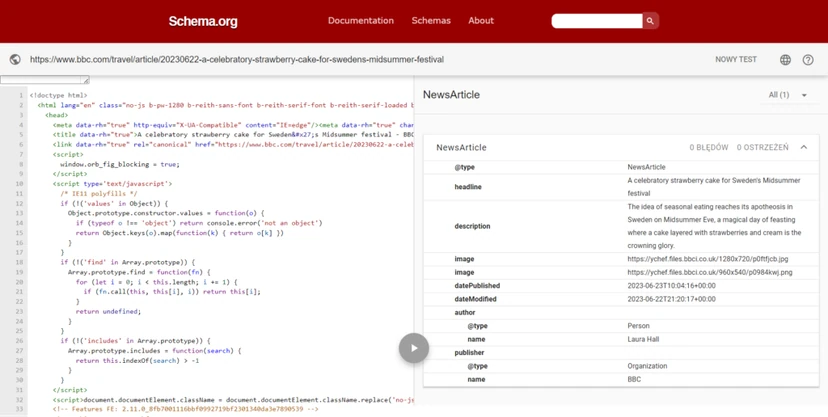
The first, and probably most important, way in which NLP affects SEO is the need to ensure that websites are properly structured so that NLP algorithms can easily understand them. The key to achieving ideal results is language understanding by NLP solutions – regardless of whether we are dealing with spoken language (voice search) or written language. NLP is a way of improving capability in this area.
Proper data structuring can be seen on many smaller as well as larger websites (e.g. Reuters or BBC). Proper data structuring for NLP can significantly increase traffic to the site.
- 01Understanding user queriesAnalysing intent, not just keywords.
- 02Natural Language Processing (NLP)Interpreting context and linguistic nuances.
- 03Content relevance assessmentMatching content to real needs.
- 04Better SERP resultsPrioritising valuable, helpful pages.
NLP enables Google to deliver results that respond to users’ real needs, not just keywords.
Internal linking and content recommendations
The second way in which NLP affects SEO is through internal linking structures and content recommendation tools.
These functions may seem different, but when you look more closely at how NLP engines work, you can see that they are connected. When an NLP system encounters a term it does not understand, it tries to learn its meaning.
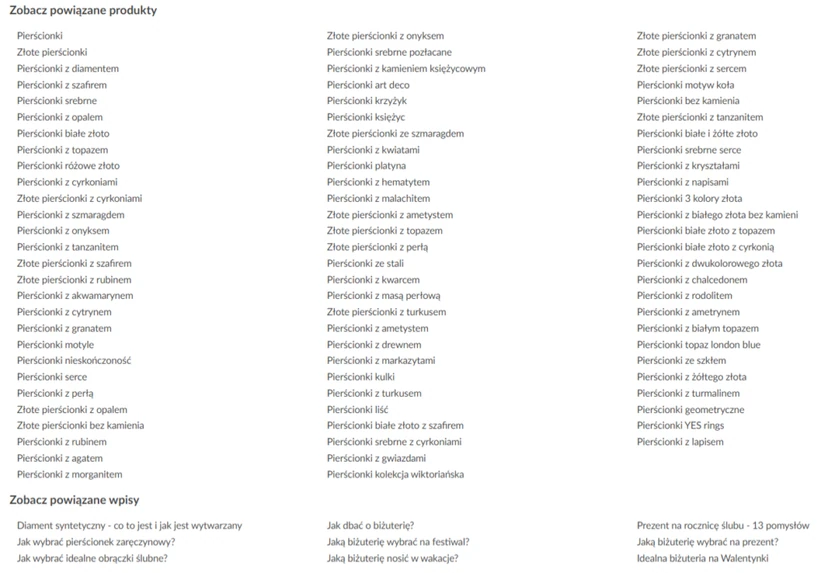
If it can do this by referring to material on a given website, it will provide it with an SEO ranking boost. For example, on The Guardian website, people’s names are linked to pages that contain all the information associated with them. NLP also has a positive impact on improving brand visibility.
The same type of process supports more advanced forms of content recommendation. There are currently many content optimisation tools that are able to assess the significance of content appearing in the list of pages visited by a user and use this to suggest different content.
Admittedly, some functionality of this kind may be limited by browser privacy policies, but they are an excellent way to increase time spent on specific pages.
Targeting topic clusters
In recent years, there has been a shift in marketing activities from targeting individual keywords to targeting topic clusters (topic clusters). Search engines are better able to understand the world around us, and disambiguation also comes into play.
As a result, the same results can be seen for users carrying out different searches with the same intent. The important thing, therefore, is not to focus on specific keywords, but on creating content appropriate for a given topic.
In other words, in the future SEO will be even more focused on delivering high-quality content that is easy for people to read and understand. It will replace today’s content that is more focused on keywords.
- 01Clear structureSimple H1, H2 headings
- 02Search intentUnderstanding user intent
- 03Keywords with contextSelecting contextual phrases
Implementing NLP improves Google’s understanding of content, delivering more relevant results.
How does NLP drive Google search algorithms?
One of the fundamental content optimisation techniques that drives more organic traffic is search engine optimisation (SEO). Identifying popular keywords used by users in queries allows content teams to prioritise specific content, create it, refine it and optimise it so that it attracts new readers and achieves high SERP rankings.
Google is constantly refining its algorithms for evaluating websites and blog posts. According to information provided by Google, these updates are designed to ensure that search results prioritise content that delivers what users are actually looking for, rather than pages containing specific keywords or phrases.
Here are examples of changes over the past few years:
- BERT algorithm update – in 2019, Google introduced the BERT algorithm update, which made it possible to capture the context of a word by paying attention to the words before and after it. This affects the attention given to more valuable content. Thanks to the improvement of BERT, Google can use NLP to determine the true intentions of users entering specific queries into the search engine.
- Helpful Content algorithm update – this change was introduced in 2022, and its aim is to provide users with content that is useful for people, written by people. With the development of GPT-3 and other solutions of this kind, this update makes it possible to detect whether content was created by AI or by a human solely for ranking purposes.
Creating an SEO strategy with NLP in mind
Based on the above changes, those responsible for creating content should use NLP in their SEO-focused content. It is worth paying attention to the techniques below.
Focusing on search intent, not just keywords
At present, improving rankings is not just about placing keywords in content. Search intent is far more important.
By using NLP, the Google search engine is able to divide queries into four categories – transactional, navigational, promotional and commercial. This information makes it possible to deliver results that meet users’ expectations.
To better understand the intent of a given search query, you can search using the keyword in Google and check what secures a position on page 1 or what appears in Featured Snippets. You can also check related searches suggested by Google at the bottom of the results page. This will make it possible to better understand users’ needs and tailor content accordingly.
Aligning SEO strategy with social research
It is worth carrying out SEO research before publishing content and independently choosing a small set of keywords to focus on. The aim is to develop comprehensive content focused on a given topic that is valuable to readers.
Of course, you can use various public research strategies, such as surveys, reviews of consumer opinions, customer interviews or the use of AI analytics solutions. Experts in a given field, working in a specific company, can also be a valuable source of information about what readers want to learn.
Demonstrating expertise on the topic
According to the algorithm update in 2022, Google are able to check whether a given piece of content merely summarises what is found on other pages without providing additional value. Such actions negatively affect rankings.
Google recommends creating content that places emphasis on “depth of knowledge” and expertise. Systems for easier retrieval of original content, product descriptions, etc. are continually being improved.
Prioritising quality over content quantity
According to Google, the search engine is able to recognise whether a page provides a huge amount of content on various topics without a deep understanding of the target audience. Google is likely to consider such content “unhelpful”, leading to lower rankings.
To prevent low rankings, you should create content that offers a high level of expertise on specific topics and is focused on readers.
Carrying out an SEO audit
According to Google, any content (regardless of its value and substance) coming from a page containing a lot of “unhelpful” content is less likely to achieve high positions in organic search rankings. In other words, getting rid of unhelpful content can positively affect the rankings of other content.
How can NLP be implemented in SEO?
There are certain methods and strategies that make it possible to improve SEO through the implementation of NLP. Here they are:
- Taking search intent into account when researching keywords – when analysing queries, Google tries to understand the search intent behind the query. This makes it possible to deliver relevant results and answers to questions. It is therefore essential to understand how Google Search interprets a search. The best way to do this is by analysing the SERPs. This makes it easy to identify the resources Google uses in response to the query.
- Writing in a simple and understandable way – Google analyses the subjects and predicates of sentences in order to identify Entities. Making small changes to sentence structure can alter the semantic structure of a sentence in a way that humans cannot detect. Google Search, however, is not human and does not understand content in the same way. That is why it is important to write simple content. One idea should be included in one sentence.
- Identifying Entities and including them in the content – Google not only identifies Entities, but also assigns them to others within the Knowledge Graph. It is worth trying to identify for yourself the Entities (subjects) that Google expects in content answering specific questions. It is worth using the Google API demo or importing data via Python. It is also a good idea to analyse competitors’ Entities. This, in turn, will make it easier to place specific Entities in your own content.
- Matching answers to questions – there is a strong chance that content will be included in answers to People Also Ask (people also ask…) if it is presented in a question-and-answer format. It is therefore worth pairing questions with answers in your content. An immediate answer to the question posed in the heading makes it easier for Google to include the answer in PPA fields.
Clear structure – in order to understand Entities (subjects), Google may obtain information from partially structured and structured data. In other words, Google understand simple heading markings such as H1, H2, etc. Understanding such data is much easier for Google in the case of unstructured data. It is therefore a good idea to use such simple solutions in headings
FAQ
Frequently asked questions
How does NLP affect SEO and website ranking?
NLP helps search engines better understand the meaning, context and structure of content. As a result, pages that are easier for NLP systems to interpret can gain better visibility and higher rankings.
Can structured data help Google understand page content?
Yes, structuring data properly makes it easier for NLP algorithms to understand a page’s content. The article highlights that this can significantly increase traffic to the site.
Why does internal linking matter in NLP-based SEO?
Internal linking helps NLP systems find and connect the meanings of terms with other materials on the site. This can improve SEO performance and support brand visibility.
When is it worth focusing on topic clusters instead of individual keywords?
It is worth doing this when you want to create content that responds better to the topic, rather than just to one query. The article points out that SEO is increasingly moving towards Topic Clusters and high-quality content for people.
How does Google use NLP to assess search intent?
Google divides queries into four categories: transactional, navigational, promotional and commercial. NLP helps the search engine match results more closely to the user’s real goal.
Does simple and clear writing matter for SEO?
Yes, Google analyses subjects and predicates to identify entities, so a simple sentence structure makes content easier to understand. The article also notes that one sentence should contain one idea.