

Impact of AI algorithms on changes in Google search results
AI-based algorithms are modifying SERPs because Google interprets queries more effectively and assesses how well an answer matches intent, rather than just the presence of a phrase. RankBrain (machine learning), BERT (context understanding) and MUM (multimodality) help the search engine “read” the meaning of a question and what the user actually needs. As a result, for queries such as “what laptop for video editing up to 5000 zł”, pages that answer comprehensively and “to the situation” more often win, rather than those that merely repeat the words from the query. This shifts SEO from “matching phrases” to providing as complete a “solution to the user’s problem” as possible.

AI-generated results (Search Generative Experience / AI Overviews) can reduce the number of clicks, because some users complete their journey without visiting a website. That is why, when assessing effectiveness, the importance of metrics such as impressions, visibility for long-tail queries and presence in citations/sources in generative results is increasing. At the same time, AI is strengthening SERP formats that provide quick answers: People Also Ask, featured snippets, video carousels or local packs. If the goal is to “win back clicks”, it makes sense to develop content that is harder to summarise in two sentences, for example step-by-step guides, comparison sections and short definitions for FAQ/PAA.
The way quality is assessed is also changing, because AI helps Google infer user satisfaction from behaviour in the SERP. Signals such as a quick return to the results, pogo-sticking or query refinement can suggest that the content does not fully satisfy the intent (for example, an informational article ranking for transactional queries). At the same time, an entity-first approach is gaining ground, where a page “wins” when it covers a topic as a network of connected concepts, rather than a set of separate texts. With core updates and “helpful content” systems, mass-produced and similar content carries greater risk, even if it is formally optimised correctly.
- 01Interpretation of intentAI understands context more deeply
- 02Problem solvingA comprehensive answer to the need
- 03AI Overviews (SGE)Direct answers in SERP
SEO evolves from matching phrases to fully satisfying user needs, and AI defines the new rules of the game.
Personalisation of results and the role of user context in SEO
Results personalisation is increasing because AI more and more often takes into account location, history, device and the user’s current context. It is natural that two people may see different results for the same phrase, and visibility declines may affect only a specific segment (for example, mobile). If you see a “drop in rankings”, first check the data in Google Search Console segments (device/country), rather than judging the situation by a single average. This approach makes it easier to distinguish a real loss from a change in the context in which Google presents your pages.
User context also affects how sensibly traffic and growth problems are diagnosed. When you have visits but the site is not growing, the cause is often a mismatched intent and the resulting low satisfaction (the user returns to the SERP because they were looking for something else). In practice, this means the analysis should be carried out “per intent”, rather than only “per word”, because AI understands paraphrases and the meaning of queries. This is particularly important for long-tail queries, where context (device, location, situation) may determine which type of answer Google considers the best.
Modelling user intent and query clustering with AI
Modelling user intent with the help of AI involves efficiently assigning queries to a type of need (informational, transactional, navigational or local) based on the language and what the SERP shows. This makes it easier to explain why content does not rank despite the phrase being in the title, because the problem is often an unsuitable answer format. For example, “best CRM” is comparative in nature, so a ranking with comparison elements (e.g. prices) usually works better than a definition. The biggest difference comes from matching the form of the content to the intent, not from “stuffing” the keyword.
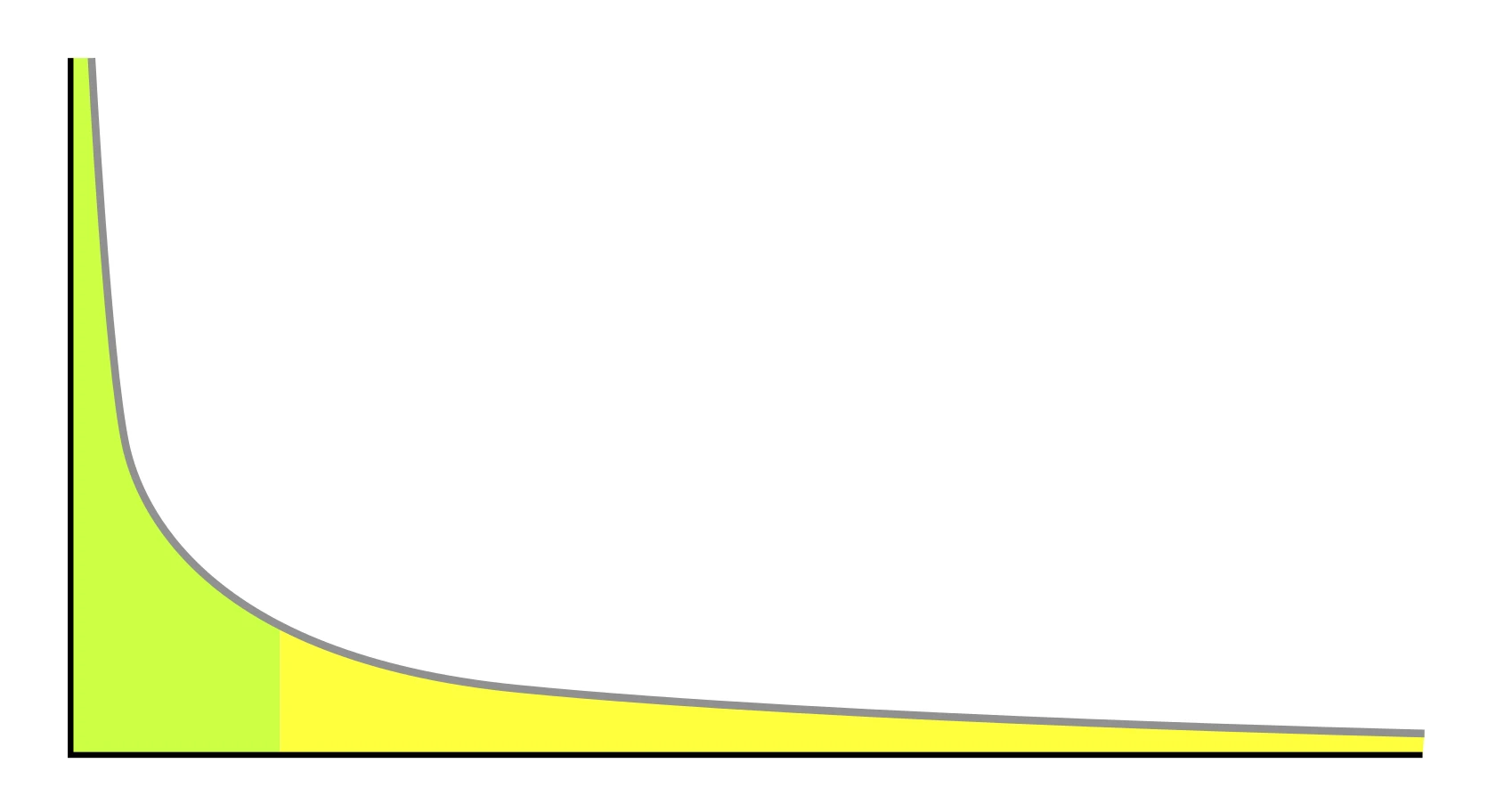
AI query clustering lets you group thousands of phrases into coherent topic clusters and build a topic map instead of planning articles in isolation. In practice, tools such as Semrush Keyword Strategy Builder, Ahrefs (Parent Topic) or your own scripts based on embeddings help with this. This model helps answer the question “how many subpages do I need?”: usually you create 1 pillar page per cluster and 5–20 supporting pieces, depending on competition and the spread of intent.
- Assign intent to queries based on the SERP and users’ wording.
- Build clusters and a topic map (pillar page + supporting content).
- Identify long-tail phrases and questions from People Also Ask and discussions (forums, Reddit, Allegro/OLX).
- Assign phrases to funnel stages (TOFU/MOFU/BOFU) so that traffic turns into leads or sales.
AI is also useful for analysing content gaps, because it can compare your materials with the TOP10 and identify missing subtopics, definitions, parameters, processes or FAQ. It can also combine data from Google Trends, Google Search Console and visibility history to assess seasonality more accurately and suggest when to update or publish (e.g. air conditioning content before heatwaves in May–June). In semantic search, natural language and the network of related concepts play an increasingly important role, so it is often more worthwhile to close the topic than to cling to exact match. If you have traffic but lack leads, you usually need to translate the keyword plan into the funnel: TOFU leads to a guide, and BOFU to an offer page with specific information.
- 01Intent and SERP analysisClassification of needs with AI (Informational, Transactional, Navigational, Local)
- 02Matching the content formatThe form of the answer is key
- 03Clustering and topic mapGrouping phrases, building a plan
Match the form to user intent and build coherent topic maps with AI to increase ranking effectiveness.
Creating unique SEO content with generative AI
It is safest to create unique SEO content with generative AI in a model where AI prepares the draft and a human checks, supplements and refines it. This process reduces hallucinations and “averaged” advice, which often misses the real user intent. Publishing straight from the tool increases the risk of factual errors and repetitiveness, so it is worth adding a fact-checking stage and editing in line with the brand tone. Treat AI as a co-author, not an autopilot: the draft should speed up the work, but final quality requires control.
In practice, content becomes difficult to “copy” when AI bases it on real materials: first-party data, test results and examples from tools (e.g. screenshots from GA4, GSC, Ahrefs or PageSpeed Insights). This is particularly important when there is a risk of mass-produced content, because without added value it is easy to end up with a series of similar articles. A good example of an element that is difficult to replicate is the description of Core Web Vitals optimisation with a concrete result, e.g. improving LCP from 2.3 s to 1.8 s. Such details build credibility and help distinguish the material from “generic” production.
Generative AI also makes it easier to plan the structure around intent more quickly (definition, steps, comparison, recommendation) and prepare short answers for featured snippets and People Also Ask. In the case of snippets, precise definitions and answers of around 40–60 words work particularly well, with a clear sentence at the start and further clarification below. Rather than writing everything from scratch, it is often wiser to use AI for content refresh: identify outdated passages, add missing steps, update screenshots and rebuild the conclusions for the new SERP reality. You will maintain consistency more easily at scale if you rely on a simple style guide (vocabulary, banned phrasing, technical level) as well as fixed prompts and editorial checklists.
Automation of SEO audits and technical optimisation thanks to AI
AI speeds up SEO audits and technical optimisation because it makes it easier to read extensive crawl reports and to prioritise fixes faster. For sites with thousands of URLs, tools such as Screaming Frog or Sitebulb provide the data, and models can suggest which issues are critical and which are mainly cosmetic. The biggest return usually comes from elements affecting indexing and Googlebot’s access to content. If the audit covers a very large number of pages, start with indexing (noindex/canonical), 5xx/4xx errors, duplication and pagination issues.
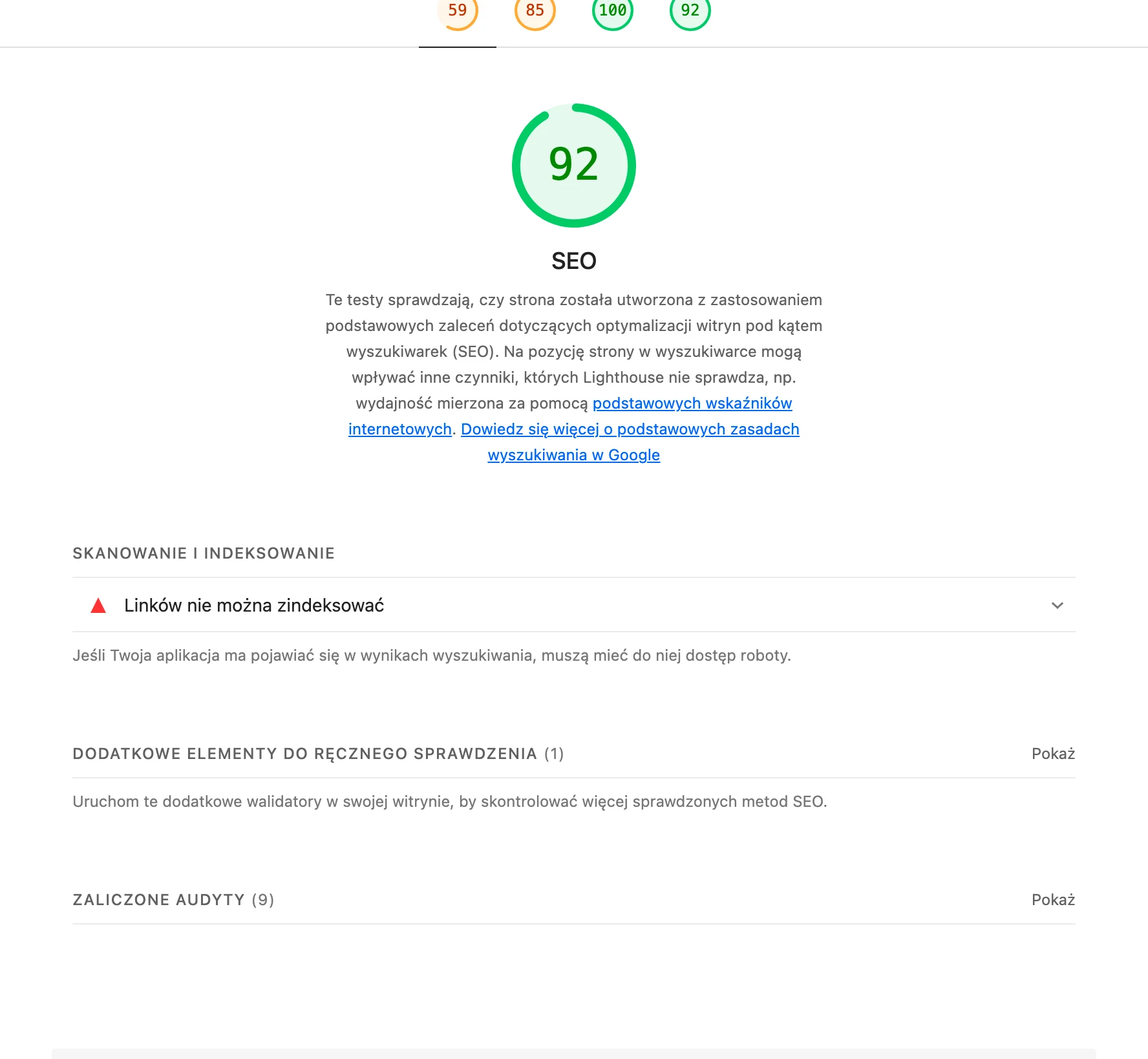
- Detect indexing anomalies using automated alerts (e.g. a drop in the number of indexed pages, an increase in soft-404s) based on data from the GSC API and logs.
- Analyse logs to check what Googlebot actually visits and whether the crawl budget is not “leaking” into parameter loops and redirects.
- Prioritise Core Web Vitals fixes according to the thresholds: LCP ≤ 2.5 s, INP ≤ 200 ms, CLS ≤ 0.1 (for most sessions).
- Validate structured data in the Rich Results Test and make sure the markup is consistent with the page content.
UX and performance optimisation is measurable, because Google evaluates, among other things, LCP, INP and CLS, so AI can point to actions with the greatest impact on results. Image optimisation (WebP/AVIF), removing render-blocking, lazy-loading and reducing third-party JS (e.g. excessive marketing tags) often come to the fore. In the area of structured data, AI can generate JSON-LD (FAQ, HowTo, Product, Article), but without validation faulty markup may be ignored. In programmatic SEO AI makes it easier to create data-driven landing pages, but it remains crucial to limit indexing to valuable combinations and to add unique blocks (e.g. local tips, differences between variants).
AI can also support risky stages such as migrations, mapping old URLs to new ones based on content and structure similarity, while key pages require manual verification. To limit losses, the approach includes 301 redirects for top URLs, staging tests, up-to-date sitemaps and monitoring in Google Search Console and logs. In the area of information architecture, semantic models help suggest internal links and anchors, which supports PageRank distribution and understanding of the topical cluster. It is usually better to add 5–15 sensible contextual links in a long article than to build footers with hundreds of links.
- 01Faster report analysisAI sorts large datasets more quickly.
- 02Prioritising critical fixesFocus on indexing and 4xx/5xx errors.
- 03UX and performance optimisationMeasure Core Web Vitals and identify actions.
- 04Maximum return and visibilityInvest in actions with the greatest impact.
AI streamlines technical SEO processes, enabling faster and more precise identification of critical issues for better results.
Link building and brand reputation in the age of AI
Link building in the age of AI increasingly focuses on quality and trust rather than “quantity”, because link profile analysis more easily spots schemes and unnatural patterns. In practice, the question “will 100 links from directories help?” most often ends with a negative answer, and a more sensible direction is often a few links from genuine industry sites that have traffic and editorial backing. AI simplifies the assessment of domain topicality, anchor naturalness and the risk of actions resembling automation devoid of value. If you want to build a safer profile, choose links resulting from actual publication and useful content rather than mass sources without editorial control.
Digital PR can be accelerated thanks to AI, because a model can spot “news hooks”, analyse trends and tailor the pitch to editors, but the effectiveness is still determined by unique material. Publications and links are easiest to secure for linkable assets based on data, such as calculators, rankings, maps, checklists or research. If you want “links without buying them”, a proven approach is a data report (e.g. a survey or price analysis) and tailoring the narrative to specific media outlets. In content supporting reputation, external linking to reliable sources (e.g. GUS, NBP, WHO, manufacturers’ documentation) also helps, especially in YMYL topics.
Risk management remains equally important, because AI can flag toxic links (sudden spikes, identical anchors, PBN networks), while disavow decisions require judgement and context (e.g. whether there was a manual action). At the same time, the importance of brand signals is growing: branded queries, publications, the newsletter and channels that build brand memory, which increases resilience to SERP fluctuations. In search, AI also interprets unlinked citations and brand mentions better, so such publications can strengthen credibility from an entity and reputation perspective. In practice, it pays to monitor reputation (reviews, forums, profiles), because negative threads can take over the SERP for branded queries and affect conversion even when SEO visibility is growing.
SEO analytics and experiments using AI
SEO analytics using AI works best when it combines data from the whole funnel, rather than being limited to visibility metrics. In practice, this means combining GA4, Google Search Console, CRM and content production costs in Looker Studio or BigQuery. If you want to know “which content makes money”, assess conversions and transaction value per landing page, instead of relying solely on sessions. This approach also makes it easier to see where SEO supports sales indirectly, and where it genuinely delivers results.
AI-supported monitoring relies on automatically spotting anomalies in clicks, impressions, CTR and average position, taking seasonality into account. To resolve the dilemma “is this a penalty or seasonality?”, compare year-on-year data, segment it by directories and verify whether the drop covers one intent or a specific page type. Models can also cluster thousands of queries from GSC and map them to pages, which streamlines diagnosing keyword cannibalisation. When several pieces of content compete for the same queries, consolidation or a clear separation of intent, supported by canonical linking, often helps.
SEO experiments with AI work best as A/B tests for titles, meta and content structure, provided the measurement is based on a sufficient sample and a comparable time horizon. A rise in CTR without a change in position can often be achieved with more specific titles (numbers, year, benefit) rather than generic slogans. AI also makes it easier to model the impact of SEO on other channels, because organic often strengthens paid and direct (the halo effect), so it is worth tracking assisted conversions and the uplift in branded queries after publishing strong materials. When planning the backlog, AI can point to tasks with the highest ROI, and quick technical fixes on pages with existing traffic often prove more effective than publishing yet another “new” article.
Risks and legal aspects of using AI in an SEO strategy
The risks of using AI in SEO stem mainly from hallucinations, repetitive content and mistakes that sound convincing, even though they are not factually correct. That is why in sensitive topics (e.g. health, finance) it is crucial to enforce citations, verify figures, work with a fact-check checklist and route selected fragments for expert review. Equally important is implementing E-E-A-T in practice: experience, authorship and review should send a clear signal that the content is based on real expertise. If you are considering what to add to the page, start with the author bio, methodology description, sources, update date and, where needed, “reviewed by” together with qualifications.
Quality control at scale requires a written AI content policy and editorial audit, because mass, template-driven publishing increases the risk of “thin content” and a lack of added value. In practice, it is worth clearly defining what AI may be used for (e.g. briefs, structures, variants) and what it may not be used for (e.g. unverified medical advice, fake case studies), and then implementing a sample audit of some publications, plagiarism tests and a checklist for SERP intent alignment. Even if the text is not plagiarised, paraphrasing alone without unique elements is often not competitive, so the advantage comes from materials that are hard to copy (your own photos, data, comparisons, expert quotes). “Detection of AI content” on its own is not a stable quality criterion; the real problem is low usefulness and a loss of trust.
Legal aspects and data security in AI usually come down to licensing issues, information protection and ensuring the message complies with brand guidelines and compliance requirements. When generating text and images, you need to check the licences of the tools (e.g. Midjourney, Adobe Firefly) and the rights to source data, while the ability to use the output commercially depends on the terms and the jurisdiction, so it is sensible to archive licence confirmations and stay away from styles imitating a specific creator. Do not paste personal data, trade secrets or contract content into prompts without clearly defined processing conditions. Instead, use anonymisation or enterprise tools with data control and access logging. In addition, AI can produce risky promises (e.g. “guaranteed result”) or wording that conflicts with policies, so in practice the following help: a list of prohibited claims, review by lawyers/compliance, and ready-made service description templates.
FAQ
Frequently asked questions
How is artificial intelligence changing SEO in Google?
Google is increasingly understanding the intent behind a query, not just the presence of a phrase. In practice, complete, useful content matched to the user’s situation wins.
Can AI-generated results reduce clicks in SEO?
Yes, because some users end their journey already in the search results. This means that rankings and CTR alone do not show the full picture of performance.
Why is Google results personalisation important for SEO?
Because two people can see different SERPs for the same phrase, depending on location, device and context. That is why drops should be checked in segments, not just against a single average.
How does AI help model user intent?
AI makes it easier to assign a query to informational, transactional, navigational or local intent based on the language and the SERP. This makes it easier to match the content format to the user’s need.
How much supporting content is needed for one pillar page?
The article says that usually 1 pillar page is created per cluster and 5–20 supporting pieces of content. The exact number depends on competition and the breadth of intent.
How can you safely create SEO content with generative AI?
The best approach is to use AI for the outline, then manually check, expand and edit the material. It is worth grounding the text in your own data, tests and examples to avoid repetition and factual errors.