
People Also Ask SEO is a way of working with content that increases the likelihood of a page appearing as a source of answers in related question boxes in Google. In practice, this is not about adding an FAQ section, but about aligning the material with the real questions users ask and with the way Google expands the topic in search results. This is particularly important when you want to capture long-tail traffic and build stronger visibility around a single topic. The biggest difference is not the number of questions on the page, but the relevance of the answer, its form and its assignment to the right URL. Well-prepared content can at the same time support informational visibility, lead the user to the next steps and strengthen the site’s topical authority. In this article, we will focus on how this works in practice and what is important during implementation.
What is People Also Ask SEO and how does it work in practice
People Also Ask SEO is the process of optimising a page for the questions Google presents in related question boxes. The aim is to increase the chances that your subpage will be indicated as the source of a short answer to a specific query. This is not a separate SEO channel, but an approach to working with content, structure and user intent.
In practice, the basic unit of work is not a generic phrase, but a precise question. It is worth establishing what the user is actually looking for, which answer format dominates in the results and which subpage should provide the answer. One question should have one main landing page, otherwise it is easy to end up with keyword cannibalisation.
Optimisation for PAA is not about adding a long list of artificially generated questions to the end of an article. It works better to embed questions as logical headings within the content and then add a short, direct answer underneath them, followed by a broader explanation. This structure is clear both for the user and for the search engine.
The process usually starts with collecting questions from real search results, autocomplete, Search Console and existing content on the site. The questions are then grouped by intent and assigned to specific URLs. Finally, the headings, answer leads, internal linking and the search query variants for which the page starts to appear are refined and monitored.
The business value of this approach lies in the fact that one well-developed page can capture many related questions, rather than only one main phrase. This is particularly useful for how-to content, service pages and categories, where the user first looks for an answer and only later moves on to action. Well-optimised answers for PAA support not only visibility, but also build the topical authority of the entire site.
- 01Optimisation for questionsGoal: increase visibility in PAA boxes.
- 02A question is the unit of workNot a generic phrase, but a precise query.
- 03Understanding user intentMatch the answer format to the dominant results.
- 04One main landing pageOne question, one dedicated subpage.
Key approach: a high-quality, precise answer integrated into the content, not an artificial list of questions at the end.
Current context and the dynamics of People Also Ask boxes
People Also Ask boxes are variable in nature, so their content differs depending on the query, device, location, language and the current SERP layout. This means they cannot be assessed “once and for all” or used as the basis of a strategy based solely on a single screenshot. Effective actions require observing the actual results for specific phrases and systematically checking them.
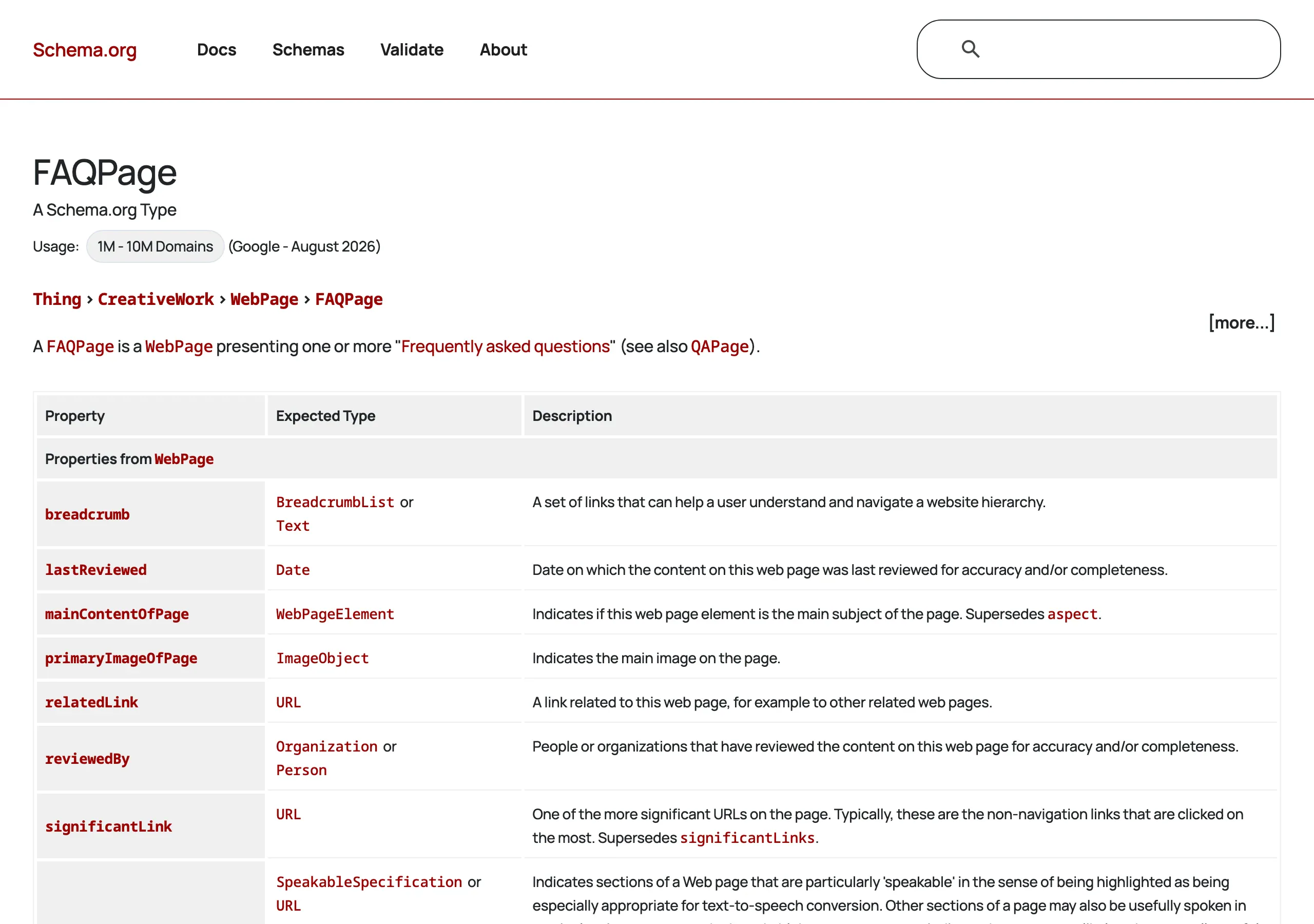
There is no tag or simple method that guarantees presence in PAA. Google selects sources based on answer relevance, page quality, alignment with intent and the context of the whole subpage. The implementation of FAQ schema may make it easier to understand the content, but it will not replace a good answer and does not guarantee exposure.
In practice, Google often pulls into PAA short, clear snippets placed directly under a heading written in the form of a question. That is why the first 1-3 sentences under such a heading should answer directly, without an extended introduction and without straying from the point. It is this excerpt that most often determines whether a subpage is used as the answer.
The type of query also matters. For informational phrases, complete coverage of questions, definitions, differences and instructions usually counts. For phrases closer to a purchase decision, the answer should not only explain the topic, but also direct the user to the next step, for example to a service, an offer, pricing or contact.
This variability brings one more consequence: the answer format should follow what the SERP shows, not the author’s habits. Sometimes Google prefers a short definitional paragraph, at other times a step-by-step list or a comparative overview works better. If the answer format does not match what Google presents for a given intent, even solid content may fail to realise its potential.
The process of optimising content for People Also Ask
The process of optimising for People Also Ask involves gathering real questions from search results, assigning them to the right subpages, and preparing answers in a form that Google can easily read as relevant and complete. The starting point is not the author’s assumptions, but what is actually visible in the SERP, Search Console, autocomplete and related searches. This means you work with questions that are genuinely linked to user intent. The most common mistake is creating a question section based on guesswork rather than data.
The next stage is grouping questions by intent and semantic similarity. In practice, some questions concern definitions, others comparisons, and others the conditions for choosing something or a specific action. This kind of clustering makes it easier to decide whether the questions should go on one page or require separate URLs. Without it, it is easy to scatter answers across the site and weaken visibility.
After selecting the cluster, it is worth checking what the answer looks like in the competitive SERP. For some questions, Google favours a short paragraph under the heading, while in others a step list or a concise summary works better. The answer format should follow the type of question, not the content template used across the entire site. When a question asks “what is”, the answer should start with a definition rather than an extended introduction.
The content itself should be structured in layers. First, you give a short, specific answer directly under the heading, and only then you add context, conditions, examples and links to the next sections. This approach usually works better than a long block of text in which the core point only appears after several paragraphs. Google often pulls exactly this short, unambiguous snippet placed close to the question.
Finally, there is on-page optimisation and results validation. What matters is a clear heading hierarchy, consistent semantics, sensible internal linking and no duplication of answers across subpages. Schema can help Google interpret the content, but it will not replace a well-written answer lead. After publication, it is worth monitoring which questions generate impressions but no clicks, because that usually means the answer is too generic, poorly formatted or assigned to the wrong page.
- 01Real dataGather questions from SERP, GSC, autocomplete
- 02Intent groupingCombine questions by meaning and purpose
- 03Assigning to pagesMatch clusters to the right subpages
- 04Answer formatPrepare clear, relevant and complete answers
- 05Visibility in SERPIncrease the chance of appearing in PAA
The key is to work with actual user questions and tailor the content to their intent, avoiding guesswork.
Strategic steps in mapping questions to URLs
Strategic mapping of questions to URLs involves assigning each question cluster to one main subpage that best answers the user intent and has the greatest chance of ranking without keyword cannibalisation. This is not just about organising content. It is a decision about where the user should land and which page should take visibility for similar query variations. One question and its close variants should have one main ranking URL.
First, you need to assess whether a given question fits an existing page or requires a new one. If the question expands on a service, category or article topic and can be logically incorporated into the current content, it is usually better to strengthen the existing URL. However, if the intent is clearly different and the user expects a different type of answer, a separate subpage is often the safer solution. In practice, separate URLs are especially needed when the topic has its own search potential and its own set of supporting questions.
When mapping, you need to look not only at the keyword, but also at the stage of the user journey. Informational questions can be handled in a guide, while questions closer to a purchase decision are better placed on a service page or category page. This ensures the answer does not end with an explanation alone, but naturally leads to the next step. This is particularly important when PAA is meant to support not only visibility, but also the move from informational intent to commercial intent.
- If the question explains the basics of the topic, it usually fits a pillar page or a comprehensive guide.
- When the question concerns choice, price, differences or terms of cooperation, a service page or a sales landing page will often be the better fit.
- If several subpages answer almost the same question, it is worth setting one primary page and reducing internal competition through thoughtful linking and refined content.
- When the current URL has an unreadable structure and leaves no room for sensible expansion of questions, it is more sensible to rebuild the page than to bolt on random FAQ blocks.
Good mapping also requires consistent internal linking. Supporting articles should point to the main page of a given cluster, and anchors must clearly indicate the answer topic. This makes it easier for Google to recognise which subpage is the hub for a specific group of questions. Scattered linking and duplicated answers often mean that no page emerges as a clear candidate for PAA.
After implementing the mapping, you should regularly make adjustments based on data. If Search Console shows that a different subpage than the planned one is getting impressions for a given question, that is a signal that the structure or intent has been assessed incorrectly. In such a situation, you need to decide whether to strengthen the target URL or adopt a new structure and organise it deliberately. The worst outcome is leaving several pages competing with each other with very similar answers.
How answer formats affect visibility in SERP
The answer format matters for visibility in SERP because Google more often selects a snippet matched to the type of question and providing a quick, clear answer. When the user asks “what is”, a short definition usually works best. For “how” questions, a sequence of steps or an ordered list more often wins. The most important thing is matching the answer format to the intent, not merely using keywords.
In practice, building answers in layers works well. First, under a heading in the form of a question, place 1-2 sentences that answer directly. Only then expand the topic with conditions, exceptions, examples and links to further sections. This layout is readable for the user and easier for Google to extract as an answer snippet.
The placement of the answer on the page also matters. Google often selects content located close to the heading that precisely matches the question from the SERP. If a long introduction appears first and only then the core point, the chance that this fragment will be considered the best answer decreases.
- For “what is” questions, a short definitional paragraph works best.
- For “how to” questions, a list of steps or a simple instruction is usually better.
- For “what is the difference” questions, a concise comparison of two options is often more effective.
- For “when is it worth it” questions, an answer based on conditions and use cases works well.
- In the case of commercial queries, the answer should not only explain the topic, but also naturally guide the user to the next step, for example to a service, the relevant category or contact.
However, it is not about mechanically sticking to one template. The same topic can generate different PAA boxes depending on device, location or query variant. That is why it is worth checking the actual SERP and seeing whether Google favours a paragraph, a list, a mini-guide or a comparison. The format should be chosen based on what is already winning in the results, not according to your own editorial habits.
It is also worth making sure the fragment itself is readable. Sentences that are too long, too many asides and answers that are too sprawling make both comprehension and extracting a sensible snippet for the SERP more difficult. A good PAA answer is specific, but it does not cut the thought short. It should answer immediately rather than leaving the user to fill in the meaning themselves.
- 01Intent matchingThe answer format matches the type of question.
- 02Quick, clear answerThe priority is a direct, understandable solution.
- 03Layered structureFirst a short answer, then expansion.
- 04Strategic placementPlace the answer in a visible, key location.
Clarity and direct alignment with the user’s question are key, which increases the chance of a featured snippet in Google results.
The most common mistakes and risks in People Also Ask optimisation
The most common mistakes in People Also Ask optimisation are mismatching the answer to the intent, duplicating content across subpages and building question sections without any grounding in the real SERP. Usually this does not bring the page down straight away, but it clearly reduces the chance of taking visibility for many long-tail questions. In practice, the content is there, it just is not working where it should.
A very common problem is publishing extensive FAQ blocks that bear no logical relation to the main page content. Such a section can feel forced on, blur the topic and make it harder for Google to assess what the subpage is actually about. A better result comes from weaving questions into the natural structure of the article or landing page, rather than adding random items at the end.
The second risk is keyword cannibalisation. When several URLs answer the same question or very similar variants, Google gets an ambiguous signal about which page to display. This often ends with visibility being spread thin, weaker rankings and greater instability in results. One question should have one main landing page and consistent internal linking.
- Creating questions based on assumptions rather than data from SERP and Search Console.
- Replicating the same answers across multiple subpages.
- Relying on schema FAQ alone without any real improvement to the content and site structure.
- Writing answers that are too generic, too long, or without a clear answer in the first sentences.
- Choosing the wrong answer format, for example a definition where the user expects instructions.
- Failing to update content even though the SERP has started promoting a different type of answer.
- Skipping questions that have impressions but low CTR, even though they are often the best material for a quick improvement.
A separate risk remains in topics where high credibility is expected, especially those related to health, finance or legal decisions. In such areas, a short answer alone is usually not enough. Site quality signals, clear authorship, sound reasoning and careful language without excessive simplification also matter. Google may not want to surface an answer that is too brief or lacks context.
A common mistake is also assessing effectiveness solely by whether the page “got into PAA”. Visibility in these boxes can fluctuate, so it is more important whether the range of queries, the number of impressions and traffic from related questions are growing. In practice, the best PAA optimisation improves not just a single fragment in the SERP, but the entire page’s ability to answer related user intents.
How to measure success and verify visibility in People Also Ask
Success in People Also Ask is seen in increased visibility for related questions, the quality of long-tail traffic and the fact that specific URLs take over new query variants. It is difficult to capture this in a single report, because Google does not provide a simple and complete “you are in PAA” view for every page and every question. In practice, you need to combine observation of real search results with data from Search Console and site analytics.
To begin with, it is worth reviewing the search results themselves for key questions, ideally on a device, in a location and in a language matching the target market. PAA boxes are dynamic, so a single screenshot is not yet a reliable basis for a conclusion. What matters is repeatability, meaning your page regularly appearing for a group of questions, rather than a one-off episode for one variant.
In Search Console, pay attention first and foremost to new queries in question form, growth in impressions for long-tail queries and changes assigned to a specific URL. If, after publishing content, the page starts collecting more variants such as “what is”, “how”, “when” or “why”, this usually indicates better intent matching and broader topic coverage. A good signal is also a situation where one subpage takes over more and more semantically close questions without splitting traffic across many competing URLs.
CTR should be interpreted carefully, because presence in PAA can boost impressions, but it does not always translate proportionally into clicks. The user often sees the answer snippet already in the SERP, so a rise in exposure can lower the average CTR even despite improved visibility. Therefore assess these elements together: impressions, the number of queries, average position for the question cluster and the quality of traffic after entering the site.
Assess traffic quality through the lens of what the user does next on the site. In the case of informational content, what matters are moves to subsequent sections, clicks on internal links and visits to service or product pages, provided such a path is justified. If the page collects queries but does not lead the user to the next step, visibility increases, but business value remains limited.
The most sensible approach is to compare results before and after implementing changes in time windows matched to the scale of the topic and seasonality. In smaller sites or for niche topics, more time is usually needed, because the number of queries is smaller and fluctuations are greater. Do not draw conclusions after one week or on the basis of one phrase; analyse entire clusters of questions assigned to a specific page.
When you see impressions without clicks, start by refining the first sentences of the answer, the question heading and a better alignment of the content with the dominant user intent. If the page generates clicks but does not take over new questions, the cause is often a topic structure that is too narrowly framed or weak internal linking. The most useful verification therefore comes down not to whether you are in PAA, but to whether the page is taking over more and more relevant questions and more fully closing the entire topic.
FAQ
Frequently asked questions
How does optimisation for People Also Ask work in Google?
It involves preparing content for the questions that Google shows in related question boxes. The goal is to increase the chances that your subpage becomes the source of a short answer.
Is it enough to add an FAQ section to appear in People Also Ask?
No, the FAQ section alone will not produce that effect. More important are relevant answers, their format, and assigning them to the correct URL.
What should a good question and answer for People Also Ask look like?
It is best when the question is a heading and a short, direct answer appears immediately underneath it. Only then is it worth adding broader explanation and context.
Why should one question have one main landing page?
Because otherwise keyword cannibalisation and visibility dilution are easy to create. Google then has difficulty choosing one best subpage to show.
When is it better to create a new URL instead of adding a question to an existing page?
When the question intent is clearly different and the user expects a different type of answer. A separate subpage also makes sense if the topic has its own search potential and separate supporting questions.
Which answer formats work best in People Also Ask?
It depends on the type of question: definitions, a list of steps, a comparison, or an answer based on conditions. The format should result from the intent and from what Google shows in the SERP.