
Case studies in B2B marketing work only when they are evidence, not page decoration. The client does not come there for a “nice story”, but for answers to very practical questions: do you understand a similar problem, how do you work, what do you measure and what can realistically be expected. The most important thing is that a good case study reduces the risk of a purchase decision. And that is where the specifics begin: it is not only the end result that matters, but also the starting point, the constraints, the implementation process and the way the impact was measured. In B2B this carries particular weight, because the purchase is rarely made by one person and rarely happens quickly. If the material does not help defend the decision within the organisation, it usually simply does not do its job.
What an effective case study in B2B marketing is
An effective case study in B2B marketing is evidence material that shows how a specific client problem was solved in real business conditions. It is not about a generic “it worked”, but about a clear sequence: initial situation, problem, constraints, actions, implementation, measurement and result. It is this cause-and-effect sequence that builds credibility. Without it, you are left with a nice story, not an argument.
In practice, the best case study answers one question: why that result was possible at all. That is why it should show not only the outcome, but also the starting conditions, the level of project complexity, the scope of collaboration and the success criteria. What is key is what usually disappears between the lines, namely “where we started” and “what the constraints were”. Without this, the audience does not know whether they are comparing their situation with something genuinely similar, or merely with a marketing shell.
In B2B, such material is primarily meant to reduce purchasing risk. Marketing wants to understand the process and channels. Sales needs arguments for the conversation. Management expects business impact, and the operations team wants to know what the implementation looks like from the inside. If a case study shows only the final result and omits the way the outcome was achieved, it loses most of its value. Instead of a decision-making tool, you end up with a poster with a slogan.
It works best for services and implementations with a longer sales cycle, a higher contract value and multiple stakeholders on the client side. In such situations, the brand promise alone is not enough, because the decision still has to be “delivered” internally. And that is not a cliché. A case study then becomes a tool used not only by marketing, but also by the salesperson and the buyer themselves, who are gathering ammunition for meetings and approvals.
The current context for using case studies in B2B
Today, a case study in B2B mainly works as a tool for verifying credibility before the sales conversation even starts. Audiences increasingly check for themselves whether the company has really solved similar problems and whether its way of working fits their situation. So the question is not “do you have a case study”, but “does it prove anything at all”. For that reason, the material must be specific, aligned with the offer and rooted in real implementation conditions, rather than relying on declarations alone.
Consistency of messaging also matters between the services page, the lead campaign, the sales presentation and the conversation with the client itself. When a case study promises more than the process can realistically deliver, a mismatch appears that very quickly undermines trust. A good case study does not sell the “maximum result”, but honestly shows what was done and under what conditions.
Segmented materials work best. A case study written for a specific industry, organisational scale, type of problem or implementation model shortens the audience’s path to a simple conclusion: “this is about a company like mine”. And that is the point. The easier the self-identification, the greater the chance that the content will actually influence the decision.
Publishing it on the blog alone usually does not deliver the result. A case study should also work on the service page, in offers, in e-mail sequences, in retargeting and in materials used by sales. In practice, this means one thing: one core piece of content should have several versions. A full one for analysis, a shorter one for campaigns and a more argumentative one for the sales process.
Input data and formalities are playing an increasingly important role. Agreements need to be closed earlier: client consent, the scope of disclosed information, permission to use the brand, quotes and figures, and anonymisation rules. Even an anonymous case study can be very powerful if it preserves the specifics of the problem, the process and the result.
The material loses effectiveness when it becomes too general or cleverly hides the starting point. If it is not clear what level the client started from, what constraints they had and what condition determined the result, the audience cannot judge whether the story has any significance for their company. The problem is that without context, “success” sounds like a slogan, not evidence. That is why today the less “flashy”, but more precise case studies are winning.
How a case study works in practice
In practice, a case study works as material that reduces the risk of a purchase decision and allows the audience to check whether a similar outcome is realistic in their conditions. What matters is not only what came out at the end, but showing the relationship between the problem, the action and the result. In B2B this matters because the client usually has to defend the choice to their manager, finance, operations or implementation team. If the material does not show exactly what was done and in what context, its sales power quickly drops.
The process begins with choosing the right project to describe. The best examples are implementations that address a common client problem or represent a strategically important use case. A good result alone is not enough. You also need the data, permission to publish and room to show the collaboration process honestly, without whitewashing the difficult moments.
The next stage is collecting and organising the information. You need the starting point, business objectives, constraints, scope of work, measurement method and the result before and after implementation on the table. Most often, it is the lack of baseline data that weakens a case study more than the lack of spectacular figures. Without this, the audience does not know whether the improvement came from good work or simply from a comfortable starting position. And that is precisely where credibility is decided.
Then comes validation. That is, a cool-headed check of what can really be attributed to the actions taken, and what is merely a nice story. In practice, you need to separate out claims that cannot be defended, clarify the impact of external factors and honestly name the boundary conditions. This is especially important in services, where the result depends not only on the provider, but also on the quality of the client’s data, the availability of their team, the budget and the pace of implementation on their side.
At the end, you build a narrative for the people who are actually involved in the purchase, and distribute the material in several formats. Marketing looks at the process, channels and metrics, management at risk and profitability, and the operations team at the scope of cooperation and implementation feasibility. A good case study does not stop working the moment it is published on the website. The problem is that many companies treat publication as the finish line, rather than the start of distribution. The material should live on in sales, proposals, email sequences, landing page content and responses to specific objections.
Steps for creating an effective B2B case study
An effective B2B case study does not happen by chance. It consists of choosing the right project, gathering complete data, structuring the story in a cause-and-effect logic, and tailoring the material to the real sales process. The key is to know from the outset why this material should exist. A case study for a lead campaign looks different, one for a proposal looks different again, and yet another for closing the decision after a sales call.
- Choose a project that addresses a specific client problem, not just one that shows the company’s overall success.
- Gather the minimum set of data: customer profile, starting situation, problem, constraints, scope of work, measurement method and result.
- Establish what can be disclosed publicly: brand name, numbers, quote, scope of cooperation or the form of anonymisation.
- Describe the course of work in causal order, without leaps in reasoning and without jumping straight from the problem to the result.
- Show the conditions that affected the outcome, for example data quality, client-side resources, implementation time and dependencies between teams.
- Prepare several versions of the material: a full version for the website, a shorter one for sales and shorter extracts for ads, proposals or follow-ups.
In practice, specifics make the biggest difference. Instead of writing that “results improved”, it is better to show what was analysed, which decisions were made, what changed in the process and how the improvement was identified. The more precise the process description, the easier it is for the client to relate it to their own situation. And that is not a cliché. Credibility is built with facts and a logical sequence, not with decorative phrasing.
If it is not possible to disclose the brand or full numbers, the publication does not have to be scrapped. You can anonymise the client, while keeping what carries meaning: the industry, the scale of the organisation, the type of problem, the scope of implementation and the kind of result. Such material still works, as long as it does not dissolve into vagueness. The question is whether the reader, after reading it, understands under what conditions the project was delivered, and thus whether they can honestly compare them with their own.
Add to the description what builds trust. Not embellishments, but hard evidence from behind the scenes of the project: a client quote, a clearly described division of responsibilities on both sides, the analytics tools used or a fragment of an artefact from the process, for example a dashboard, funnel map or test plan. Such details are often more convincing than the final result itself, because it is clear that the outcome did not fall from the sky, but grew out of a specific methodology.
At the end, you need to honestly check whether the material is actually working in sales. What matters is whether salespeople reach for it on their own, whether conversations become more concrete, whether the education stage is shortened in practice and whether specific references to the case study come up during objections. And if the material is gathering dust in a folder, the format is rarely to blame. Most often the problem is that it does not match the service, the persona or the funnel stage.
What affects the effectiveness of a case study
The effectiveness of a case study starts with a simple test: does the recipient see themselves in it and can they assess how realistic the implementation is for them. That is why the best-performing materials are tailored to the industry, company size, type of problem or cooperation model. An overly broad example dilutes the message, and the potential client starts wondering whether the description applies to their conditions at all. The easier it is to self-identify, the greater the sales value of the material.
The second key factor is specificity. A case study should show the starting point, constraints, scope of work, measurement method and the result set in context, not in a vacuum. The final outcome alone is not enough, because in B2B the recipient wants to understand what led to the change and which conditions had to align. And that is where the essence lies: not a slogan, but logic. What is most convincing is not the promise, but the clear sequence: problem, decision, implementation, measurement, result.
Alignment with the offer, the sales process and the funnel stage is also very important. A different material does the job at first contact, and another at the point of closing the decision and handling objections. When a case study promises more than the service actually covers, or does not fit the sales conversation, credibility evaporates faster than you can send a follow-up. A good case study can be used on the service page, in a proposal, in an email and during a sales meeting without changing the meaning of the message.
The result is also affected by the quality of the input data and the publication format itself. When there is no client consent, no numbers, no quote or at least a sensibly described anonymisation, the material becomes weak and difficult to defend under probing questions. It is also crucial whether salespeople actually use it and whether the content answers the questions of management, marketing and operations. An effective case study is not a decoration on the blog, but a tool used where the buying decision is made.
The most common mistakes in B2B case studies
The most common mistakes in B2B case studies are easy to recognise. The material does not reduce decision risk; it tries to impress. This happens especially when the description is too general, stitched together from slogans and does not show the starting conditions. The reader cannot see whether the result was the effect of a well-thought-out process or a one-off coincidence that cannot be replicated.
One very common mistake is to centre the narrative on the provider rather than on the client’s situation. In short, it becomes a brochure. If most of the text talks about the agency’s capabilities, tools and “ambitious approach”, while pushing the problem, constraints and decisions on the client side into the background, the case study loses its purpose. The question is what someone facing a similar choice is meant to take away from it. In B2B, the hero of a case study should be the process of solving the client’s problem, not the supplier’s self-promotion.
Another problem is the lack of methodology and hiding inconvenient context. “Results improved” or “efficiency increased” on its own does not mean much if it is not clear what was changed, how it was measured and from when the effect was counted. On top of that comes omitting limitations such as data quality, the client’s resources, implementation time or dependencies on other teams. And then the whole thing sounds like a promise, not evidence. If you do not show the boundary conditions, the reader assumes the result is not comparable with their situation.
It is also a mistake to detach the case study from a specific service and the real sales process. The text may be well written, but if it does not support the services page, does not answer typical objections and does not feed into proposals or sales follow-ups, its impact will be negligible. The same applies to overzealous anonymisation: when the brand, numbers, scale and implementation process disappear, what remains is a generic story without evidential weight. As a result, the reader has nothing to “grab onto” in a decision-making conversation. A good case study must be usable operationally, not just publishable.
How to measure case study effectiveness in the B2B process
Case study effectiveness in the B2B process is measured by its impact on the quality and course of sales conversations, not just by views. The view counter is tempting, but that is not enough. In practice, the key question is whether the material helps qualify leads better, shortens the stage of explaining the offer and makes it easier to move through objections. If a case study is widely read but changes nothing in the pipeline, it has content value, not sales value. That is why analytics data is only one part of the picture, not its core.
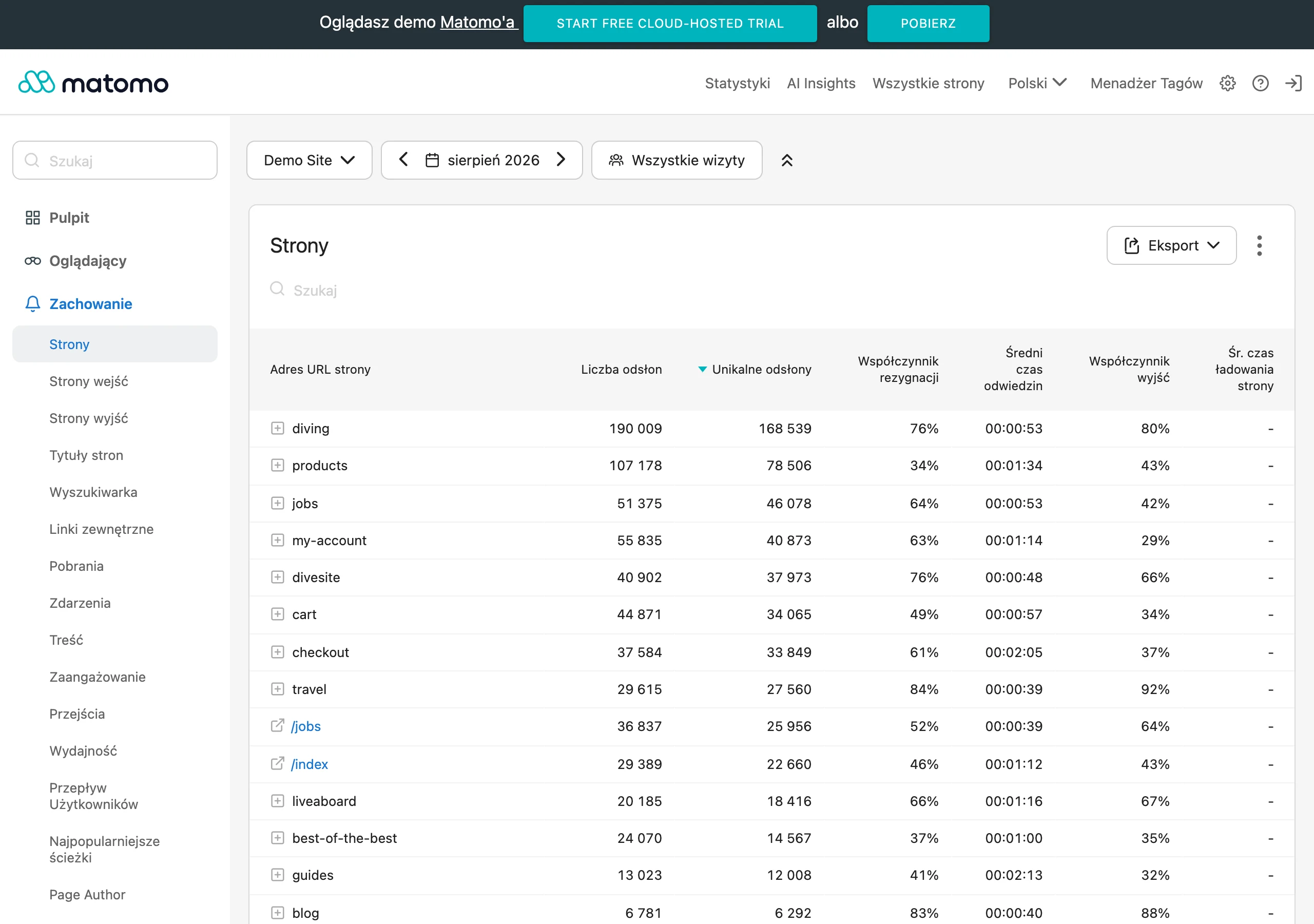
The best way is to measure it on three levels: content consumption, impact on lead behaviour and usefulness for sales. At the consumption level, you check whether people actually reach the material, scroll through it, download the PDF or return to it before making contact. At the behaviour level, you look at whether the number of relevant enquiries increases after contact with the case study, whether lead quality improves and whether conversations with the right decision-makers happen more often. At the sales level, you assess whether salespeople really use the material and whether it helps them close specific stages of the process. And only that third layer shows whether the text is working in the field or just looks good on the page.
In practice, focus first on operational metrics. They show fastest whether the case study is really working where it should, rather than just “looking nice” in the repository. Useful ones include:
- how often salespeople send the case study in sequences and proposals,
- the number of returns to the material before a sales conversation or after receiving a proposal,
- the impact on the time from first contact to the next stage of the pipeline,
- the difference in the quality of leads that had contact with the case study and those that did not,
- the role of the material in responses to objections about risk, implementation, time and results,
- the number of situations in which the client refers to a specific example during the conversation.
A good case study often does not generate the most traffic, but it improves the quality of the buying decision. And that is the crux of it. Its effectiveness is often visible not in a larger number of opportunities, but in fewer, yet clearly better sales opportunities. If, after implementing the material, the sales team has fewer educational conversations from scratch and more conversations about fit and terms of cooperation, then the signal is clear. The question is: can you see that change in your pipeline.
For measurement to make sense, the case study needs to be embedded in the working system, not treated like a loose attachment. Tag links in emails and campaigns, attach the material to specific services, record in the CRM at which stage it was used, and gather regular feedback from salespeople. One click does not explain anything, but a series of behaviours does. Without combining analytics data, CRM and observations from the sales team, it is easy to draw the wrong conclusion that the material works or does not work. The problem is that you are then assessing not the content, but chance.
Another thread is the different types of case study. Material used for lead generation is evaluated differently from a case study sent after a meeting or included in a proposal, because they serve a different function in the conversation. In the first case, what matters is attracting the right audience and building trust; in the second — the ability to reduce risk and speed up the decision. Instead of putting everything in one bucket, it is better to separate roles and metrics. The most practical approach is to assign each case study one main role in the funnel and measure it precisely against that role.
FAQ
Frequently asked questions
Which case study in B2B marketing works best and why?
The best one is the one that shows the client’s specific problem, starting conditions, actions and result. That way, the reader can judge whether the story is really similar to their situation.
Is simply showing the result in a case study enough to convince a B2B client?
No, because the result on its own looks like a slogan, not evidence. In B2B, you also need to show the starting point, constraints and the way you got to the result.
Why does a case study without baseline data lose credibility?
Because the reader does not know what level you started from or whether the improvement was really due to the actions taken. Without that, it is hard to compare their own situation with the project described.
When is a case study most useful in the B2B sales process?
Especially when the purchase has a longer cycle, higher value and multiple stakeholders on the client side. In such situations, a case study helps defend the decision inside the organisation.
What should be included in an effective B2B case study?
It should include the starting situation, the problem, constraints, scope of actions, measurement method and the result. The conditions that influenced the outcome, such as data quality or implementation speed, are also important.
What mistakes most often ruin a case study in B2B?
The most common issues are an overly general description, lack of methodology and omitting constraints. Another problem is a narrative focused on the provider instead of the process of solving the client’s problem.