

Semantic SEO is the study of describing the types of Entities in the world and the ways in which they are connected. One method is to define the vocabulary relating to things and the contextual relationships between them. The vocabulary that makes semantic SEO possible is called Schema.org.
Schema.org is not only a vocabulary of the Semantic Web, but is also maintained and supported by Google, Bing, Yahoo and Yandex. However, it is worth remembering that structured data is not the only method of semantic web optimisation, but rather one of the effective methods when you have good content.
For sites with a large amount of content, structured data can help describe, categorise and connect content in a way that helps search engines better understand the site. Many people know how to create and implement structured data, but not everyone knows how to optimise it for the semantic web.
What are data?
Data is nothing more than a set of information. One of the aims of data science is to structure data, making it easy to interpret and use. Data is divided into two groups:
- Structured data
- Unstructured data
- 01Aim of data scienceStructuring information
- 02DataA set of information
- 03Unstructured dataNo defined model
- 04Structured dataStandard form
Data is a raw material which, once structured, becomes valuable knowledge.
What are unstructured data?
Unstructured data (or unstructured information) are information that do not have a pre-defined data model or are not organised in a pre-established way. Unstructured information usually contains a lot of content and may include data, numbers and important facts.
What are structured data?
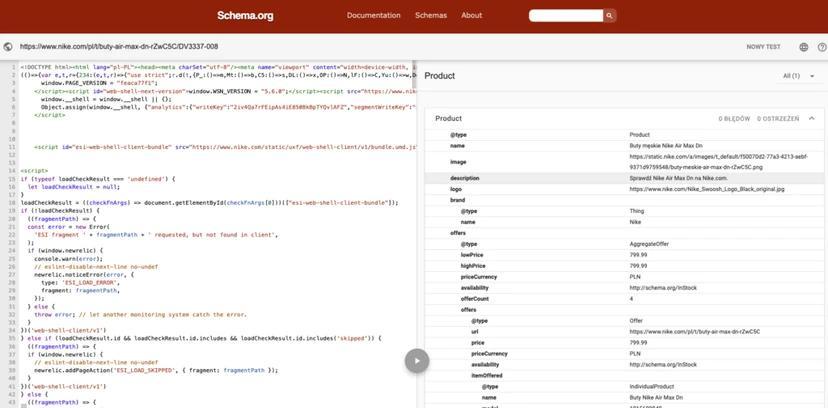
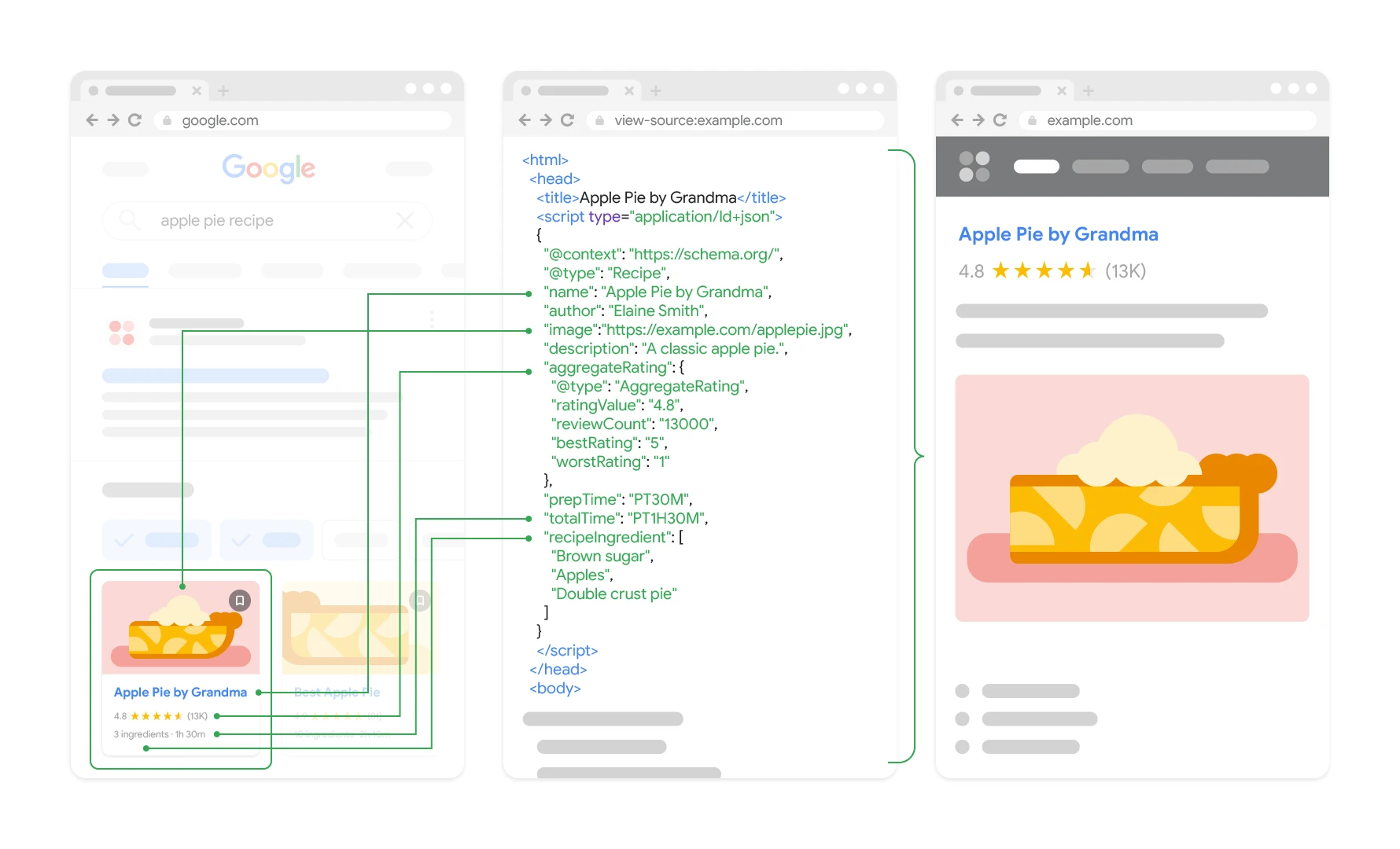
Structured data is a standard form of providing information about a page and classifying its content. For example, on a recipe page there is information about ingredients, cooking time, temperature, calories, etc.
- 01Better understandingHelps Google understand the content
- 02Faster indexingSpeeds up visibility in Google
- 03Increased organic trafficDrives more visits
- 04Higher click-through rate (CTR)More clicks in results
- 05Richer search resultsVisibility in Knowledge Graph
Structured data improves the understanding, visibility and organic performance of websites.
What is the purpose of using structured data?
The purpose of structured data is to make human language readable for machines. Structured data is data that has descriptions and is formatted in a standard and easily accessible way. Data descriptions are what we call metadata. As a result, structured data gives machines and search engines the ability to understand and analyse data.
Why are structured data important in SEO?
Structured data is important in SEO because it makes it easier for Google to understand what websites or different services present.
The benefits of using structured data include, among other things, increased organic traffic, higher click-through rates, better visibility in search results, faster indexing, providing information to Google Knowledge Graph and announcing special events.
- 01Semantic tripleSubject → Predicate → Object
- 02Atom of informationUniversal unit of the graph database
- 03Machine-readableExample: Bob → is → 35 years old
The key to optimising data in the semantic web and helping robots understand content.
Increasing organic traffic to the site
Structured data can increase organic traffic on a site. By implementing such data, search engine algorithms can better understand website content, which in turn has a positive impact on SEO optimisation.
Increasing the click-through rate (CTR)
Structured data can have a positive impact on organic results. One of the benefits is increasing the click-through rate of a website. Rich results may include images, descriptions, FAQ or other elements that are not text.
Faster indexing
Structured data can help Google crawl and index a website more easily and faster. Crawling is expensive, and there is a lot of duplicate and low-quality content that the search engine wants to keep out of its index. It is therefore worth taking care of your Crawling Budget.
Matching user intent
Machines such as semantic search engines use structured data to read and understand the basic Entities of a given page in relation to reasoning systems. This allows users to find what they are looking for, thanks to understanding the intent behind their search.
Providing information to Knowledge Graph
Structured data provide Google Knowledge Graph with relevant information about the site creator, their business and the site itself. In addition, this data can be used to power Google Knowledge Graph. It is a database that combines all types of data that Google finds on the web. This data is displayed in Google’s knowledge panel.
Providing information to Google Knowledge Graph makes Google’s job much easier. In this way, important data about the site’s search results are conveyed as effectively as possible.
Announcing special events
Structured data can help Google display special events, such as match results, current job opportunities, etc.
Google events make it easier for people to discover and attend events through Google Search results and other products such as Google Maps. This feature provides many benefits, such as more interactive results and increased chances of discovery and conversion.
What is semantic SEO?
Semantic SEO is the practice of optimising website content in a way that enables search engines to understand the meaning and context of the content.
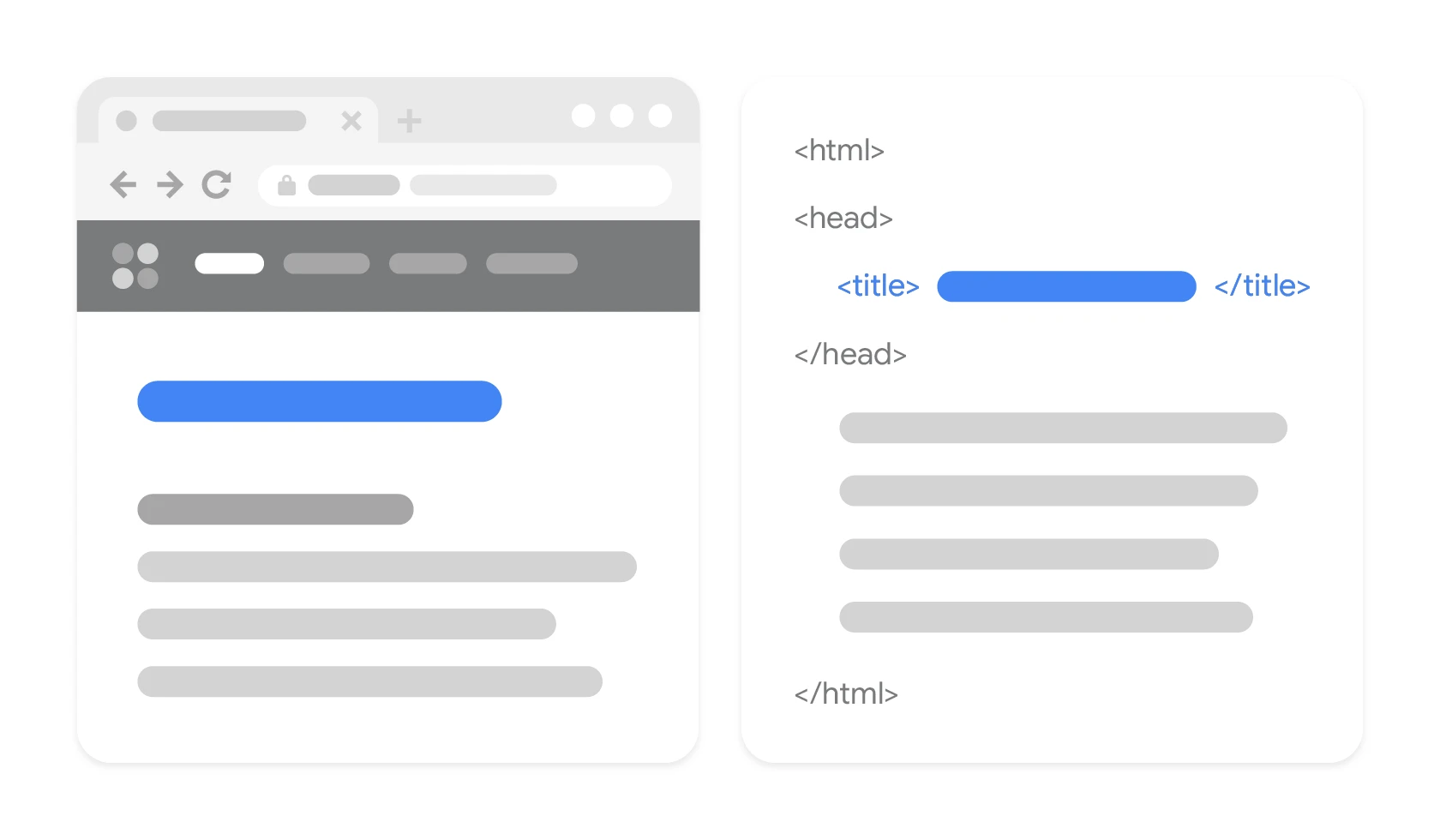
This includes the process of building the semantic model of a website, as well as creating a topical map and internal linking.
It also includes using related words and phrases, using titles and headings, and using correctly structured data so that the content is easier for search engine robots to read and understand.
Structured data are important in semantic SEO because, once an ontology describing Entities and their relationships has been established, they help search engines understand the content on a website and the context in which it has been used.
By using semantic SEO techniques, you can increase the relevance and accuracy of the content on a website. This makes it more attractive to search engines as well as users. This improves the site’s visibility in rankings on search results pages and also increases traffic to the site.
What are Semantic Triples? How does Schema Markup work?
A Semantic Triple is a set of three Entities encoding a sentence about semantic data in the form: subject-predicate-object (ID, property, value).
Googlebot analyses data and processes it into triples that can be stored in a graph database. Such triples are the universal and fundamental atom of information. As a result, understanding the Semantic Triple is crucial for optimising structured data and content in the semantic web.
How can metadata describe data using triples? Example: (e.g. “Bob → has → 35 years” or “Bob → knows → John”). Such a format makes it possible to present knowledge in a machine-readable way. Each part of a schema.org triple has a unique identifier. A URI can be used to present these IDs – for example, the sentence “Bob knows John” can be presented in schema.org as:
{
“@context”: “https://schema.org”,
“@type”: “Person”,
“@id”: “Person1”,
“name”: “Bob”,
“knows”: {
“@context”: “https://schema.org”,
“@type”: “Person”,
“@id”: “Person2”,
“name”: “John”
}}
In schema.org, each piece of information is stored and available in triple format.
It is always possible to break elements down into precise sets of triples. A single triple pattern match, such as the one shown above, is undoubtedly useful, but within one triple pattern it is possible to present a limited amount of things. As a result, triples can create a more complex model using a triple as the subject or predicate in other triples, for example Susan → said that: (Bob → knows → John).
How to use triples to create content that can be easily processed into structured data?
Instead of using structured data to describe content, you can write it in a way that allows it to be easily processed into structured data using triples.
Semantic search engines, such as Google, use knowledge bases such as Wikipedia, musicbrainz or Yahoo Finance as sources of information needed to describe data.
They are often populated partially or entirely with structured data that is easy to use. Google has also started using data from unstructured sources, such as the websites of various authorities, institutions and companies.
When creating such content, you should write in a way that is easy to process into structured data.
- Writing in triples or subject-> verb-> object formats.
- Using title pages with the page topic in the form of a title and heading.
When it comes to data, the search engine wants to see a triple.
Unstructured data seems less flexible, but it is more unique than structured data. This provides greater variety in the semantic web.
To optimise a semantic triple, you first need to understand its elements (ID, property and value). Each ID is an Entity, and each Entity (subject) has its own properties. The value of an Entity may be the ID of another Entity, which also has other properties. These elements are internally related and distinct, and their value depends on context.
How to optimise Schema Markups in SEO?
1. Following general guidelines
- Simplicity: The principle of simple but strong SEO is that Schema Markups should represent the main Entity (subject) of the page. This ensures that the structured data on the page matches its main element.
- Ensuring relevance: Context is very important in SEO. You should therefore find other relevant Entities and describe their relationships with the primary Entity.
- Do not mark up irrelevant content: You should stay focused. There is therefore no need to mark up unnecessary content such as the navigation bar, main menu, footer, etc., if such Entities are not relevant to the primary Entity.
2. Optimising the schema type
- Being specific: Choosing the right schema type is the foundation of optimising the value of Entities in the search engine’s eyes.
For example, when describing a dental clinic, you can choose a local business or a medical clinic schema. Both answers are partially, but not completely, correct. Choosing only one of them may mean losing some properties required by the other type.
You can use both types at the same time, but the best option is to choose a dentist schema. Such a schema combines the properties of a local business and a medical clinic and is the best description of a dental clinic.
In the markup, you should use the most specific matching type and property names defined in schema.org.
- Accuracy: The greater the accuracy, the better for SEO. A schema is simply a description of what is on a website. As a result, it is not recommended to add information to a schema that does not exist on the page. If there is a mismatch between the schema and the information on the page, then according to Google’s information, the page will achieve a worse ranking or be marked as worthless.
- The more, the better: when describing an Entity on a website, a greater amount of information provided has a beneficial impact on SEO. You just need to make sure that all such data exists on the page.
- Multiple elements: Describing and linking multiple elements is an advanced SEO practice. Multiple elements on a website mean that there is more than one thing on the page. For example, a page may contain a recipe, a video showing how to prepare a dish based on the recipe, Breadcrumb information on how people can discover that recipe, etc. All this user-visible information can be marked up with structured data, making it easier for search engines such as Google to understand the information on the page. When more elements relevant to the page are added, Google gets a broader picture of what the page is about and can display it in searches for different elements.
3. Optimising schema properties
Properties describe an Entity. To optimise SEO schema properties, you should define the primary Entity using “mainEntity” and describe its relationship with other Entities using the “sameAs” and “About” URLs.
- Defining the primary Entity: When defining the primary Entity, the mainEntity property makes it possible to express the relationship between the page and the primary Entity. For example, you should use mainEntity to explain which of several Entities is the main one for a given page.
- Using URL: The URL property should be reserved for more official websites.
- Linking data: The sameAs property is also associated with the thing on the page that defines it indirectly. In the case of a Wikipedia page or a product page, the manufacturer’s official page with specifications can be considered sameAs.
- About a mainEntity: The About function is similar to mainEntity, with two key differences. First, About can relate to many Entities/topics, while mainEntity should only be used with the main topic. Second, some pages have a primary Entity describing another Entity. For example, one website may display a news article about a particular person. Another page may contain a photo with a description of a specific product. In such cases, the mainEntity for the pages should refer to the news article or the description (respectively), while About will be correct for the person or product.
- Using images: A good SEO practice is to make sure that the image is appropriate for the page on which it appears. You should use the image URL to identify it. All image URLs must be crawlable and indexable.
4. Optimising schema ID
The function of a schema identifier or ID means the identifier of any element, such as an ISBN code, GTIN, UUID, URL, URI, sameAs, etc. Schema.org contains dedicated functions needed to represent many such elements as text or URL links (URI).
ID is used to define Entities and link them together. The sameAs and URL functions are special cases of ID.
You can assign any name to your ID, but it is best to assign the HTML ID tag of the described Entity.
SEO tip: If there are many useful elements that are connected to each other (e.g. a recipe and a video of how to make it), use @id in both the recipe and the video elements to establish that the video relates to the recipe on the page. If these elements are not linked, Google may not know that the video can be shown with the recipe.
How to optimise structured data for SEO
One good way of conveying information to Google about real-world relationships is to build semantic networks. In short, a semantic network places data in context by linking and embedding semantic metadata. This makes it possible to move away from single, disconnected schemas and towards building semantic networks of knowledge graphs that better represent Entities and their context.
1. Providing context by connecting your own Entities with known Entities
The ability of structured data to combine information from multiple sources is a desirable and very powerful feature that can be used in semantic SEO.
Naming Entities is the task of assigning a unique identifier to Entities (such as famous people, locations or companies). For example, in the English sentence “Paris is the capital of France” you need to establish that “Paris” refers to the capital of France, not Paris Hilton.
2. Nesting the right Entities
Nesting is an excellent semantic practice based on defining the nature of the relationships between Entities (subjects).
Some Entities cannot be identified on their own, but can be nested within a larger Entity as part of it.
Additional elements are grouped within the main element. This is useful for grouping related elements (e.g. a recipe together with a video).
3. Creating a semantic network
A semantic network is a knowledge base presenting semantic relationships between concepts on the web. It is often used as a form of presenting knowledge.
A semantic network can be created, for example, as a database graph or a concept map. Typical standard semantic networks are expressed as semantic triples.
Semantic networks help bots recognise all Entities on a website, in particular the primary Entity, and understand all information about it and about the relationships with other Entities.
4. Matching the page with rich results
Rich results schema markup requires webmasters to provide specifications about their Entities, such as images, descriptions, prices, etc. Such requirements and rich results specifications are a valuable source of semantic network data. This is therefore a correct semantic SEO technique.
A rich results snippet can check markup against the general guidelines that apply to all snippets. These guidelines should be followed so that structured data can be included in Google results.
FAQ
Frequently asked questions
How do structured data help Google understand a website?
Structured data make human language readable to machines. This allows search engines to better recognise the content, context and core entities of the page.
Is schema.org just a vocabulary, or does it also matter for search engines?
Schema.org is a vocabulary that enables semantic SEO, but it is also supported by Google, Bing, Yahoo and Yandex. It is what helps describe things and their relationships in a way that is understandable for search engines.
Why are structured data important in SEO?
They help Google understand what a page or service presents, and that can translate into better visibility, a higher CTR and organic traffic. They also support faster indexing and feeding information into the Knowledge Graph.
When is it worth using structured data on a site?
Especially when a site has a lot of content and you need to describe, categorise and connect elements more effectively. They are also useful when you want to make it easier for search engines to understand the intent and context of the content.
What are semantic triples in schema.org?
They are a set of three elements in subject–predicate–object form, namely ID, property and value. This format makes it possible to represent knowledge in a machine-readable format.
How should you optimise schema markup tags for SEO?
You need to describe the main entity of the page, choose the most specific types and properties possible, and avoid adding information that is not on the page. It is also worth connecting the relevant elements, but without marking up content that is irrelevant to the main topic.