

AI in SEO is above all a tool that speeds up work, not a shortcut to higher rankings. Used sensibly, it allows you to analyse large data sets faster, organise issues, prepare drafts and catch errors that can take many hours to spot manually. It adds the greatest value where SEO relies on repeatable decisions and large-scale actions, for example on sites with many similar subpages. The key point is that AI does not replace strategy, user understanding or quality control — it works best as an execution layer in a well-organised process. Generating text on its own rarely solves real visibility problems. The outcome is determined by the inputs, the implementation method and the subsequent verification of results.
What is AI in SEO and how does it work in practice
AI in SEO is the practical use of artificial intelligence models for time-consuming tasks, repetitive tasks or tasks that are difficult to process manually at scale. Most often this includes query analysis, grouping them by intent, preparing content briefs, filling in missing sections, creating variants of title and meta description, suggestions for internal linking, and detecting duplication or keyword cannibalisation. This is not a separate method of SEO, but a way to carry out specific elements of SEO work faster.
The best results come when it is given structured input data. This can include exports from Google Search Console, a crawl of the site, analytics data, existing content, category structure, product documentation, brand guidelines or legal constraints. The fuller the input context, the less generic and the more useful the model’s recommendations will be.
In practice, the process usually looks like this: first you define the goal and the scope of URLs, then you collect the data, and then the model helps organise it and indicate possible actions. On that basis, a draft, brief or list of changes to be implemented is created. In the end, a person checks whether it aligns with the facts, the offer, user intent and the site structure.
This is important because AI should not independently decide on facts, business promises or publishing content without oversight. Language models can sound convincing even when they do not have full knowledge or overly simplify the problem. In SEO, AI adds the most value as a tool for analysis, suggestions and working versions, not as an autonomous decision-maker.
How artificial intelligence supports SEO processes
Artificial intelligence supports SEO processes by speeding up analysis, preparation of recommendations and creation of working versions of changes. You gain the most where you have large sets of keywords, many similar subpages or frequent content updates. Instead of manually reviewing hundreds of queries or URLs, you can spot patterns faster and move on to making decisions.
- grouping keywords by intent and topic similarity,
- identifying content gaps, keyword cannibalisation and subpages that need refreshing,
- preparing briefs covering the topic scope, user questions and heading structure,
- preparing variants of title, meta description and content-deepening sections,
- recommendations for internal linking between related URLs,
- content QA, that is, catching repetitions, overly generic passages and inconsistent terminology.
Such support only makes sense when it is embedded in the process. The most practical working model looks like this: your own data, analysis, a draft or recommendation, verification, implementation and measurement. Simply generating text without comparing it with the real SERP, the offer and the existing subpages often ends with content that is linguistically correct but weak for SEO.
AI works particularly well on large e-commerce sites, portals with a complex structure, multilingual projects and websites where new subpages are constantly being added. In such conditions, manual work quickly becomes a bottleneck. The model can then support standardisation, organisation and maintaining quality across many URLs at once.
However, it is worth being aware of what AI does not do well without oversight. It should not make up data, interpret business results without context or suggest technical changes without validation through crawls and the site’s logic. The most common mistake is outsourcing mass writing to the model before determining which URL should respond to which intent.
In practice, the most effective implementations do not start with the question “how do I generate more content”, but with the question “which tasks take up most of our time and can be standardised”. It is precisely in these areas that AI usually brings real time savings and greater predictability of results. If you have good source data and clear acceptance criteria, it can become strong support for day-to-day SEO.
Key applications of AI in SEO analysis
The key applications of AI in SEO analysis are above all organising large data sets and quickly spotting patterns that are hard to notice manually. The greatest value appears when you have hundreds or thousands of keywords, many similar URLs or a large site with a repeatable structure. AI does not replace an analyst, but it clearly shortens the path to sensible conclusions. It works best where the starting point is specific data from Search Console, a crawl and existing content, rather than the general instruction “do SEO”.
In practice, AI handles keyword clustering and mapping user intent very well. This matters because similarity of keywords alone does not yet mean that the user expects the same answer. A well-organised process allows you to decide more quickly whether you need a new subpage, expansion of an existing one or consolidation of several URLs that are competing with each other for the same topic.
Another strong use case is content gap analysis. The model can compare the current content of a page with a set of queries, user questions and related topics, then point out missing sections, headings that are too broad or underexplained elements of the offer. This is especially useful when refreshing old articles, categories and service pages, where the problem is not a lack of text, but insufficient topic coverage.
AI also works well when dealing with snippets and information architecture. Based on data about queries, titles and descriptions, it can suggest better title and meta description variants, spot recurring patterns and identify pages with low CTR relative to their visibility. This is not a guarantee of improved results, but at scale it makes it easier to quickly identify the areas where it is worth testing changes.
Using AI to detect keyword cannibalisation, duplication and internal linking issues can also be very practical. The model can compare query sets, content similarity, headings and anchors, then show which URLs overlap semantically or fail to pass each other the right context. This is one of the areas where AI delivers real time savings, because manual analysis of many similar pages can be tedious and prone to mistakes.
- grouping queries by intent and stage of the user journey,
- detecting topical gaps and sections to expand,
- creating briefs for content based on data from the site and SERPs,
- suggesting internal linking between related URLs,
- content QA for repetition, inconsistencies and overly general language.
AI can also be helpful in technical analysis, although more often as an interpretive layer than a source of decisions. It can organise crawl results, group similar issues and prioritise them by page type or impact on indexing. However, it should not independently decide implementation matters without checking the site logic, templates and technical data.
How to implement AI effectively in an SEO strategy
Effective AI implementation in an SEO strategy means integrating it into a specific process, not using it for one-off text generation. First, it is worth defining the operational goal, page types and input data, and only then choosing the tool and prompts. Without that, the model usually returns answers that sound correct but are of little practical use. The best starting point is one repeatable problem, for example briefs for categories, updating old content or analysing cannibalisation.
In practice, it is best to start with a small scope and clearly defined input. A set that works well is: an export from Search Console, a crawl of specific URLs, the current page content, brand guidelines, a list of mandatory topics and quality criteria. The better you define the context, the fewer generalities and the less manual editing your team will need to do.
The key is to separate the generation stage from the publishing stage. AI can prepare a draft, suggest a content structure or indicate possible improvements, but the final choice should always belong to a human. This is particularly important in industries where it is easy to make a factual mistake, overpromise, diverge from the offer or create legal risk.
Effective implementation also requires separate rules for different types of subpage. You work differently on a how-to article, differently on an e-commerce category, and differently again on a local service page or a product description. One “universal” prompt for the whole site usually ends in average quality and a mismatched intent.
From an organisational point of view, a simple workflow with a designated process owner and a QA checklist works best. This setup clearly separates responsibilities: who provides the data, who approves the suggestions, who publishes and who measures the result after implementation. Without this division, AI quickly becomes another source of chaos instead of genuinely speeding up the work.
- define one specific use case and its goal,
- prepare a fixed set of input data,
- set a brief template or recommendations,
- introduce checks for facts, tone and alignment with the offer,
- measure the effect at the level of specific URLs and tasks.
Measurement should cover not only traffic, but also the quality of execution. Depending on the use case, it is worth monitoring section completeness, the accuracy of intent coverage, linking consistency, snippet CTR, the number of pages requiring corrections and the time needed to prepare the material. This makes it possible to assess whether AI is really improving the process or merely shifting effort from writing to later corrections.
The most common mistake is trying to scale too quickly. When a company starts with mass publishing of generated pages without validation, the number of duplicates usually rises, the tone becomes inconsistent and the topic map across the site starts to blur. It is wiser to implement less, but with quality control, and only then expand the scope to include more content types and processes.
The most common mistakes when using AI in SEO
The most common mistakes when using AI in SEO are publishing without verification, ignoring work with first-party data and treating the model as a strategist rather than an execution tool. This usually ends in generic content that is poorly matched to intent and too similar to other subpages. AI speeds up production, but it does not understand your business, offer and constraints in the way a human does.
A very common problem is generating text without assigning it to a specific URL and its role on the site. As a result, materials are created that sound correct but do not fulfil any practical task: they do not strengthen the category, do not answer user questions or come into conflict with an existing page. In practice, every piece of content created with AI should have a clearly defined goal, page type and topic scope.
The second stumbling block is often equating similar keywords with the same search intent. The model can sensibly group phrases at language level, but that is still not enough to determine whether you need a new subpage or rather an expansion of the one that already exists. If you do not verify intent and the layout of the search results, you can easily end up with keyword cannibalisation instead of growth in visibility.
Many problems also stem from using one prompt for all page types. The brief for a how-to article should look different from one for a category, a product or a service page. When there are no rules on tone, entities, sources, legal constraints and heading structure, the model produces answers that are either too sprawling or overly templated.
A separate group of problems consists of hallucinations and adding facts. This particularly applies to product parameters, performance promises, quotations, data interpretation and technical recommendations. AI should not independently decide on facts or publish content without editorial review and comparison with the real offer.
Another mistake is using AI to mass-produce thin subpages simply because they can be generated quickly. Such scale usually lowers the quality of the site, complicates internal linking and increases the risk of duplication. It is wiser to use AI where it genuinely provides an advantage, namely for updates, briefs, organising large data sets, metadata and QA.
Finally, the process itself often falls apart. There is no approval owner, QA checklist, linking rules, update policy or measurement of results after implementation. The biggest mistake is not a weak prompt, but the lack of a workflow in which AI is one of the stages, not the whole SEO process.
How to measure SEO results using AI
SEO results using AI are best measured at the level of specific URLs, task types and implemented changes, rather than by the speed of content creation alone. Faster production is not yet an SEO result if it does not improve the quality of the site or its visibility. That is why the baseline needs to be set before implementation: which pages you are changing, what exactly you are improving and how you will recognise success.
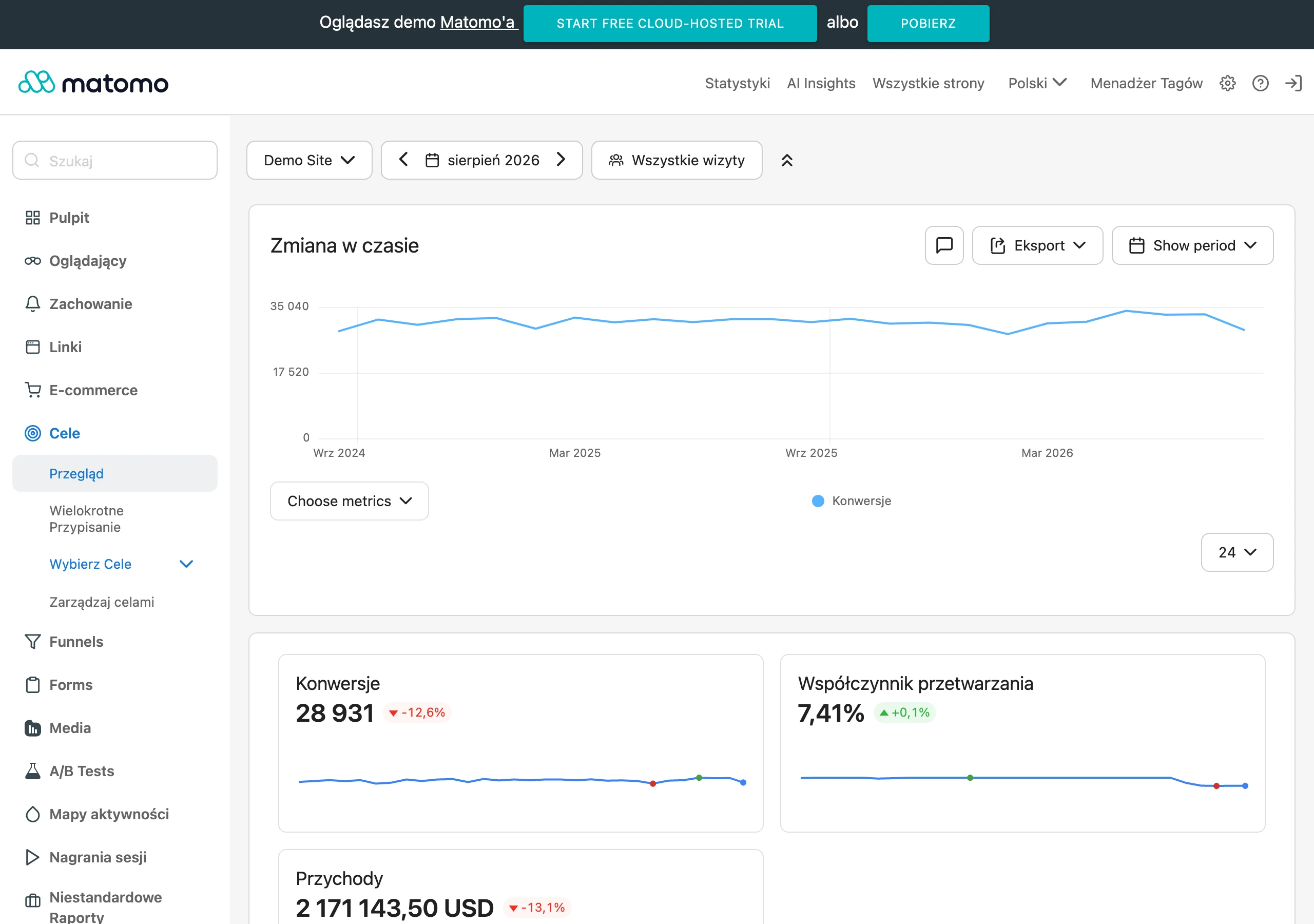
The most practical approach is often to compare before-and-after effects for the same group of pages. Compare query visibility, clicks, CTR, indexing, changes in the number of phrases assigned to a given URL and the quality of topic coverage. If AI supports content refreshes, also check whether the page answers a greater number of user questions and whether it is not giving away traffic to other pages on your own site.
The metrics should stem from the nature of the task. For generating title and meta description variants, the key will be maintaining or improving CTR at a similar position. In internal linking, pay attention to the number of sensible connections between pages, the speed of indexing important URLs and the impact on traffic directed to supported pages. In briefs and content expansion, the following matter: completeness of sections, alignment with intent, filling topic gaps and fewer manual edits after editorial review.
It is also worth monitoring operational effects, because this is exactly the area where AI often delivers the quickest return. Measure brief preparation time, page update time, the number of pages handled per month, the share of content rejected in QA and the number of issues caught before publication. If AI does not improve quality or shorten the process without a simultaneous increase in the number of errors, the implementation is poorly configured.
A good solution is a test on a limited sample instead of rolling everything out at once. Choose a group of similar subpages, introduce one type of change and compare the results with a control group or with a historical period. This approach helps separate the impact of AI from seasonality, demand fluctuations, site updates and other marketing activities.
When measuring, you need to be careful about misleading interpretations. A greater number of published pages alone does not determine quality, and traffic growth is not always the result of using AI. Above all, assess whether a given change solved a specific SEO problem: improved the snippet, reduced keyword cannibalisation, filled a content gap or improved linking.
The simplest assessment framework works best: input data, how AI was used, scope of changes, result on the URL and the decision for the next step. This way you know which applications genuinely work on your site and which only look good in a draft version. In SEO with AI, it is not the one who generates the most who wins, but the one who can measure the impact of changes and quickly cut weak implementations.
FAQ
Frequently asked questions
How does AI support SEO analysis in large websites?
It helps to organise hundreds or thousands of keywords, URLs and queries more quickly, and to spot patterns that are hard to notice manually. It works best on sites with a complex, repetitive structure.
Can AI replace SEO strategy and quality control?
No, because AI is an execution tool, not an independent strategist. It should support analysis and the preparation of working versions, but decisions and verification remain the responsibility of a human.
What does AI most often do in SEO practice?
It most often groups keywords, helps identify content gaps, prepares briefs and variants of titles and meta descriptions. It can also suggest internal linking and spot duplication or cannibalisation.
Why does AI-generated text alone rarely improve visibility?
Because without good input data, correct assignment to a URL and subsequent content verification, you can end up with material that is linguistically sound but poor for SEO. The result is also influenced by user intent, the offer and implementation.
When is it worth implementing AI in an SEO strategy?
It is best when you have a repetitive problem that can be standardised, for example briefs, updating old content or analysing cannibalisation. A good starting point is a small scope and a clear operational goal.
How do you measure the effects of SEO using AI?
At the level of specific URLs, task types and implemented changes, not just the speed of content creation. It is worth comparing visibility, clicks, CTR, indexation, the number of keywords and topic coverage quality before and after implementation.