

Online store SEO starts with getting the fundamentals in order, not with chaotically adding keywords to product cards. It is worth checking what in the store can actually be indexed, how the category structure is built, and whether the platform allows the necessary changes to be implemented. It is equally important to determine which areas of the store are really meant to sell and where best to allocate budget and time. In e-commerce, SEO results depend not only on content, but also on filters, variants, stock levels and the way URL addresses are generated. The biggest mistake at the start is to begin writing descriptions before you know which pages should be competing for visibility at all. This process is best carried out in stages: diagnosis, technical implementations, category optimisation and products, and then ongoing measurement of results.
What online store SEO involves
SEO for an online store is about preparing it to attract traffic from organic search results at technical, structural and content level. In practice, this means making sure Google sees the right pages, indexes them correctly and understands which queries they should appear for. It is not a single action, but a set of decisions concerning the entire store: categories, products, internal linking and templates.
In an online store, SEO is not reduced to “adding keywords” in titles and descriptions. At the outset, you check indexation, the quality of URL addresses, duplicate content, the operation of filters, pagination, canonicals and XML sitemaps. In a store, the quality of pages in the index matters, not just the number of subpages. If the platform creates numerous similar addresses through sorting, parameters and variants, visibility can become dispersed or be held back by technical clutter.
Information architecture is also highly important. You need to assess whether categories and subcategories correspond to how users really search for products, and whether purchase intent can be sensibly assigned to them. Categories and subcategories often deliver a greater SEO effect than individual product cards, especially when the offer changes quickly. Products go out of stock, models and variants change, whereas a well-designed category can work for a long time.
Store SEO also largely depends on the capabilities of the e-commerce platform itself. If you cannot edit meta data, headings, redirects, structured data, robots.txt or templates, part of the recommendations will remain only in the documentation. That is why SEO services for an online store usually include not only analysis, but also an implementation plan for development, content and the person managing the range of products. Without systemic implementations, SEO in a larger store quickly becomes inconsistent and difficult to maintain.
What are the key stages of store SEO
The key stages of store SEO include setting business priorities, technical audit, analysing structure and demand, on-site implementations and then ongoing monitoring. The order matters, because technical faults and a misguided architecture can undermine even well-prepared content. It is worth first establishing which sections of the store are key, and only then optimising them at scale.
- Setting the goal and priorities. At the start, determine which categories, product groups and markets have the greatest business weight. Consider margin, seasonality, product availability and which sections can realistically drive sales.
- Technical audit. Check indexing, response statuses, redirects, canonicals, sitemap, robots.txt, pagination, mobile versions and rendering errors. This stage makes it possible to assess whether the store is losing potential because of technical issues.
- Analysis of the store structure. Check the category tree, click depth, menu, breadcrumbs, manufacturer pages, tags and filters. The aim is to identify which types of subpages should be indexed and which are better to trim.
- Keyword analysis and intent. Phrases are assigned to categories, subcategories, product pages and advisory content. This helps reduce situations where several pages compete for the same query.
- On-site implementation plan. At this stage, specific tasks are laid out: titles, meta descriptions, headings, internal linking, SEO templates, category descriptions and URL tidying. The plan should be feasible within the given shopping system.
- Product page optimisation. Unique description elements, parameters, images, availability, variants and structured data are completed. A good product page answers not only the model name, but also the questions that arise before purchase.
- Category optimisation. Headings, introductory text, content blocks and links to subcategories or popular filters are refined. A category should help the user choose a product, rather than function solely as a page “for a keyword”.
- Indexation decisions. Rules need to be set for filters, pagination, internal search, tags and variants. This is one of the most important stages, because it is often here that an excess of unnecessary pages in the index is created.
- Development of supporting content. Guides, comparisons, selection instructions and content answering users’ pre-purchase questions are prepared. Such materials should support sales through sensible linking to categories and products.
- Monitoring and adjustments. After implementation, visibility, indexing, category traffic, technical errors and the impact of changes on important sections of the store are tracked. In e-commerce SEO, the work does not end after publication, because the store’s offer and structure are constantly changing.
In practice, individual stages are rarely carried out with the same intensity from the very beginning. If the store has a serious problem with duplicate URLs or indexing errors, those areas should be sorted out before expanding the content. When the technical layer works properly, a greater effect may come from restructuring the categories and mapping keywords more precisely.
A well-run process is iterative in nature. After the first implementations, you usually go back to the data, verify Google’s reaction and only then develop further elements of the site. This makes it easier to reduce the cost of misguided decisions and direct resources where the store can genuinely improve visibility and sales.
Which factors influence the effectiveness of SEO
The effectiveness of store SEO depends primarily on which pages are included in the index, how the site structure has been designed and whether the content matches users’ actual intent. In e-commerce, the number of subpages alone makes little difference if a large share of them are duplicates resulting from filters, sorting or variants. The biggest difference is made by the quality and usefulness of the pages in the index, not by their quantity.
The architecture of categories and subcategories is also very important. It is these sections that often capture traffic for general and transactional keywords, especially when specific products quickly go out of stock or models change frequently. If category names are unclear, the tree is too deep or several subpages address the same need, visibility usually grows more slowly.
The second key area is technical aspects, that is, whether the store can be crawled and indexed properly. Response statuses, redirects, canonicals, XML sitemap, robots.txt, pagination, mobile version, performance and rendering errors all matter. Even good content will not help if the platform generates chaos in URL addresses or makes it hard to control indexing.
The way product and category pages are optimised also has an impact on results. Product pages should contain unique elements, sensibly described parameters, correct names, availability information and content answering long tail questions. Categories must fulfil their own sales function, have a clear heading, logical links to subcategories, a sensible introduction and a connection to guides or filters that genuinely help the user.
Implementation capabilities and measuring results are no less important. If it is not possible to edit meta templates, headings, structured data, redirects or the indexing rules for filters, part of the work will remain only on paper. Effective SEO for a store requires analytics, development resources and clear business priorities at the same time.
How to prepare a store for SEO optimisation
Preparing a store for SEO optimisation comes down to organising access to data, identifying the types of subpages and deciding which areas have the greatest business importance. At the outset, it is worth clearly establishing what the store creates automatically, what can enter the index and which elements really drive sales. Without this knowledge, it is easy to get stuck in activities that look good in a report but do not translate into results.
At the start, gather operational and technical information so that implementation does not stop halfway through the work. In practice, it is worth preparing:
- access to the store panel and editing of SEO templates,
- access to analytics and tools for search engines,
- a list of all types of subpages generated by the store,
- a description of how filters, sorting, variants and the internal search engine work,
- the ability to edit redirects, canonicals, XML sitemaps and robots.txt.
Next, set priorities. Identify the main categories, subcategories with demand, products that are always available, sections with a good margin and areas that can be developed with content. It is not worth tackling the entire range at once, because in e-commerce it is almost always better to start with the key groups.
The next stage is to verify whether the store structure reflects the way users search for products. This is a good moment to map keywords to categories, subcategories, product pages and advisory content. If several URLs are competing for the same intent, or category names are out of step with customers’ language, it is better to correct this before expanding the content.
At the same time, organise indexing rules and URL handling. Pay particular attention to filters, sorting pages, tracking parameters, product variants, internal search results and products that are unavailable or withdrawn. This is usually the first area where the store burns through crawl budget and dilutes visibility.
Finally, prepare an implementation plan and a way to measure results. It helps to divide the task list into development, content and analytics, and to assign each change a priority and a method of verification. Monitor not only rankings, but also the number of valuable pages in the index, traffic to categories and technical issues after deployments.
What are the most common mistakes in store SEO
The most common mistakes in store SEO result from poor prioritisation, indexing duplicate content and optimising the wrong types of pages — not the ones that should be driving results. In practice, the problem is rarely “too few keywords”; more often it is disorder in the structure, URLs and indexing decisions. A store may have thousands of subpages and still grow very slowly if most of them provide no value to either the user or the search engine. First, you need to decide which sections of the store are actually meant to attract traffic and generate sales.
A very common mistake is focusing almost exclusively on product pages. In many stores, stock quickly goes out of range, changes names or competes with many nearly identical items. In such a situation, categories and subcategories usually have greater potential, because they respond to broader demand and stand the test of time better.
The second major problem is leaving pages generated by filters, sorting, the internal search engine and various URL parameters in the index. This leads to content duplication, diluted signals and unnecessary consumption of crawl budget. When a store creates multiple URLs for the same content, SEO starts tidying up technical mess instead of building visibility.
The category architecture itself also fails just as often. Names are sometimes too general, “internal” or out of step with how customers actually search for products. On top of that comes keyword cannibalisation, when several categories, tags or brand pages address the same intent and none of them gets a clear priority.
Another mistake is manually polishing individual subpages in a large store without working with templates. With hundreds or thousands of products, you need to think systemically, that is, about rules for titles, headings, linking, structured data and handling unavailable products. In e-commerce, scale makes a difference, so without template-based implementations the results are usually limited and hard to maintain.
Many stores also lose results because they lack clear rules for withdrawn products, temporarily unavailable items or items being replaced by new models. In practice, this ends in 404 errors, empty pages or mass redirects to the home page that do not solve the user’s problem. A better approach is to have clear rules for when to keep a URL, when to redirect it to the nearest equivalent and when to remove a page from the index.
A separate category is rolling out changes without measurement. Changing the menu, rebuilding categories, a new filter template or a platform migration can help SEO, but they can just as easily cut important pages off from indexing. Every major change in a store is worth checking after deployment, rather than assuming it “was done according to the brief”.
How to monitor SEO results
It is worth tracking the effects of store SEO through data on indexing, visibility, traffic to categories and the impact of SEO on sales. Keyword rankings alone are not enough, because they do not show whether the number of valuable pages is growing, whether traffic is reaching the right sections and whether the store is losing visibility because of technical issues. Reliable monitoring combines data from analytics tools, Google Search Console and regular technical reviews. The key is to observe changes at the level of page types, not only across the domain as a whole.
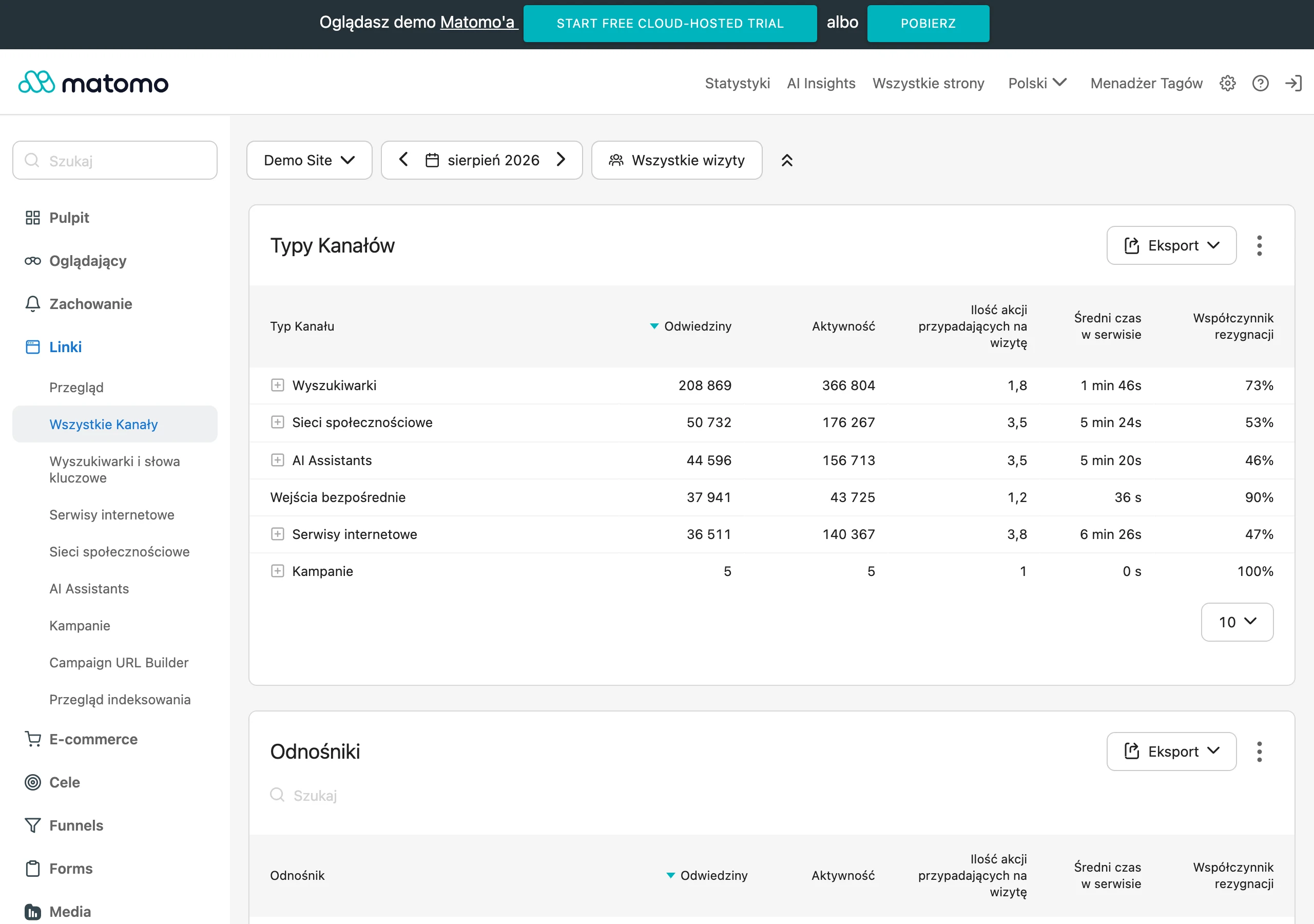
To begin with, it is worth sketching the store into sections: categories, subcategories, products, brands, guides and, where relevant, filter pages allowed to be indexed. This layout quickly reveals where growth is actually appearing and where, despite the work done, traffic remains unchanged. Without this, it is easy to miss the moment when the blog is growing while the sales sections stand still.
In day-to-day practice, it is best to keep a close eye on a few groups of metrics:
- number and quality of indexed pages,
- visibility of categories and subcategories for key keywords,
- clicks and impressions from organic results for specific sections,
- organic traffic and user behaviour on landing pages,
- revenue, transactions or leads attributed to SEO traffic,
- technical errors: 404s, incorrect redirects, canonical issues, blocks in robots and drops in the number of pages in the sitemap.
In Search Console, it is particularly worth checking which queries lead to categories and which to products. If an important category has impressions but a low CTR, the cause is often the title, the heading or a mismatch with user intent. If the page does not appear in the data at all, the first step is to verify indexing, internal linking and renderability.
In analytics, it is not enough to observe total organic traffic month on month. The data needs to be set against seasonality, product availability, price changes, paid campaigns and changes in the store. Only in such context can you see whether growth comes from better SEO or from external factors.
Monitoring after technical deployments is just as important. After a template change, migration, menu rebuild, implementation of filters or a platform update, it is worth reviewing response statuses, canonicals, XML sitemaps, meta robots and the number of indexed pages. The biggest losses in e-commerce SEO come not from a lack of activity, but from undetected errors after system changes.
Reporting should lead to decisions, not end with a description of the situation. If visibility is growing but sales are not rising, you need to check the quality of landing pages, the intent of the traffic and the offer itself. When categories grow but products do not, refining internal linking, availability data, copy on product pages and variant handling often helps.
FAQ
Frequently asked questions
How do you start ecommerce store SEO step by step?
First, you need to carry out a technical diagnosis and set business priorities, and only then optimise the content. The sequence from the article is: audit, technical implementation, category and product optimisation, and monitoring.
Is it worth starting store SEO by writing product descriptions?
No, that is one of the most common mistakes. First you need to know which pages should be indexed and fight for visibility.
Which technical elements should you check in a store before SEO?
You need to verify indexation, URL addresses, duplicate content, filters, pagination, canonicals, the XML sitemap and robots.txt. The article also highlights redirects, the mobile version and rendering errors.
Why are categories so important in ecommerce store SEO?
Categories and subcategories often deliver a bigger effect than individual product pages, because they better match broader queries. In addition, they are more stable when the offer and stock levels change frequently.
What mistakes most often damage store SEO?
The most common problem is indexing duplicates from filters, sorting and URL parameters, as well as a poor category architecture. Another mistake is focusing only on products instead of on sections that are actually meant to generate traffic and sales.
How do you monitor ecommerce store SEO results?
You need to track indexation, visibility, traffic on categories and the impact of changes on sales. Keyword positions alone are not enough, because they do not show the quality of traffic or technical issues in the store.