
E-commerce SEO is a marketing technique used to generate more traffic to an online store by increasing its visibility on search results pages (SERP). A well-ranked site will generate more traffic.
Unlike paid ads, which generate traffic to the store online and require paying for every click, SEO allows you to generate relatively high traffic at virtually no cost. Search engines such as Google, Bing and Yahoo rank online stores based on SEO.
To improve SEO in your online store, it is important to pay attention to content. You can improve e-commerce SEO through comprehensive product pages, optimised product descriptions, by starting a blog or by carrying out a technical audit of the website.
In order to achieve higher positions of pages in SERP, you need to make sure that your site has been optimised for search engines. Here are a few key examples of what to pay attention to:
- keywords used to target landing pages,
- technical configuration of the online store,
- checking whether the online store is optimised for mobile devices.
All of this affects your e-commerce SEO and whether your pages achieve high positions on search results pages, e.g. in Google.

4 key elements of an e-commerce SEO strategy
- 01Content optimisationKeywords in URL, H1, Meta
- 02Technical optimisationHTTPS, speed, indexing, sitemap
- 03User signalsTime on site, conversions, bounce rate
- 04Building trustA credible source of information for users
- 05Better rankingMeeting Google’s and the user’s expectations
Ultimate goal: Provide value and credibility for Google users.
1. Content
Optimise your content for the terms you want to rank for. Elements such as the URL, H1 heading, content, meta description and meta title should be optimised.
2. Technical configuration
Optimise your online store technically. Pay attention, for example, to HTTPS, mobile optimisation, page speed, indexing, XML sitemap (for Google this is an index), etc.
- 01Brand discoveryNew customers find you
- 02Finding productsVisibility of the range
- 03Better experiencesSatisfaction and trust
- 04Increased visibilityGrowth and profits
The key is to increase reach, trust and growth.
3. User experience
Google uses user statistics to determine which pages to rank in its search engine and in what order this should be done. These statistics include time spent on the page, bounce rate, conversion rate, page load time, etc. Ultimately, Google wants to know whether users will find what they are looking for on the page and whether your site is a credible source of information.
Proving this to Google means appearing on the first page of search results. 75% never browse the second page in search of answers, so this is very important.
4. Link acquisition
You need to think about which internal links (from your site) and external links (from other sources) point from and to you. You also need to make sure that other assets linking to you are taken into account because of the authority you gain. Choosing the right sources or being cited by another organisation can help build credibility and brand reputation.
- 01Organic trafficNumber of visits from search
- 02Keyword rankingsThe position of content in search engines
- 03Increase in sales and profitThe key goal of SEO activities
Monitoring SEO effectiveness is easier with the right KPI
What are the benefits of e-commerce SEO?
There are many benefits to establishing an e-commerce SEO strategy. Here are 3 basic advantages:
Better user experience
One of Google’s basic ranking factors is delivering a good user experience. If your site is targeted at keywords relevant to your audience and answers their questions, Google sees this as a positive experience for them and your site’s ranking will rise.
However, if users land on your site and leave it immediately, Google treats this as a negative experience and it will have a bad effect on your ranking.
Focusing on optimising user experience for SEO has a highly positive impact on your customers. Your site will be much more attractive to them in terms of usability and use.
Increasing reach
E-commerce SEO helps an online store generate more traffic, which in turn expands brand reach. When a user lands on the site organically, you can later reach that person again through paid campaigns. SEO remarketing is a highly effective practice.
If your site is organically ranked for the terms relevant to you, this also helps establish brand authority. This in turn will set your company apart from competitors.
Higher quality traffic
If your site ranks higher for the right keywords, there is a greater likelihood of attracting audiences who are interested in the products or services offered by your business. The result is a higher conversion rate, because visitors are more likely to become customers.
Cost effectiveness
SEO is a channel with relatively low costs required to achieve effectiveness, especially compared with paid ads. Unlike paid ads, where you have to pay for every click, site optimisation generates free organic traffic.
Low level of control and maintenance
Unlike email or paid ads, which require constant thinking about new campaigns, refreshing content and whose effectiveness is tied to ongoing monitoring, once an SEO strategy has been implemented, it works to a significant extent on its own in your favour.
Why is SEO important in e-commerce?
There are several reasons why SEO is important in e-commerce (including local e-commerce):
- you enable people to discover your brand – if someone does not know your brand, e-commerce SEO is an excellent way to make it discoverable. You appear in a greater number of search results,
- you enable people to find your products – people actively search for the products offered by your e-commerce business. By investing in e-commerce SEO you increase product visibility and brand awareness,
- you provide a better experience for your audience – investing in e-commerce SEO makes it possible to provide a better user experience. You need to optimise your site to achieve better positions in search results, and this in turn translates into a better user experience. That in turn makes the brand more memorable and increases sales,
- you increase sales – when potential customers find your products in search, they spend time checking them and determining whether they are right for them. By gaining positions in relevant search results, you attract potential customers who are more likely to make a purchase.
Ideal e-commerce strategies for your online store
It is not only important to know what e-commerce SEO is and why it matters. You also need to know how to implement and optimise it. Here are some useful strategies worth exploring.
1. Check keywords to achieve high positions in specific search results
The first stage of an e-commerce SEO strategy is keyword research and discovery. Keywords are the phrases customers use in search engines to find the right products. For example, if someone is looking for blue floor tiles, they might type “niebieskie płytki podłogowe do łazienki” (blue floor tiles for a bathroom) into a search engine.
Your keywords make products appear before buyers’ eyes. Search engines, such as Google, use keywords to determine whether your page is appropriate to appear in search results. It is therefore important to choose the right keywords for your product pages so that they appear in the right search results.
To research keywords for the e-commerce sector, start by looking at your product types to see what additional keywords you can generate. There are plenty of keyword research tools available online.
By entering an example query “niebieskie płytki podłogowe” in such tools, you can get a list of keyword ideas that are suitable for use on product pages. So if, for example, the query “niebieskie płytki podłogowe do łazienki” is relevant to your product page, you can use it there as a keyword.
When researching keywords, it is a good idea to stick to long-tail terms. They contain three or more words and are very specific. Such keywords help generate traffic from potential customers interested in buying. This is therefore high-quality traffic.
In the case of smaller keywords consisting of one or two words, they may work better for your business in some cases, but they usually face a lot of competition. It is also harder to determine what someone wants if they use short keyword phrases.
An example could be “tiles”. It is not clear whether the searcher wants to know what tiles are, what types there are, or whether they want to buy them. It is difficult to determine this from such a keyword. However, if someone enters “niebieskie płytki podłogowe do łazienki w rozmiarze 10 x 10”, it is clear what that person is looking for.
As you can see, search intent in the case of long-tail keywords is much clearer compared with short keywords. Long-tail phrases are also more niche than short-tail, because they are more specific in terms of what the searcher wants to know. So focus your e-commerce SEO strategy on longer keyword phrases.
2. Create helpful content
After choosing the primary phrase and a set of related keywords, you need to work on a content marketing strategy in e-commerce. Content helps build visibility across different search results and generate more relevant traffic to your site.
To start creating content, you need to prepare topics. Focus on industry topics that will help generate relevant traffic to your site. Then you can look for suitable keywords to be added to the content.
To create impactful SEO in marketing digital content, follow these best practices:
- include your target keywords – let your audience know exactly what they are viewing thanks to the keywords on your page. Keyword phrases should look natural. Avoid stuffing too many of them into the text,
- match search intent – when creating content, make sure it matches search intent. Use your keyword phrases and look at what other companies are writing about the topic. This will help you create content that better matches search intent, which translates into a higher position in the results,
- format your content properly – content that ranks conveys information in an easy-to-understand way. Avoid using too much technical and industry jargon to increase the accessibility of your content,
- make content easier to scan – you should aim to ensure that buyers can quickly find the information they are looking for on your site. Make sure your content is easy to scan. Break your pages into short paragraphs, use bullet points and headings. This way buyers can quickly scan the information they need.
3. Create click-worthy title tags
Title tags are the first elements seen by users in search results. They are an important aspect of SEO on e-commerce sites because, together with keywords, Google uses title tags to determine the context of your page. They are therefore a direct ranking factor for Google.
For every page on your site, you need to spend a few minutes coming up with title tags. You need something enticing that will encourage customers to click.
In addition, you should place the primary keyword at the beginning of the title tag. Searchers usually read the first few words of the title, so you need to let them know straight away what they are looking at. In addition, including keyword phrases in the title tag has a positive effect on content rankings.
When optimising title tags, you need to stay within the character limit. You only have 60 characters to use, so for safety aim to create titles of around 55 characters. Otherwise, the title tag may be cut off.
4. Create meta descriptions that catch the eye
Meta descriptions appear below title tags in search results. They provide a concise description (around 160 characters) of what buyers can find after visiting your site. Meta descriptions play an important role in providing buyers with information about your site and encouraging them to click on your link. Attractive meta descriptions will generate more traffic to your online store.
Do not forget to include your main keyword in your description. This will help Google and searchers understand whether your page is suitable for appearing in the search results.
5. Create user-friendly URLs
You can improve the accessibility of your online store by creating user-friendly URLs across all pages. Instead of a confusing string of letters and numbers, your customers will be better served by seeing your keywords, which reveal the page context and make the address easier to remember.
If your website contains categories or folders that pages belong to, these can also be included in the URLs. This way, customers will be able to work out where they are on your site.
A clear URL structure has a positive impact on rankings in search results and provides users with better context.
6. Improve your site architecture
As an e-commerce site, you certainly have hundreds of pages and subpages. From category pages to individual product pages, there are many of them and they require organisation. When applying SEO to e-commerce sites, it is important to have a solid architecture that gives customers easy navigation.
Here are the key issues related to site architecture:
- ensure proper organisation – the most important thing when it comes to architecture is making sure the site is organised and has a logical path. If the path is organised, it is easier for users to go back without having to press the browser back arrow. Use navigational elements to maintain proper organisation,
- maintain scalability – as an online store, you will certainly add new pages as new products are added and content is created. Your site architecture must be able to handle such additions while maintaining integrity and simplicity. Make sure you have a systematic category structure that allows new product pages to be added easily.
When creating the site structure, it should be designed with customers in mind. It is worth spending time checking the structure and determining how easy it is to find pages on the site. A search bar is also a good idea, as it allows customers to easily find specific products.
7. Optimise images for search
As an e-commerce business, you provide your customers with a huge number of images so they can see your product. As a result, your pages may become overloaded and slower, because you have so many images.
A slow-loading site has a negative impact on SEO because Google wants to give searchers access only to fast-loading sites, so they can quickly obtain the relevant information. So it is important that your site meets at least the basic speed requirements.
To avoid images overloading the site, it is a good idea to use image compression tools, such as Kracken.io. These can reduce the file size of images and ensure they do not place a heavy load on the site.
Using compression allows you to save many kilobytes (or even megabytes) on each image, while it will still look excellent on the site.
In addition to compressing images, you should also add alt text, which will allow them to appear in search results.
Alt text appears when an image fails to load properly or when the shopper is using assistive software such as a screen reader. By adding alt text, you create the opportunity to include your keywords in it and build rankings in the search results.
Instead of writing “coral image” in the alt text, you can use descriptive alt text such as:
“White duvet with blue coral and starfish. The bottom part of the duvet has a coral colour with a white coral on it. The coral bedding set is on a king-size bed, along with matching pillowcases”.
So if you are optimising a page for “coral bedding set”, this alt text provides an excellent description by integrating your main keyword.
8. Improve your online store speed
It is important to ensure your store runs as quickly as possible. If your site loads in just one second, this can increase conversions by up to 7%. In addition, pages that load in five seconds generate 70% longer user sessions and a 35% lower bounce rate. Slow-loading online stores risk losing a large number of potential customers.
If you want to find out how quickly your site loads, you can check its loading time using the Google PageSpeed Insights tool.
In addition to the image compression mentioned above, you can improve your site speed by doing the following:
- hosting video content on external platforms, such as YouTube,
- compressing large Javascript, CSS and HTML files,
- tidying up the code and removing unnecessary elements from it,
- checking the server configuration,
- enabling browser cache usage,
- reducing the number of redirects.
If carrying out such changes yourself seems too difficult, you can invest in site speed optimisation services. These are offered by various digital marketing companies.
9. Ensure a responsive design to give shoppers a better experience
Over 70% of customers shop using a smartphone. If you do not have a responsive online store adapted for mobile devices, you will not appear in search results.
Google currently uses “mobile-first” indexing when ranking pages in search results. This means that bots look at the mobile version of your site. If it is not adapted for mobile devices, competitors with properly optimised websites will overtake you.
By using responsive design, you allow your site to adapt to any devices used by your audience. It provides a positive experience for users on smartphones or tablets.
With good responsive design, every element on the page (text, images, videos, navigation elements) is scalable, and the layout changes depending on the device and the size of its screen.
Create a responsive site by doing the following:
- use a fluid grid in the page code,
- design elements for both mouse and touch screens,
- choose elements that provide the best experience also on small screens,
- try out predesigned responsive layouts.
You can check how your site is optimised for mobile devices using Google Mobile-Friendly Test.
10. Mark your products up with Schema
Schema markup is code included in HTML that adds features such as product descriptions and reviews, prices and offers to search results.
Google decides whether to add these elements to your results on search pages. Thanks to Schema markup, there is a high chance that such elements will be displayed.
If shoppers see such information straight away, they will be more engaged and may get information that influences their decisions while searching.
Schema markup also has a positive impact on e-commerce SEO because it helps Google better understand your site. Such a schema is useful because it enables identification of you as an online entity (including your name, URL and phone number) and establishing what products you sell.
11. Acquire backlinks
Backlinks are links directing to your site from other pages. They are valuable for a search engine optimisation strategy because they can significantly increase traffic as well as the trust and authority of your site.
Search engines view backlinks as forms of endorsement, so it is important to acquire credible and valuable links leading to your site.
Let’s assume that you sell nautical home décor items.
If a popular interiors blog creates an article “Beach decorations you must have in your home” and adds a link to one of your product pages, then it is recommending your product to readers. When readers read this post, they will start visiting your product page to check it and perhaps buy it.
You need to obtain a lot of backlinks to positively influence your site authority. To create a link acquisition strategy, you should take care of the following:
- creating engaging content that makes other sites link to your site,
- appearing on social media to improve brand visibility,
- creating shareable videos,
- alerting other sites to broken links and providing links to working pages in their place,
- inviting industry experts to review your content.
12. Secure your online store
Site security is an absolute must when it comes to online stores, and there is a huge emphasis in search engine optimisation on securing users’ private data.
As an online store, you must encrypt the data you receive from customers. Your customers want to feel safe when they enter their credit card details and addresses. You therefore need to secure your site to make sure customers will continue shopping in your store.
You can do this by using a SSL certificate (secure sockets layer)
An SSL certificate encrypts data on your site, so malicious actors are unable to read it. In addition, this certificate adds HTTPS (the opposite of unsecured HTTP) before your site’s domain name.
Secure sites outrank unsecured sites. If you want to improve your e-commerce SEO strategy, you must ensure your online store is secure.
KPI (key performance indicators) used to check the effectiveness of e-commerce SEO
Monitoring the effectiveness of your SEO channel is easier if you know which KPIs to pay attention to. Here are the most relevant metrics that can tell you whether your efforts are delivering results:
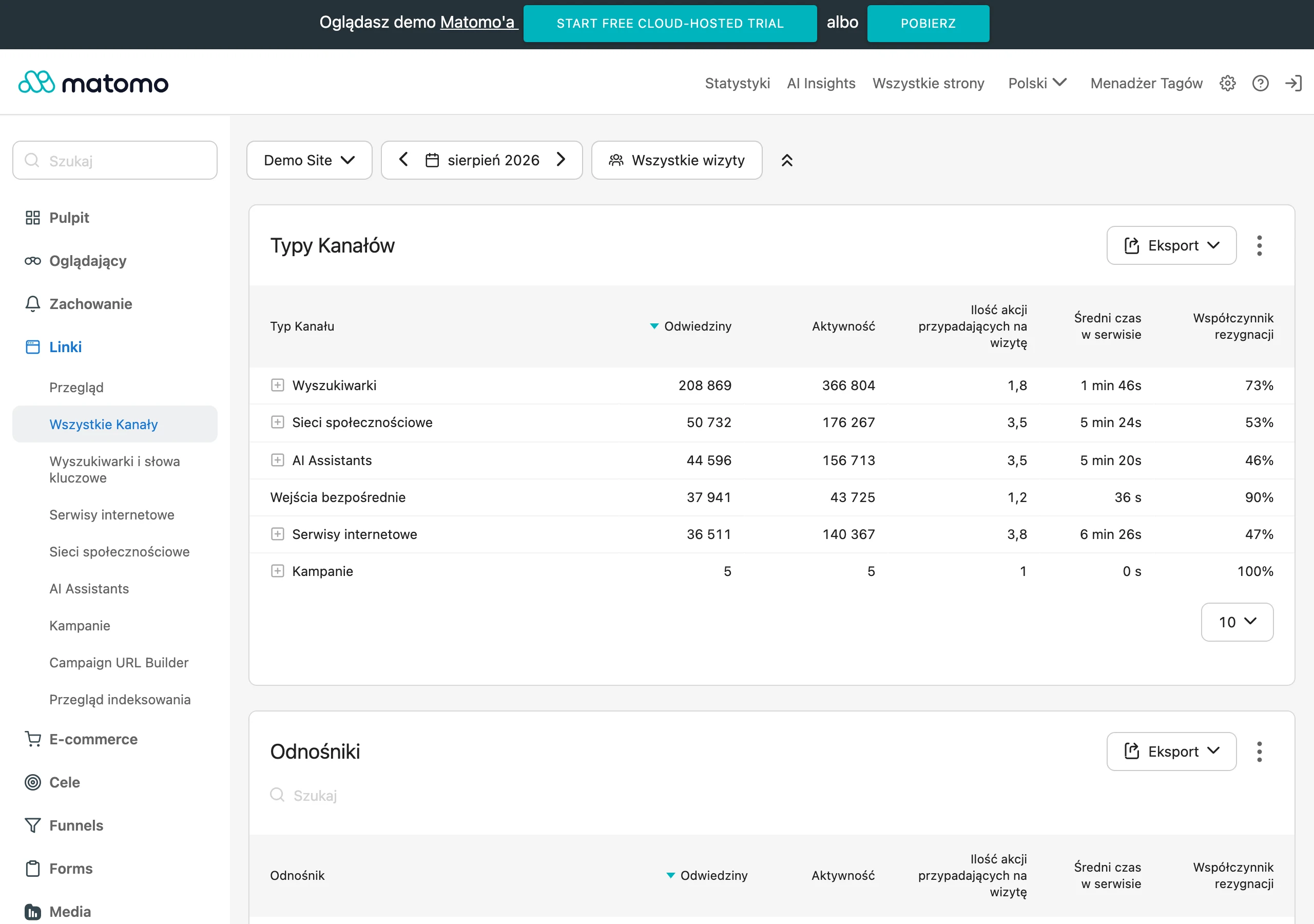
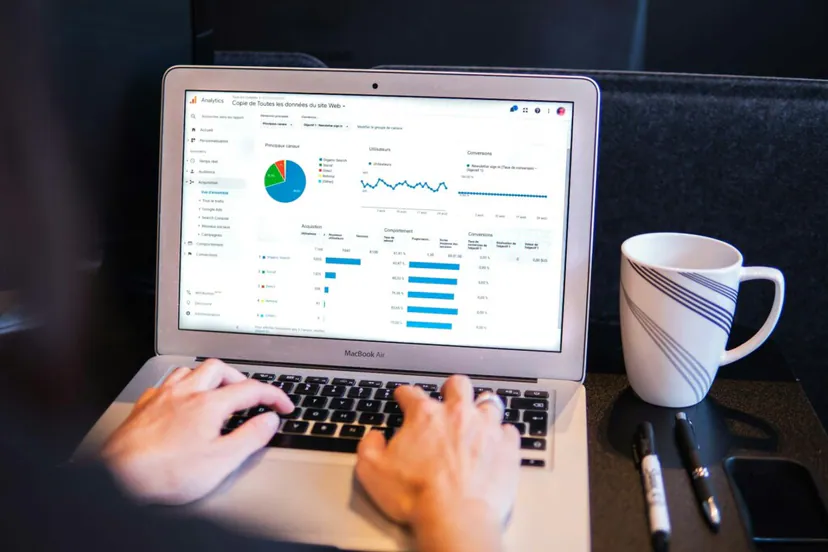
- organic traffic – this metric determines the number of visits to your site coming from organic search. This is the most obvious KPI for anyone who wants to check the effectiveness of SEO activities, you can use Google Analytics to check your organic traffic from time to time,
- keyword rankings – if you create content with a specific keyword in mind, it is important to check how the page is ranking for a given keyword phrase, you can use Google Search Console or other dedicated tools to check how your content performs for specific keywords. Such tools can also help you check whether there are any other keywords that may be suitable for your online store,
- Organic click-through rate (CTR) / bounce rate – to genuinely regard an SEO campaign as effective, you need to make sure whether the traffic generated a) stays on the site and b) the users generating the traffic carry out the actions you want them to. The CTR of search engine results pages (SERPs) can also provide valuable insights into how effective titles and meta descriptions are at attracting audiences; use Google Search Console and Analytics tools to check how your audience interacts with your content.
- Revenue – observing what proportion of organic traffic ends in conversion into measurable revenue will help show exactly what value e-commerce SEO brings to your marketing activities. Generating high-quality traffic to an online store should naturally increase revenue. If that is not happening, you need to examine carefully what using your store looks like from the user’s perspective.
As you can see, e-commerce SEO is a very important element of the marketing strategy for online stores. It helps to increase brand recognition, acquire additional customers, and boost sales and profit.
FAQ
Frequently asked questions
Which elements are most important in SEO for an online store?
The article points to four key areas: content, technical configuration, user experience and link building. Keywords, mobile optimisation and site speed are also important.
How do you choose keywords for e-commerce SEO?
It is best to start with product types and expand them into more specific phrases. The article recommends long-tail phrases because they are precise and attract higher-quality traffic.
Why is content important in SEO for an online store?
Content helps build rankings in search results and bring in more relevant traffic. It should include target keywords, match search intent and be easy to scan.
How do you optimise title tags and meta descriptions in an online store?
The title tag should be compelling, include the main keyword at the beginning and stay within a limit of around 55–60 characters. The meta description should be around 160 characters long and clearly explain what the user will find on the page.
Does user experience affect an online store’s position in Google?
Yes, because Google takes into account things like time spent on the page, bounce rate, conversion and load time. If users leave the site quickly, this can work against rankings.
Why do internal and external linking matter in e-commerce SEO?
The article emphasises that it is worth analysing links leading to and from the store, as well as looking after sources that build authority. Being cited by other organisations can help with credibility and brand reputation.