

The product description should help the customer make a decision, not just “sound salesy”. It’s simple. In practice, it is about providing information that shortens comparison time, reduces the number of doubts and makes it easier to choose the right variant without getting lost in the tabs. A well-prepared product page works at the same time for the user, Google search and the store’s internal search. The problem is that the most damage today is done by descriptions that are too general, copied from the manufacturer or simply inconsistent with the specification and the images. A good description does not replace the price, images and parameters, but removes the uncertainty that makes the customer postpone the purchase or choose the wrong product. Look at it differently: the description is not a decoration for the page, but a decision-making tool.
What are product descriptions that support the purchase decision?
These are descriptions that give the customer exactly the information they need to choose a product and its variant. They do not play solely on “benefits”, but also show application, fit, limitations and conditions of use. The effect is concrete: the customer assesses more quickly whether a given model makes sense in their case.
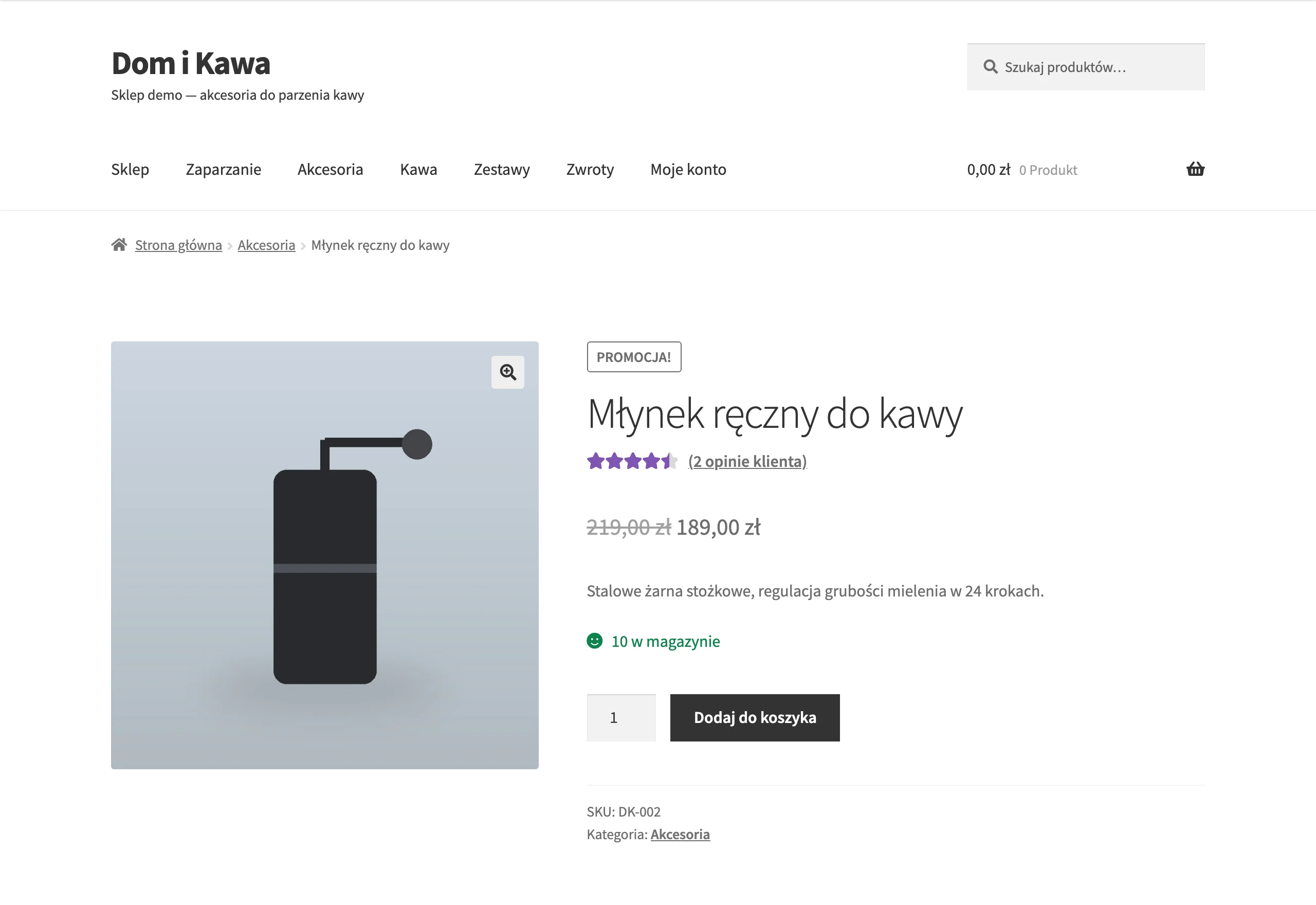
Such a description combines technical features with their practical meaning. And rightly so. Information about the material, power, size or capacity on its own is rarely enough if it is not clear what this means in everyday use (at home, at work, in the field). The customer is buying certainty that it fits their situation, not just a set of parameters.
In practice, a description that supports the decision works as part of the whole product page, not as a separate block of text. It needs to hold the line. It must be consistent with the product name, images, specification table, variants, price, availability, delivery and returns policy. If these elements contradict each other, even a really good text will not help.
It is also a process, not a one-off writing of a few paragraphs. And this is where the difficulties begin. For a broad assortment, templates are usually created for categories, rules for variants and shared blocks, instead of writing every SKU entirely from scratch. The best description is one that answers the real customer questions and can be kept up to date when the offer changes.
SEO also matters, but in a practical sense. The key is alignment with intent, not with a slogan. The description should cover specific searches such as model, material, application, compatibility, installation or care, rather than revolve around broad phrases. This gives the page a better chance of appearing for queries that really lead to a purchase, not just a click.
What elements should effective product descriptions include?
An effective product description should answer the customer’s questions before the product is added to the basket. No guesswork. The most important are the elements that help compare the offer, assess fit and avoid a wrong purchase, that is, a costly mistake for both sides. The order of the sections should lead from a quick assessment of the product to the details needed just before the final decision.
- a short description of what the product is for and who it is intended for,
- the most important features together with their practical meaning,
- key technical parameters, dimensions or composition,
- information on choosing the size, variant or version,
- application, compatibility and conditions of use,
- what is included in the set and what is not included,
- limitations, contraindications, care or assembly instructions,
- answers to the most common pre-purchase questions.
The most useful are the fragments that translate a feature into a decision. Simple. If the product is made from a specific material, the customer should immediately understand what that does to durability, comfort, cleaning or application. What is most often missing is not “strong sales arguments”, but information about fit, limitations and the completeness of the set. And it is precisely these “boring” details that close the sale.
An effective description must also clearly separate the information common to the whole line from that which concerns a specific variant. This is particularly important with products in different sizes, colours, capacities or compatibility options. When variants get almost identical descriptions without indicating the differences, the customer gets confused and the store creates costly content duplication. The question is: why make choosing harder where it can be simplified with a single sentence.
The language that matters is the one customers actually use to search for the product. Not embellishments, but keywords. It is about material names, types of application, models, installation method or target groups, not just marketing slogans. This works for both the person and the store’s mechanics, because it helps the filters and internal search find what the user actually wants.
A good description should also honestly say when a product will not be suitable. No beating about the bush. Such information reduces the number of incorrect orders, questions to customer service and returns. If the customer has to guess whether the product meets their needs, the description is not fulfilling its role.
How to avoid duplication and inconsistencies in product descriptions?
Duplication and inconsistencies are not eliminated by “nice writing”, but by order in the content. The problem is that you need to separate the shared information from the variable data, establish a single source of truth for the parameters and then add clear rules for handling variants. Most problems come from copying the manufacturer’s description, automatic imports from a feed and publishing almost identical content for many SKUs. If the same product has several versions, not every version needs a separate, full description.
In practice, an information matrix works well for each category. It is a simple map that says: what is mandatory at all times, what depends on the variant, and what can be shown in a shared section for the whole product group. This means the description does not break down into random paragraphs, and the customer gets the same type of information with every similar product. Let’s look at it another way: less improvisation, more standardisation.
Equally important is consistency between the description, the specification table, images and variant names. If the description promises outdoor use, but the specification does not mention weather resistance, the customer starts to hesitate and often leaves the product page or asks support. The product page should have one place from which key parameters are pulled, instead of re-entering them manually into several fields. This is not cosmetic polish, but the foundation of trust.
With variants, you first set the rules of the game. What is fixed and what is variable. Fixed elements are usually the material description, main use or care instructions, while variable elements are size, colour, capacity, compatibility or set contents. The result. less duplication and a lower risk that one variant promises something the other no longer has.
Before publication, a simple quality check comes into play. Short, but ruthless.
- whether the description matches the feed and the product name,
- whether the images actually show what the text is talking about,
- whether the variants differ only where they really should,
- whether the manufacturer’s content has been copied 1:1,
- whether usage limitations are stated clearly.
Do not hide product limitations. That does not hurt sales. Information that a given model does not fit a specific device, is not suitable for intensive use or requires an additional component usually reduces the number of wrong purchases and returns. And that is not a cliché. It is simply better than a description that sounds attractive but leaves the customer uncertain.
Finally, you need a simple update workflow. Without it, the description gradually turns into a museum exhibit. A change in specification, a new product batch, new customer questions or a high level of returns should automatically trigger a review of the description. The product description is not content “once and for all”, but an element of the offer that must keep pace with the actual state of the product.
How to optimise product descriptions for SEO and UX?
Product descriptions are optimised for SEO and UX then when they answer specific customer queries and make it quick to pick out the most important information on the product page. The question is: what is the user really looking for. Good SEO in e-commerce is not about stuffing in keywords, but about covering real questions. about the model, material, size, use, installation, care, performance or compatibility. The content that works best is the content that matches the way the customer actually searches for the product.
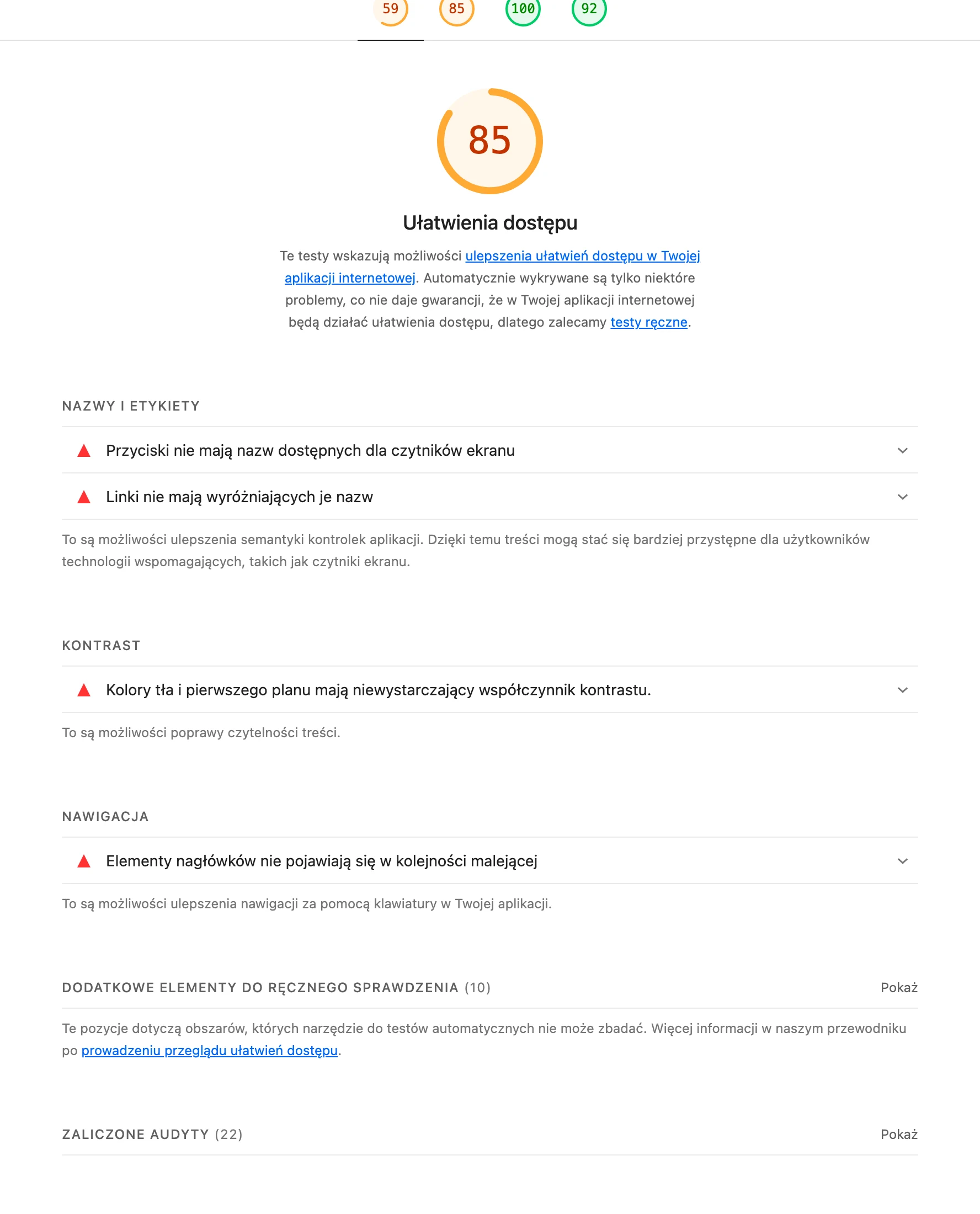
In practice, it is better to assign keywords to specific sections of the description rather than scatter them randomly across the whole product page. At the start, clarity matters. the product name and the beginning of the description should immediately say what the product is and who it is for. Then. decision-making features, use, limitations and parameters, because these are the elements that help both the user and the search engine understand what is on the page. But beware. consistency has greater value than forced creative synonyms.
From an UX perspective, the order of information is key. First, the customer wants to know whether this is the product for them. Then they check how it differs from other models, and only at the end do they look at the full specification. That is why the description should lead from decision to detail, rather than starting with a long block of vague statements that settle nothing.
On mobile devices, readability and scannability matter. A phone does not forgive walls of text. Too long, dense paragraphs reduce usability even when the content is strong in substance. If the customer cannot find information about size, compatibility or set contents within a few seconds, the description is not doing its job.
SEO and UX also meet in parameter naming. It is crucial that the same terms stay together in the title, description, filters, internal search and specification table, because then the shop supports product comparison more efficiently and is less likely to “lose” the user along the way. In large catalogues, this is not a detail, but a condition for operation. Different names for the same parameter can throw filtering off and extend the search for the right model.
Optimisation does not end with the text. The meta title and meta description are meant to secure the click from the search results, but at the same time they must deliver on the promise once the user lands on the product page, without friction or disappointment. Because what is the point if the user clicks through and immediately sees something different. On top of that comes internal linking. From categories, guides and similar products sections, it is worth leading the user along a sensible path, because that strengthens visibility and shortens the route to the purchase decision.
The best descriptions are checked against data, not gut feeling. Look at organic traffic, CTR, behaviour on the product page, questions to support, internal search results and signals about poor product selection. These are facts, not opinions. If the description does not reduce pre-purchase doubts, you need to improve the content, structure or the way information is presented, not just add more SEO keywords. The question is: what actually helps the customer choose.
What are the most common mistakes in creating product descriptions?
The most common mistakes are descriptions that do not help the customer choose, but merely take up space on the product page. The customer is looking for answers to simple, specific questions: does it fit, what is it suitable for, how does it differ from other variants, and what are its limitations. And that is exactly what the description test is about. If the text does not explain this, even linguistically correct copy does not support sales; it only pretends to do something.
A very common problem is copying the manufacturer’s content or automatically duplicating similar descriptions for many SKUs. Such text usually does not answer how the customer actually searches for the product in the shop and in Google, and that is where the first “yes” or “no” is decided. Duplicate content harms not only SEO, but also product comparison, because the product pages start to look the same despite real differences. Instead of information — cloning that blurs the details.
The second mistake is descriptions based on slogans instead of decision-making data. Phrases such as “high quality”, “modern design” or “ideal choice” sound nice, but on their own they convey nothing if they are not backed by specific information about the material, compatibility, how it is used or durability (and that is what the customer is looking for). A good description turns general promises into information that can be used before purchase. Not X, but Y.
Many product pages also omit awkward but crucial information. This includes usage limitations, installation conditions, what is included in the set, care instructions, differences between variants, or what the product will not work with. And the problem here is that silence does not disappear; it comes back in the form of questions. Hiding such data increases the number of support queries and the risk of returns, because the customer fills in the missing pieces for themselves and then painfully verifies them after purchase.
Another mistake is inconsistency between the description, the specifications table, the images and the purchasing conditions. You really can see it. If the text talks about a different material than the specification, and the images show accessories that are not included in the set, the page loses credibility faster than you can say “promotion”. The description should be part of one information system, not a separate block written independently of the rest of the page.
Finally, there is the organisational mistake that quietly destroys scale: no rules for variants and no content updates. In a large catalogue, you cannot maintain quality manually without templates, an information matrix and a clear workflow after a specification or range change. The problem is that when a description is not updated after new customer questions, a change in the product batch or a change in compatibility, it quickly stops helping with the purchase. The text remains, but the usefulness disappears.
How do you measure the effectiveness of product descriptions and introduce improvements?
The effectiveness of product descriptions is measured by whether the page genuinely leads the customer to the right decision, not by the length of the text or the number of SEO phrases. This is not a competition for characters. The most important things are user behaviour signals, traffic quality and whether the number of doubts and incorrect purchases falls after implementation. A good description does not always deliver an immediate increase in sales, but it should reduce friction in the decision-making process.
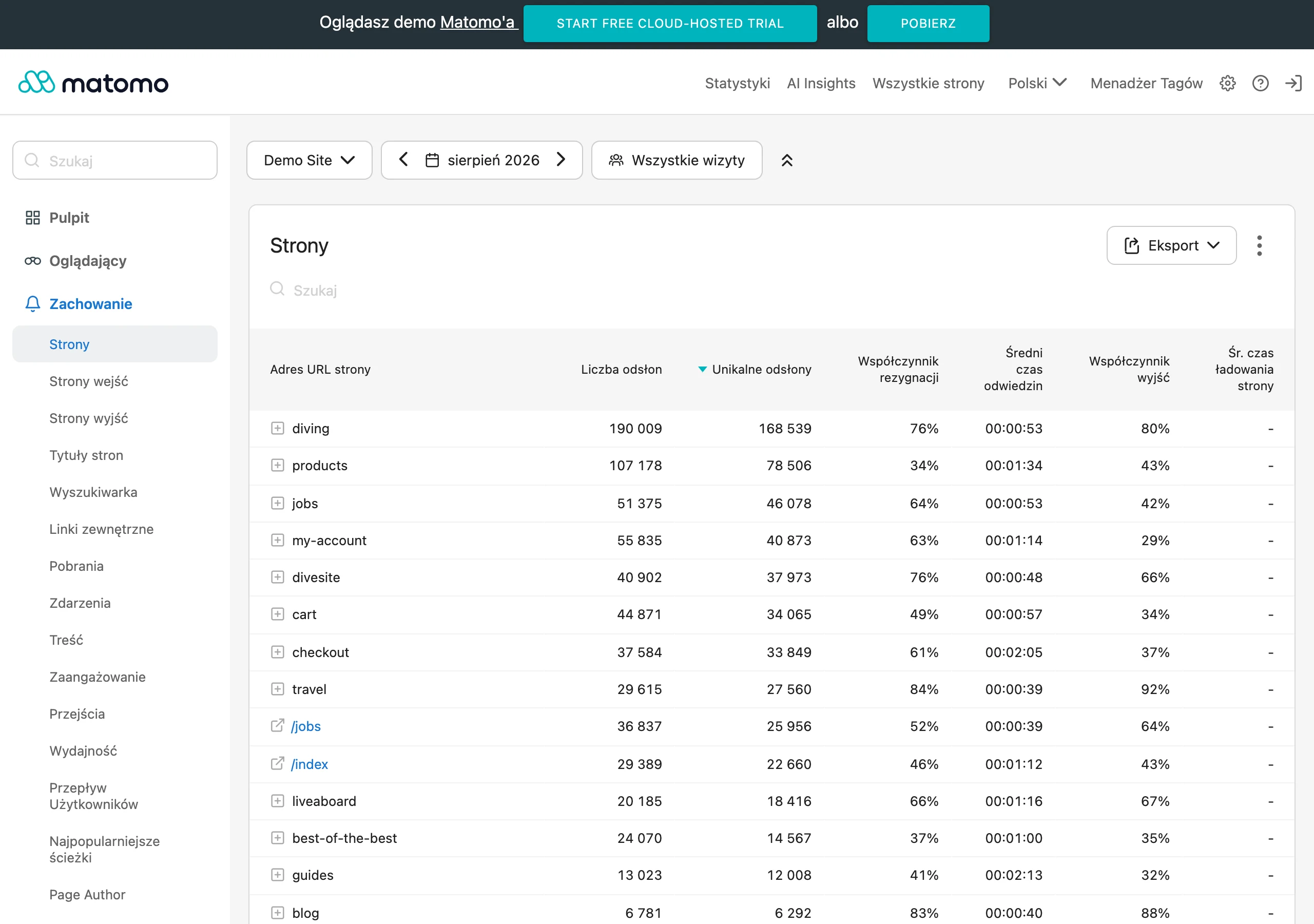
In practice, it is better to observe several groups of indicators at once, because a single reading rarely tells the whole truth:
- add-to-basket and purchase rate from the product page,
- CTR and organic traffic to specific pages,
- on-page behaviour: scroll depth, time to interaction, exits from the page, clicks through to the FAQ or the specifications table,
- the number of pre-purchase questions about fit, set contents, installation or compatibility,
- reasons for returns and signals of incorrect product selection,
- internal search queries, especially those that appear just before entering the page or immediately after leaving it.
The analysis itself has to be comparative. And there is no shortcut here. Do not assess the description based on the whole shop; look at the category, product type, device and traffic source. The data is clear: users from paid campaigns behave differently from those from organic search, and someone returning directly to a specific model behaves differently again.
The best improvement process starts with priorities. The key is to hit where it hurts most. First improve pages with high traffic, high sales value, frequent questions or a high return rate. Then check what was missing: did the customer not understand the differences between variants, not find size information, or perhaps the description did not answer important long-tail searches? The question is: what exactly stopped them before clicking “buy now”.
It is worth introducing changes in modules rather than rewriting everything from scratch. Instead of revolution — surgery. Sometimes the biggest effect comes from adding a fit section, moving an important parameter higher up, tidying up naming, or adding information about when the product will not be a good choice. The most useful improvements usually reduce uncertainty rather than “beautify” the text.
You use AI or automated templates. Measure not only the “polish” of the description, but also the quality of the input data and the number of corrections after publication. The problem is that the text may be fluent linguistically while still being factually wrong or simply out of line with the specification. And what is the point if it sounds good but does not hold to the facts. That is why a sensible working model is a closed loop: data → publication → measurement → correction → re-check, especially after changes in the offer.
FAQ
Frequently asked questions
What information should a product description include to help with purchase decisions?
It should answer questions about use, fit, technical features, variants, pack contents and limitations. Ideally, it should also explain what a given feature means in practice.
Is a product description alone enough for a customer to make a purchase decision?
No, the description supports the decision, but it does not replace the price, images or parameters. It works best as part of a coherent product page.
Why are descriptions copied from the manufacturer a problem?
Because they are usually too generic and do not answer customers’ real questions. They can also create inconsistency with the rest of the product page and make it harder to compare offers.
How should you write product descriptions for different variants to avoid duplication?
You need to separate shared information from variable information and set rules for size, colour, capacity or compatibility. A category information matrix and a single source of truth for parameters also help.
How do product descriptions affect SEO and the store’s internal search?
They should use the words and phrases customers really use to search for a product, such as the model, material, use or compatibility. This makes it easier to filter, search and match queries that lead to purchase.
What is the most common mistake in product descriptions?
Most often, the problem is vagueness, slogans and a lack of information about limitations or fit. Another mistake is inconsistency between the description, images, parameter table and variants.