

An XML sitemap is a key tool in SEO optimisation that guides search engine robots through your site’s structure. It enables faster and more effective indexing of content, especially on large websites or sites with dynamic assets. Find out how this universal file works, what data it should contain and why its regular update is essential for improving your site’s visibility in search results!
What is an XML sitemap?
An XML sitemap is a special file in XML format that contains a list of URLs for a given website. It is intended primarily for search engine robots such as Google, Bing or Yahoo. The main purpose of an XML sitemap is to indicate which subpages should be indexed and to inform search engines about changes made to the site since their last visit. As a result, the process of indexing new or updated content runs more smoothly and effectively.
XML format is a universal standard used to store data in an orderly way, which makes it easier for machines to process. In the case of an XML sitemap, the file contains not only a list of URLs, but also additional information such as:
- last modification date (lastmod),
- update frequency (changefreq),
- indexing priority (priority).
These elements help robots better understand the site structure and determine which subpages are the most important.
An XML sitemap is hugely important for SEO optimisation. It enables robots to access all key subpages, which is especially important for large websites with extensive navigation or dynamically generated content. Thanks to it, you can avoid situations where some pages remain unnoticed by search engines.
It is worth noting that an XML sitemap differs from an HTML sitemap. The latter is aimed at users and is intended to make it easier for them to navigate the site. An XML sitemap, on the other hand, focuses solely on the needs of indexing robots.
An XML sitemap is an essential tool for any website that wants to improve its visibility in search results. It allows you to manage the indexing process effectively and ensure that all important subpages are noticed by Google robots and other search engines.
- 01A file for robotsURL list for search engines
- 02Indication and indexingInforms about pages and changes
- 03Structured formatXML data structure
- 04Efficient processingFaster indexing process
Main takeaway: An XML sitemap improves communication between a website and search engines, speeding up the indexing of new and updated content.
Definition and XML file format
An XML file is a format based on a markup language that is used to store and transfer data in an orderly way. In the context of a sitemap, such a file contains a list of URLs together with additional metadata such as last modification date (lastmod), update frequency (changefreq) and indexing priority (priority). The hierarchical structure of the file makes it easier for search engine robots to analyse and process information.
XML is a universal format that is readable for both machines and humans. Each element in the file is marked with appropriate tags that give it meaning. For example, the <url> tag groups data relating to a single URL, and within it there are tags such as <loc>, <lastmod>, <changefreq> or <priority>. This makes the sitemap a precise tool that shows search engine robots which pages are crucial to the indexing process.
An XML sitemap is particularly important for large websites with numerous subpages or dynamically generated content. It enables better management of the indexing process and quick updating of information about new or modified pages. This, in turn, speeds up their appearance in search results.
Thanks to its flexibility and clarity, an XML sitemap is an indispensable tool in SEO optimisation. It allows for effective communication with search engine robots, which directly affects improved visibility of the site on the internet.
List of URLs in a sitemap
A sitemap, more specifically the list of URLs it contains, plays a key role in the process of a site being indexed by search engine robots. Each link in the sitemap.xml file corresponds to a specific subpage that should be included in search results. This allows Google’s mechanisms to efficiently identify and analyse the most important elements of the site, which translates into better visibility.
In the structure of a sitemap, URLs are organised using the <url> tag, which contains additional metadata. These include:
- <loc> – full link to the page,
- <lastmod> – information about the last update,
- <changefreq> – guidance on the frequency of changes,
- <priority> – a value determining indexing priority.
These data allow bots to decide which pages deserve more attention and more frequent crawling. For example, the homepage usually receives a higher priority than archived subpages.
Creating a sitemap is particularly important for large websites and sites with dynamic content. In such cases, manually highlighting key subpages significantly speeds up the indexing process and reduces the risk of important elements being overlooked by Google’s algorithms.
What’s more, a sitemap can include not only standard links to pages, but also links to images, videos or other media. This further increases the chances of them appearing in search results, which can be particularly beneficial for sites based on visual content.
- 01Makes crawling easierHelps search engines
- 02Provides metadataSuch as update frequency
- 03Identifies pagesContent prioritisation
- 04Speeds up indexingFaster visibility
The key to effective visibility of your site in search engines.
How does a sitemap work?
A sitemap acts as a table of contents that helps search engine bots understand the structure of a website. Thanks to it, crawling bots such as Googlebot can browse the site’s content more quickly and efficiently. This is particularly important for large sites with numerous subpages or dynamically generated content.
In XML format, a sitemap contains a list of URLs together with additional data such as:
- last modification date (lastmod),
- update frequency (changefreq),
- indexing priority (priority).
This information helps bots determine which pages are key and require more frequent crawling. For example, the homepage usually has a higher priority than archived subpages.
The main purpose of a sitemap is to provide bots with precise guidance on the site structure. As a result, the indexing process runs more smoothly, and the risk of important subpages being missed is much lower. For sites with dynamic content or complex navigation, a sitemap becomes an indispensable tool for improving visibility in search results.
The effectiveness of SEO can also be increased by including not only standard links to pages in the sitemap, but also links to media such as images or videos. This supports the indexing process and has a positive impact on the site’s rankings in search results.
A sitemap as a table of contents
A sitemap acts as a table of contents that helps search engine bots such as Googlebot understand the structure of a website. Thanks to it, bots can browse the site’s content more efficiently and quickly, which is particularly important for large sites with numerous subpages or dynamically generated content.
In XML format, a sitemap contains a list of URLs together with additional data such as:
- last modification date (lastmod),
- update frequency (changefreq),
- indexing priority (priority).
This information helps bots determine which pages are key and require more frequent crawling. For example, the homepage usually has a higher priority than archived subpages.
The main purpose of a sitemap is to provide bots with precise guidance on the site structure. This makes the indexing process run more smoothly, and the risk of important subpages being missed decreases. For sites with dynamic content or complex navigation, a sitemap becomes an indispensable tool for improving visibility in search results.
The effectiveness of SEO can also be strengthened by including not only standard links to pages in the sitemap, but also links to media such as images or videos. This supports the indexing process and has a positive impact on the site’s rankings in search results.
- 01Choose a methodAutomatic or manual
- 02Automatic methodCMS platforms, plugins, modules
- 03Manual methodCompatible with Google XML
- 04XML file structureURLs and metadata
Automation is convenient, while the manual approach gives you full control over the data for Google.
Making it easier for Google bots to index content
An XML sitemap is a tool that helps Google robots, such as Googlebot, efficiently index a website’s content. It enables bots to find and analyse key subpages more quickly, which translates into better visibility in search results. A sitemap contains not only URLs, but also additional information such as:
- last modification date (lastmod),
- update frequency (changefreq),
- indexing priority (priority).
This data helps robots determine which pages are most important and need to be crawled more often.
In the case of large websites or sites with dynamic content, a sitemap becomes virtually essential. It allows bots to identify which subpages should be indexed first, which speeds up the appearance of new or updated content in search results. What is more, a sitemap can include not only links to pages, but also links to multimedia content, such as images or videos. This increases the chances of them being noticed by Google’s algorithms.
To make the most of a sitemap’s potential, it is worth updating it regularly and submitting it to Google Search Console. This ensures that robots always have access to the latest information about the site structure, which affects faster and more accurate indexing. In this way, an XML sitemap becomes a key element of SEO optimisation, supporting the website’s visibility on the internet.
Why is an XML sitemap important for SEO?
An XML sitemap plays a key role in SEO optimisation, making it easier for search engine robots, such as Googlebot, to crawl and index website content efficiently. Thanks to it, the process of analysing subpages runs more smoothly, which is especially important for large websites or sites with dynamically generated content. A sitemap not only contains a list of URLs, but also provides metadata such as:
- last modification date (lastmod),
- update frequency (changefreq),
- indexing priority (priority).
This data helps robots identify the most important pages and decide which ones require more frequent crawling.
For newly launched websites, an XML sitemap is virtually indispensable. It speeds up the indexing process, allowing content to appear in search results more quickly. In the case of extensive websites with a multi-level navigation structure, a sitemap minimises the risk of key subpages being missed by Google’s algorithms. Additionally, thanks to the ability to prioritise pages using metadata, you can show robots which elements are most important for SEO.
An XML sitemap also plays an important role for sites with hard-to-reach content, such as dynamic subpages or elements generated by JavaScript. Without it, robots may have trouble finding such resources, which negatively affects the site’s visibility in search results. A sitemap makes it possible to ensure full index coverage of all important subpages.
Regularly updating the sitemap and submitting it to Google Search Console increases its effectiveness. This means robots always have access to the latest information about the site structure, which translates into faster and more accurate indexing. In this way, an XML sitemap becomes an indispensable tool supporting the website’s visibility on the internet and improving its position in search results.
The importance of a sitemap for indexing
An XML sitemap plays a key role in the process of a website being indexed by search engine robots, such as Googlebot. Thanks to it, bots can analyse the structure of the site more efficiently and precisely, which directly affects its visibility in search results. A sitemap contains not only URLs, but also additional metadata such as:
- last modification date (lastmod),
- update frequency (changefreq),
- indexing priority (priority).
This data helps robots identify the most important pages and decide which ones require more frequent crawling.
In the case of extensive websites or sites with dynamically generated content, a sitemap becomes virtually indispensable. It allows bots to quickly work out which subpages should be indexed first. This means that new or updated content appears in search results much faster. What is more, a sitemap can contain not only links to pages, but also links to multimedia content, such as images or videos. This further increases the chances of them being noticed by Google’s algorithms.
Regularly updating the sitemap and submitting it to Google Search Console significantly increases its effectiveness. This ensures that robots always have access to the latest information about the site structure, which translates into faster and more accurate indexing. In this way, an XML sitemap becomes an integral element of SEO optimisation, supporting the website’s visibility on the internet and helping it achieve better positions in search results.
How does a sitemap speed up indexing?
XML sitemaps significantly speed up the process of indexing websites. They act as a guide for search engine robots, such as Googlebot, providing them with detailed information about the site structure. As a result, bots can more efficiently find and analyse key subpages, which shortens the time needed for them to appear in search results.
A sitemap contains not only URLs, but also additional metadata such as:
- last modification date (lastmod),
- update frequency (changefreq),
- indexing priority (priority).
This data helps robots determine which pages are most important and need to be crawled more often.
In the case of large websites or sites with dynamic content, a sitemap is absolutely essential. It helps indicate to bots which subpages should be indexed first, which is particularly important for new or updated content. As a result, they reach search results more quickly. What is more, the sitemap can include not only links to pages, but also links to multimedia such as images or videos, increasing their visibility for Google’s algorithms.
For a sitemap to be effective, it needs to be updated regularly and submitted to Google Search Console. This ensures that robots always have access to the latest information about the site structure, which translates into faster and more accurate indexing. In this way, an XML sitemap becomes a key element of SEO optimisation, supporting the site’s visibility on the internet.
Prioritising indexing with metadata
Prioritising indexing with metadata in an XML sitemap allows search engine robots to see which pages are key for your website. Three tags play a particularly important role in this process: lastmod, changefreq and priority.
- the first one, lastmod, informs about the date of the page’s last update, which helps robots decide whether it is worth crawling again,
- the second tag, changefreq, specifies how often the page changes – whether the content is modified daily, weekly or perhaps less often,
- the third element, priority, allows pages to be assigned different levels of importance on a scale from 0.0 to 1.0, where the highest value indicates the greatest importance.
Thanks to this metadata, robots can manage their resources more efficiently, focusing on higher-priority or more frequently updated pages. For example, the homepage may have a priority of 1.0, while archival subpages only 0.5.
In the case of extensive websites or sites with dynamic content, prioritising indexing becomes essential. It helps avoid situations in which Google’s algorithms ignore important subpages in favour of less significant content.
For this process to be effective, it is worth regularly updating the metadata in the sitemap and submitting it to Google Search Console. This ensures that robots always have access to up-to-date information about the site structure and its indexing priorities, which directly affects better visibility in search results.
What data should be included in the sitemap.xml file?
The sitemap.xml file is a key element that makes it easier for search engine robots such as Googlebot to index the site effectively. It is worth getting to know its most important components:
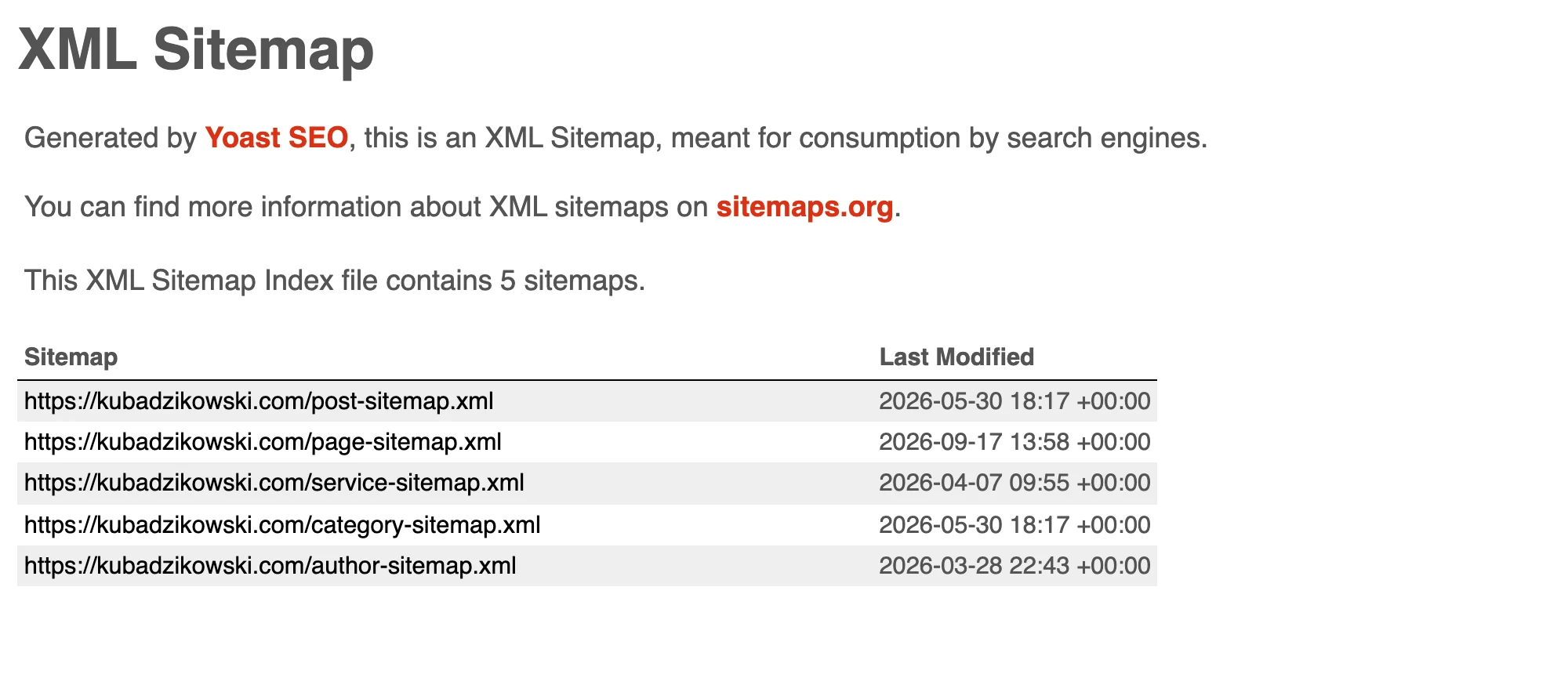
- URLs – full links to all subpages that should appear in search results, marked with the <loc> tag,
- last modification date (lastmod) – informs bots when the page was last updated, which helps them decide whether it is worth crawling again,
- update frequency (changefreq) – indicates how often the page content changes, taking values such as “daily”, “weekly” or “monthly”,
- indexing priority (priority) – defines the importance of the page on a scale from 0.0 to 1.0, where the homepage usually has the highest priority (1.0), and less important subpages lower values.
This metadata helps bots better understand the site structure and decide which pages require more frequent crawling and which are key to the indexing process.
What is more, a sitemap can contain links to multimedia such as images or videos, which increases their visibility in search results. In the case of large websites or sites with dynamic content, a sitemap becomes essential to ensure full indexing coverage of all important elements.
Regularly updating the sitemap.xml file and submitting it to Google Search Console allows Google robots to index new or modified content faster and more accurately.
URLs and their significance
URLs in the sitemap.xml file are extremely important for the process of indexing a site by search engine robots such as Googlebot. Each one indicates a specific subpage that should be included in search results. This allows robots to efficiently identify and analyse the key elements of the website, which translates into better visibility for the site.
In the sitemap structure, URLs are organised using the <url> tag, which contains additional metadata. These include:
- <loc> – full page address,
- <lastmod> – date of last modification,
- <changefreq> – frequency of content updates,
- <priority> – indexing priority of a given subpage.
These data help robots determine which pages require more attention and more frequent crawling. For example, the homepage usually has a higher priority than archive posts or less important sections.
Creating a sitemap is particularly important for large websites and sites with dynamic content. In such cases, manually indicating key subpages speeds up the indexing process and minimises the risk of important elements being overlooked by Google’s algorithms.
What is more, a sitemap can include not only standard links to pages, but also links to images, videos or other multimedia. This increases the chances of them appearing in search results, which is particularly beneficial for sites based on visual content.
Regularly updating URLs in the sitemap.xml file and submitting it to Google Search Console allows Google bots to index new or modified content more quickly and accurately. As a result, your site can be more visible to users searching for specific information.
Metadata – lastmod, changefreq, priority tags
Metadata in the sitemap.xml file, such as lastmod, changefreq and priority, play a key role in the process of indexing a website by search engine bots. Each of these elements provides valuable information that helps bots better understand the site structure and prioritise crawling.
- lastmod tags – indicate the date of the page’s last modification. This allows bots to assess whether it is worth reanalysing a given subpage. For example, if a page has been updated recently, bots may consider it more relevant and speed up its indexing,
- changefreq tags – specify how often the content on the page is updated. It can take values such as “daily”, “weekly” or “monthly”. This helps bots plan how frequently to crawl a given subpage,
- priority tags – allow different levels of importance to be assigned to pages on a scale from 0.0 to 1.0. The home page usually has the highest priority (1.0), while less important subpages receive lower values.
Thanks to this metadata, bots can manage their resources more efficiently, focusing on higher-priority or more frequently updated pages. In the case of large sites or websites with dynamic content, prioritising indexing becomes crucial in order to avoid situations where Google’s algorithms ignore important subpages in favour of less significant content.
Regularly updating metadata in the sitemap and submitting it to Google Search Console accelerates and improves the indexing of new or modified content by Google bots. As a result, the XML sitemap becomes a key element of SEO optimisation, supporting the site’s visibility in search results.
How do you create and submit an XML sitemap?
Creating an XML sitemap can be done in two main ways: automatically or manually. In the case of the automatic method, many popular CMS platforms, such as WordPress or Shopify, offer built-in tools for generating the sitemap.xml file. With the right plugins or modules, this process happens without the need for manual intervention – the system independently creates and updates the sitemap with every change on the site.
However, if you prefer the manual approach, you need to prepare an XML file compliant with Google’s standards. It should contain a list of URLs along with metadata such as:
- date of last modification (lastmod),
- update frequency (changefreq),
- indexing priority (priority).
Each URL should be placed between the <url> and <loc> tags, with additional information added within the relevant tags.
Once the sitemap.xml file has been prepared, it should be uploaded to the site’s main directory on the server. The next step is to submit the sitemap in Google Search Console. Simply log in to the tool, select the site property, go to the “Sitemaps” section and add the URL of the sitemap.xml file. This will inform Google bots about the site structure, making it easier for them to index more efficiently.
Regularly updating the sitemap and submitting it to Google Search Console is extremely important for the site’s visibility in search results. New or modified content will reach the search engine index faster, which will positively affect the site’s SEO. Make sure your site is always up to date and easy for users to find – that is the key to success online.
Automatic generation vs manual creation
Automatic XML sitemap generation is currently the most commonly chosen solution, especially for sites based on content management systems (CMS), such as WordPress, Shopify or Joomla. Most platforms of this type offer built-in tools or dedicated plugins that independently create and update the sitemap.xml file after every change to the site content. An example is the popular Yoast SEO plugin for WordPress, which not only generates a sitemap, but also provides additional features supporting SEO optimisation. As a result, the whole process runs smoothly and does not require much involvement from the user.
By contrast, manual sitemap creation requires you to prepare an XML file yourself in line with Google’s guidelines. In this case, you need to manually enter all URL addresses and add the appropriate metadata, such as lastmod, changefreq or priority. This method is more time-consuming, especially for large sites with hundreds of subpages. However, its advantage is full control over the sitemap structure and the ability to precisely define indexing priorities for individual pages.
The decision between automatic and manual sitemap creation depends primarily on the scale of the project and individual needs. For smaller and medium-sized sites, automatic solutions are usually more than sufficient. However, in the case of extensive portals, it is worth considering manual customisation, which allows for better management of the indexing process and optimisation of the site structure.
Submitting a sitemap to Google
After preparing the sitemap.xml file, the next step is to submit it to Google. The easiest and most popular way is to use Google Search Console. Just log in to your account, select the relevant site and go to the “Sitemaps” section, where you add the URL of the sitemap.xml file and confirm. This way, Google’s robots will be informed about the new sitemap and will begin indexing it.
If you want other search engines to also have access to the sitemap, you can add its address to the robots.txt file. Simply place the following line there: Sitemap: [sitemap URL]. This simple solution makes the sitemap available to different search engines.
An alternative method is pinging, that is, sending a special HTTP request to Google with the sitemap URL. Just open your browser and enter: http://www.google.com/ping?sitemap=[full sitemap URL]. This is a quick way to notify Google about a new sitemap.
Regularly updating the sitemap and submitting it to Google Search Console is crucial. This ensures that robots always have access to the latest information about the site structure, which translates into faster appearance of new or changed content in the search results. Remember – the more often you update the sitemap, the greater the chance of improving your site’s visibility online.
FAQ
Frequently asked questions
How does an XML sitemap help search engine bots index a site?
It works like a table of contents, showing bots the site structure and pointing to the most important URLs. This means new or updated content can be found more quickly and included in search results.
Is an XML sitemap important for large websites?
Yes, because it makes it easier to access all key pages and reduces the risk that some of them will be missed. This is especially important when there is extensive navigation and many pages.
What should be included in an XML sitemap?
The sitemap should contain URLs and additional information such as lastmod, changefreq and priority. It may also include links to images, videos and other multimedia.
Why is an XML sitemap different from an HTML sitemap?
An HTML sitemap is created for users and helps them navigate the site. An XML sitemap is intended for search engine bots and is used for indexing content.
When is an XML sitemap particularly needed?
It is especially useful for sites with dynamically generated content, complex navigation or resources that are difficult for bots to access. It also helps new sites appear in search results faster.
Should an XML sitemap be updated regularly?
Yes, regular updates are important because they inform bots about changes made on the site. The article also notes that it is worth submitting it to Google Search Console.