

How do you measure the success of your SEO activities? Key performance indicators (KPI) are the core metrics that help assess the effectiveness of a website optimisation strategy. From tracking organic traffic and keyword rankings to assessing conversion rates, these indicators provide practical insights that help refine your SEO tactics. Find out why regularly analysing KPI metrics such as search visibility, bounce rate and return on investment is crucial for adapting to market trends and achieving long-term online success.
What are SEO indicators (KPI) and why are they important?
SEO indicators, also known as KPI (Key Performance Indicators), are indispensable tools for assessing the effectiveness of website SEO activities. They provide numerical data that make it possible to track progress towards business goals and are key in analysing results and adjusting optimisation strategies.
KPI play an important role in assessing whether the actions taken are delivering the desired results. They allow you to identify areas that need improvement and measure the impact of the changes introduced on search visibility. Without systematic monitoring of these indicators, it is difficult to determine the effectiveness of an SEO strategy.
The main benefits of tracking KPI include:
- analysing organic traffic,
- monitoring the site’s ranking positions,
- measuring the conversion rate.
This information provides valuable data on user behaviour and the effectiveness of optimisation activities. As a result, it is possible to make fact-based decisions, which translates into better results in the longer term.
In addition, KPI are essential for assessing the return on investment (ROI) in SEO activities. They make it possible to determine whether the money and time devoted to optimisation are bringing real benefits to the business. Regular analysis of this data allows you to adapt your strategy to changing market conditions and search engine algorithms.
SEO indicators (KPI) are key tools for monitoring the effectiveness of website SEO activities. Their regular analysis makes it possible to make informed business decisions and optimise SEO strategy to achieve better results.
- 01Numerical dataTracking progress and goals
- 02Effectiveness assessmentChecking desired results
- 03Identification of areasDetecting areas for improvement
- 04Impact on visibilityMeasuring effects and adapting strategy
Systematic monitoring of KPI is the key to understanding the effectiveness of SEO activities.
The most important SEO indicators (KPI) to track
Key SEO indicators (KPI) are essential tools that allow you to assess the effectiveness of website SEO activities. Their regular monitoring makes it possible to analyse progress and introduce the necessary adjustments. Here are the most important metrics to pay attention to:
- visibility in SERP – shows how often the site appears in search results for selected keywords,
- organic traffic – the number of people who reached the site thanks to natural search results,
- keyword positions – indicate where selected keywords rank,
- click-through rate (CTR) – measures the percentage of users who clicked on a result after it was displayed,
- conversions – the number of users performing a desired action, e.g. a purchase or newsletter sign-up,
- number of organic sessions – shows how many times the site was visited thanks to natural search results, without the involvement of paid ads,
- bounce rate – informs you about the percentage of people leaving the site after viewing only one page,
- page load time – affects both user experience and the site’s position in search results,
- ROI (return on investment) – allows you to assess the profitability of SEO activities by comparing costs with the financial benefits achieved.
Regular analysis of these metrics helps you better understand user behaviour and adapt your strategy to the requirements of algorithms and market trends. This makes it possible to increase the effectiveness of activities marketing activities and achieve better online results.
SERP visibility as a key SEO KPI
Visibility in search results (SERP) is one of the most important KPI metrics in SEO, measuring how often a website appears for specific keywords. The better the visibility, the greater the chances of attracting valuable organic traffic. This metric analyses positions in TOP3, TOP10 and TOP50, giving a full picture of the effectiveness of optimisation efforts.
The importance of SERP visibility is particularly significant when assessing a SEO strategy. When a website regularly ranks in the top ten for many keywords, it indicates strong exposure and the potential to generate traffic. At the same time, analysing this metric makes it possible to identify weak points, such as low positions for key phrases that need improvement.
To track SERP visibility, it is worth using tools such as Google Search Console or SE Ranking. They provide detailed information about a website’s position for individual queries, enabling you to monitor changes over time and adapt your strategy to current trends and algorithm requirements.
It is worth emphasising that SERP visibility is closely linked to other key SEO metrics, such as CTR or number of organic sessions. Better exposure translates into more clicks and visits. That is why regular monitoring of this metric is essential to achieving long-term success in SEO.
- 01Define business goalsKPI metrics
- 02Use toolsGA and GSC
- 03Track key metricsTraffic, CTR, time
- 04Analyse engagementSessions, conversions
- 05Develop salesTraffic value
Basic solutions and systematic monitoring are the key to success.
Number of organic sessions as a key SEO KPI
The number of organic sessions is one of the key metrics in SEO, measuring how many people reach a website through organic search results. This metric is extremely important because it shows whether the website successfully attracts users without the need for paid advertising. It makes it possible to assess the effectiveness of optimisation efforts and check which keywords generate the most traffic.
Analysing this metric also makes it possible to identify trends and seasonal fluctuations in traffic. For example, online stores often see an increase in visits before the festive season, when interest in shopping rises. Tools such as Google Search Console make it possible to trace exactly which devices (e.g. desktops or smartphones) and keywords bring in the most sessions.
The number of organic sessions is closely linked to a website’s visibility in search results (SERP). The higher a page ranks for a given phrase, the greater the chance of attracting organic traffic. Regular monitoring of this metric allows you to react quickly to changes in rankings and adapt your SEO strategy to current needs.
What is more, analysing the number of organic sessions can help detect technical or content-related issues on a website. A sudden drop in visits may indicate a fall in rankings or algorithm changes in search engines. In such a situation, it is worth looking at the quality of the content and the technical optimisation of the website in terms of Google’s requirements.
The number of organic sessions is not only a measure of a website’s popularity, but also a tool for assessing the effectiveness of SEO efforts. Regular monitoring of this metric allows you to make informed optimisation decisions and achieve better results in the long term.
Ranking position metric and its importance
Ranking position is one of the most important KPI metrics in SEO, showing how high a website ranks in search results for specific keywords. Regular monitoring of this metric helps assess the effectiveness of optimisation efforts and compare results with competitors. The better the position, the greater the chance of attracting organic traffic and increasing the number of conversions.
Analysing keyword rankings plays a key role in assessing SEO strategy. It makes it possible to identify phrases that need improvement as well as those that are already generating significant traffic. For example, if a website is in 15th place for an important phrase, it is worth focusing on content optimisation and internal linking to move up into the top ten.
Specialist tools such as Google Search Console, SE Ranking and Ahrefs are used to track positions. They provide detailed information about changes in rankings over time and make it possible to monitor the effects of the modifications introduced. Thanks to regular analysis, you can react quickly to algorithm changes in search engines and adapt your strategy to current trends.
A high ranking has a direct impact on the CTR (Click-Through Rate). Pages in the TOP3 have a much greater chance of being clicked than those lower down. That is why striving to achieve the best positions is crucial for long-term SEO success.
Tracking this metric not only makes it possible to assess the effectiveness of optimisation efforts, but also to adapt the strategy to changing market conditions and algorithm requirements. It is an integral part of effectively managing a website’s visibility.
- 01Visibility analysisCheck keyword rankings.
- 02Content and link optimisationAdjust keywords.
- 03Data monitoringUse analytics tools.
- 04Strategy adaptationReact and improve.
The key to success is continuous data analysis and systematically adapting the strategy to the results and expectations.
Organic traffic metric and its role
Organic traffic is one of the key KPI metrics in SEO, measuring the number of users arriving on a site through natural search results. It is the most desirable type of traffic because it does not require investment in paid advertising campaigns. What is more, it shows whether the optimisation efforts being carried out are delivering the expected results. By regularly tracking this parameter, you can assess whether the site is attracting the right number of visitors and whether the selected keywords are properly matched and effectively ranking.
A site’s visibility in search results (SERP) has a direct impact on organic traffic. The higher a page ranks for a given keyword, the greater the likelihood of attracting more visitors. Analysing this metric also helps to identify seasonal fluctuations affecting traffic. For example, online stores often record increases in visits before Christmas or during seasonal promotions.
To monitor organic traffic, it is worth using tools such as Google Analytics or Google Search Console. They provide detailed information on:
- traffic sources,
- devices used by users,
- keywords generating the most visits.
This makes it possible to better understand user behaviour and adapt the SEO strategy to their preferences.
This metric also plays an important role in assessing the effectiveness of optimisation efforts. A sudden drop in traffic can indicate technical issues, such as:
- indexing errors,
- loss of ranking positions.
In such a situation, it is worth analysing the quality of the content and the site’s technical optimisation in terms of Google’s algorithm requirements.
Organic traffic is not only a measure of a site’s popularity, but also a tool for assessing the effectiveness of SEO efforts. Regular monitoring of this parameter allows you to make informed optimisation decisions and achieve better results in the long term.
CTR metric and its impact on SEO
CTR metric (Click-Through Rate) plays a key role in SEO, measuring how many people clicked on a search result after it was displayed. It is an important metric that shows how effectively a site attracts attention from organic results. If CTR is low, it may signal issues with the meta title or description – perhaps they are not compelling enough.
Analysing CTR for individual keywords and URLs makes it possible to identify areas that need improvement. For example, when a page ranks highly but has a low click-through rate, it is worth reviewing the meta description. It may not match user intent or it may not attract attention. In such a situation, adapting the meta tags to audience expectations can bring a significant improvement.
It is worth remembering that CTR has a direct impact on organic traffic. The more people click on the result, the greater the chance of increasing the number of sessions and conversions. Tools such as Google Search Console provide detailed data on the click-through rate for specific queries and pages, making it possible to track changes over time.
Optimising CTR is not just about improving meta tags – it also means testing different versions of titles and descriptions (A/B testing) and adapting them to current trends and user preferences. As a result, search results become more attractive, which translates into more effective SEO efforts.
Regular monitoring of this metric allows you to react quickly to search engine algorithm changes and adapt your strategy to current market requirements. A high click-through rate is not just better visibility for the site – it also brings real business benefits from increased traffic and user engagement.
SEO conversion rate and its significance
SEO conversion rate is one of the most important metrics, measuring how effectively visitors complete desired actions on the site. This may include purchases, newsletter sign-ups or filling in contact forms. This metric is key to assessing the effectiveness of SEO activities, because it shows whether increased organic traffic translates into real benefits for the business.
Analysing this metric allows you to identify pages and keywords that generate the most valuable interactions. For example, high organic traffic with low conversion may indicate a mismatch between the content and user needs or issues with optimising the purchase journey. In such a situation, it is worth looking at the quality of the content and the user experience (UX) in order to introduce the necessary improvements.
Tools such as Google Analytics are commonly used to track the conversion rate. They make it possible to monitor conversions on individual pages and assign them to specific keywords. This makes it easy to identify areas requiring optimisation and adapt the SEO strategy to audience expectations.
It is also worth paying attention to attribution models, which help better understand the impact of different marketing channels on conversions. For example, the “last click” model assigns the entire value of the conversion to the last traffic source, while the “linear” model distributes it evenly across all interactions. Choosing the right model allows you to gain a more precise picture of the effectiveness of SEO activities.
Regular monitoring of this metric is key to assessing return on investment (ROI) in SEO. It enables informed decisions about optimisation and helps you adapt your strategy to changing market conditions and user preferences.
Number of conversions as a measure of SEO effectiveness
The number of conversions is a key measure of SEO effectiveness, showing how efficiently the site turns visitors into customers. A high level of conversions – whether purchases, newsletter sign-ups or form submissions – shows that the SEO strategy is delivering tangible business benefits.
Monitoring this metric allows you to identify pages and keywords generating the most valuable interactions. If a site attracts plenty of organic traffic but records a low number of conversions, this may signal issues with the content or the purchase journey. In such a situation, it is worth looking at the quality of the materials on the site and the user experience (UX) in order to make the necessary improvements.
Tools such as Google Analytics are often used to track conversions. They make it possible to assign conversions to specific pages and keywords, which makes it easier to identify areas requiring optimisation. This allows you to tailor the SEO strategy to the actual needs of the audience.
It is also worth paying attention to attribution models, which help better understand the impact of different marketing channels on the conversion process. For example, the “last click” model assigns the entire value to the last traffic source, while the “linear” model distributes it evenly across all interactions. Choosing the right model allows you to gain a more precise picture of the effectiveness of SEO activities.
Regularly analysing the number of conversions is essential for assessing return on investment (ROI) in SEO. It makes it possible to make informed decisions about optimisation and adapt the strategy to changing market conditions and user preferences.
Bounce rate as a measure of user engagement
Bounce rate is one of the key metrics in SEO, showing what percentage of visitors leave the site after viewing only one page. A high value may indicate issues with content quality, user experience (UX) or a mismatch with search intent.
Analysing this metric allows you to identify areas requiring improvement. For example, if we record a high rate for specific keywords, this may suggest that the content does not meet visitors’ expectations or that the meta tags are configured incorrectly.
Tools such as Google Analytics are used to track this metric, providing detailed information on user behaviour. This makes it possible to analyse the pages generating the most bounces and introduce the necessary corrections.
Optimising the rate includes, among other things:
- improving content quality,
- adjusting meta tags,
- improving site navigation.
Such actions increase user engagement and reduce the number of people leaving the site after a single visit.
Regular monitoring of this metric is essential for assessing the effectiveness of SEO activities. It allows you to tailor the strategy both to user needs and to the requirements of search engine algorithms.
Page load time and its impact on SEO
Page load time plays a key role in SEO, directly affecting user experience. Faster sites are more user-friendly, which results in a lower bounce rate and greater engagement. Google research shows that pages loading within 2 seconds have on average 15% fewer bounces than those that take longer.
To speed up loading, it is worth using a few proven solutions:
- image compression,
- minification of CSS and JavaScript code,
- using technologies such as lazy loading.
Tools such as Google PageSpeed Insights and Lighthouse help identify problem areas and provide practical advice on optimisation.
Loading speed is particularly important on mobile devices, where users expect immediate access to content. Slow-loading pages can lead to a drop in organic traffic. It is worth remembering that search engine algorithms, such as Core Web Vitals Google, treat this metric as one of the main ranking factors.
Regular monitoring of loading time makes it possible to adapt the SEO strategy to current technical requirements and user expectations. This means you can not only improve your position in search results, but also increase conversions and visitor satisfaction.
ROI in SEO as a return on investment metric
ROI in SEO is a key metric that helps assess whether investments in website SEO bring measurable benefits. It shows the relationship between the profits generated by organic traffic and the costs incurred on optimisation. This makes it easy to determine whether SEO expenditure is worthwhile for the business.
To calculate ROI in SEO, simply use a straightforward formula: ROI = (Value of organic conversions – SEO investment costs) / SEO investment costs. For example, if the monthly budget for SEO activities is PLN 5,000 and revenue from conversions is PLN 25,000, the ROI will be 4 (400%). This means a fourfold return on every zloty invested.
For a precise ROI analysis, key performance indicators (KPIs) are essential, such as:
- number of conversions,
- value of organic traffic.
Tools such as Google Analytics make it possible to assign specific revenue to activities related to SEO, which makes it much easier to assess the effectiveness of campaigns.
Systematic monitoring of ROI enables companies to make more informed decisions about resource allocation. A high return on investment indicates an effective strategy and encourages further development of SEO activities. On the other hand, a low ROI may signal the need to change approach or redefine business goals.
It should be remembered that the effects of SEO activities are usually visible only after a longer period and require ongoing optimisation. Therefore, regular ROI analysis is essential to maintaining competitiveness and achieving ever better financial results through website SEO.
How to measure and analyse SEO metrics?
To measure and analyse SEO metrics effectively, it is necessary to use the right tools and monitor data systematically. Google Analytics and Google Search Console are the basic solutions that provide detailed information about organic traffic, search engine rankings and user engagement. They allow you to track key metrics such as the number of organic sessions, CTR or page load time.
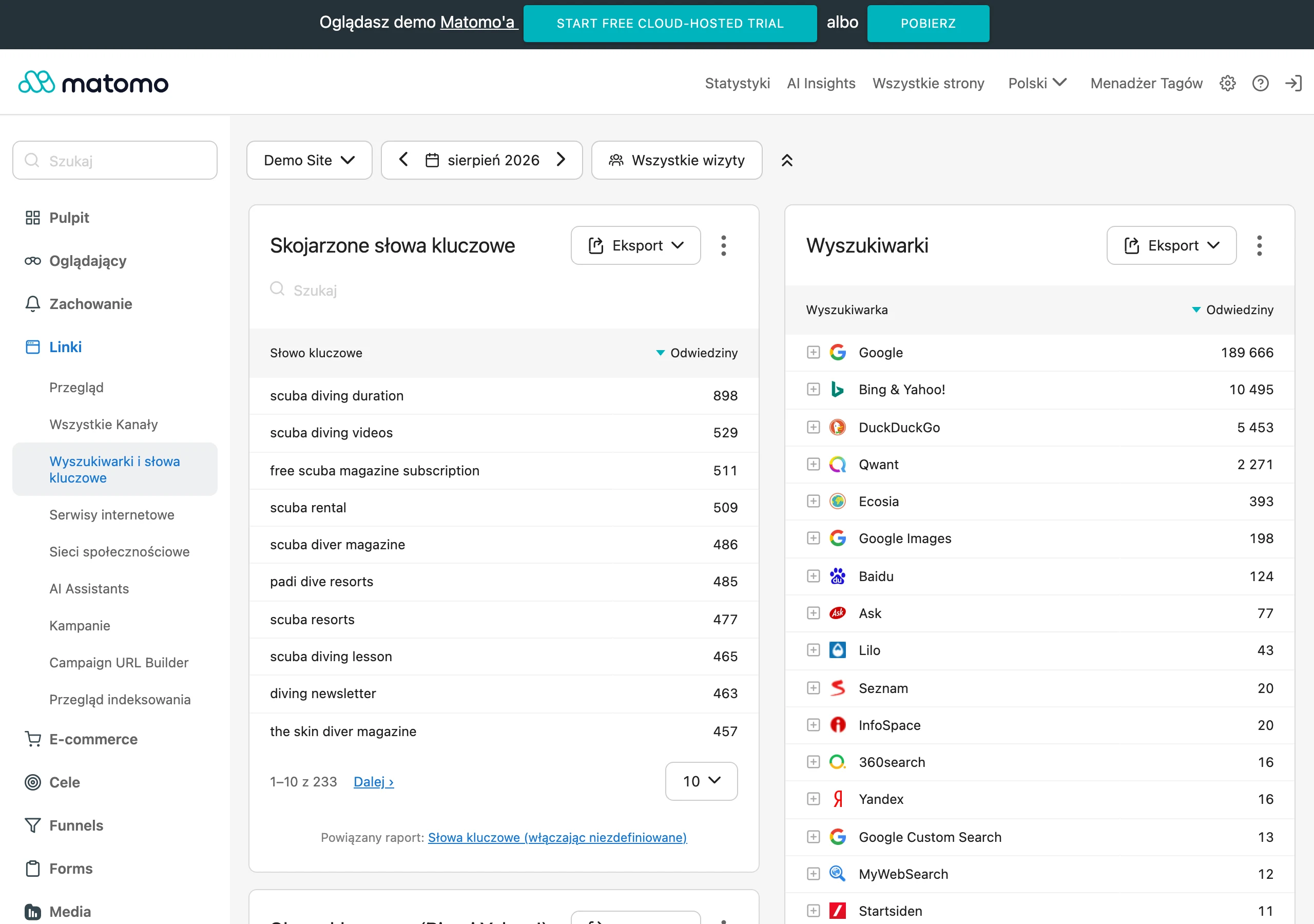
The first step is to clearly define business goals and assign the appropriate KPI metrics to them. For example, if the priority is increasing sales online, it is worth focusing on monitoring the number of conversions and the value generated by organic traffic. Google Analytics offers the ability to create custom reports that make it easier to track progress and identify areas requiring improvement.
The next important element is trend analysis. Regular review of data makes it possible to spot changes in keyword rankings or sudden drops in organic traffic. Such a situation may indicate technical issues or changes in search engine algorithms. In that case, it is worth looking at content quality and the site’s technical optimisation.
To monitor keyword rankings, it is worth using specialist tools such as SE Ranking or Ahrefs. They provide detailed information on ranking changes and enable comparison of results with competitors. This allows you to react quickly to changes and adapt the SEO strategy to current algorithm requirements.
Analysing the CTR (Click-Through Rate) is another important aspect. A low CTR may result from poorly configured meta tags or a mismatch between the content and user intent. In such a case, it is worth carrying out A/B tests of titles and descriptions to increase the attractiveness of search results.
It is also worth paying attention to organic traffic, which shows how many people arrive on the site thanks to natural search results. Tools such as Google Search Console provide data on traffic sources and the devices used by users. This makes it easier to understand their behaviour and tailor the strategy to their preferences.
Regular monitoring of page load time has a direct impact on user experience and the site’s position in search results. Tools such as Google PageSpeed Insights help identify problematic areas and provide practical advice on optimising site performance.
The final step is assessing the return on investment (ROI) in SEO. To do this, compare the revenue generated by organic traffic with the costs incurred on site optimisation. Regular ROI analysis makes it possible to make informed decisions about resource allocation and the further development of the SEO strategy.
Measuring and analysing SEO metrics requires consistency and the use of appropriate analytics tools. Thanks to regular data monitoring, you can react quickly to changes, optimise your activities and achieve better business results through website SEO.
Tools for monitoring SEO metrics
Specialist tools are used to monitor key SEO metrics (KPIs), providing detailed data on the effectiveness of optimisation activities. One of the most commonly used solutions is Google Analytics. This versatile tool allows you to analyse organic traffic, number of sessions, bounce rate and conversions. It also enables tracking user behaviour on the site, which is essential for adapting the SEO strategy to their real needs.
Another important tool is Google Search Console. It provides valuable information about the site’s position in search results, indexing errors and keyword performance. It allows you to monitor your website’s visibility in SERPs on an ongoing basis and react quickly to changes in Google’s algorithms.
Among paid solutions, it is worth paying attention to Ahrefs and Senuto. Ahrefs offers advanced inbound and outbound link analysis features, which helps assess the quality of the link profile. Senuto, on the other hand, is a tool that is particularly popular in Poland and enables keyword position monitoring and competitor analysis.
For technical site optimisation, tools such as Google PageSpeed Insights or Lighthouse are also useful. They help identify issues affecting website load time. Page speed has a direct impact both on user experience and on search rankings.
Regular use of these tools not only allows you to track key SEO metrics, but also to make informed optimisation decisions. As a result, this translates into better business results and increased site competitiveness.
Google Analytics as a data analysis tool
Google Analytics is one of the most important tools in SEO, enabling you to track key performance indicators. It allows you to monitor organic traffic, analyse traffic sources and study user behaviour on the site. It provides detailed data such as:
- number of sessions,
- bounce rate,
- time spent on the website,
- conversions.
One of the most valuable features is the ability to attribute conversions to specific keywords and pages. This makes it possible to determine which elements of the SEO strategy bring the greatest business benefits. The tool also offers user path analysis, which helps understand how visitors move around the site and where problems may occur.
Google Analytics integrates perfectly with other Google products, such as Google Search Console or Google Ads. This synergy gives a full picture of the effectiveness of marketing and optimisation activities. For example, data from Search Console help track keyword positions and detect indexing errors – key aspects for improving the site’s visibility in search results.
It is also worth mentioning the ability to create custom reports and dashboards. They allow you to focus on the most important metrics for a given SEO project and react quickly to changes. Regular data monitoring makes it possible to adapt the strategy to current trends and search engine algorithm requirements.
The tool also offers advanced features related to mobile device analysis. In the era of the growing popularity of smartphones, mobile optimisation is essential for SEO success. Google Analytics provides information on how the site performs on different devices and what the differences are in user behaviour between desktop and mobile.
In summary, Google Analytics is an indispensable tool for every SEO specialist. It enables precise monitoring of the effectiveness of optimisation activities, identification of areas requiring improvement and data-driven decision-making. Regular analysis of results translates into better business outcomes thanks to an effective website SEO strategy.
SE Ranking and its functions in monitoring KPIs
SE Ranking is an advanced tool that helps monitor key performance indicators (KPI) in SEO. It enables you to carry out a comprehensive analysis of optimisation activities, which is crucial for assessing the effectiveness of a search engine optimisation strategy. The tool allows you to track a page’s positions in search results for selected keywords and provides detailed reports on visibility in SERP. This makes it possible to react quickly to changes in search engine algorithms.
One of the most important features is competitor analysis. It lets you compare your site’s results with those of your rivals, focusing on keyword positions, organic traffic and the link profile. This makes it easy to identify weak points and adapt your strategy to current market trends.
SE Ranking also offers tools for monitoring backlinks, which play a key role in building site authority. Analysing the quality and quantity of backlinks helps detect potential threats, such as toxic links that may lower rankings.
In addition, the platform enables the creation of personalised reports and dashboards, which make it easier to track the most important KPI metrics. Regular data analysis allows you to make informed optimisation decisions, which translates into better results in the long term.
The tool integrates with popular analytics platforms such as Google Analytics and Google Search Console, providing a full picture of SEO performance. This makes it possible to better understand user behaviour and adapt the strategy to their needs.
SE Ranking is an indispensable solution for SEO specialists who want to effectively monitor and optimise activities related to website search engine optimisation.
How to optimise SEO activities based on KPI metrics?
Optimising SEO activities based on key performance indicators (KPI) requires continuous data monitoring and implementing changes that improve strategy effectiveness. To achieve the best results, it is worth focusing on parameters such as:
- positions in search results (SERP),
- organic traffic,
- click-through rate (CTR),
- number of conversions.
This makes it easy to identify areas requiring improvement and adapt activities to user expectations and search engine algorithms.
The first step is analysing the site’s visibility in SERP. If the website does not rank highly for important keywords, it is worth looking at content optimisation for keywords as well as the quality of linking – both internal and external. Tools such as Google Search Console or SE Ranking provide detailed information on site positions, making it possible to react quickly to changes.
Another important aspect is organic traffic. Although a high number of visits indicates effective SEO activities, a lack of conversions may point to problems with the content or the purchase journey. In such a case, it is worth analysing user behaviour using tools such as Google Analytics and making the necessary modifications.
You also cannot forget about page load time. Fast websites are rated more highly by Google algorithms and provide users with a better experience. Tools such as Google PageSpeed Insights help identify problematic elements and speed up the site.
The CTR rate plays an equally important role. Low click-through rates may result from unappealing meta tags or content that does not match user intent. Testing different versions of titles and descriptions (A/B testing) can significantly improve the attractiveness of search results.
The final element is the regular analysis of ROI (return on investment) in SEO. Comparing revenue generated by organic traffic with optimisation costs makes it possible to assess profitability and adapt the strategy to current business needs.
Systematic monitoring of these KPI metrics and the use of appropriate analytical tools make it possible to make informed optimisation decisions, which translates into better business results thanks to an effective SEO strategy.
Optimising content based on the content quality metric
Content optimisation based on quality metrics is the foundation of effective SEO. Metrics such as CTR (Click-Through Rate) or bounce rate provide important data on users’ reactions to page content. A high CTR indicates attractive meta titles and descriptions, while a low bounce rate suggests that the content meets visitors’ needs. To improve the quality of materials, it is worth paying attention to several key elements:
- alignment with user intent – the content should answer the specific questions and needs of people searching for particular keywords. For example, if someone is looking for a guide, the page must offer practical tips, not just general information,
- meta tag optimisation – titles and descriptions must not only be attention-grabbing, but also include the relevant keywords. Testing different versions (A/B testing) can significantly increase CTR,
- quality and usefulness of content – articles should be well structured, easy to read and valuable for readers. Avoiding language errors and using headings (H1, H2) improves user experience,
- analysis of data from SEO tools – using tools such as Google Analytics or Google Search Console makes it possible to identify pages generating the most organic traffic and those that need improvement in terms of user engagement,
- regular content updates – Google’s algorithms prefer fresh and up-to-date material. That is why it is worth regularly reviewing existing articles and making the necessary changes.
Improving the quality of content not only affects better positions in search results, but also increases user engagement and conversions. Analysing key KPI indicators makes it possible to make informed optimisation decisions and adapt the strategy to changing algorithm requirements and audience preferences.
Improving page load time as the key to better SEO
Page load speed is one of the most important elements of an SEO strategy, affecting both user experience and the bounce rate. Pages that load faster are more visitor-friendly, which results in fewer site exits and greater engagement. Google research shows that pages loading in 2 seconds have an average 15% lower bounce rate compared with those that take longer.
To speed up a website, it is worth using several proven techniques:
- image compression – reducing the size of image files without losing their quality,
- CSS and JavaScript code minification – removing unnecessary characters from the source code,
- lazy loading – delaying the loading of elements that are not visible on the screen during the first visit to the page.
To identify problems and optimise performance, it is worth using tools such as Google PageSpeed Insights or Lighthouse. They provide detailed reports and practical tips for improving performance.
On mobile devices, page load speed is particularly important. Users expect immediate access to content, and slow pages can lead to a drop in organic traffic. Search engine algorithms, such as Google Core Web Vitals, treat this metric as a key factor affecting search rankings.
Regular monitoring of load time makes it possible to adapt the SEO strategy to current technical requirements and user expectations. This means you can not only improve visibility in search results, but also increase conversions and visitor satisfaction.
Link building and its impact on the link flow metric
Link building is one of the most important elements of an SEO strategy, with a direct impact on link flow. The number and quality of links pointing to a site determine its authority in the eyes of search engines. The more valuable external links point to a given website, the higher its position in the rankings. The link flow metric, which is a key ranking factor, shows how often other websites refer to a specific domain.
A high level of this metric indicates that the site is seen as a reliable source of information. Links from reputable websites are far more valuable than those from lesser-known domains. That is why it is so important to acquire them from high-quality sources such as industry blogs, news portals or educational institution websites.
Monitoring link flow makes it possible to assess the effectiveness of link acquisition activities. Tools such as Ahrefs or Majestic provide detailed data on the number and quality of backlinks and the domains that generate them. This makes it easy to identify areas requiring improvement and adapt the strategy to current needs.
It is also crucial to maintain a natural link profile. Search engine algorithms can detect artificial methods of acquiring links, which may result in penalties and a drop in search rankings. That is why it is so important to build relationships with other sites and create valuable content that encourages natural sharing.
Regular analysis of link flow not only helps to assess the effectiveness of SEO activities, but also makes it possible to adapt the strategy to changing algorithm requirements. This allows you to maintain high visibility for the site and achieve better business results through effective SEO.
FAQ
Frequently asked questions
What SEO metrics are worth tracking to assess the effectiveness of SEO?
It’s worth monitoring, among other things, SERP visibility, organic traffic, keyword positions, CTR, conversions, the number of organic sessions, bounce rate, page load time and ROI. These data show whether SEO efforts are actually delivering results.
Why is regular SEO KPI analysis important?
Because it allows you to assess strategy effectiveness, identify areas for improvement and adapt activities to changes in algorithms and market trends. Without it, it is difficult to tell whether SEO is working well.
How does SERP visibility affect SEO results?
The more often a site appears in search results for selected phrases, the greater the chance of organic traffic. This metric also shows positions in TOP3, TOP10 and TOP50, making it easier to assess optimisation effectiveness.
Does organic traffic show whether SEO works?
Yes, because it measures the number of users who landed on the site from natural search results. If it grows, it usually means that optimisation activities are delivering results.
When can a low CTR be a sign of an SEO problem?
When a page has a good position but few people click the result, it may mean that the meta title or description is not attractive enough. In that case, it is worth tailoring them to user intent.
How does the conversion rate metric help assess SEO results?
It shows whether visitors complete desired actions, such as a purchase, signing up for a newsletter or filling in a form. This makes it possible to check whether organic traffic translates into real business benefits.