

Marketing resistant to change in channels and algorithms is an approach designed to keep leads and sales flowing even when one platform suddenly stops delivering. And that’s not just a cliché. In practice, it means making sure a company is not held hostage by a single source, whether that is SEO alone, social media ads alone, a marketplace alone, or only brand traffic. Such a model is built on owned assets: the website, the contact database, CRM, content and robust measurement. The most important shift is that you optimise not a single campaign, but the entire acquisition and conversion system. This makes it easier to move budget, messaging and activities between channels without giving up control over the outcome. The problem is that today algorithms, media costs and tracking capabilities can change from week to week.
What is marketing resistant to channel and algorithm changes?
Marketing resistant to channel and algorithm changes is a way of running activities in which results do not depend on one platform, one traffic source or one mechanism for reaching the customer. Sounds sensible. Its aim is not to squeeze the maximum out of one channel, but to build a model that still works after organic reach drops, cost per click rises or advertising rules change. This approach is designed so that the company can react quickly instead of patching things up only after losing the pipeline. The question is: why wait for the alarm when you can have a plan B and C in advance.
The core of this model is the development of owned assets, that is, elements over which the company has real control. That is the foundation. This is mainly about the website, landing pages, the contact database, CRM, newsletter, expert content and first-party data collected in line with the sales and analytics process. The more value marketing keeps within its own ecosystem, the lower the risk that a single platform decision will suddenly cut off results. Instead of living on someone else’s land — your own infrastructure and your own data.
In practice, such marketing does not end with setting up ads and publishing content. That is only the beginning. It also covers site architecture, forms, CTAs, the flow of leads into sales, contact segmentation, automations, reporting and traffic quality assessment. If any of these elements fails, more traffic on its own will not achieve much, because the problem lies lower down the funnel. Less noise, more friction reduced in the process.
An essential part of this approach is also a clear division of roles between channels. Without that, it becomes chaos. Some channels are meant to capture existing demand, others to build trust and interest, and still others to collect owned data or serve for testing. Only such a division makes it possible to make sensible budget decisions, because you know what to expect from each traffic source. Otherwise everything is measured with the same ruler, and then we wonder why the results do not add up.
This is not a “a little bit everywhere” model, but a system based on priorities and resilience. And rightly so. A company can still have a dominant channel, but it should not make its entire sales dependent on it. When one channel weakens, others should take over part of its function, and owned assets should keep contact with the audience continuous. Look at it differently: this is not about dispersion, but about risk control.
How does a multi-channel marketing model work?
Multi-channel marketing does not work “just because there are more channels”. It works when the roles are defined and everything is tied together by one content, data and measurement system, so that each channel has a specific task in the funnel and its impact on revenue can be calculated. When this is missing, the company is “in several places” at once, but in practice it has a jumble of activities, not one working model.
It starts with an audit of dependencies. You check where entries, leads and sales actually come from, what share each channel has, and whether switching off one source would stop the pipeline. The question is: what happens when you turn off one tap. Such an analysis should include acquisition costs, traffic quality, measurement gaps and whether CRM shows the real sources of contacts, not just the last click.
Then you organise demand and audience intent. In practice, this means assigning questions, problems and decision stages to specific content, offers and touchpoints so that communication is not a lottery. This makes it clear which activities are meant to capture ready demand, which are meant to build trust, and which activate the contact through a signup, consultation, demo or downloading a resource.
Next, you need a central hub. Most often this is the website with sensibly designed destination sections, because this is where traffic from different channels lands and where messaging, clear CTAs, forms, lead magnets and places for collecting first-party data have to align. If the channels are different, but all lead to a weak site or a generic subpage, the multi-channel model will not be resilient. Instead of dispersion — one strong centre of gravity.
Measurement comes alongside that. It covers events and conversions, UTM parameters, form integration with CRM, mapping lead sources, pipeline stages and dashboards that show not only traffic, but also quality and sales progress. But beware, this is not a “nice-to-have” add-on. Without connecting web analytics, CRM, advertising systems and sometimes call tracking, it is difficult to distinguish a channel problem from a conversion or attribution problem.
Only on that basis does diversification make sense. Search and content usually handle active demand, email and automations support retention and nurturing, remarketing recovers intent, and webinars, partnerships or expert content build reach and credibility. Social media in this setup can be a distribution and amplification channel for content, not the only pillar of sales. And rightly so, because one pillar likes to wobble.
To make this setup deliver in the long term, the messages need to be modular and portable. One well-developed topic can become a pillar page, an article, an email sequence, a landing page, an FAQ, campaign material and sales support, without changing the meaning, only the format. This lowers the adaptation cost, because when the channel changes, there is no need to build the message from scratch.
The final element is continuous optimisation and rules for responding to change. Headings, the offer, form length, ad-to-landing-page consistency, page speed, traffic segmentation and lead-handling quality on the sales side are all tested. This is hands-on work, not theory. At the same time, alert thresholds, budget-shift rules and a regular review cycle are set up so that drops are caught at the first signs, rather than only when the result has already clearly fallen apart.
What factors influence the effectiveness of a marketing strategy?
What determines the effectiveness of this strategy above all is whether the company controls its data, touchpoints with the audience and the conversion process, rather than just buying traffic. Acquisition alone is not enough. If results depend mainly on one platform, a single algorithm change or click cost increase can immediately hit leads and sales. That is why the key is not simply being present in many channels, but assigning them sensible roles, with a clear “why” for each of them.
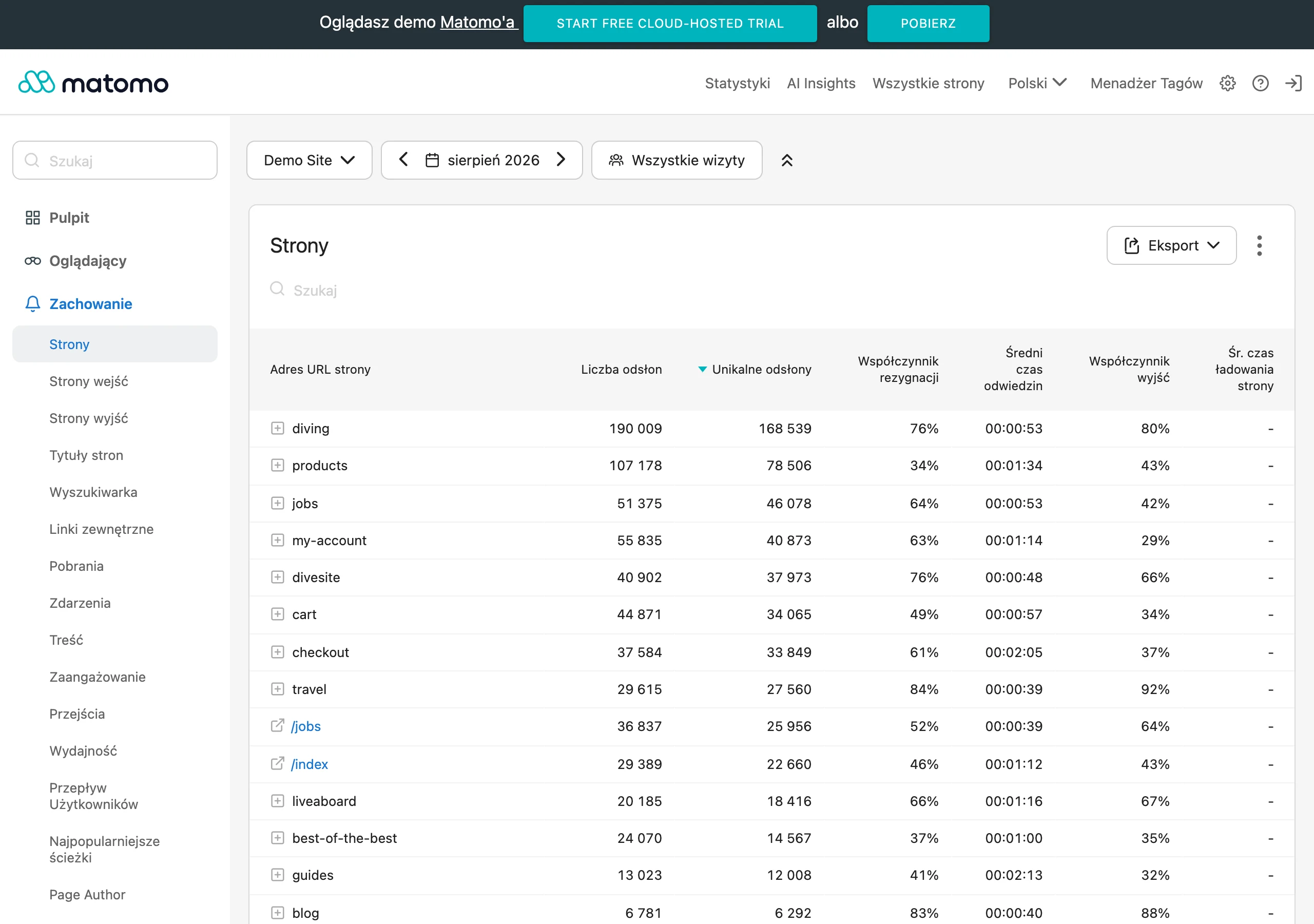
Concentrating revenue and leads on a single source matters a great deal. A company that relies exclusively on SEO, paid social or a marketplace operates with greater operational risk than a company with several channels that work on different principles. At first, it is only small fluctuations. Then it turns into a cash flow problem. The most resilient systems are those in which one channel captures existing demand, another builds trust, and a third recovers and activates contacts.
The second key factor is the quality of owned assets. This is the foundation. The website, landing pages, contact database, CRM, newsletter and an evergreen content library give the company assets that are not taken away by a platform update or a sudden change in reach. The more value marketing transfers into owned assets, the less dependent the company is on external reach.
Measurement also has a very strong impact on the outcome. Without joining web analytics, tag manager, CRM, advertising systems and sales data, it is easy to confuse a drop in traffic with a drop in conversions, or an attribution issue with a real deterioration in lead quality. First comes chaos in the reports. Then chaos in the decisions. A good strategy is based on measuring the impact on the pipeline and revenue, not just clicks, reach and session cost.
Effectiveness also depends on whether the message can be moved between channels without falling apart. If every campaign is created from scratch, the team responds slowly and loses consistency of message, while costs grow faster than the results. Instead of carving out separate worlds in each channel, it is better to build one system. A modular content structure delivers better results: one topic developed in parallel in an article, landing page, email, advert, FAQ and sales materials.
The last important factor is funnel efficiency. This is the test of truth. Even good traffic will not save the result if the form is too difficult, the landing page does not match the intent, the offer is unclear or the lead reaches sales with a delay. First you lose conversions. Then you lose trust. Marketing resilience grows when the company improves conversion and lead-handling quality, because this makes it less dependent on fluctuations in traffic costs.
What steps should you take to implement resilient marketing?
Resilient marketing is not implemented “from tomorrow”. It starts with a hard check of what the company is most dependent on today and where it is really losing control of results. This is a straightforward diagnosis: which source delivers most of the leads, what happens to traffic after it lands on the site, and whether marketing data actually ties in with sales. First you need to build visibility of the risk, and only then add new channels and campaigns.
- Analyse the share of channels in traffic, leads and sales. If one source is responsible for most of the pipeline, treat it as a business risk, not just a marketing one.
- Secure access to tools and the team. The minimum is unforgiving: web analytics, tag manager, CMS, ad systems, CRM, mailing tool, implementation resources and someone who really delivers content.
- Organise the map of demand and intent. Split queries and topics into those that capture ready demand, build trust and activate contact, because otherwise you are throwing everything into one basket.
- Build a central hub in your own assets. Most often this is a site with well-designed landing pages, forms, CTAs, consultation or demo bookings and a place to collect first-party data.
- Implement end-to-end measurement. Configure events, goals, UTM, mapping of lead sources in CRM, pipeline stages and a dashboard that shows not only traffic, but also lead quality and the impact on sales.
- Add channels with different roles. Search and content can handle active demand, email and automations retention, remarketing intent recovery, and webinars and partnerships expert reach, instead of trying to squeeze everything out of one channel.
- Create content and messaging in a modular form. One well-developed topic should be usable on the site, in a campaign, in email, in sales materials and in remarketing, rather than dying after one publication.
- Regularly improve conversion. Test headlines, the offer, forms, alignment between the ad and the landing page, site speed, traffic segmentation and the way leads are handed over to sales, because small friction points can eat the whole result.
Sequence matters. If a company first expands its channel mix without measurement and a functioning landing page, it usually only multiplies chaos faster. The question is: why pour traffic you cannot count and close. First you set the foundations, then distribution, and only at the end budget scaling.
At the operational stage, it is crucial to set alert thresholds and response rules. For example: what do we do in the event of a sudden drop in organic traffic, a rise in acquisition cost or a drop in lead quality in CRM, before the topic spreads through the company as gossip. Resilience is not about nothing changing, but about the company having a ready-made way of reacting without losing control of the pipeline.
The most common mistake is trying to “save the result” by simply increasing the ad budget. It works briefly, and then the truth comes out: problems with the offer, landing page, measurement or sales follow-up come back with redoubled force. It is better to treat implementation like building a system in which channels, content, data and sales work together. Not alongside each other, but together.
Jakie są najczęstsze błędy w marketingu wielokanałowym?
The most common mistakes are simple and painful. They are dependence on one channel for results, weak measurement, a lack of a coherent conversion journey and marketing being disconnected from CRM and sales. Many companies call their marketing multichannel only because they publish content in several places. That is still not enough if most leads and revenue still come in from one source. Real resilience only starts when channels have different roles and the budget can be shifted without stopping the pipeline.
A common mistake is treating every channel in exactly the same way. In practice, search, email, remarketing, webinars or social media work at different stages of the decision process and have different jobs in the funnel. When a company expects immediate sales from every channel, it quickly cuts actions that calmly build demand, trust and a data base for later.
The second problem is less spectacular, but more costly. It is publishing content without a map of intent and without a plan to move to contact, so articles, posts and campaigns are created, but the user is not given a clear next step. Traffic grows or stays flat, but it does not turn into leads because there is no matching CTA, form, lead magnet or logical landing page.
Many companies also waste paid traffic. They send it to generic subpages instead of precise landing pages, which lowers conversion, blurs user intent and makes analysis harder. If the message in the ad, the headline on the page and the offer are not saying the same thing, acquisition cost usually rises faster than traffic.
- Reporting only on clicks, reach and media costs, without hard data on lead quality and sales.
- No linkage between forms, lead sources and pipeline stages in CRM.
- Ignoring first-party data, the newsletter and automation, which makes the company depend almost entirely on external platforms.
- No procedure for responding to drops in visibility, rising ad costs or e-mail deliverability issues.
- Evaluating channels too quickly, without taking into account the length of the buying cycle and the supporting role of some activities.
A separate mistake is the lack of work on conversion after someone lands on the site. Companies try to save the result with another channel or a bigger budget, even though the problem lies in the form, an overly long path, a slow site or weak sales follow-up. Marketing resilience is built not only by new traffic sources, but also by reducing losses at the next stages of the funnel.
In practice, many teams react only after losing results. By then it is usually too late, because rebuilding reach, the contact base and measurement takes longer than the drop itself. What matters is constant monitoring of each channel’s share in leads, traffic quality and the pace of transition to sales, before the problem hits revenue.
Jak mierzyć efektywność i wpływ marketingu na przychody?
Marketing’s impact on revenue does not come from instinct. It is measured by combining data on traffic source, user behaviour, lead quality, pipeline stages and closed sales. Data from ad platforms alone does not get the job done, because it mainly shows clicks and conversions assigned “in its own way” by a given system. That is simply not enough for budget decisions if some sales close later, offline or after several contacts. The key thing is not which channel “brought the click”, but which one really brings valuable sales opportunities and revenue.
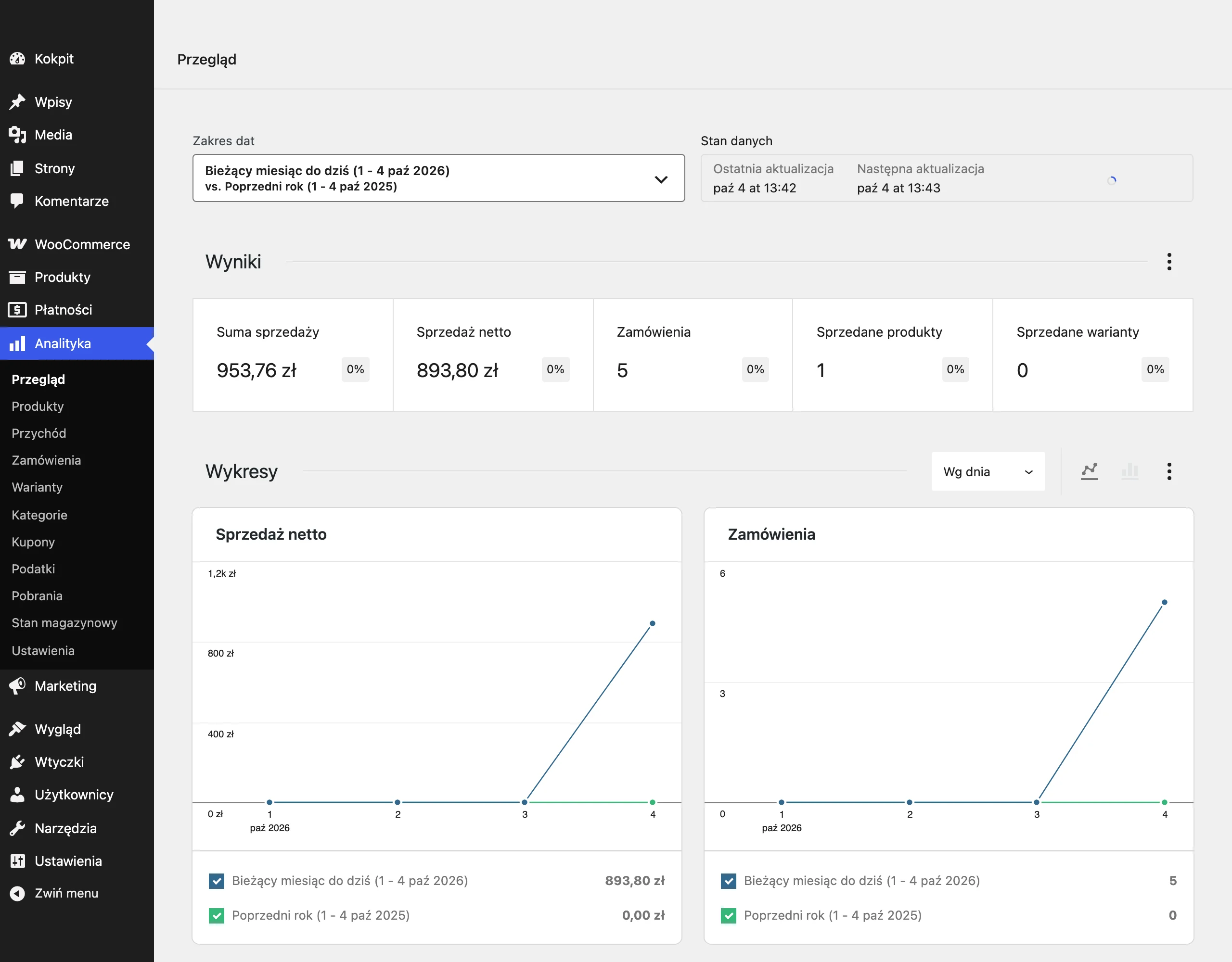
The foundation is simple: collecting the right data from the first visit to the sale. In practice, this means consistent UTM tags, events and conversions in analytics, integration of forms with the CRM, recording the source of the first and last contact, mapping funnel stages, and the ability to attribute a won sale to a campaign or a group of activities. Without this, we are guessing blindly, because it is hard to distinguish a drop in traffic from a conversion problem, and a conversion problem from an attribution error.
Measurement is worth structuring in layers. And this is not an academic whim. Each layer answers a different decision-making question, so mixing metrics in one bucket usually ends in bad conclusions. Media data tells you how much reach costs, onsite data shows whether the website and offer convert, CRM data verifies whether the lead is any good and whether it moves on. Only sales data completes the picture of impact on revenue.
- Traffic layer: users, sessions, channel share, cost, CTR, share of branded and non-branded traffic.
- Conversion layer: landing page conversion rate, cost per lead, form quality, abandonment rate.
- Pipeline layer: number of accepted leads, meetings, quotes, sales opportunities, speed of movement between stages.
- Revenue layer: number of won deals, sales value, customer acquisition cost, channel share in the pipeline and revenue.
Counting leads is not enough. The key is to measure their quality, not just volume, because a channel that delivers a cheap form submission may be weaker than a more expensive one if the leads do not reach a sales conversation or quickly drop off. What is the point of a great-looking cost per lead if the pipeline is going nowhere. The best filter for marketing is whether the lead moves on to the next stages and how effectively it turns into sales.
Attribution should be treated as a working tool, not as a perfect reflection of reality. The user often sees the brand in several places, comes back directly, signs up for the newsletter and only then converts. The problem is that one attribution model likes to pretend it is the ultimate truth, but the reality is that the journey can be fragmented. That is why it is worth comparing several perspectives at once: the first contact source, the last source before conversion, and the channel’s share in the path. This leads to better decisions than blind faith in a single attribution model.
In companies with a longer sales cycle, time and lag indicators are useful. If marketing generates leads today and sales closes them after a few weeks or months, a short-term report can understate the real impact of the activities. The question is: are we assessing the channel by what is visible immediately, or by what actually delivers the result. In that case, it is better to look at lead cohorts, time to meeting, time to quote and time to win, instead of judging a channel only by current ROAS.
A simple management dashboard with a few warning indicators works well here. It has to be ruthless in its diagnosis. It should show not only the final result, but also the moment when the funnel starts to crumble and where momentum is being lost. If traffic is flat but the number of sales opportunities is falling, the problem usually does not lie with media, but with the website, offer, qualification or the way leads are handled. The question is: where exactly is the chain breaking.
In the end, what matters is the routine of reviews and the readiness to make adjustments. Not reporting for reporting’s sake, but decisions. Measurement should help reallocate budget, improve landing pages, change messaging and cut low-quality channels, instead of producing nice slides for the drawer. From small shifts to hard cuts, this is meant to be a process, not a decoration. If the data does not lead to specific operational decisions, the system may look analytical, but it does not increase marketing resilience.
FAQ
Frequently asked questions
How does channel and algorithm resilient marketing work?
It is based on a system where results do not depend on one platform or one source of traffic. Owned assets, measurement, an effective funnel and the ability to shift activities between channels are key.
Why is it not worth relying on just one marketing channel for sales?
Because one algorithm change, a rise in cost per click or a drop in reach can immediately hit leads and sales. Several channels with different roles reduce that risk.
What should be the foundation of resilient marketing?
First and foremost, owned assets: a website, landing pages, a contact database, CRM, a newsletter and evergreen content. The more value these assets hold, the less dependent you are on external platforms.
Does multi-channel marketing work only when there are more channels?
No, the number of channels alone is not enough. It works only when each channel has a specific role and the whole system is held together by content, data and measurement.
What elements need to be measured in resilient marketing?
You need to track events and conversions, lead sources, pipeline stages and the impact of activities on sales. Analysis of clicks and reach alone does not give the full picture.
What are the most common mistakes in multi-channel marketing?
Most often, companies make results dependent on one channel, have poor measurement and lack a coherent conversion path. Another problem is sending traffic to generic subpages instead of matched landing pages.