

Search engine, social media and ad platform algorithms change regularly. And with them, visibility, acquisition cost and traffic quality shift too, sometimes from one day to the next. That is why marketing cannot rely on a single channel or a single content format. The biggest risk is becoming dependent on one platform whose rules you do not control. A resilient model is built around owned assets, robust measurement and the ability to shift emphasis smoothly between channels. In practice, the aim is that after an algorithm update you do not start from zero, but know what dropped, why it dropped and how to offset it. This setup does not eliminate fluctuations, but it clearly makes it easier to maintain leads and sales.
What is marketing resilient to algorithm changes?
Resilient marketing to algorithm changes is a way of running activity in which results do not depend on one platform or one traffic source. This approach combines SEO, content marketing, UX, analytics, e-mail marketing, retention and conversion optimisation into one coherent system. The goal is simple: stability, not short-term growth based on tricks tailored to a specific algorithm. The question is whether your results will survive the next rule change.
The core of such an approach is owned assets: the website, contact database, first-party data, content library and specialist expertise. These are what make it possible to win users back, return with communication and distribute content without paying for every single reach again. The more value a company builds on its own properties, the less impact a single update to an external platform has. And that is not a cliché, but an advantage you can see in the numbers after the first drop.
In practice, this model is not about hunting for loopholes in the algorithm, but about building several parallel sources of acquisition and traffic recovery. In addition to search, direct visits, newsletters, referrals, partnerships, evergreen materials and regularly updated content all matter. When one channel weakens, others can take over part of the result and keep momentum going. Instead of one lever, you have several, and that makes the difference.
This approach also has an operational dimension. After a drop in visibility, you need to quickly distinguish a reach problem from a traffic quality, conversion or offer problem. If you do not measure lead quality and user behaviour after landing on the site, a drop in traffic alone tells you too little. Resilient marketing therefore gives you not only greater stability, but also faster diagnosis and better decisions. The key is to know exactly what is breaking, not just to watch the chart.
What are the key elements of implementing marketing resilient to algorithm changes?
The key implementation elements are risk audit, structured measurement, development of owned assets, content optimisation and UX, and distribution diversification. It sounds like a list. But note: these are not separate actions, but a system in which each element supports the others. First you need to know what the company is dependent on today, and only then decide what to fix and what to develop. Otherwise, instead of resilience you just get another campaign that works until the next update.
- Audit of channel and page resilience: checking which traffic sources and which subpages really drive leads or sales, where historical declines have occurred and how dependent performance is on brand and non-brand traffic.
- Mapping risks and priorities: identifying the content, keywords, campaigns and sections of the site most sensitive to changes, and breaking the work down into quick fixes, structural actions and the development of supporting channels.
- Order in analytics: implementing tracking for events, micro-conversions, main conversions, lead quality and assisted attribution so you can assess not only traffic volume, but also its real value.
- Strengthening owned assets: developing service pages, topic hubs, FAQ sections, knowledge bases, downloadable materials, newsletters and user re-engagement scenarios.
- Content optimisation and information architecture: resolving keyword cannibalisation, aligning with intent, stronger internal linking, refreshing older publications and connecting informational content with transactional content.
- Technical and UX improvements: more efficient indexing, speed, mobile, accessibility, clearer forms and shorter conversion paths that reduce drop-offs.
- Distribution diversification and iteration: using email, social media, partnerships, remarketing and sales materials, and continuously adjusting course based on data.
The key is to start implementation by looking at the impact on business results, not at the number of publications. First you need to identify which pages are critical for revenue, which pieces of content generate lots of impressions without conversions, and where there is a mismatch between user intent and the offer. Updating, combining or redesigning existing content often delivers more than publishing more, deceptively similar articles.
The second foundation is measurement. Without proper conversion and lead quality tracking, it is impossible to tell an algorithm problem apart from an offer problem, a site problem or low-quality traffic. In practice, this means connecting data from analytics, CRM and ad dashboards, even if the attribution model is not ideal to begin with. The question is: what exactly do we consider a “good” lead, and where does that show up in the numbers.
The scope of implementation depends on the state of the site, the number of channels, the quality of the current content, CRM maturity and whether the team can quickly roll out editorial, technical and sales changes. A company with a large content library usually gains most from organising and updating, while a company with a small first-party data base needs to develop its newsletter, downloadable materials and retention faster. Landing pages, forms and contact paths are just as important as visibility itself, because they are what turn traffic into results.
What risks are associated with dependence on a single marketing channel?
Dependence on a single marketing channel is like playing Russian roulette. One change to an algorithm, advertising policy or distribution model can, from one day to the next, reduce the number of leads and sales. And it is not just about a drop in reach. Usually, acquisition costs rise too, traffic quality worsens, and the company comes under pressure to make quick, frantic budget decisions. If one channel is responsible for most of the result, the company does not control its growth pace as much as it thinks it does.
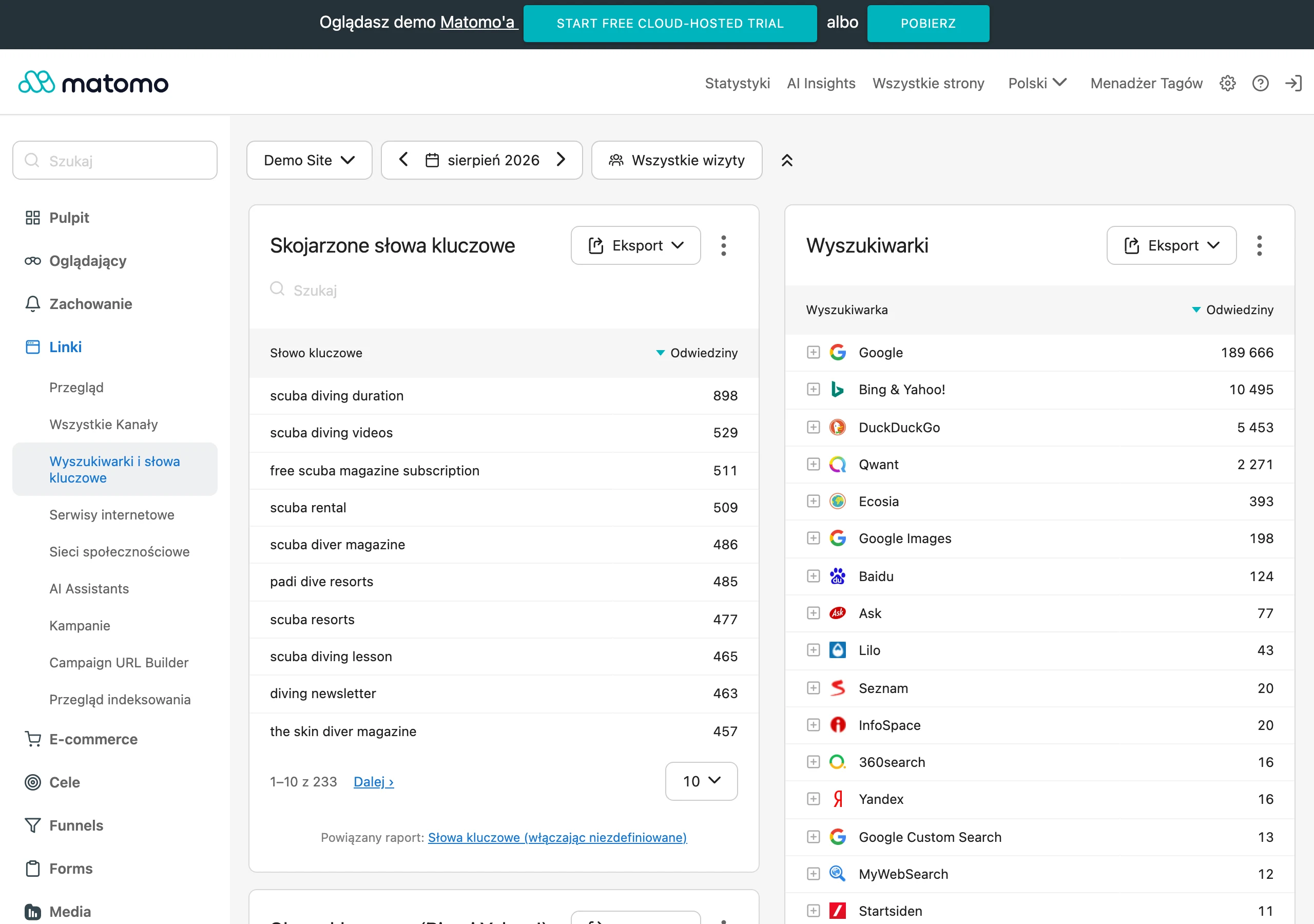
The most risky situation is when a brand has “nice” traffic, but almost no owned assets. This is the case with companies that do not build a contact base, do not collect first-party data, do not build direct traffic and do not have content that users return to regardless of the platform. Then every drop in visibility has to be rescued with spend, not a system. Instead of a mechanism that is already working, there is ad hoc boosting with budget.
The second risk is more insidious. It is a mistaken diagnosis of what is actually breaking. Without proper measurement, it is easy to conclude that the problem is the traffic drop itself, when the real issue lies in the quality of visits, a mismatch between content and intent, or poor UX after landing on the site. The question is: what exactly has fallen, the counter or the value. Measuring only sessions or reach gives a false sense of control.
Strong dependence on a single channel also undermines the ability to test and learn. When the entire result rests on SEO, social media or paid ads, the team usually optimises for one logic instead of developing several sources of acquisition and traffic recovery. It is convenient. And short-sighted. In practice, this ends with a weaker newsletter, neglected evergreen content, a lack of partnerships and ineffective remarketing.
Over the longer term, this model reduces the resilience of the entire funnel. Fluctuations in one place start hitting sales, work planning and team priorities, and then margin. Not X, but Y: not “a worse month”, but the whole machine becoming unstable. Without channel diversification, even good results can be fragile, because it is impossible to know whether they will hold after the next update.
How does an audit of resilience to algorithmic changes work?
An audit of resilience to algorithmic changes checks what marketing results really depend on, where the biggest risks lie and which elements can be improved fastest. It is not a general review of “content overall” or a hunt for SEO mistakes. The key is to establish which channels, pages and campaigns have a real impact on revenue or leads, and which only look good in the report. A good audit does not end with a list of mistakes, but with an action plan ranked by impact on result stability.
- First, the structure of traffic and revenue is analysed: the share of channels, dependence on brand and non-brand, lead sources and the pages that really generate business results.
- Then the history of drops and anomalies is checked: when visibility or conversions fell, which content types were affected, and whether the problem concerned reach, traffic quality or the conversion path.
- The next stage is verifying measurement: events, conversions, micro-conversions, lead quality, assisted attribution and data consistency between analytics, CRM and advertising systems.
- Then it is time for a hard assessment of the site’s condition: indexing, information architecture, internal linking, speed, mobile-friendliness, accessibility, forms and all the elements that undermine the path to contact or purchase.
- At the end, risks are mapped and priorities are set: which content to consolidate, what to update, which pages to treat as critical, and which channels to develop as real support.
In practice, the key is assessing user intent and whether the content genuinely fits the offer. Traffic may be high. But if the page answers questions that are too general or does not lead the person to the next step, business resilience remains just a slogan. That is why the audit must separate content that “generates views” from content that genuinely supports sales. The question is: is it traffic, or just noise.
The audit should also check whether the company has its own assets for traffic recovery. These are not decorative extras, but specifics: a newsletter, a contact database, CRM automations, downloadable materials, remarketing and content that can be distributed across several channels. Without this, you are at the mercy of platforms. If there is no way to reach the user again after losing reach, resilience is only apparent.
The outcome of the audit must be usable. And that is not a cliché. Instead of vague “recommendations”, you need operational artefacts: a channel risk map, a backlog of technical and UX fixes, a content update plan, a list of pages critical to revenue and rules for responding to sudden drops. Such a document does more than help fight fires. It also makes it possible to shift weight between channels faster, when one platform starts performing worse and no longer delivers results.
What are the best practices for content and UX optimisation?
The best practices for content optimisation and UX boil down to one thing: align the page with the user’s real intent and remove the obstacles that block the path from entry to conversion. Visibility is only the beginning. If a user lands on material that does not match the question, or does not know what to do next, all that “growth” stays in the stats. That is why content and on-page experience need to be treated as one system, not two separate projects. The most common problem is not a lack of traffic, but poor alignment between the query, the content promise and the next step in the funnel.
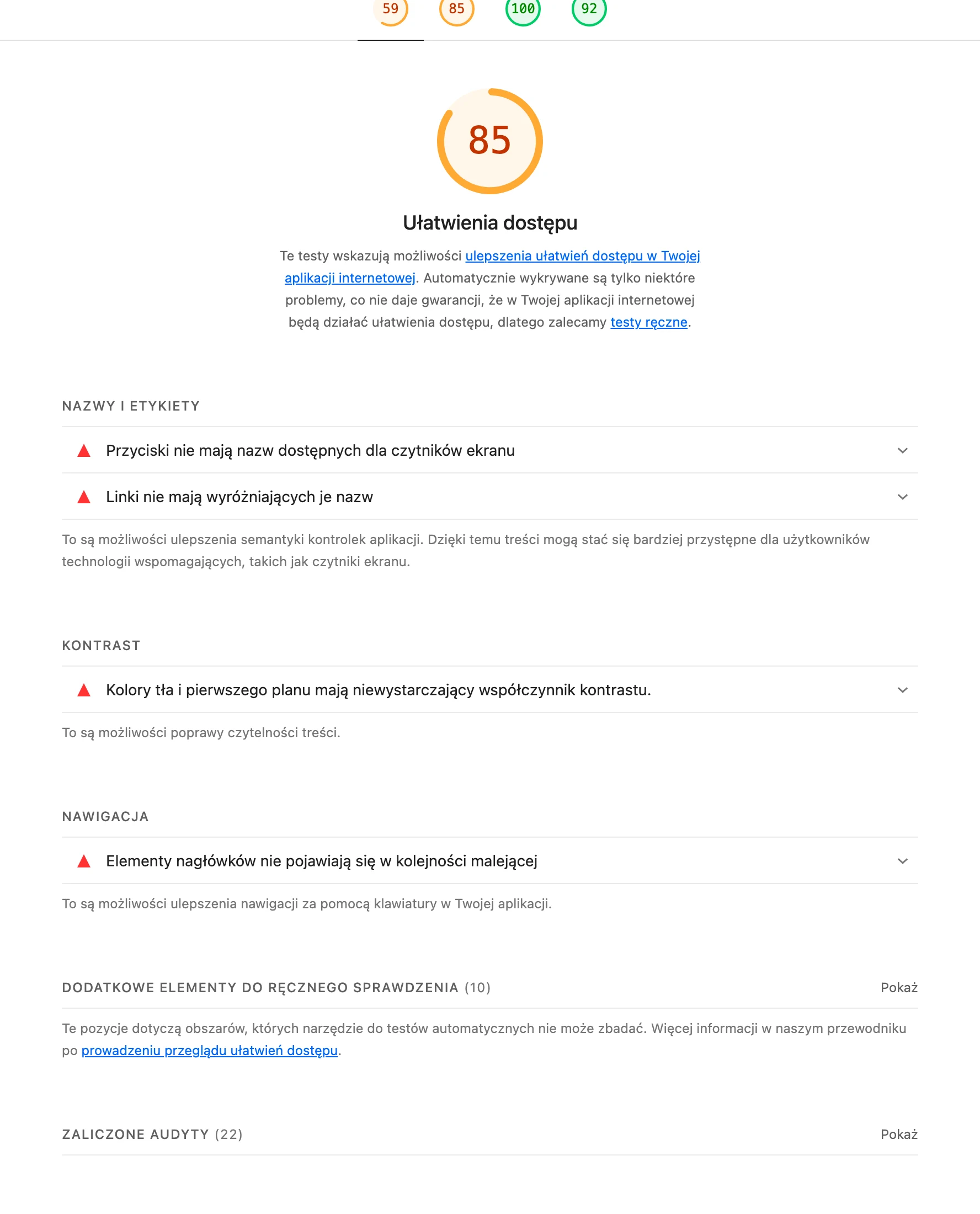
In practice, it is best to start by tidying up what is already on the site. First, a quick review. Then specifics: which articles and service pages address similar intents, cannibalise each other or generate impressions without any business effect. Good results come from consolidating weaker publications, updating older material, refining headings, internal linking and tighter linking of informational content with offer pages. Instead of adding more similar texts, it is better to strengthen the ones that already have potential. Updating and strengthening existing content very often delivers more than publishing yet more similar articles.
The content needs to be complete. Specific. And grounded in the real experience of the brand or author, because the audience wants a quick answer, context and an understanding of where that credibility comes from. A clear information structure, FAQ sections, use cases, trust elements, update dates and clear CTAs matched to the stage of decision all help with this. The problem is that when educational material ends without a natural transition to an offer, lead magnet or contact, the traffic is simply wasted.
UX is judged once someone lands on the page. Not by appearance alone. What matters are hard facts: loading speed, the mobile version, readability of forms, the number of steps needed to complete an action, and whether the user understands where they are and what they will gain next. If a form, pricing, offer or navigation slows down the decision, the algorithm is not the main problem — the problem is friction in the conversion path. That is why you should analyse not only pageviews, but also scroll depth, clicks, microconversions, form abandonment and lead quality by traffic source.
Good optimisation does not happen once. It is an iteration based on data, carried out regularly and without sentimentality. You need to keep your finger on the pulse: CTR, on-page behaviour, conversion rate, topics generating revenue and pages with lots of traffic but low effectiveness. Without proper measurement, it is easy to confuse a drop in reach with a drop in traffic quality or a problem with the site itself. And then it is all downhill, just in the wrong direction: flawed editorial decisions, misplaced budgets and nervous “saving” of channels that were never at fault.
Why is channel diversification key in marketing?
Channel diversification is not a decorative part of a strategy. It is a safety valve. It reduces the risk that one algorithm change or one change in ad policies will suddenly stop the flow of leads and sales, leaving the business with an empty pipeline. The point is not to be everywhere, but to build several stable routes to reach the audience. When one channel weakens, you can shift emphasis to other sources and keep the pace. The most resilient marketing systems are built on owned assets, while external channels are treated as a lever, not a foundation.
In practice, this means one thing: content and offer work in parallel in several places. In search, email, direct traffic, partnerships, remarketing, sales materials or a knowledge base. This means the publication does not depend on one feed, and re-engaging the user does not end after one visit. This is especially important where the buying process is longer and the decision needs several brand touchpoints. If a company has a newsletter, a sensible CRM and evergreen content, it is easier to return to the user without buying the entire traffic again.
Channel diversification works best when each channel has a clear role:
- SEO and evergreen content build a steady flow of traffic with a specific intent.
- Email and CRM help to regain attention and work on retention.
- Paid media speed up acquisition and message testing.
- Remarketing closes the users who did not convert on the first attempt.
- Partnerships, webinars and referrals take reach beyond your own platforms.
The most common mistake is simple. A company launches many channels but has no shared measurement, no consistent message and no plan for reusing content. As a result, the number of activities grows, but resilience does not. A more sensible approach is to develop fewer channels, but with a clearly assigned role in the funnel and with measurement of impact on revenue, not just on reach. Diversification only makes sense once you know which sources deliver not only clicks, but also valuable audiences.
It also comes down to budget decisions. When a company sees that one channel is getting more expensive, losing quality or starting to wobble, it can shift resources between acquisition, retention and user re-engagement more quickly. And that is where the difficulties start. Such flexibility will not happen without first-party data, properly configured analytics and an organised content distribution process. Diversification does not eliminate the impact of algorithms, but it significantly reduces their ability to overturn the entire business result.
What are the most common mistakes in marketing resistant to algorithm changes?
The list of mistakes is fairly predictable, but the consequences can be brutal. These include measuring only traffic, becoming dependent on a single channel, publishing a large number of similar pieces without any quality edge, ignoring UX after the user lands on the site, and lacking a plan of action in the event of a sudden drop in visibility. These problems usually do not burn through results straight away, but they do mean the company reacts too late and blindly. And then even a small change in search, social media or paid campaigns can shatter funnel stability. The most dangerous mistake is not the fall in reach itself, but the lack of data and a process that allow you to quickly assess what has actually stopped working.
- measuring success solely by the number of visits, without assessing traffic quality, leads and sales,
- relying most of the result on one acquisition source,
- producing lots of content on similar topics without a clear intent and without updating older materials,
- disconnecting content from the services page, offer and conversion path,
- ignoring technical and mobile issues, and forms that reduce performance after the user lands on the site,
- lacking owned assets such as a contact database, newsletter, first-party data and re-engagement scenarios,
- lacking an established response procedure when visibility, CTR, the number of leads or the quality of enquiries drops.
The first common mistake is viewing marketing through the prism of impressions, sessions and rankings, without tying it to business results. The numbers grow, while the meaning slips away. In practice, this model masks the problem, because traffic may be going up, while leads become weaker or simply misaligned. If you do not measure traffic quality after the user lands on the site, you will not tell the difference between an algorithm problem and a problem with the content, offer or form. And the question here is: what is actually delivering value. That is why you should track not only the final conversion, but also micro-conversions, the sources of the best leads and user behaviour on key pages.
The second mistake is building the entire result on one channel. That is a straightforward route to fragility. This applies not only to SEO, but also to ads, a single social feed, one lead-generation campaign or one partner. Such a setup is convenient until it works, but when distribution rules change or acquisition costs rise, the company loses its safety margin and starts firefighting. Resilience does not mean being everywhere, but having at least a few sensible sources of demand and user re-engagement.
The third mistake is mass-producing similar content without any expert edge and without organising what already exists. Lots of text, little substance. The result is predictable: keyword cannibalisation, diluted intent and a loss of trust, because the user gets several versions of the same answer, and none of them leads them to the right next step. Instead of adding yet another article on the same topic, it is often better to merge several weak publications into one strong piece that genuinely covers the topic. In resilient marketing, what wins is a content library that can be updated and connected with the offer, not the sheer number of published URLs.
The fourth mistake is ignoring what happens after the click. A click is cheap, failure after the click can be expensive. Even strong visibility will not help if the site is slow, unclear on mobile, has weak CTAs or the form requires too much effort. In such situations, teams too easily assume the problem lies in the acquisition channel, when the real loss is being caused by UX, information architecture or a lack of consistency between the content promise and the offer.
The fifth mistake is the lack of owned assets and response procedures. This is not a detail, it is a structural gap. The company publishes, promotes and buys traffic, but does not build a contact database, does not develop a newsletter, does not record campaign insights and does not define which pages are critical to revenue. When a drop appears, the search for a culprit begins instead of a calm diagnosis. Good practice is a ready-made framework: what we check in the first 24 hours, which metrics we compare, who is responsible for content, technical work, campaigns and communication with the sales team.
In many companies, the organisational mistake is still there too. Marketing, sales, content and IT run on separate tracks, so nobody ties it all together and nobody sees the full picture. The result is predictable: content misses the real questions customers are asking, forms collect poor data, and the ads team optimises campaigns for a cheap lead rather than a valuable customer. The question is who is then protecting revenue. Marketing resilient to algorithm fluctuations requires one shared model of priorities, because only then is it possible to shift weight between channels quickly and improve what actually delivers the result.
FAQ
Frequently asked questions
How does marketing resilient to algorithm changes work?
It bases results on several traffic sources rather than one platform. It combines SEO, content, UX, analytics, email marketing, retention and conversion optimisation into one system.
Why is relying on one marketing channel risky?
One change in an algorithm, advertising policy or distribution model can suddenly reduce the number of leads and sales. Acquisition costs also rise, and traffic quality often drops.
What should be checked in an audit of resilience to algorithm changes?
You need to assess what your results really depend on, where the biggest risks are and which elements can be improved fastest. Also important are traffic channels, pages generating results and the consistency of data from analytics, CRM and advertising.
Which elements strengthen marketing resilience to algorithm changes?
Key elements are owned assets such as the website, contact database, first-party data and content library. Structured measurement, content and UX optimisation, and distribution diversification also help.
How do you optimise content and UX to increase marketing resilience?
Content should match user intent and lead them to the next step in the funnel. It is worth organising existing materials, merging similar publications, improving internal linking and simplifying the conversion path.
Why is channel diversification so important in marketing?
Because it reduces the risk that one change will stop the flow of leads and sales. When one channel weakens, others can take over part of the result and maintain the pace of activity.