

SEO can be the key to your website’s success, but even minor mistakes can significantly reduce its visibility in search engines. From poor keyword selection to slow loading times or duplicate content – these mistakes cost traffic and conversions. In our article, you’ll learn about the most common SEO pitfalls, practical solutions and the tools that will help you avoid them and achieve better results.
The biggest SEO mistakes and how to avoid them
SEO mistakes can seriously affect a website’s position in search results, which in turn leads to a drop in organic traffic and lower conversion rates. To avoid such problems, it is worth learning about the most common mistakes and finding out how to fix them.
One of the key mistakes is poor keyword selection. Many websites use phrases that do not match users’ real needs. That is why keyword research should form the foundation of every SEO strategy, so that content is matched to real search queries.
Another common problem is duplicate content. Repeating text on different subpages or copying it from other websites can result in penalties from search engines. Unique and valuable content is essential for success.
Neglecting meta tags, such as titles or descriptions, also negatively affects website visibility. They should be unique, contain relevant keywords and encourage users to click.
Slow page loading time is another technical mistake that puts off both visitors and crawlers. Speed optimisation through image compression or the use of caching is key to improving performance.
Lack of responsiveness is a serious problem in the mobile era, where most traffic comes from portable devices. The website must be adapted to different screen sizes to ensure convenience for users.
Poor image optimisation can slow down a website and make it harder to index. It is important that images are compressed without losing quality and are provided with appropriate alt attributes.
To avoid these mistakes, it is worth carrying out an SEO audit regularly and using tools that monitor website performance. This makes it possible to quickly detect problems and make adjustments, which translates into better visibility in search results.
- 01Incorrect keyword selectionIt does not meet needs. Users search differently.
- 02Duplicate contentCopying on the site. Penalties from search engines.
- 03Neglecting meta tagsUnoptimised descriptions. Loss of visibility.
These mistakes lead to a drop in organic traffic and lower conversion rates — avoid them!
Keyword selection mistakes
Keyword selection mistakes can significantly affect the effectiveness of an SEO strategy. One common problem is choosing phrases that do not match users’ real search queries. For example, using overly general terms such as “products” or “services” rarely attracts valuable traffic. Instead, it is worth focusing on long phrases (long-tail keywords), which better reflect the intentions of people looking for information.
Another common mistake is ignoring competitor analysis. Without understanding which keywords other players in the industry are using, it is difficult to find a niche and stand out in search results. For this purpose, it is worth using tools such as Google Keyword Planner or SEMrush, which help identify the most valuable phrases.
Underestimating local keywords is another problem. For companies operating in a specific region, it is crucial to take geolocation into account – e.g. “hairdresser Kraków” instead of the generic “hairdresser”. This strategy increases the chances of reaching local customers and improves visibility in a given area.
It is also worth avoiding excessive focus on a single keyword phrase. Keyword diversification allows you to reach a wider audience and minimises the risk of penalties from search engine algorithms for so-called keyword stuffing, i.e. excessive optimisation for one phrase.
You also cannot forget about regularly updating the keyword list. Trends and user preferences change dynamically, so it is important to monitor these changes and adapt your SEO strategy to the current needs of the market. This helps maintain high effectiveness of your efforts for a longer time.
Duplicate content
Duplicate content is one of the more serious SEO mistakes, and it can significantly lower a page’s position in search results. Search engines such as Google prioritise unique and valuable content, so copying text between subpages or from other websites is treated as an attempt to manipulate algorithms. The consequences can be severe – from a drop in visibility to penalties from search engines.
To avoid such problems, it is worth focusing on creating original content that meets audience needs. Regularly updating existing materials also helps maintain their freshness and uniqueness. If you want to check whether your site contains any duplicate fragments, you can use tools such as Copyscape or Screaming Frog.
Technical issues should not be overlooked either. Duplicate URLs or a lack of 301 redirects can lead to a situation where the same content is available under different addresses. This not only makes it harder for search engine bots to index the site, but also negatively affects its visibility.
Avoiding duplicate content brings many benefits – it not only improves a page’s position in search results, but also builds user trust and strengthens brand authority. That is why it is worth taking this issue into account when planning an SEO strategy.
- 01Natural keywordsIntent research, without keyword stuffing.
- 02Unique product descriptionsAvoiding duplicates, original copy.
- 03Regular content auditsIdentifying issues regularly.
Focus on quality, originality and substantive value for the user, using dedicated tools.
Neglecting meta tags
Neglecting meta tags such as the title and description is one of the more common SEO mistakes and can significantly reduce a site’s visibility in search results. These elements play a key role in communicating with search engines by providing information about the website’s content. Their proper optimisation not only affects SEO, but also attracts users’ attention and encourages them to click.
The page title should be unique, contain the main keywords and accurately reflect the content of the subpage. The optimal length is 50-60 characters – longer titles may be truncated in search results. The description, on the other hand, serves a promotional function: it must be concise (150-160 characters), contain relevant keywords and effectively encourage users to visit the page.
Duplicating meta tags across multiple subpages or failing to personalise them can result in a drop in rankings. Search engines interpret such practices as a sign of low-quality content. That is why it is worth regularly reviewing and updating meta tags, adapting them to current SEO trends and user expectations.
In the optimisation process, tools such as Google Search Console or Yoast SEO are helpful, as they monitor the effectiveness of meta tags and suggest possible improvements. Thanks to them, you can avoid mistakes related to neglecting them and increase your chances of better online visibility.
Slow page load time
Slow page loading is a common SEO problem that negatively affects both user experience and search rankings. According to studies, websites that take longer than 3 seconds to load record a 38% higher bounce rate. Since Google treats loading speed as an important ranking factor, optimising this parameter becomes crucial for achieving success.
The main culprits behind delays are usually large files, especially images, and inefficient HTML, CSS or JavaScript code. To speed up the site, it is worth:
- compressing graphics without losing quality – for example by using the WebP format,
- simplifying the code by removing unnecessary elements,
- implementing cache (cache), which significantly shortens loading time for returning users.
It is also worth considering modern technological solutions such as AMP (Accelerated Mobile Pages) or lazy loading, which delay the loading of elements not visible on the screen. Analytics tools such as Google PageSpeed Insights or GTmetrix help identify problems and suggest specific corrective actions.
Optimising page load speed brings benefits not only in terms of SEO. Pages that load in under 2 seconds have a 15% higher conversion rate compared with slower websites. That is why it is worth taking care of this aspect already at the website design stage – it is an investment that translates into both better search results and greater user satisfaction.
- 01Indexation monitoringTracking issues, analysing organic traffic (Google Search Console)
- 02Fixing technical errorsQuickly detecting 404s, bad redirects (Google Search Console)
- 03Loading speed analysisTesting load times, actionable recommendations (GTmetrix)
- 04Better performance and experienceMaintaining rankings, improving user comfort (Optimisation)
Subtle technical optimisation is the key to lasting visibility
Lack of responsiveness
Lack of responsiveness is one of the most serious SEO mistakes, especially in the era of mobile device dominance. According to StatCounter data, over 58% of online traffic comes from phones and tablets. If a website is not adapted to different screen sizes, it can frustrate users and lead to a high bounce rate.
Responsiveness involves automatically adapting the layout and content of a page to the screen dimensions. This makes browsing on smartphones, tablets or computers convenient and intuitive. Since 2015, Google has treated responsiveness as a key ranking factor within the Mobile-First Indexing algorithm, which means it indexes pages mainly on the basis of their mobile version.
The main problems associated with a lack of responsiveness include:
- difficult navigation – buttons or links may be too small or hard to click,
- incorrect content display – text may become unreadable and images may extend beyond the screen,
- slower loading – unoptimised elements extend loading times on mobile devices.
To prevent these problems, it is worth opting for RWD (Responsive Web Design), which flexibly adapts the site to different devices. Tools such as Google Mobile-Friendly Test help assess whether a website meets responsiveness requirements. In addition, it is worth:
- optimising images for mobile devices,
- simplifying the navigation menu,
- choosing readable fonts of an appropriate size.
Responsive pages not only improve user experience, but also increase the chances of better positions in search results. It is worth remembering that a lack of responsiveness can result in losing as much as half of potential organic traffic.
Improper image optimisation
Improper image optimisation is one of the most common SEO mistakes, which can seriously affect website performance. The main problem is often the lack of proper compression of image files, which results in slower site loading. According to research, pages with images exceeding 1 MB load on average 2-3 seconds slower, which can increase the bounce rate by as much as 40%.
A key issue in optimisation is the use of ALT attributes. They not only increase accessibility for people using screen readers, but also help search engines better interpret the image content. Their absence can lead to a loss of valuable organic traffic.
Another common mistake is choosing unsuitable file formats. For example, the PNG format, although it offers high quality, often generates large file sizes. Instead, it is worth opting for modern formats such as WebP, which provide better compression without loss of visual quality.
It is equally important to adapt image sizes to the dimensions displayed on the page. Uploading photos in full resolution when they are displayed in a smaller format is a common mistake that leads to wasted server resources and longer page loading times.
To avoid these problems, it is worth using tools such as Google PageSpeed Insights or TinyPNG. They help identify errors related to image optimisation and suggest specific solutions. This makes it possible to significantly improve both website performance and user experience, while also avoiding SEO mistakes.
Technical SEO errors
Technical SEO errors can significantly reduce a site’s visibility in search results, leading to a drop in organic traffic and fewer conversions. One of the most common problems is excessive use of JavaScript. When a site relies mainly on scripts and the content is not rendered server-side, crawlers may have difficulty reading key information. That is why it is worth making sure that the most important elements of the website are available without the browser having to perform complex operations.
Another common mistake is ignoring server-side rendering. Many modern websites use technologies such as React or Angular, which generate content dynamically on the client side. Unfortunately, search engine bots often struggle with such solutions. To address this, it is worth implementing techniques such as Server-Side Rendering (SSR) or Pre-rendering, which ensure content is available to indexing bots.
Another problem is overusing 302 redirects. This type of temporary redirect should only be used in specific situations, e.g. when testing new features. However, if they are used long-term, they can create confusion for both users and search engine bots. Instead, it is better to use 301 redirects, which signal a permanent URL change and help preserve link equity.
The lack of a sitemap is another serious technical mistake. A sitemap makes it easier for bots to quickly and efficiently index the site’s content. Its absence can result in important subpages being missed during the indexing process. That is why it is worth updating the sitemap regularly and submitting it to tools such as Google Search Console.
Indexing problems are also among the common technical SEO mistakes. They can result from incorrect configuration of the robots.txt file or noindex meta tags, which block access to content. Regular technical audits make it possible to detect such errors and implement the appropriate fixes.
To avoid these problems, it is worth using tools that monitor site performance and carrying out regular SEO audits. This makes it possible to quickly identify potential errors and implement the necessary changes, which translates into better visibility of the website in search results and higher organic traffic.
- excessive use of JavaScript can make it harder for indexing bots to access the page content,
- server-side rendering (SSR) is crucial for ensuring content is available to search engine bots,
- 302 redirects should be replaced with permanent 301 redirects.
Overusing JavaScript
Overusing JavaScript is a common technical mistake in SEO that can make indexing a website by search engines more difficult. When a website relies mainly on scripts and the content is not server-side rendered, bots may have problems reading key information. As a result, the page may be omitted from search results or lose positions.
Another challenge is overloading the site with scripts, which significantly increases load time. Research shows that websites taking longer than 3 seconds to load have a higher bounce rate. That is why it is worth using JavaScript sparingly and ensuring that key elements are available without the browser having to perform complex operations.
To avoid these problems, it is worth considering techniques such as Server-Side Rendering (SSR) or Pre-rendering, which make content easily accessible to indexing bots. Regularly testing site performance and optimising JavaScript code – by removing unnecessary functions and compressing files – also brings benefits. Tools such as Google Search Console or Lighthouse are invaluable for monitoring JavaScript’s impact on indexing and suggesting specific fixes.
Let us also remember that too many scripts not only harm SEO, but also negatively affect the user experience. Finding the balance between functionality and performance is the key to success for both search engines and website visitors.
Neglecting server-side rendering
Neglecting server-side rendering is a common technical SEO mistake that can make it harder for search engine bots to access content. Many modern websites use technologies such as React or Angular, which generate content dynamically on the client side. Unfortunately, indexing bots often struggle with such solutions, which leads to key information being omitted from search results.
To prevent this, it is worth considering Server-Side Rendering (SSR) or Pre-rendering. The first solution involves generating content on the server before sending it to the user’s browser, which provides bots with a ready-made HTML page and makes indexing easier. The second approach allows static versions of pages to be prepared specifically for bots, increasing their accessibility.
Lack of proper rendering can result in a drop in the site’s visibility in search results and a reduction in organic traffic. That is why it is crucial to regularly test site performance and implement the necessary optimisations. Tools such as Google Search Console or Lighthouse are indispensable for monitoring this aspect and suggesting specific fixes.
It is worth remembering that correct rendering not only affects SEO, but also significantly improves the user experience. Faster page loading and better content accessibility translate into greater visitor satisfaction and have a positive impact on the overall usability of the website.
Overusing 302 redirects
Overusing 302 redirects is a common SEO mistake that can confuse both users and search engine bots. Although they are intended for temporary use, such as testing new features or short-term changes on a site, using them for too long can lead to indexing problems. Search engines may not treat them as permanent changes, which affects site effectiveness.
One of the main problems is the fact that 302 redirects do not pass the full value of links (the so-called link equity) to the new URL. As a result, the destination page may lose rankings in search results. Instead, it is worth opting for 301 redirects, which signal a permanent change and help preserve SEO value.
Another challenge is creating the so-called “redirect loops”, which can arise when 302 redirects are used excessively in the site structure. Such situations make it harder for crawlers to access content and can lead to important subpages being omitted from search results.
To avoid these problems, it is worth regularly monitoring the redirect structure using tools such as Google Search Console or Screaming Frog. This makes it possible to quickly detect issues and replace temporary redirects with permanent 301 solutions.
Let us also remember that proper redirect management affects not only SEO, but also the user experience. A consistent and clear URL structure builds visitors’ trust and improves overall site usability.
How to avoid SEO errors in content creation
To avoid SEO errors in content creation, it is crucial to focus on quality, originality and substantive value. The first step should be natural placement of keywords, without excessive repetition of phrases, i.e. the so-called keyword stuffing. It is worth using tools such as Google Keyword Planner or Ahrefs, which help select phrases that match users’ actual intent.
Another important aspect is creating unique product descriptions. Copying text from other sites or internally duplicating content can result in penalties from search engines. That is why it is worth spending time preparing original descriptions that not only attract the audience’s attention, but also improve rankings.
Regular content audits are essential for identifying areas that need improvement. They make it possible to check the freshness of texts, the presence of relevant keywords and eliminate any duplicates. Tools such as Copyscape or Screaming Frog are indispensable for detecting duplicated fragments and making the necessary changes.
It is also important to adapt content to different audience groups. Using long phrases (long-tail keywords) makes it possible to reach more specific queries, which increases the chances of conversions. For companies operating locally, it is worth taking geolocation into account – for example, “hairdresser Kraków” instead of the general “hairdresser”.
Optimising meta tags is another key element. Titles and descriptions should be unique, contain relevant keywords and encourage users to click. The title length should not exceed 60 characters, and the description – 160 characters.
You should also not forget about regularly updating the content on the site. Fresh and valuable materials are better evaluated by search engine algorithms and attract more visitors. Adding new blog posts or updating existing product descriptions can significantly affect the site’s visibility.
Avoiding SEO mistakes therefore requires attention to quality, originality and systematic content optimisation. This makes it possible to increase organic traffic and improve the site’s position in search results without the risk of penalties from algorithms.
SEO audit: the key to avoiding mistakes
An SEO audit is a key tool that helps avoid mistakes that could affect a site’s visibility in search results. Thanks to regular reviews, it is possible to detect both technical and content-related issues that reduce the effectiveness of SEO efforts. This makes it possible to make quick corrections and adapt the strategy to the current requirements of the algorithms.
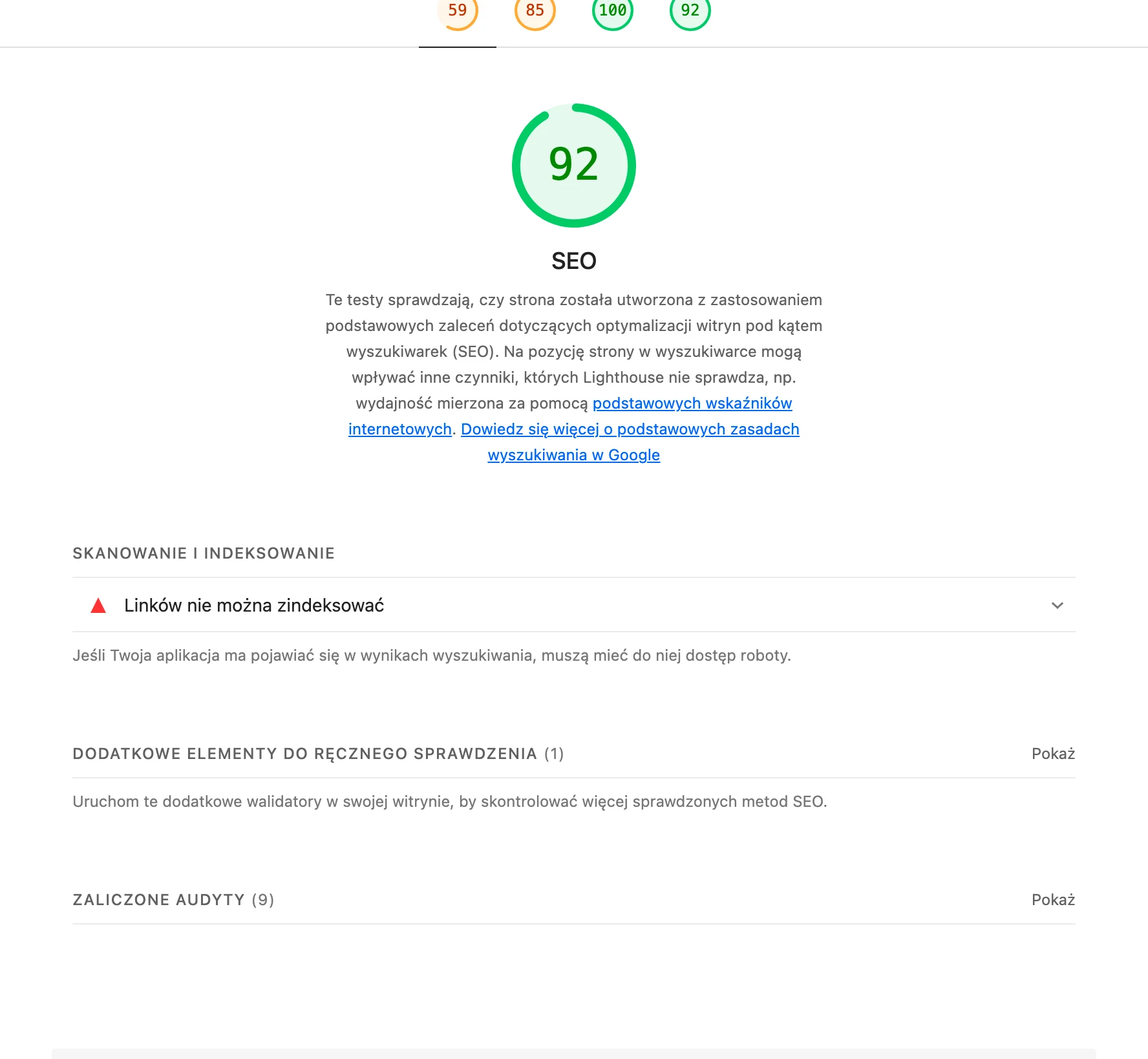
One of the main tasks of an audit is identifying indexing-related errors. An incorrect configuration of the robots.txt file or noindex meta tags can lead to important subpages being omitted by indexing robots. In addition, the audit checks the clarity of the URL structure and eliminates temporary 302 redirects, replacing them with permanent 301 redirects.
Another important area is content optimisation. Duplicated texts, improper keyword placement or a lack of unique meta tags are common mistakes that affect a site’s SEO. The audit makes it possible to detect them and suggest solutions such as creating original product descriptions or updating existing materials.
Page performance is another key element of analysis. Slow website loading, excessive use of JavaScript or a lack of responsiveness can put off both users and search engine bots. Tools such as Google PageSpeed Insights or Lighthouse help you examine these aspects in detail and implement the necessary optimisations.
The audit also includes an assessment of the quality of internal and external linking. An incorrect internal link structure can make it difficult to navigate around the site, and low-quality external links can weaken domain authority. Analysing these elements makes it possible to improve the site’s coherence and its position in the rankings.
Carrying out SEO audits regularly is an investment in the long-term success of a website. They help you avoid penalties from search engines, increase organic traffic and improve the user experience. It is worth remembering, however, that an effective SEO strategy requires constant monitoring and adjustment to changing market conditions and search engine algorithm updates.
Tools for monitoring and fixing SEO errors
To maintain high visibility in search results, tools for monitoring and fixing SEO errors are essential. One of the most popular solutions is Google Search Console, which enables you to track indexing issues, analyse organic traffic and monitor website performance. Thanks to it, you can quickly spot technical faults, such as missing pages (404 errors) or incorrect redirects, and fix them immediately.
When it comes to optimising page loading speed, it is worth paying attention to GTmetrix. This tool analyses in detail the loading times of individual elements, such as images or JavaScript scripts, and provides specific recommendations for improvements. Improving website performance not only leads to a better user experience, but also contributes to higher rankings.
Another helpful solution is PageSpeed Insights, also offered by Google. This tool examines website performance in detail on both mobile devices and desktop computers. It provides detailed reports with optimisation suggestions, such as image compression or simplifying CSS/JS code.
In the case of content-related errors, it is worth reaching for tools such as Copyscape or Screaming Frog. Copyscape helps detect duplicate content on the site or across the internet, which is crucial for avoiding penalties from search engines. Screaming Frog, in turn, offers a comprehensive analysis of the website structure, identifying link issues, internal links, meta tags or the sitemap.
For tracking keywords and competitor analysis, platforms such as SEMrush or Ahrefs are useful. They allow you not only to monitor keyword rankings, but also to examine competitors’ strategies and find new optimisation opportunities.
Using these tools systematically allows you to keep track of your website’s condition on an ongoing basis and respond quickly to emerging problems. This helps you avoid serious SEO mistakes and maintain the effectiveness of your SEO efforts.
FAQ
Frequently asked questions
What are the most common SEO mistakes that reduce website visibility?
The most common include poor keyword selection, duplicate content, neglecting meta tags and slow page loading. Other issues are lack of responsiveness, incorrect image optimisation and technical indexing errors.
How should you choose keywords to avoid making an SEO mistake?
It’s worth basing this on keyword research and choosing phrases that match users’ actual queries. Long-tail keywords, competitor analysis and taking local phrases into account also help.
Why does duplicate content harm website SEO?
Republishing text across subpages or copying it from other websites can be interpreted as an attempt to manipulate algorithms. The result can be a drop in visibility, and even penalties from search engines.
What should meta tags include to support SEO?
The title and description should be unique, include relevant keywords and match the content of the subpage. It’s best to keep the title within 50–60 characters and the description within 150–160 characters.
How can you speed up page loading if it is too slow?
The article points to image compression, simplifying code and implementing caching. Solutions such as AMP and lazy loading can also help.
Why is a lack of responsiveness a SEO problem?
Because most online traffic now comes from mobile devices, and Google treats responsiveness as an important ranking factor. A site that isn’t adapted to phone and tablet screens may have a higher bounce rate and lose organic traffic.