
The client rarely makes a decision based on a simple, general description of a service. Most often they want to check in a minute whether the offer fits their situation, how much it might cost, what the collaboration looks like and where the risks lie. That is exactly what decision-stage articles are for: they are meant to structure the choice and shorten the path to the next step. Their job is not only to attract traffic from Google, but to genuinely guide a person from doubt to an enquiry, consultation or purchase. A well-prepared piece gathers the questions that would normally land with sales, support or an implementation specialist. The result is simple: the user knows faster what to expect and whether it is worth going any further.
What decision-stage articles are and how they support the client
Decision-stage articles are content for people who are one step away from sending an enquiry, having a sales conversation or making a purchase. They are not about “basics for beginners”, but about answers to hard questions: how to choose a service, how variants differ, what affects the price, how long implementation takes and on what terms the collaboration starts. This is the typical lower or lower-middle stage of the funnel. In other words, the place where marketing stops telling stories and starts solving specific doubts.
In practice, they take the form of buying guides, option comparisons, pre-purchase checklists, articles about costs, the scope of a service or the course of cooperation. One thing is key: specificity. Good decision-stage content does not sell aggressively, it removes uncertainty. Instead of promises — conditions, scenarios and boundaries.
Such an article helps because it structures the decision according to real criteria, rather than according to what the company most likes to say about itself. The user should clearly see who the solution is right for, when it will not be a good choice and what needs to be prepared before starting. And the problem today is that comparison happens in parallel in several places at once. Search engines, maps, social media, review sites and AI tools. If the content is not precise, it loses out to any old table and comment online.
From the company’s perspective, these materials tie together SEO, UX and sales. They attract traffic from high-intent queries, direct users to the right service or form and reduce the number of repetitive questions in the sales process. They work best when they grow out of the company’s real process: service stages, the most common objections, implementation documents and the actual limitations of the offer. We do not “tell”, we show how it works in practice.
The best topics for such articles come from sales questions, not from keyword research alone. If clients keep asking about cost, scope of responsibility, integrations, timelines or entry requirements, then that is exactly what the content should be based on. The data shows it clearly: the article then becomes not only a marketing asset, but also an operational tool used in emails, calls and follow-ups. The question is whether your content helps close the decision, or just looks nice in the blog menu.
Which selection criteria to include when creating content
When creating such content, you need to target the criteria by which the client really compares providers and assesses the risk of the decision. This is not about a full catalogue-style list of “service features”, but about a few points that genuinely steer the choice and the pace of purchase. They are the ones that should shape the article structure.
Most often these will be:
- budget and factors affecting the quotation,
- service scope and what the offer does not include,
- delivery or implementation time,
- technical and organisational requirements on the client’s side,
- differences between variants or packages,
- scope of responsibility on both sides,
- risks, limitations and situations in which the solution will not be suitable,
- the next step: consultation, brief, audit, form or quotation.
In practice, these criteria are described in decision-making language, not advertising language. Instead of writing that the service is “flexible”, it is better to show clearly what can be adapted and what remains fixed regardless of the circumstances. If the client does not understand what the price depends on, they usually lose trust in the offer or put the decision off.
The level of detail depends on the industry and the purchase value. For simpler services, it is enough to clearly map out the variants, price, deadline and delivery method. For more complex ones, you go deeper. The key issues are data security, integrations, legal compliance, client-side resources and dependencies that can throw the timeline off course.
On top of that come negative criteria, meaning the reasons why the client should not choose a given option. It sounds like a sales risk. Yet it works the other way around: instead of inflating the number of leads, it improves their quality and cuts out poor-fit enquiries. Every criterion described in the article should lead to a specific next step.
The most common mistake is banal in form, costly in its consequences. The company describes only the benefits and omits the entry conditions, limitations and the client’s responsibilities. Such content can generate traffic, but it does a poor job of closing the decision. The client needs not only a promise of results, but also clear information on what they need to have, what they need to do and what they need to agree to for the collaboration to make sense at all.
How to integrate articles into the sales process and UX
You need to plug articles into the sales process in such a way that, after reading, the user does not wander off and knows immediately what to do next without searching. The question is: what next step should they take after this text. If the article answers the cost question, let it lead to a quotation, brief or consultation. If it concerns service fit, the natural move will be a qualification form, a call or a page for a specific offer variant.
The most important thing is consistency between the content, the service page and what happens after the CTA is clicked. If the article promises a consultation, a calculation or a clear scope of cooperation, the user must find it straight away on the landing page. Otherwise the content only warms up interest, but does not lead to a decision.
From a UX perspective, such material should shorten the time needed to assess the offer. It needs to be scannable in a minute, so it requires clear sections and decision-making language, not generic descriptions. Sections about what really drives up the cost, what the entry requirements are, where the limitations lie and what the collaboration looks like step by step work particularly well.
It is best to put this kind of article together with a salesperson or someone who talks to clients every day. In those conversations, you can immediately see which topics keep coming back like a boomerang and slow things down: price, deadline, responsibility, integrations, data security or the scope of implementation. The content should remove the objections that normally come up in a sales conversation, rather than just driving visits from search.
Equally important is matching the CTA to the user’s stage. Someone comparing options is rarely ready to buy straight away. More often, they are ready to send a brief, go through a checklist or book a short consultation. An overly aggressive call to buy can reduce effectiveness, because it misses the moment when the decision is actually maturing.
In practice, this kind of article should work beyond SEO too. After the first contact, sales can send it as a way of “getting the topic in order”, support can lean on it when questions keep coming back, and marketing can attach it to an autoresponder or a remarketing campaign. The best decision-stage material is not just a blog post, but a tool used throughout the entire lead handling process, from the first email to closing the details.
Stages of creating and optimising decision-stage articles
Creating this kind of article starts with choosing a topic that genuinely moves the customer’s decision forward. The best themes come from questions in the CRM, sales conversations, emails, forms and consultations. Priority should go to areas that most often stall a purchase: cost, scope, comparing options, implementation time and starting conditions.
The second stage is identifying intent and the point in the buying journey. You need to clearly establish whether the user wants to check whether the service fits, compare options, understand the quote, or prepare for implementation. This decision determines the structure of the article, the level of detail and the type of CTA, that is, whether the text leads to a brief, a checklist or a conversation.
The next step is gathering source material from the company. In practice, sales briefs, call notes, implementation documentation, onboarding checklists, service scopes, security policies and support questions all come in handy. This means the content does not sound like a marketing pat on the back, but like a practical explanation of a process that can actually be used.
On that basis, you build the customer decision model, that is, the list of selection criteria. Usually this includes budget, deadline, project scale, technical requirements, integrations, resources on the client side, level of responsibility and legal compliance or data security. These are the criteria that should form the core of the article, because the user compares the offer in exactly these categories, not in marketing slogans.
Then comes the structure of the text. It works well when it leads the reader from the question “is this solution for me” to the question “what should I do next”, while along the way organising options, limitations, factors affecting price, required inputs and the cooperation process itself. A decision-stage article should also clearly say when the service will not be a good choice, because that boosts credibility and simply saves both sides time.
The next stage is developing the content in a sales-and-information mode. One section, one objection. Instead of circling around the topic, each part should close off a specific doubt and leave the reader with a clear “I know where I stand”. Conditions, scenarios, scope dependencies and short situational examples work best, showing what something depends on in practice. The question is: does the text answer real “what if” questions, or does it just describe the service in nice sentences.
After writing the content, it needs to be refined for SEO and UX. This is not cosmetic work, but setting the signposts: choosing keywords with commercial or decision-stage intent, organising headings, sensible linking to services, forms, FAQ and supporting materials, and shortening paragraphs where the text becomes heavy. Readability has a direct impact on conversion here, because the user usually scans the material looking for one answer. And if they do not see that answer in the first few seconds, they leave.
Before publishing, it is worth validating the piece with a few people from the company: sales, a subject matter expert, SEO and UX. This check catches inconsistencies with the real process, oversimplifications and promises the company cannot deliver. The key is that someone from the front line says it plainly: “yes, that is really how it works”, or “we cannot promise that to clients”. Only then does the text genuinely support the decision, rather than generating more questions.
The final stage is publication, measurement and updating. Hard signals matter: visits from decision-stage phrases, clicks through to service pages, CTA clicks, questions asked after reading and lead quality. But beware, views alone do not win sales. If users often drop off at the same point or are still asking about what was supposed to have been explained, the article needs refining, not just filing away in an archive. The fact is: material that is “written once” ages faster than most companies want to admit.
The most common mistakes in creating articles that support decisions
The most common mistakes are writing generic texts that do not remove real buying objections. Such an article may get traffic, but it does not help the customer choose an option, assess the cost or understand the terms of cooperation. The problem is that “a topic described” is often confused with “a decision made easier”. In practice, it is not about a lack of content, but a lack of answers to the questions that really block the decision.
The first mistake is choosing a topic based on the popularity of the keyword rather than the real questions in the sales process. If salespeople are constantly explaining the differences between packages, implementation time or what affects pricing, that is exactly where the material should come from. A good decision-stage article starts with analysing conversations with clients, not with keyword research alone. Not the other way around.
The second mistake is avoiding specifics. A client close to buying wants to know who the service is suitable for, when it does not make sense, what is included in the scope, what the limitations are and what the price depends on. And that is not a cliché, but a checklist the reader will bring to the company anyway. When the text skips these elements, the user comes back with the same questions in the form, in an email or in a sales conversation, which is exactly where there should be fewer of them.
The third mistake is inconsistency between the article and the rest of the site. It sounds harmless, yet it can overturn conversion. If the content promises a consultation, a quick quote, a specific process or a particular scope, the user must be able to confirm that without effort after clicking through. An article that promises more than the service page or form delivers lowers trust instead of closing the decision.
The fourth mistake is an CTA that is too early or poorly matched. Too early, too forceful, and that’s it. Someone who is only comparing options is not always ready for a sales conversation, but may want a checklist, a brief or a page with service variants. The question is: does this step really match the stage the reader is at. By contrast, a user who has read an article about cost should get a simple path to request a quote, not a generic contact page.
The fifth mistake is ignoring constraints and entry conditions. And that is where the marketing fairy tale ends. In many industries the decision depends on the client’s resources, integrations, deadlines, data security, input materials or legal compliance. You can leave that out, but what would be the point. Content that honestly also shows the requirements and risks filters better and usually attracts more relevant leads.
The sixth mistake is not updating the material after publication. A text is not a monument. Implementation stages, service scopes, responsibilities and the way clients are qualified all change, so an article can quickly stop matching the real offer. Then you are left with dissonance: the reader reads one thing, and in the sales process gets another. That is particularly damaging where content is meant to support sales, not just build visibility.
How to measure the effectiveness of decision-making articles
The effectiveness of decision-making articles is measured primarily by whether they help move on to the next sales step. Google traffic on its own is not enough. Such material is meant to support the decision, not just generate page views, so what matters is the follow-up, not the first click. It is therefore crucial to connect the data on visits with data on behaviour, clicks and lead quality.
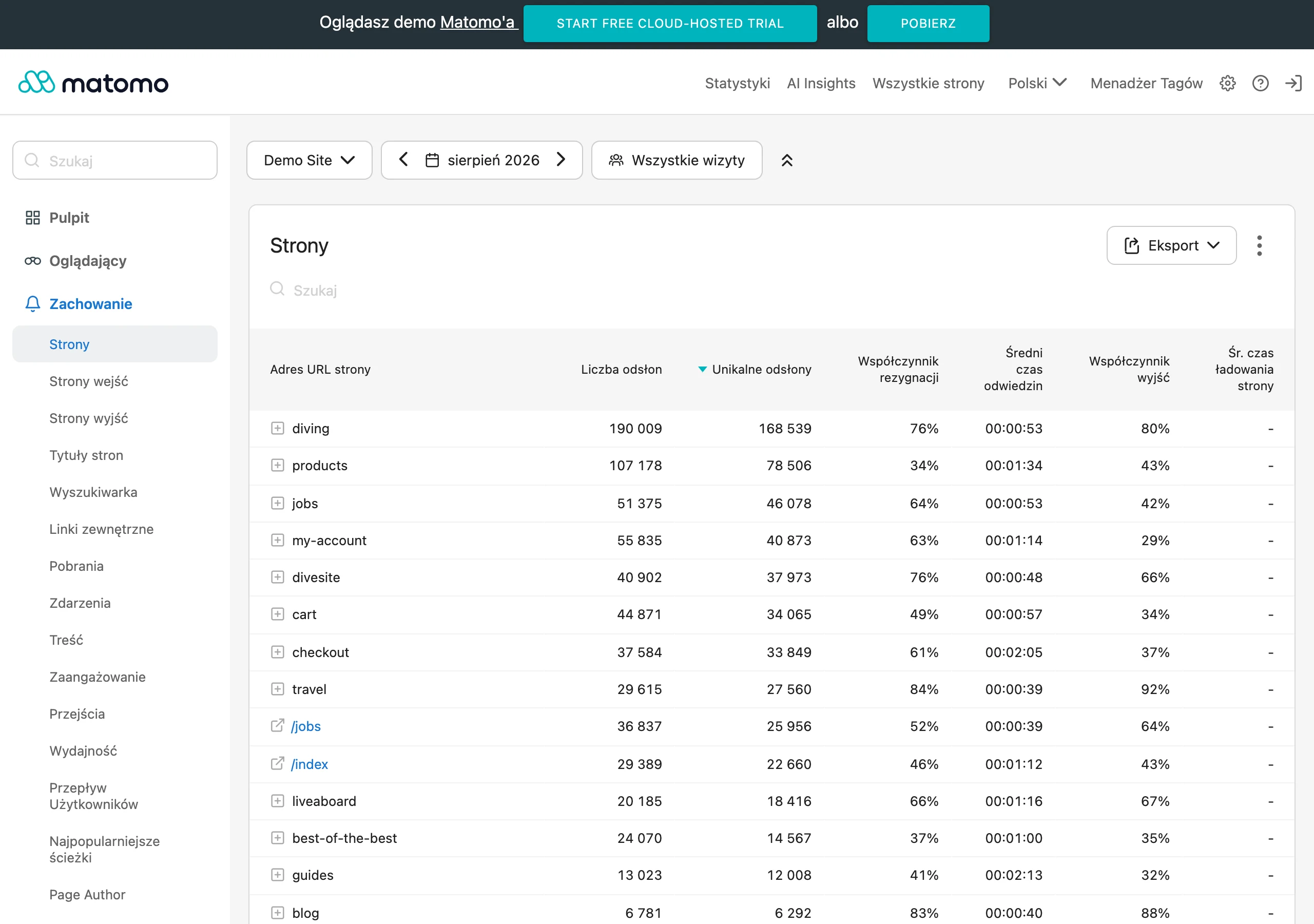
The simplest measurement model includes several levels:
- visits from decision-intent phrases and their quality,
- clicks from the article to service pages, pricing, the form or calendar,
- CTA clicks and form starts,
- submitted enquiries, booked consultations or downloaded materials,
- lead quality assessed by sales,
- the article’s impact on the time taken to close the decision and the number of recurring questions.
In practice it is worth looking not only at how many people clicked the CTA, but also at which sections of the text preceded the action. It is a small detail that says everything. If users read the part about costs and then move on to the quote form, that is a sign the article is working in line with intent. If, on the other hand, there are lots of visits but few onward clicks, the problem is usually a lack of detail, trust or a logical next step. And without that, traffic remains just traffic.
Lead quality is also very important, not just volume. A form counter can be deceptive. An article may generate fewer forms than a purely traffic-driven text, but if the enquiries are better matched and require less explanation in the conversation, its business value is greater. A good decision-making piece shortens the salesperson’s work because it answers part of the questions before contact.
Without a coherent analytics setup, there is no meaningful measurement. The key is to tag clicks to key places, measure form starts and submissions, and connect this with the CRM so you can finally see which articles are genuinely delivering enquiries and sales. The problem is that without such a connection it is easy to confuse noise with results. Texts can have excellent traffic metrics and at the same time not move the client even a centimetre towards a decision.
Data is one thing, but attention — qualitative signals often speak faster than a dashboard. If, after publication, salespeople hear fewer of the same questions, conversations start at a higher level and forms stop being a collection of half-sentences, then the material is working, even if you cannot yet see it in a simple report. The question is whether we measure only clicks, or also changes in audience behaviour. The best measurement combines analytics data, CRM data and observations from the sales team.
FAQ
Frequently asked questions
What questions should a decision-making article answer before buying a service?
It should explain how to choose a service, how the variants differ, what affects the price, how long implementation takes and on what terms the collaboration starts. This removes doubts that usually arise before contacting the company.
Should a decision-making article also describe the offer’s limitations?
Yes, because the client needs not only the benefits but also information about when the service will not be a good choice. Such content builds trust and helps enquiries be better matched.
Why is it worth creating decision-making articles based on sales questions?
Because it is the questions from conversations with clients that most often block the decision, for example about cost, scope, timelines or integrations. An article based on such themes genuinely supports sales and reduces the number of repetitive questions.
How can you connect a decision-making article with the sales process?
The content should lead to a specific next step, such as a quote, a brief, a consultation or a qualification form. Consistency between the article, the service page and the CTA is also important.
When will the CTA in a decision-making article be well matched?
When it matches the stage the reader is at. Someone comparing options more often needs a checklist, a brief or a short consultation than an immediate purchase.
What mistakes most often undermine the effectiveness of articles that support decision-making?
These are most often generalities, a lack of specifics about price, scope and entry conditions, and inconsistency with the rest of the site. Another problem can be an overly aggressive CTA and a lack of updates after publication.