

Performance marketing is an approach to advertising in which decisions and budgets are based on measurable results, such as sales, leads or app installs, rather than focusing solely on reach. In practice, this means you plan and optimise campaigns for the end result (e.g. CPA or ROAS), even if billing is based on clicks or impressions. The core principle is measurability, i.e. combining data from advertising platforms with analytics (GA4) and transactional data (CRM or e-commerce). It is worth bearing in mind that discrepancies between results in the ad panel and sales in the shop often come from differences in attribution, conversion windows and data loss (e.g. missing consent, adblock). In the next part, you will learn the foundations of performance marketing and the most common billing models, so you can choose them according to your goal and the quality of measurement.
Definition and key assumptions of performance marketing
Performance marketing is a model of advertising activity in which you base decisions and budgets on measurable results, such as sales, leads or app installs. However, this does not automatically mean that you always “pay only for results”, because in many campaigns billing is based on clicks (CPC) or impressions (CPM), and only the optimisation is carried out towards CPA/ROAS. The most important assumption of performance is that success is determined by the business result, not by traffic or reach alone. To make this work, you need to clearly define what conversion means in your case (e.g. purchase, form submission, phone call, registration).
In practice, measurability means connecting ad data (e.g. Google Ads/Meta Ads) with analytics (GA4) and transactional data (CRM, e-commerce), which allows you to assess the real impact of campaigns on results. Gaps between what the advertising system “sees” and what the shop or GA4 shows most often result from attribution, conversion windows and the loss of some data due to missing consent or adblock. Performance is based on iteration, because effectiveness is rarely the result of one setting: hypothesis → test → conclusion → implementation. In systems such as Meta and TikTok, creative and offer often build the edge, because algorithms take over a large part of the “targeting”, and CTR and CVR depend largely on the message and fit to the funnel stage.
The most common billing models in performance marketing
The most common billing models in performance marketing are CPC, CPM, CPL and CPA, and the choice depends on the campaign goal and the maturity of measurement. CPC works well when the priority is traffic or testing, while CPM can be useful when scaling reach and in remarketing activities. CPL/CPA are closest to the result (lead/sale), but they require properly configured conversions and an adequate volume of events. If you do not have stable measurement and a sufficient number of conversions, algorithms may optimise the campaign in an unstable or random way.
- CPC – billing for clicks; works well in campaigns aimed at generating traffic and verifying assumptions.
- CPM – billing for impressions; is sometimes chosen when scaling reach, as well as in remarketing.
- CPL – billing for a lead; makes sense when the priority is acquiring enquiries (requires correctly set up conversions).
- CPA – billing for an action/conversion (e.g. sale); relies on proper tracking and an adequate volume of events, often at least 30–50 conversions per week per ad set.
In practice, there is no single “best” model, because the goal (sale, lead) and data quality should determine billing and the way optimisation is carried out. When a campaign is meant to deliver sales, you usually want to control the cost of acquisition (CPA) or revenue efficiency (ROAS), even if at the start you rely on CPC/CPM. If you see clicks without effect, the cause often lies in the definition and configuration of conversions, rather than in the billing model itself. That is why, before scaling, it is worth ensuring that conversions are defined as events with real business value (macro-conversions), not only micro-actions such as clicking a button.
How to define a conversion and measure its value
You define a conversion as an event with real business value, e.g. a purchase, form submission, phone call, newsletter sign-up, registration or app install. At the same time, you can track micro-conversions (e.g. click on “Add to basket”), but for budget optimisation you will most often need macro-conversions that actually close the goal (e.g. a purchase or qualified lead). The key is that a “conversion” should not be just an activity on the site, but a signal linked to the company’s result. This way, algorithms do not learn to deliver easy actions that do not translate into sales.
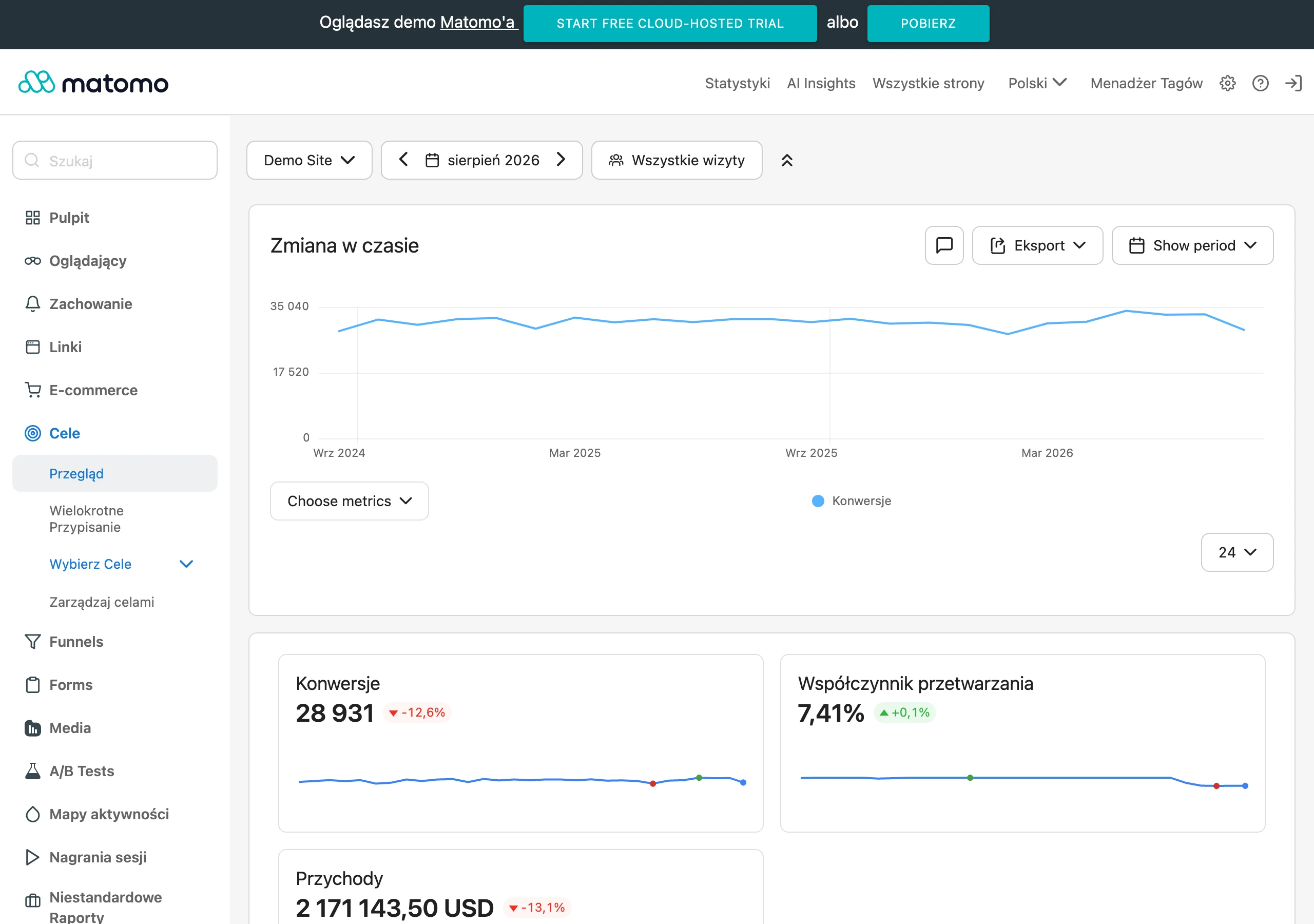
You measure conversion value by combining data from advertising platforms (e.g. Google Ads/Meta Ads) with analytics (GA4) and transactional information from e-commerce or CRM. If discrepancies appear in reports (e.g. Ads shows different sales than the shop), they most often result from differences in attribution, conversion windows and the loss of some data due to missing consent or adblock. In e-commerce, it is sensible to optimise for Purchase with value, and in lead campaigns for a quality event (e.g. a lead containing a phone number, consent and a specified budget). Such a definition of conversion helps maintain consistency between optimisation and the real result.
In services and B2B, the quality of conversions can usually only be verified in the CRM, which is why closing the loop is crucial: lead from an ad → qualification → sales. In practice, lead scoring in the CRM (e.g. HubSpot, Pipedrive) and passing offline conversions to ad platforms (e.g. SQL/Deal Won) works well, so the algorithm learns from valuable leads rather than merely cheap ones. If you optimise only for form submissions, the system may maximise the volume of low-quality enquiries. Importing offline conversions (e.g. into Google Ads or Meta) makes it possible to link advertising activity more strongly to the stage closer to revenue.
Setting business goals and metrics in performance marketing
It is worth setting performance marketing goals from the business side: revenue, number of sales, or the number of leads of a defined quality, rather than relying on clicks or traffic alone. Only after defining the goal do you choose intermediate metrics (e.g. CTR, CPC) as diagnostic indicators, not as an end in themselves. This way of thinking makes it easier to choose the right type of optimisation and to interpret results soberly when a campaign generates activity but does not improve the outcome. As a result, you base budget decisions on what really matters for the business.
The most commonly used KPIs are ROAS, CPA, CAC and LTV, because they allow you to assess cost efficiency and customer value over time. ROAS shows how much revenue you generate from 1 zł of spend, CPA indicates how much a conversion costs, CAC defines the cost of acquiring a customer, and LTV shows how much a customer is worth over time. The answer to the question “what is a good ROAS?” depends on margin and fixed costs — for example, with a 40% margin and additional costs of 10%, you may need a ROAS in the region of 3–4 for the result to be positive. For this reason, KPIs should stem from the economics of the offer, not from averaged benchmarks.
When choosing goals, it also helps to take the time horizon and purchase delays into account, because users can convert after several to several dozen days. If you are considering how many days after launch to evaluate a campaign, you usually need at least 7 days for the data to stabilise, and a full assessment should take into account the conversion window and delays in the CRM. Benchmarks such as “CTR 1%” or “CPC 2 zł” can signal a problem, but without the context of the industry and the creative they easily lead to wrong conclusions. In practice, it is better to compare results with your own history and A/B tests than with universal market values.
The role of creative and targeting in effective campaigns
Creative and offer are now among the key factors determining the effectiveness of performance campaigns, and “narrow targeting” alone is increasingly rarely a real advantage. In systems such as Meta or TikTok, a significant part of audience matching happens on the algorithm’s side, so the result largely depends on whether the message is clear and attractive at the right stage of the funnel. In practice, CTR and CVR are more often lifted not by a more “precise” interest group, but by a better hook, a clear value proposition and trust-building elements (e.g. social proof). If the campaign is not delivering, start by checking the message and the offer, and only then “tighten” the targeting settings.
Targeting makes sense when it strengthens intent and lets you control who receives the message in TOFU/MOFU/BOFU. In many industries, segmenting by events (e.g. remarketing) and intent signals (e.g. search, queries) works better than relying solely on interests. In B2C, a behaviour-based approach often wins (e.g. cart abandonment), while in B2B it is based on company characteristics and intent (e.g. price list download). To make decisions without shooting in the dark, it is worth keeping to a rhythm of iteration: hypothesis → test → conclusion → implementation.
Traffic acquisition channels: Google Ads, Meta Ads, TikTok
Google Ads, Meta Ads and TikTok Ads are most often compared, because each of these channels “captures” demand at a different point in the buying journey and offers different optimisation possibilities. Google Ads Search responds to intent “here and now”, Meta can effectively scale demand thanks to creative and a broad approach, and TikTok can be strong at building relatively cheap attention in TOFU. The choice of channel should stem from the goal (sales/lead), the user’s intent and whether you have measurement that allows you to optimise for the final outcome. In practice, results are more often improved by consistency: ad → landing page → conversion event, than by the platform choice alone.
In Google Ads Search, no conversions despite clicks often result from overly broad keywords, missing exclusions and a mismatch between the landing page and the search intent. Performance Max and Shopping can work very well if you have a solid product feed and correctly set conversions with value, because the system uses many Google assets at once. When the issue of PMax “taking” brand traffic comes up, the solution is to monitor the share of brand queries, use exclusions and take a separate approach to incrementality measurement. This allows you to assess whether the campaign is really adding sales or merely attributing them to itself in attribution.
In Meta Ads, remarketing can still deliver results, but its effectiveness is often limited by consent and iOS, which is why it is often combined with broad campaigns and optimisation towards higher-quality events (e.g. Purchase instead of ViewContent). TikTok Ads usually requires native creative (e.g. UGC), a strong hook in the first 1–2 seconds and frequent iterations, because without this it is difficult to maintain predictable results. In B2B, TikTok can make sense (e.g. recruitment, education, tools), but it is often better treated as TOFU, with closing handled through retargeting or Search. This division of roles between channels makes it easier to plan tests and assess where business value is actually created.
Campaign optimisation: A/B tests and incrementality experiments
Performance campaign optimisation is based on regular A/B tests and checking whether ads really add incremental results rather than merely “claiming” sales in attribution. Instead of hunting for one perfect setting, you work iteratively: hypothesis → test → conclusion → implementation. In practice, this means comparing creative, offer or landing page variants side by side and evaluating them against metrics linked to the goal (e.g. CPA/ROAS and CVR on the landing page). The biggest levers are usually in the offer, the hook and the format (e.g. video vs static), and only later in small “cosmetic” changes.
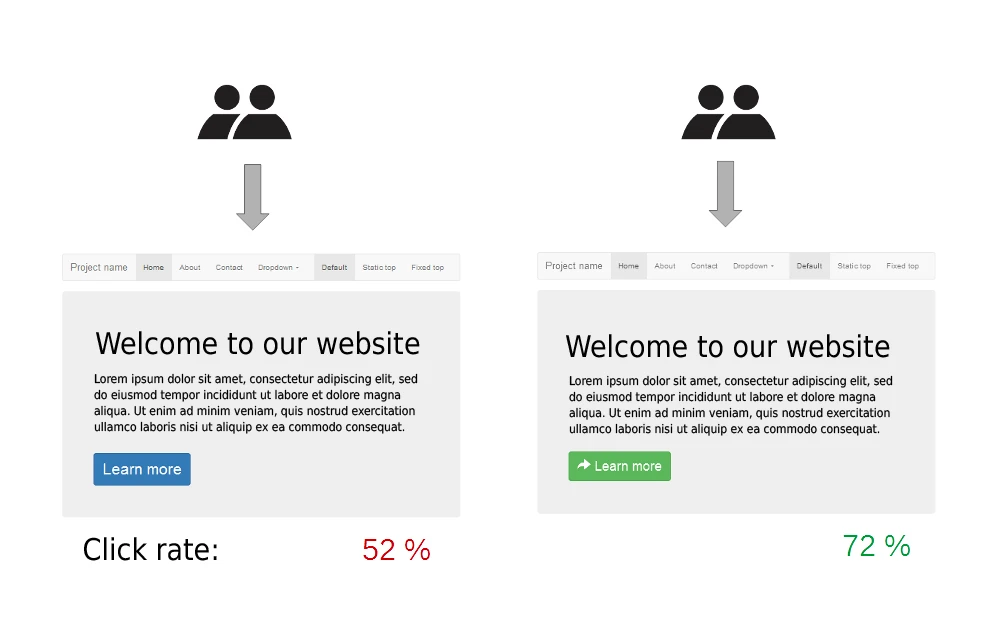
It is worth starting A/B tests on creatives with elements that genuinely influence the user’s decision, namely the promise, the first few seconds of the message and how well the message matches the stage of the funnel. When assessing a test, it is better to look not only at CTR, but also at whether the change increases the conversion rate on the site and lowers the acquisition cost. If results fall despite the same budget, a common reason is creative “fatigue” and rising impression frequency, so you need variant rotation and refreshed messaging. This rhythm of work is particularly important in systems where the creative has a strong influence on how the algorithm finds audiences.
Incrementality experiments answer the question of whether a campaign generates sales “on top of” what would have happened anyway without ads. In practice, a geo test, holdout or budget shut-off approach is used: for example, you switch off remarketing for part of the audience for a set period and compare the difference in revenue rather than relying solely on a last click model. Such tests are especially useful when you suspect that closing channels (e.g. remarketing or brand) are favoured by attribution. If you want to make budget decisions without guesswork, an incrementality test is more reliable than reports on conversion “attribution” alone.
Optimisation is also about account hygiene and giving the algorithm the right signals, because an overly fragmented structure makes it harder for the system to learn and stabilise results. If you optimise for an event that is too early, the platform can deliver many “easy” actions that do not translate into sales, which is why in e-commerce it is usually wiser to optimise for purchase with value, and in leads for a quality event. Automated bidding strategies (tCPA/tROAS) work best with stable conversions and correct tracking, and moving to tROAS makes more sense when you have a lot of value data and care about profitability. In Search, match types and exclusions are an additional lever, because budget can “leak” into informational or poorly matched queries relative to intent.
Managing budget and risk in performance campaigns
Managing budget and risk in performance campaigns comes down to planning spend against the expected acquisition cost and checking whether ad results remain profitable after taking real business costs into account. The starting budget follows the objective and the expected CPA/CAC, rather than a randomly chosen amount, so in practice it is calculated “from the back” (e.g. number of leads × expected CPL) and a margin is added for testing. It is also worth remembering that automated systems need regular conversions, because with too little volume the data become unstable and optimisation can behave randomly. If a campaign is not becoming stable, it is often better to simplify the structure and concentrate the budget rather than fragment it across many small ad sets.
Budget scaling should take place under control and depend on whether you are maintaining the target KPIs, not solely on a growing number of clicks or impressions. Vertical scaling means increasing the budget within the same campaign, while horizontal scaling means adding new creatives, markets, segments or channels. In practice, a safe approach may be to raise the budget by 10–30% every 24–48 hours, provided the result remains stable and you do not push the campaign out of the learning phase. As you grow, it is also a good idea to keep a “reserve” of creatives, because message fatigue can increase the cost of reach.
Profitability control requires calculating not only ROAS, but also what happens after the sale, because a “nice” ROAS without margin can be a trap. If there is sales volume but no profit, the cause is often the sum of costs: margin, returns, delivery, payment processor fees and operational costs (warehouse and fulfilment). To avoid burning through funds at the wrong moment, you need budget pacing and a plan for seasonality (e.g. separate budgets for Black Week/Christmas and up-to-date stock levels and product feed). This approach makes decision-making easier when deciding when to accelerate and when to protect results.
Risk in performance is not only a matter of cost, but also of lead quality, fraud and compliance with the law and platform policies. In display and affiliate there are bots and dubious placements, while in lead generation campaigns a common problem is high volumes of cheap enquiries with no impact on sales. Qualification and optimisation for a stage closer to revenue (e.g. SQL or a booked consultation) usually help here. Reporting for decision-makers should answer simple questions: how much did we spend, what did we get from it (revenue/leads), what is the profitability (ROAS/CAC vs LTV) and what have we changed and what do we plan, instead of limiting itself to tables alone. In addition, ads must comply with the law and platform policies, because missteps in promises or consents can end with account suspensions and loss of optimisation data.
FAQ
Frequently asked questions
How does performance marketing work in practice?
Campaigns are planned and optimised for the end result, e.g. sales, a lead or an app install. Billing may be per click or impression, but the most important thing is the measurability of the business outcome.
Do you always pay only for results in performance marketing?
Not always, because many campaigns are billed per click (CPC) or impression (CPM). Performance means that, despite such billing, the campaign is optimised for CPA or ROAS.
How do you define a conversion in performance marketing?
A conversion should be an event with real business value, e.g. a purchase, form submission, phone call, registration or app install. In e-commerce, you usually optimise for a purchase, while for leads you optimise for a quality lead.
Why do the results in an ad platform differ from sales in the store?
Most often, this is due to differences in attribution and conversion windows. Gaps are also affected by the loss of some data, e.g. due to missing consents or ad blockers.
Which billing models are most commonly used in performance marketing?
CPC, CPM, CPL and CPA are used most often. The choice depends on the campaign goal, measurement quality and whether the priority is traffic, reach, a lead or sales.
How do you optimise performance campaigns to improve results?
An iterative approach works best: hypothesis, test, conclusion, implementation. In practice, it is worth testing creatives, the offer and the landing page, and checking whether the campaign delivers incremental results rather than merely claiming sales in attribution.