
Brand image and performance marketing can be brought together into one coherent whole. The condition is simple: you plan them as one system, not two separate sets of actions. In many companies, brand is meant to be about “nice communication”, and performance about “results”, which ends up in inconsistent campaigns, weaker trust and poorer conversion. The user does not see the split into teams or budgets. They see one brand and one experience, from the first ad to the purchase. The best results come from a shared communication strategy, shared measurement and separating objectives by stage of the customer journey. And that is crucial especially today, when media costs are rising and simply “adding budget” rarely fixes anything. In this article I will show how to combine brand building with measurable results so that these actions do not compete with each other, but reinforce one another.
How to combine brand and performance marketing actions?
They are combined through one strategy and one customer picture. On top of that come shared personas, a sensible division of channel roles and separate KPIs for funnel stages. In practice, these cannot be two independent projects, because then the brand promises one thing and the sales campaigns try to sell something else. The effect can be ruthless: trust falls, the conversion rate drops, and acquisition cost rises.
First, you establish a shared communication core. This is about the brand’s main promise, the most important advantages, benefit-led language and credibility proofs that can be shown, not just declared. That same core should appear in awareness campaigns, search ads, on the landing page and in the sales conversation. Performance works better when the user already understands who you are, why they should trust you and how you differ from the competition. Without that, every “sales pitch” sounds like a random message from the internet.
The next step is to assign functions to channels consciously. Not everything has to sell here and now; instead, each channel should do its job at the stage where it makes sense. Upper-funnel channels, such as video or social paid, usually build attention, associations and memorability. SEO, expert content and the website strengthen credibility, while search captures existing purchase intent. Remarketing and email close the decision, and CRM works on retention and customer value after the first conversion.
Measurement is equally important. Brand is measured differently from sales, so it makes sense to monitor, among other things, quality reach, engagement, growth in branded searches or direct traffic. Performance is judged by leads and sales, acquisition cost, conversion rate, revenue and lead quality after verification in CRM. It is not worth assessing everything solely on last click, because some campaigns create demand earlier, before the user clicks the sales ad. The question is: are you measuring impact, or only the last touch.
Combining these actions also requires matching the post-click experience. Cold traffic needs more context, a proper explanation of the problem and stronger social proof, because it comes in “from the street” and is not buying yet. High-intent traffic expects a shorter path, a simple form and a quick move to the offer. If you send all traffic to one page, the results are usually weaker than they could be. This is not a matter of taste, but of matching the message to the moment in the funnel.
At the end, you close the data loop. Information from CRM, sales and customer service must flow back into marketing so you can assess not only the number of conversions, but above all their quality. The problem is that this is precisely where it most often becomes crystal clear whether the campaign is reaching the right customer or just pumping cheap but low-value traffic or leads.
The role of a consistent messaging strategy in marketing
A consistent messaging strategy is one promise. Just delivered in different formats and with different emphasis on selling. This is not a matter of aesthetics or tone of voice, but a foundation that determines whether the audience understands the offer, trusts the brand and moves to action without friction.
In practice, consistency starts with a few simple answers: what exactly do we promise, to whom, what proves it and which objections need to be removed along the way. The key is that these answers must be the same in the ad, on the website and in the offer. If the ad talks about simplicity, but the website is chaotic, the form is long and the offer is unclear, the user quickly loses trust. Inconsistency between the ad, the website and the offer almost always raises the cost of conversion, even with good targeting.
A good messaging strategy takes the audience’s decision stage into account. Someone who does not know the brand needs a simple explanation of the category, the problem and the value of the solution, rather than fireworks. A person comparing offers is looking for advantages, specifics and proof, not general declarations. Someone ready to act wants a clear offer, simple terms and a short path to contact or purchase. The same core message should therefore have different versions for cold, warm and hot traffic.
Consistency does not mean repeating the exact same slogan in every channel. It is about maintaining the same meaning of the message in video ads, sponsored posts, search campaigns, website content, FAQ and email marketing. This way the audience does not have to “learn” the brand from scratch every time, and ad systems get clearer signals about who is actually responding to the offer.
In practical implementation, a simple messaging architecture works best. One main promise, a few advantages, a set of credibility proofs and answers to the most common objections. On that basis, separate educational, comparison, testimonial, remarketing and offer-based creatives are created, moving from lighter ones to those that close sales most strongly. The better organised the messaging, the easier it is to scale campaigns without losing quality and without chaos between teams.
The division of channel roles in a marketing strategy
Role splitting across channels is the deliberate assignment of one main task to each channel within the customer journey. Some channels are there to build attention and recall, others to explain the offer, and yet others to capture demand and close the decision. This means you do not expect every brand contact to generate sales and you do not measure everything by the same standard. The question is whether you really want to judge reach as if it were a campaign aimed at ready-to-buy intent. The most common mistake is expecting the same return from reach channels as from campaigns aimed at ready-to-buy intent.
The upper funnel plays for tomorrow’s result. Video, paid social and broad-reach formats reach people who are not yet looking for the offer, but may remember it and come back later via search, a direct visit or remarketing. This is not a one-off “ad impression”, but the building of associations, trust and the first spark of interest.
The middle of the funnel is there to disarm doubts. The aim is to deepen understanding and reduce resistance to contact, so on-site content, SEO, expert materials, comparisons, FAQs and ads driving to a landing page with a stronger explanation of value work well. The problem is that when a user from cold traffic lands straight on a short sales page without context, the acquisition cost usually rises because the brand is trying to sell too early.
The bottom of the funnel closes the deal. Search campaigns, remarketing, product campaigns, email and CRM activities work best when they address a specific need and lead to a simple action. Search often captures the effect of earlier brand work, so a good sales campaign result is often also the outcome of actions that are not visible in the last click.
Role splitting must go hand in hand with budget splitting. It is not worth mixing cold traffic with remarketing in one campaign or pushing everyone to the same landing page, because these are different conversations with different people. Someone seeing the brand for the first time needs different arguments from someone who abandoned a form yesterday. Consistency between the channel, the funnel stage and the landing page has a direct impact on conversion cost.
The importance of correct analytics in marketing campaigns
Analytics is the foundation, not a decorative extra. Without it, you do not know which activities are genuinely delivering results and which are only pumping traffic for traffic’s sake. In a brand and performance setup this is crucial, because some of the effect appears immediately and some only later and in a different channel. If you measure only the last click, you usually overvalue closing channels and undervalue those that build demand. Without reliable data, it is easy to optimise campaigns for an apparent result rather than their real impact on sales.
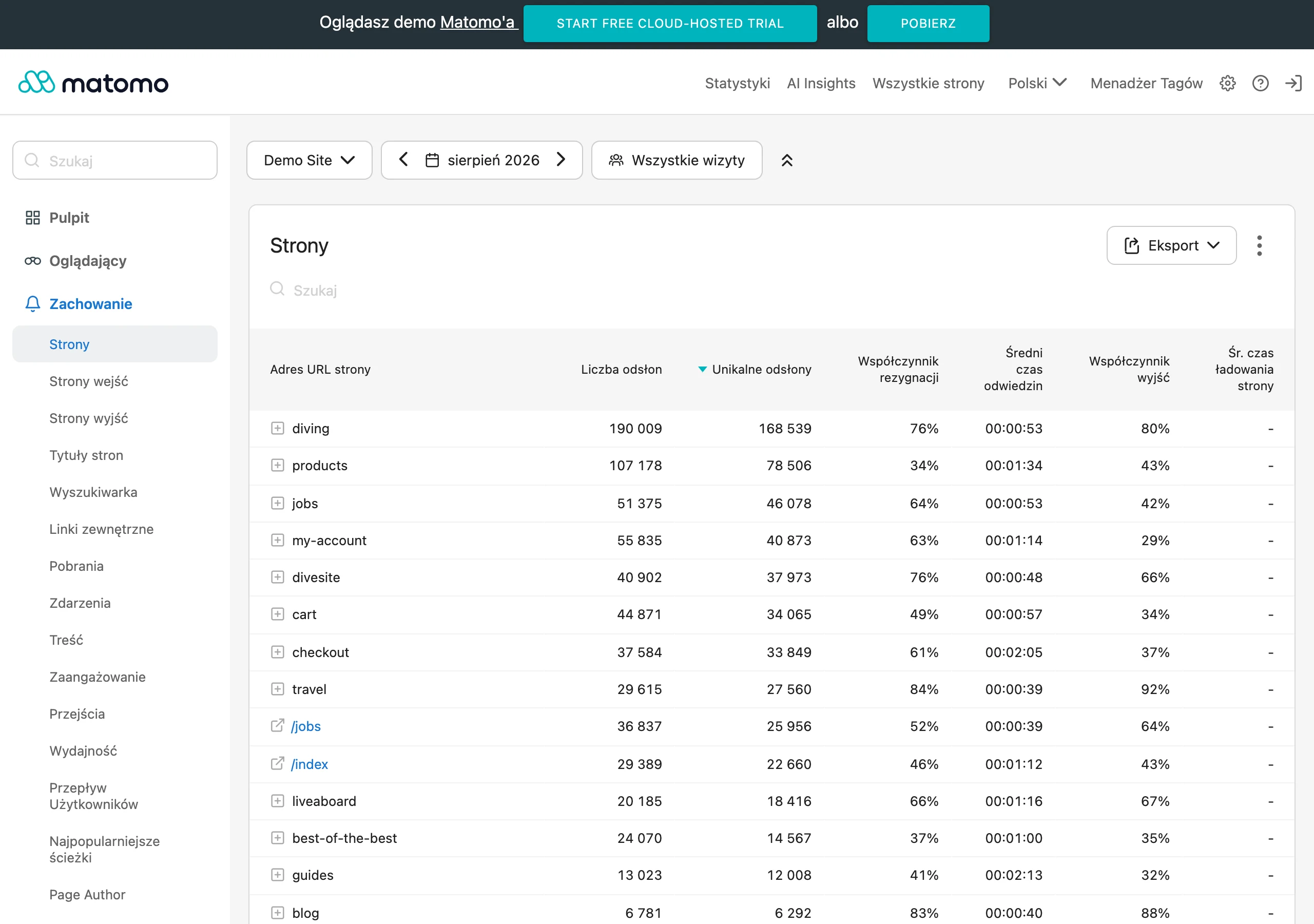
In practice, analytics should track the entire chain, not just the entry point. What matters is not only the source, but the sequence of events from the ad to sales quality, meaning properly defined conversions, micro- and macro-conversions, consistent UTM parameters, sensible campaign naming and linking data from advertising with data from the website and CRM. A form submitted on the site is not enough if you later cannot say which leads were valuable and which were random.
It is equally important to separate KPIs by campaign objective. For brand-building activities, the more sensible metrics will be those tied to quality reach, engagement, growth in branded traffic or direct visits, while for performance they will be cost per acquisition, number of sales, lead quality and the share of assisted conversions. The problem is that sometimes one table is expected to judge everything with one metric, and then channels start competing with one another instead of pulling in the same direction.
Technical issues can kill the best plan. Poorly configured events, conversion duplication, missing consent, inconsistent tagging or incorrectly imported data into ad systems distort the entire optimisation process faster than most teams manage to notice. The advertising platform learns from the signals you send it, so if the signal is wrong, automation will simply scale the wrong pattern. And then everyone wonders why “optimisation does not work”.
Good analytics does not end with a dashboard. Data needs to be regularly validated and checked against business reality: the length of the decision-making process, the quality of sales conversations, the share of rejected leads and revenue over time. The most useful measurement model is one that combines advertising data, on-site behaviour and CRM feedback, because only then can you see what really improves results. Without that, you are left with a nice chart and the wrong conclusions.
Key KPIs for demand generation and capture
This is not one set of KPIs, but two. Key KPIs for demand generation and capture measure two different marketing tasks, so mixing them in one basket ends in poor assessment of work and poor decisions. Demand generation is responsible for attention, recall and trust. Demand capture is responsible for turning existing intent into a lead, a sale or contact. The most common mistake is judging both of these areas with one KPI, most often at the expense of the lead or ROAS.
In branding activities, you look first and foremost at whether the brand appears more often in the audience’s mind and whether the number of valuable contacts with the message is growing. You care less about “here and now”, and more about whether the reach is high quality and whether contact frequency builds the brand rather than wearing people out. In practice, useful metrics include quality reach, contact frequency, video views, engagement, growth in direct traffic, growth in branded searches, and the share of new users who return later via another channel. These are not sales KPIs, but without them it is hard to understand whether the brand is genuinely building future demand. The question is whether you include them in the report at all.
In performance activities, the metrics that matter are those linked to business outcomes and intent quality. There is no debate here: the most important are the number of leads or sales, acquisition cost, conversion rate, revenue, ROAS, share of macro-conversions, and lead quality assessed already on the CRM or sales side. A low conversion cost is worthless if the lead does not move on, does not fit the offer, or does not close as a sale. Instead of fetishising a “cheap result”, it is better to make sure the result is simply good.
You cannot read these two sets of KPIs separately. But you do not look at them over the same time horizon. The effect of a sales campaign can show up on screen after a few days, while branding activities return more slowly. Often via search, direct visits, remarketing, or simply better bottom-funnel campaign effectiveness. If you report only the result from the last click, you usually underestimate the brand’s impact on performance.
In practice, a simple reporting split wins. You separate demand-generation KPIs and demand-capture KPIs instead of putting everything in one bucket. Then you add the “in-between” metrics, because they connect both worlds: assisted conversions, growth in branded queries, changes in conversion rate after exposure to branding ads, lead quality from individual segments. The question is not “should this be measured”, but “should it be measured together, but intelligently”. Only this setup shows whether marketing is not only generating results today, but also lowering acquisition cost in the months ahead.
The most common mistakes in integrating branding and performance activities
The most common mistakes stem from one habit: mixing goals, messages and data into a simplified evaluation model. The brand is then judged like a sales campaign, while performance runs without the support of trust and brand distinctiveness. The outcome is often predictable. Acquisition cost rises, and results start to fluctuate.
The first classic mistake is judging everything by last click. This model rewards channels that capture ready-made intent and ignores those that previously built interest and shortened the path to decision. As a result, budget is cut where the brand creates future demand. And the money ends up where you only collect people who have already decided, meaning you pay more for the same thing.
The second mistake is failing to separate campaigns by audience intent. Cold traffic, remarketing and branded traffic behave differently, so they should not go into one campaign or onto the same landing page. This is not a detail; it is fundamental. If one advert and one page are trying at the same time to educate, build credibility and sell, they usually do none of these things well.
The third problem is more “soft”, but it hits the result hard: inconsistent communication between the ad, the site and the offer. The brand talks about simplicity in the ad, yet the user lands on a complicated page. The ad promises a specific advantage, but the landing page does not prove it. And then the whole promise falls apart after the click. A lack of continuity between the promise and the post-click experience very quickly raises the conversion cost, even with good targeting.
The fourth mistake concerns measurement, which is where it is easy to fool yourself with a “nice” chart. Companies optimise campaigns against a poorly defined conversion, do not have a connection to the CRM, or do not distinguish valuable leads from random ones. The ad system then learns from weak signals. And then it does what it has been encouraged to do: delivers more cheap but poorer-quality contacts. Without feedback from the CRM, you do not know whether you are improving marketing or just improving the number in the report.
The last, and by no means rare, mistake is organisational. Brand, performance, sales and customer service work in silos, measure success by different standards and do not close the learning loop. The outcome is often predictable. The best results come from a shared message architecture, one data naming convention, regular lead quality analysis and a clear division of responsibility for each stage of the funnel.
What factors affect the effectiveness of marketing activities?
Marketing effectiveness rarely depends on a single knob. What matters are brand recognition, the quality of the offer, matching the message to the decision stage, the state of analytics, and the readiness of the site and sales team to handle traffic. When the brand is little known, the user needs more proof, compares options more often and is less likely to convert on first contact. When the brand is already familiar, sales campaigns usually “pull” faster and with less resistance. That is why the same budget can deliver a completely different result in two companies with a similar offer.
The offer can derail a campaign faster than the creative. It is harder to scale marketing when the proposition is unclear, has weak differentiators, creates price objections, or does not show concrete value for the customer. The advert will deliver clicks and leads, but it will not fix a poorly described product or an inconsistent promise. And that is where the hard maths begins. If the user does not understand why they should choose this company, acquisition cost will rise regardless of the channel.
The length of the purchase journey and the number of audience segments also matter. The longer the decision and the more different target groups there are, the more you need separate messages, landing pages and further remarketing stages. After all, you do not speak in the same way to someone who is just learning about the category as you do to someone who is comparing offers and ready to get in touch. The question is how many marketers truly separate this in practice. The most common practical problem is using one message for all funnel stages.
The quality of data and measurement weighs heaviest. When conversions are poorly defined, events are incomplete and CRM integration does not work, ad systems learn from weak signals and optimise for the wrong result. Then we have nice charts. And dreadful leads. Without data validation, there is no sensible way to assess whether the problem lies with the ads, the website, the offer or the sales team’s work.
Effectiveness also depends on what happens after the click. The website must be fast, clear and aligned with the promise made in the ad, and the form should be as simple as the qualification process allows. Cold traffic needs more explanation, testimonials, examples and responses to objections, whereas traffic with high intent should be taken to a shorter path to action. The problem is that many campaigns do not lose because of weak targeting, but because of a mismatched landing page.
Operational resources within the company also affect the result. When there are no creative assets, no sensible content on the website, no organised CRM, no regular feedback from sales and no process for working leads, optimisation quickly hits a wall. A campaign can generate interest. The problem is that, without closing the loop between marketing, the website and sales, it is difficult to improve the quality of results month after month, because there is no feedback data or clear responsibility for the next steps. Who is supposed to “deliver” the conversion then. The best results appear when marketing does not operate as a separate island, but as part of the entire customer acquisition and service process.
FAQ
Frequently asked questions
Jak połączyć wizerunek i performance marketing w jedną strategię?
You need to plan them as one system, with one communications strategy, a shared customer view and separate goals for funnel stages. Then the activities do not compete with each other, but reinforce one another.
Czy spójny komunikat marki ma wpływ na konwersję?
Yes, because the user sees one brand and one experience, rather than a split between teams or budgets. Inconsistency between the ad, the site and the offer increases the cost of conversion and weakens trust.
Jaką rolę powinny pełnić kanały w marketingu?
Each channel should do one main thing at the right stage of the customer journey. Video and paid social build attention, SEO and content strengthen credibility, and search, remarketing and email close the decision.
Jakie KPI mierzyć w działaniach wizerunkowych, a jakie w performance?
Image is measured through quality reach, engagement, growth in branded searches or direct traffic. Performance is judged by leads, sales, acquisition cost, conversion rate and lead quality.
Dlaczego nie warto oceniać kampanii tylko po last click?
Because last click favours the channels that close the decision, and ignores those that built demand earlier. As a result, it is easy to underestimate the brand’s impact on sales.
Jakie błędy najczęściej psują połączenie brandu i performance?
The most common problem is mixing goals, messages and data, and judging everything with one metric. Another mistake is putting cold traffic, remarketing and branded traffic into one campaign or onto the same landing page.