

Wikipedia may be relevant for SEO, but it works differently from what many people imagine. It is not an easy way to get a “strong link” and a quick jump in rankings. In practice, it is more about entity visibility, meaning the visibility of a brand, person, organisation, product or topic within a broader information ecosystem. The most important thing is that Wikipedia supports SEO mainly indirectly: through credibility, context and data consistency, rather than through a simple link building effect. This matters especially when a search engine is trying to understand what a given brand is and which facts it should be associated with. At the same time, being present on Wikipedia is not a necessary condition, because many businesses build strong organic visibility without their own entry.
What is Wikipedia in the context of SEO and why does it matter?
From an SEO perspective, Wikipedia is primarily a part of entity visibility work, rather than a tool for acquiring links. This is an important distinction, because many misguided actions begin with the belief that simply adding an entry or a link will translate into better rankings. In practice, search engines assess the topic more broadly: through the prism of information consistency, the recognisability of the subject and reliable sources that confirm its existence and significance.
The role of Wikipedia stems from the fact that it is part of an open knowledge ecosystem used by users, editors, journalists and various systems that build information context. It can therefore organise the way a brand or person functions in descriptions online. Its SEO value usually appears indirectly: through branded search, referral traffic, better entity understanding and greater data consistency.
However, this does not mean that every company should pursue its own entry. Wikipedia is not required to achieve high organic visibility, and in many industries a bigger role is played by well-developed company websites, expert profiles, industry publications and correctly implemented structured data. If the topic does not have real externally verified recognisability, an attempt to “do Wikipedia for SEO” usually ends in rejection or content removal.
It is also worth bearing in mind that being present on Wikipedia does not give full control over the messaging. Content can be edited by the community, supplemented with inconvenient facts or marked as poorly documented. From an SEO perspective, this is not an advertising channel, but a space where neutrality, verifiability and compliance with editorial rules matter.
- 01Entity, not linksConsistency of information about the topic
- 02Knowledge ecosystemReliable sources and recognisability
- 03Indirect valueImpact on branded search
Wikipedia organises context and builds trust, influencing SEO indirectly rather than directly.
What are the key principles of notability and source independence?
The key principles of notability and source independence boil down to the fact that the topic must be encyclopaedic in significance and described in reliable, external publications. The mere fact that a company operates, has a website, has clients or does marketing is not enough. What matters is whether the topic has been discussed more broadly and substantively by independent sources that are not part of its own communications.
In practice, it is best to rely on secondary and editorially verified sources such as reputable media, books, industry studies or institutional publications. On the other hand, a weak basis is made up of the company’s own website, PR materials, press releases republished without editorial oversight, sponsored posts and company directories. The most common mistake is equating “a large number of mentions” with “good, independent sources”.
Source independence means that the publication should not be under the control of the brand itself or created solely with its interests in mind. When most of the information comes from owned channels, Wikipedia will consider the topic poorly documented even if the company is active and recognisable in its niche. That is why, before thinking about an entry, it is worth checking not only the number of publications, but also their quality, funding model and the real level of editorial independence.
Notability is also assessed through the durability and substance of the description, rather than through a single marketing success or short-lived publicity. One award, one major campaign or a few articles based on the same press release usually do not create a solid foundation. If the topic cannot be described neutrally on the basis of external, reliable materials, the problem is not the text, but the lack of qualification for presence on Wikipedia.
From an SEO perspective, it is worth treating this stage like a risk audit. First, you verify whether there are suitable sources and whether the data is consistent across the web: the name, dates, associated people, scope of activity and key facts. Only then does it make sense to decide whether to expand an existing entry, submit corrections, or put the topic on hold and build credibility outside Wikipedia first.
What steps does the process of creating and editing content on Wikipedia include?
The process of creating and editing content on Wikipedia includes an audit of the topic’s qualifications, gathering independent sources, neutral editing, publishing or submitting changes, and subsequent monitoring. In practice, most of the work is done before the edit itself, not when you click “publish”. If the topic does not have a solid source base, further actions usually miss the point. First you check whether the entity is even suitable for description on Wikipedia, and only then do you prepare the content.
To begin with, it is worth doing a simple audit: are there reliable, independent and secondary publications that describe the topic more broadly than in a single mention. Next, analyse the consistency of the entity’s data online, meaning the name, brand variants, dates, associated people, locations and key facts. This stage matters because discrepancies in the information quickly become a problem not only on Wikipedia, but across the entire search ecosystem.
- Assessment of encyclopaedic notability and source quality.
- Gathering external materials: press, books, industry analyses, institutional sources.
- Mapping facts that can be verified with citations.
- Preparing or editing content in a neutral tone, without promotional overtones.
- Making changes or submitting an edit proposal in line with community rules.
- Monitoring reversions, discussions, and the stability of the entry after implementation.
- Organising data about the entity outside Wikipedia, so that the information remains consistent also on the brand’s website and in other sources.
The text should be concise, specific and based on sources, not on marketing narrative. Do not include sales claims, competitive advantages or terms such as “leader” unless they are supported by very strong, independent publications. Wikipedia requires an encyclopaedic style, so the text should describe, not persuade.
In many situations, it is safer not to create a new entry from scratch, but instead refine an existing article or propose changes on the talk page. This is particularly important when you are editing a topic connected with your own company, client or brand. The greater the conflict of interest, the more sensible it is to act transparently and cautiously rather than forcing a quick publication.
The work does not end after publication. It is worth checking whether the changes have been reverted, whether warning templates have been added and whether the citations are accepted by other editors. If the topic does not meet the requirements, it is better to pause and build recognition in external sources instead of trying to force the entry through.
- 01Topic qualification auditIs the topic encyclopaedic?
- 02Gathering independent sourcesReliable, secondary publications
- 03Neutral editing and publicationImpartial, coherent description
- 04Later monitoring and updatingMaintaining and verifying content
The key work takes place before the edit, building a solid source base, not only at the point of publication.
What risks are associated with editing Wikipedia for SEO purposes?
Editing Wikipedia for SEO purposes is primarily associated with the risk of changes being reverted, the entry being deleted, accusations of conflict of interest, and the mistaken assumption that a link alone will improve rankings. This is not a channel over which a brand has full control. Any content can be challenged by the community if it appears promotional or is based on weak sources. The most common mistake is treating Wikipedia as a place to build links, rather than as a project based on verifiability and neutrality.
The first risk is purely executional: content written in corporate language usually does not pass without objections. Even factually correct information can be reverted if it is presented in too favourable a tone or relies mainly on the brand’s own website. In practice, this means that good intentions are not enough, because form, sources and compliance with community rules are what count.
The second risk concerns the qualification of the topic itself. If the entity is too poorly covered in independent publications, a new entry may be marked for deletion or disappear very quickly. This often ends in a needless waste of time, and sometimes also in a visible editorial dispute around the brand.
The next issue is strategic: Wikipedia does not guarantee SEO results. Links from this source should not be treated as a simple way to boost rankings, and their impact is at best indirect. If you judge success solely through the lens of rankings after adding a mention on Wikipedia, you are probably measuring this channel with the wrong yardstick. More meaningful are branded search, referral traffic, entity presence in results and data consistency.
There is also reputational risk. Attempts to present the company one-sidedly, omit inconvenient facts or “smooth over” the organisation’s history are usually quickly spotted. For sensitive or controversial topics, even a minor edit can attract greater attention from editors and make later, also justified, corrections more difficult.
The most practical risks to take into account before acting are:
- reversion of changes due to promotional tone,
- tagging or deletion of the entry due to lack of encyclopaedic notability,
- challenges to citations based on dependent or editorially weak sources,
- allegations of conflict of interest when editing your own brand or a client’s,
- lack of influence over the final wording of the content and its later modifications.
That is why the safest approach is simple: assess the topic soberly, prepare reliable sources, write in neutral language and accept that the outcome does not depend solely on you. If the topic is borderline, it is wiser to first build credibility in external publications than to risk a weak and unstable presence on Wikipedia. This order of operations usually also works well beyond Wikipedia itself, because it strengthens the entity’s overall visibility.
What practices are worth applying to use Wikipedia effectively in an SEO strategy?
It is best to treat Wikipedia as one element of entity visibility work, not as a separate “SEO” channel. In practice, this means that you first check whether the topic has real recognition and whether it can be supported by external, independent publications. If solid sources outside your own website are lacking, actions on Wikipedia usually are not justified. This saves time and reduces the risk of the content being removed quickly.
It is worth ensuring consistency of brand information across the entire online ecosystem. This includes the name, dates, associated people, scope of activity, locations and key facts present on the company website, in industry profiles, press materials and structured data. Wikipedia works best when it is not the only place organising information about an entity, but one of many consistent points of reference.
If the entry already exists, it is usually more practical to correct facts, add references and tidy up inaccuracies than to add marketing angles. Changes based on neutral language and solid sources are more likely to remain in the article for longer. In many situations, it is more sensible to submit proposals in line with community rules than to push them directly from an account associated with the brand.
In an SEO strategy, it is also worth measuring the right results. Rather than hoping for a jump in positions simply because a mention appeared, it is better to track branded search, referral traffic, brand visibility in informational results and the stability of entity data. Wikipedia can support credibility and recognition, but its impact is usually indirect and depends on the quality of the whole informational environment.
The safest operating model assumes building credible external publications first, and only then using them as a basis for any potential changes on Wikipedia. This is particularly important for borderline topics that are easy to challenge. Wikipedia should be the result of a real presence in sources, not an attempt to replace that presence.
- 01External credibilityIndependent publications first
- 02Ecosystem consistencyStandardising data everywhere
- 03Entity organisationConsolidating facts on Wikipedia
Wikipedia works best when it organises already existing, consistent online visibility, rather than as a standalone SEO tool.
Why should Wikipedia not be treated as a link building tool?
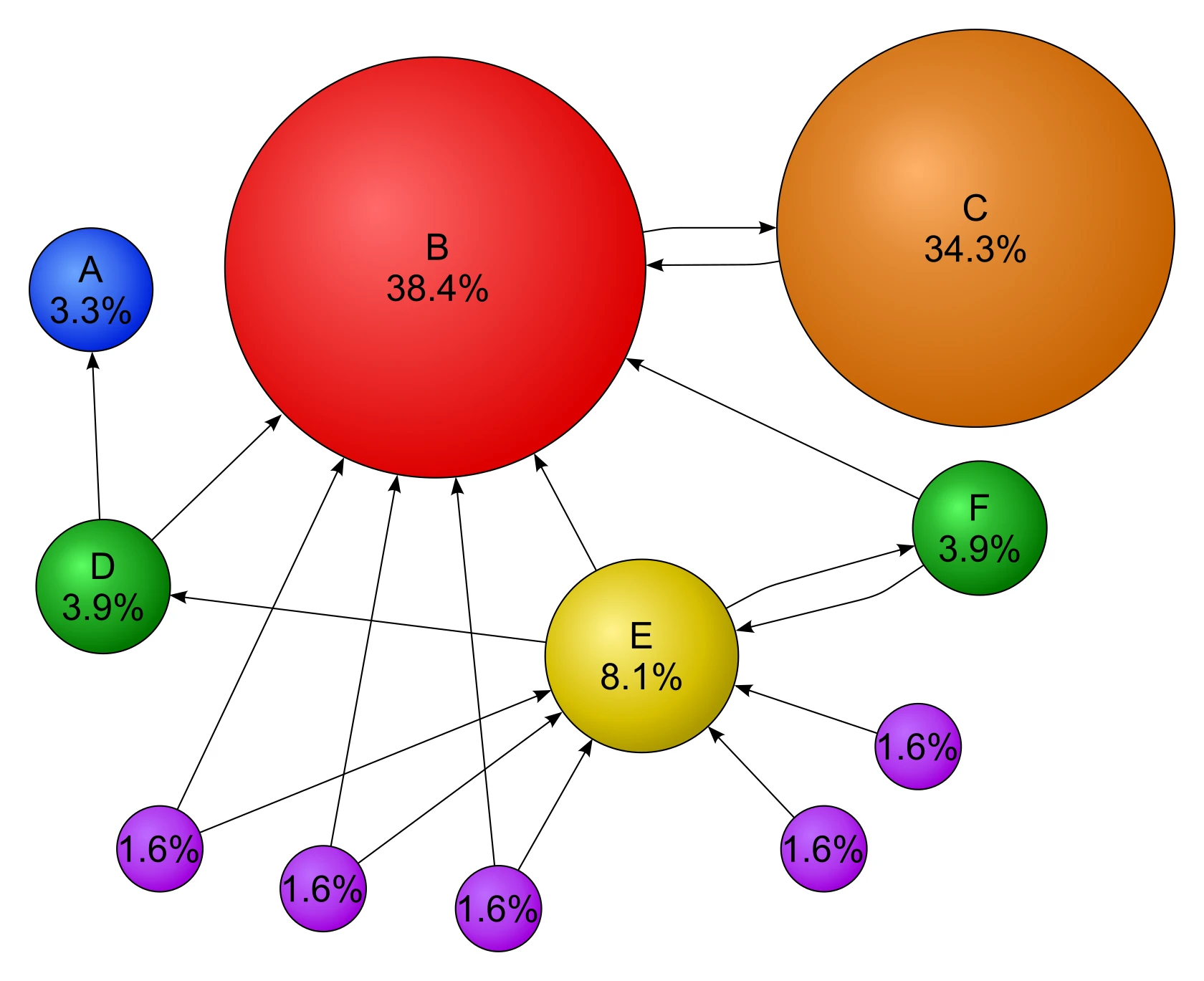
Wikipedia should not be treated as a link building tool, because its key value in SEO is indirect and does not result from simple passing of link equity. Links from Wikipedia do not form a strong foundation for a strategy focused on acquiring ranking signals. Even if they generate traffic or make content easier to discover, they do not work like a classic mechanism for building domain authority. Thinking about Wikipedia solely through the lens of a link usually leads to poor decisions.
There is also a purely practical aspect. Edits made mainly to add a link to your own website are easy to see as promotional and are often quickly reverted. The Wikipedia community primarily evaluates the usefulness of the source and the encyclopaedic value of the change, not the brand’s interests. If a link does not have real substantive justification, its chances of staying are slim.
Much more important than the link itself is whether the entity has a credible description based on independent sources and whether the information about it is consistent across the web. This can help search engines better understand the brand, person or organisation and connect it with other entities and facts. From an SEO perspective, building context and credibility makes sense, not “getting a link from Wikipedia”.
In practice, it is better to see Wikipedia as part of the knowledge ecosystem, rather than as a link building campaign target. If a brand needs stronger SEO signals, it is often more effective to develop quality external publications, expert PR, owned content and technical data consistency. Wikipedia can then support the whole, but it will not replace a well-built visibility profile.
How should entity data be monitored and integrated with other sources online?
Monitoring and integrating entity data comes down to periodically checking whether key information about a brand, person or organisation remains consistent across the entire online ecosystem. In practice, this includes the name, its variants, dates, addresses, associated people, social profiles, descriptions of activity and sources confirming these facts. When data diverges between the company website, external profiles, publications and knowledge bases, the search engine receives an inconsistent picture of the entity. The most important thing is a single reference source on the brand side from which all other publications derive.
At the outset, it is worth identifying which places on the web genuinely shape the understanding of the entity. These are most often: the homepage and the “about us” page, social profiles, company profiles, press publications, industry directories, institutional websites, editorial articles and entries in open databases such as Wikidata. Individual sources carry different weight, but each can cement incorrect information if no one oversees it. In entity SEO, informational chaos does more harm than the absence of a single mention.
A good approach is to prepare an entity map. This is a simple document in which you record the official name, abbreviations, former name, date of establishment, locations, URL, social profiles, management team, scope of activity and the most important facts confirmed by sources. Such a map speeds up later updates on the site, in schema markup, in external profiles and in PR materials. This means you do not correct every place separately “by feel”, but stick to one agreed pattern.
Monitoring should cover both your own assets and what appears beyond them. In practice, it pays to regularly check search results for branded queries, the presence of the knowledge panel, snippet content, descriptions in external profiles and whether Wikipedia or other sources are not presenting out-of-date data. It is also worth tracking changes in footnotes, related entities and naming. The point is not to manually check everything every day, but to maintain a steady, simple rhythm of checking the most important places.
- company website and subpages about the brand, team, contact details and history
- schema markup and structured data on key subpages
- company and social profiles
- press publications, bios and editorial mentions
- Wikidata, if the entity appears there
- search results for the brand name, person and the main query variants
Data integration is also about organising the relationship between sources. If you use the full company name on your website and an abbreviation on social media, make sure both variants are sensibly linked and easy to recognise. If the company has changed its name, acquired another brand or expanded its activity, the update should appear in parallel in owned content, press materials and external profiles. Otherwise, the search engine may start combining old and new data.
When it comes to Wikipedia and related sources, it is worth remembering that you do not have full control over how the information will ultimately be shown. You can correct errors in line with the rules, submit change proposals and suggest better sources, but you cannot impose a specific version of the description simply because it is commercially beneficial. For this reason, it is wiser to strengthen the quality of external publications and the consistency of your own data than to focus solely on one entry. If reliable external sources are good, consistent and up to date, it is easier to maintain order in the open knowledge ecosystem as well.
Finally, it is a good idea to measure the effects in a practical way, rather than a purely symbolic one. Check whether data consistency in branded results is improving, whether the number of incorrect mentions is falling, whether descriptions across different services are becoming more aligned, and whether the user gets to the right information about the brand more quickly. These are concrete signals that the work on the entity is delivering results. The mere presence in one source means little if the rest of the internet presents the same company in a contradictory way.
FAQ
Frequently asked questions
How does Wikipedia affect SEO in practice?
Most often indirectly, through better understanding of the entity, credibility and information consistency. It is not a simple way to boost rankings quickly via a link.
Should every company have a Wikipedia page?
No, having a Wikipedia page is not a necessary condition for strong organic visibility. Many companies build it effectively without their own page.
Why isn’t a company website enough to create a Wikipedia page?
Because independent external sources that cover the topic more broadly are what matter most. Your own website, PR materials or press notes are not a sufficient basis.
Which sources are best for Wikipedia?
Reliable secondary publications work best, such as recognised media, books, industry reports and institutional sources. It is important that they are independent of the brand being described.
Can you add a link from Wikipedia just for SEO?
This usually does not work, because such edits easily look promotional and are reverted. Wikipedia is not treated as a channel for link building, but as a space based on neutrality and verifiability.
What risks come with editing Wikipedia for your own brand?
Most often it involves edits being reverted, the page being removed, or accusations of a conflict of interest. In addition, the brand does not have full control over the content, because it may later be edited by the community.