

External linking in SEO is the deliberate addition of links to other sites in a way that genuinely supports the user and does not undermine the importance of key subpages within the website. In practice, it is not about removing all outbound links, but about calmly assessing which ones are justified, where they should appear and how they should be marked up. A well-chosen link can increase the credibility of an article, guide or comparison, especially when it leads to a data source, documentation or an official statement. By contrast, a poor link can be distracting, send traffic to weak domains and add unnecessary quality risk. The most important rule is simple: first assess whether the link makes sense for the user, and only then its SEO impact. This approach usually works better than mechanically adding nofollow to everything or completely avoiding external links.
Meaning and practice of external linking in SEO
The significance of external linking in SEO lies in the fact that an outbound link can simultaneously strengthen content credibility, and at the same time weaken its effectiveness if it is used without a clear purpose. The mere fact that a page links out is not a mistake. The key is whether the link genuinely helps the user or simply takes them away from the site without a clear reason.
In practice, an editorial approach works best, not automatic rules. An expert article should often lead to primary sources, research, documentation or official institutional pages. By contrast, on sales landing pages, service pages and key conversion subpages, external links are usually best kept to a minimum, because they can easily distract from the main action.
The placement of the link also matters a great deal. A link in a paragraph that adds the source of the data or expands on a specific topic feels natural and is easy to read. Links added en masse in a single block, in the footer, sidebar or automatic widgets perform worse, especially when they are repeated across hundreds of subpages.
SEO does not assess an outbound link solely through the prism of the rel attribute. Attributes such as sponsored, ugc or nofollow help describe the nature of the link, but they do not fix weak context, a poor destination page or too many links on the page. That is why it is first worth deciding whether the link is justified at all, and only then choosing its technical marking.
It is also worth keeping proportions in check. If content has lots of external links and few sensible internal links, the user and the search engine crawler get the signal that the most important answers are outside the site. Well configured external linking should complement the internal structure, not replace it.
How to assess the purpose and value of an external link
The purpose and value of an external link are best assessed by answering one question: what will the user get after clicking. When a link leads to a data source, documentation, legal definition, manufacturer’s page or an official statement, it usually has a practical justification. If, however, it adds nothing beyond what is already on the page, in most cases it is unnecessary.
The first step is to determine what function the link is meant to serve in the text. It may be a source, a quotation, a reference, a confirmation of parameters, an affiliate element or a commercial CTA. Each of these functions requires a different approach to placement, anchor text and rel marking, which is why there is no point in treating all outbound links identically.
The next step is to assess the destination page. Check whether it matches the paragraph topic, whether it looks credible, whether it works over a secure connection, whether it is overloaded with advertising and whether the URL is stable. It is also worth quickly verifying whether the page gives the impression of being part of a private blog network, automatically generated or abandoned.
Editorial context also matters. The anchor should clearly signal where the link leads, but it must not sound like an artificially inserted keyword. Instead of a generic “click here”, it is better to use a description that explains what is on the destination page and why the user might want to go there.
Finally, it is worth considering whether the link should be so prominently displayed at all. Not every link needs to go into the main paragraph; some can be moved to a sources section, footnotes or a less visible place. If a link does not support the user’s decision at that moment, it is better to remove it than to leave it “just in case”.
Choosing rel attributes in the context of SEO
The rel attribute determines what character an external link has and how you want to communicate that to the search engine. The most common uses are sponsored for paid, affiliate and partner links, ugc for user-generated content and nofollow when you do not want to pass the standard ranking signal. This is not a technical embellishment, but a way of organising the intent behind the link. A poor choice of rel usually stems not from a coding error, but from an incorrect assessment of why the link is on the page in the first place.
If the link is the result of a commercial collaboration, the marking should make that clear. A sponsored link without the proper rel is a genuine quality and editorial risk, especially when there are several such links or they appear in multiple places across the site. In affiliate content, simply adding nofollow does not solve the issue if the whole thing looks like hidden advertising. What matters is both the technical marking and honest placement within the content.
For ordinary source links, there is no need to add nofollow automatically. When you link to official documentation, research, an institutional statement or a manufacturer’s page confirming specifications, a follow link is often the natural choice. Nofollow should not be the default setting for all outbound links, because instead of consciously caring about link quality, you are in practice masking a lack of decision. First it is worth assessing whether the link makes sense, and only then choosing the attribute.
It is also worth remembering that Google treats rel as a suggestion, not as a magic switch. Adding rel on its own will not fix a weak destination domain, spammy context or too many links in a paragraph. If a link is unnecessary, awkwardly integrated or leads to a poor page, a better move may be to change the URL, move the link elsewhere or remove it altogether. A well-chosen rel organises signals, but it does not replace editorial judgement.
Analysis of the quality of target pages for external links
Analysing the quality of the target page comes down to checking whether the link leads to a trustworthy, thematically coherent and technically sound source. At the outset, it is worth verifying whether the given page genuinely answers the user’s need arising from your paragraph. If it does not develop the topic, does not confirm the information or looks like a URL swapped in at random, such a link adds no value. In SEO, it is not the linking alone that matters, but the quality of the destination you point to.
Thematic consistency and editorial quality are crucial. The target page should be specific, up to date and stable, rather than vague, overloaded with ads or created purely for monetisation. Link to primary sources, official statements, documentation and pages with clear authorship, if they are available. This is usually a safer solution than directing users to intermediaries, aggregators and secondary commentary.
The second filter is the technical condition of the target page. It is worth checking whether the address works over HTTPS, returns the correct HTTP status, does not end up in a redirect chain and does not lead to a soft 404. It is also worth assessing whether the page is indexable and whether it does not give the impression of being abandoned or rebranded after the domain expired. A link to an address that works today, but will change topic or disappear in a month, quickly lowers the quality of your content.
- whether the domain and subpage are consistent with the topic of your material,
- whether the content has visible sources, an author or a responsible institution,
- whether the address is stable and does not rely on temporary parameters,
- whether the page is not overloaded with ads, pop-ups and aggressive CTAs,
- whether, after clicking, the user lands exactly where the anchor promises.
Particular caution should be exercised with links to rankings, comparisons, coupon sites and services with mass-generated content. Such addresses can often change content, redirect traffic or over time clearly lose quality. If you have doubts about the credibility of the domain, it is better to find a more solid source than to try to rescue a weak link with the rel attribute. This solution is simpler and usually more beneficial for the user.
Quality assessment is not a one-off activity, because even good links age along with the content. Older articles should be checked periodically for 404s, changes in the domain’s profile and redirects to other subpages. An external link that once was a reliable source can over time become dead, misleading or spammy. For this reason, checking outgoing links should be part of content updates, not a separate task carried out only after a problem appears.
Strategic decisions regarding external linking
Strategic decisions regarding external linking come down to determining where a link is actually needed, how many links to use and which subpages are worth protecting from unnecessary loss of attention. In practice, such a decision cannot be made once for the whole site. A guide is treated differently, a category page differently, and a sales landing page or an affiliate article differently again.
In informational content, an external link often increases credibility, provided it leads to a primary source, documentation or an official statement. On pages focused on conversion, you need to act more cautiously, because every additional link competes with the main goal of the subpage. The closer the user is to a purchase decision, the less space outgoing links should take up.
Another decision concerns the balance between external and internal linking. If an important article contains several links to other domains, while at the same time lacking links to your own categories, services or related guides, the site itself weakens its structure. An external link should not replace an internal link that leads the user deeper into your offer or knowledge base.
The placement of the link also matters. A link in the middle of a paragraph, right next to the cited source, is usually justified and clear to the user. The same link added in the footer, sidebar or a module repeated across the site may unnecessarily increase the scale of linking and create a low-quality signal. The safest are contextual links, and the most risky can be sitewide links without a strong user-facing rationale.
In practice, it is worth implementing simple editorial rules. For each content type, define the maximum number of outgoing links, acceptable source types, anchor selection rules and the way commercial collaborations are disclosed. Such a standard streamlines publishing and reduces random decisions that are later hard to spot in an audit.
Most common mistakes and risks associated with external links
The most common mistakes and risks associated with external links include incorrect labelling of commercial links, pointing to weak sources and cramming links into places that should strengthen your own site architecture. These are not merely minor technical shortcomings. They usually stem from a lack of clear rules defining who adds a link on the page, when and for what purpose.
The first serious problem is sponsored, affiliate and partner links without proper labelling. The fact that a link appears in valuable content does not change its commercial nature. If a link results from a collaboration, this should be clearly visible both to the user and to the search engine.
The second mistake is linking to low-quality pages. This is not only about spam, but also thin content, aggressive advertising pages, addresses leading through many redirects, expired articles and subpages that have changed topic over time. Such a link quickly stops supporting the material and starts undermining its credibility.
A common issue also concerns anchors and the scale of their use. A series of almost identical exact-match anchors, several links placed next to one another in a single paragraph or dozens of links in a long guide look unnatural and distract from the main point. An excessive number of outgoing links rarely helps the user and often weakens the page’s main message.
A separate category of risk is made up of technical and template-based elements. A partner widget, a footer link, an automatically generated external recommendations module or uncontrolled user comments can quickly generate hundreds of repetitive links. In such situations, the problem is not a single URL, but the scale and the lack of editorial control over where the links actually lead.
Another mistake is treating nofollow as a universal safeguard. Such an attribute will not fix a weak landing page, an irrelevant context or an unnecessary link on an important landing page. Instead of immediately wondering which rel to add, it is better first to assess whether that link should remain on the site at all and whether it is still current.
Monitoring and optimising links after implementation
Monitoring and optimising links after implementation comes down to regularly checking whether the link still leads to the correct, valuable page and whether it does not weaken the purpose of your own subpage. After publication, problems often only emerge over time: the address starts redirecting, the page changes topic, drops out of the index or falls into the low-quality category. Therefore, the fact that a link was once correct does not mean it is still SEO-safe and useful for the user.
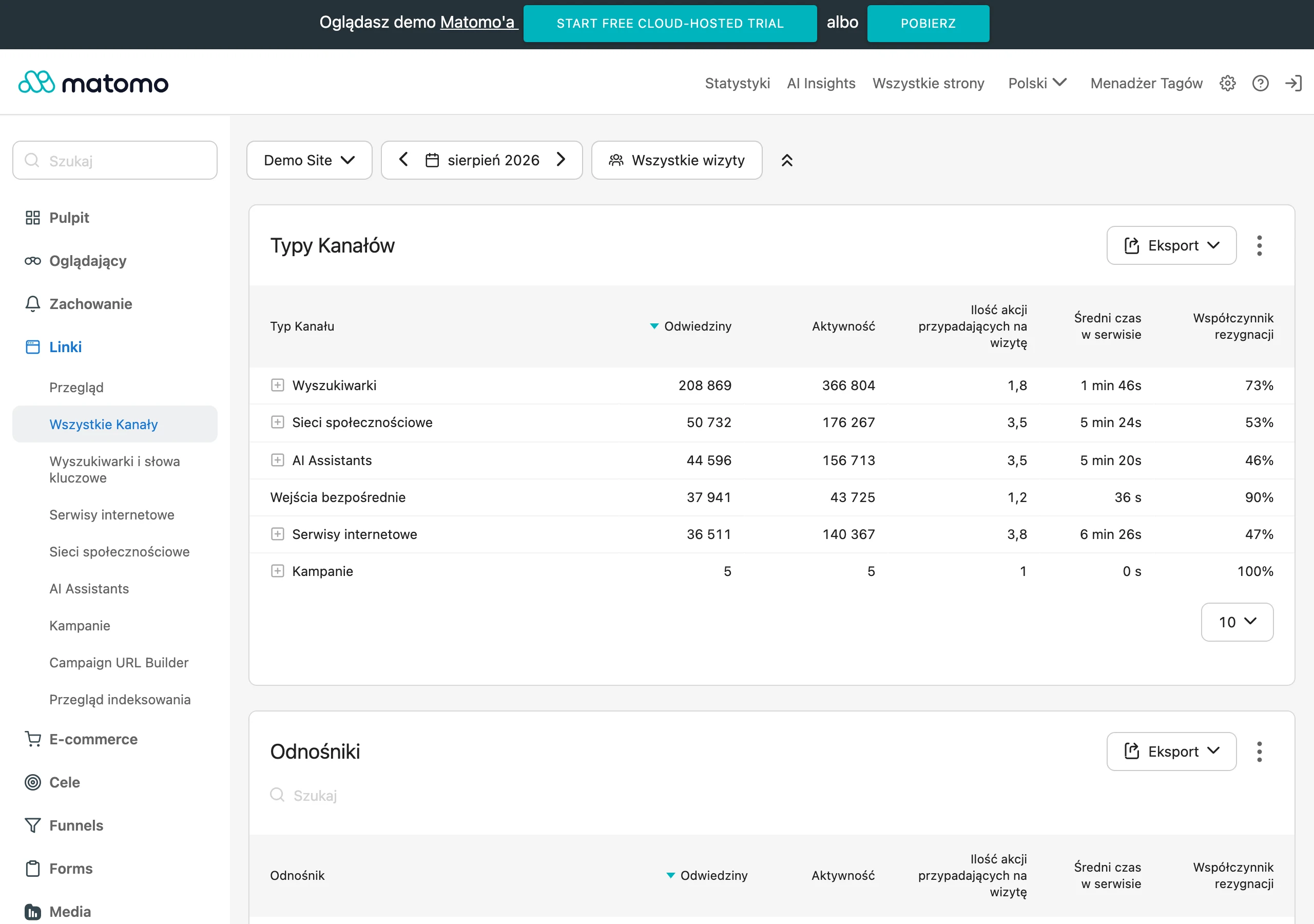
First of all, it is worth checking technical issues. You need to monitor HTTP status codes, redirects, 404 and 5xx errors, as well as whether the landing page has been marked as noindex or leads through several consecutive redirects. An external link that technically “works” but goes through an unnecessary redirect chain still degrades the quality of the page and user experience.
The second area concerns changes in the quality of the source itself. After a few months, an external page may lose credibility, be turned into an ad-heavy page, remove the original content or start serving spam. In practice, you therefore need to monitor not only the address itself, but also the current editorial context of the target page. If the material no longer supports what you are referring to, the link should be replaced or removed.
It is also worth assessing how links affect user behaviour and your site layout. On sales pages, comparison pages and landing pages, it is a good idea to check whether external links are not distracting too much attention from the CTA, form or key internal links. If a link is factually correct, but throws the user out of the process, it is usually better to move it lower down, place it in a less prominent section, or replace it with a short quote without a click-through.
After implementation, template-based errors that are not visible when editing a single piece of content also often come to light. This applies especially to widgets, footers, partner modules and repetitive elements that generate an outbound link across hundreds of subpages. Such a link may be technically justified, but if it does not add real value for the user, it needlessly scales the problem. A sitewide link requires a much stricter assessment than a single link in a paragraph.
The most practical approach is to set up a simple audit rhythm. Current, affiliate and externally sourced content should be reviewed more often than static help pages or documentation. During each check, it is worth reviewing four things: whether the URL is still correct, whether the source content still supports your material, whether the rel attribute still matches the function of the link, and whether the number of external links on the page has not grown over time to an excessive level.
Post-implementation optimisation does not always come down to removing a link. Often a better move is to refine the anchor text, replace the address with the original source, add the correct rel, or move the link to a place where its presence feels natural. The best results come from treating external links as part of content maintenance, rather than as a one-off decision at publication.
FAQ
Frequently asked questions
How do you assess whether an external link is needed in an article?
First check what the user will gain by clicking and whether the link genuinely develops the topic, confirms the data or points to a source. If it adds nothing beyond what is already in the text, it is usually unnecessary.
Do you need to add nofollow to all outbound links?
No, because nofollow should not be the default setting for all external links. For standard source links, for example to documentation or official statements, such an attribute is often not needed.
Why should a sponsored link have the correct rel attribute?
Because a link resulting from a commercial partnership should clearly signal its nature. Without the proper marking, it creates a quality and editorial risk, especially when there are more of these links.
When does an external link do more harm than good for SEO?
When it leads to a weak, little-trusted or unstable page, and also when it is added without a clear purpose. Links on important conversion pages that distract from the main action can also be a problem.
Which sites are worth choosing as the source of an external link?
Primary sources, official announcements, documentation, studies and pages with clear authorship work best. It is worth avoiding intermediaries, aggregators and sites overloaded with advertising.
What are the most common mistakes when linking to other sites?
The most common mistake is linking to low-quality domains, failing to mark commercial links and cramming many links into one paragraph. It is also a problem to treat nofollow as a universal shield instead of making a real assessment of whether the link makes sense.