
Nofollow links are not a tool for “magical” SEO control, but a way to describe the type of link accurately. In practice, it is worth distinguishing whether a link is an editorial recommendation, part of a commercial partnership, user-generated content, or merely a technical source reference. This decision is made for a specific link and a specific publication context, not according to one rule for the entire website. What matters most is who added the link, whether it involves financial gain or some other benefit, and whether the editorial team genuinely takes responsibility for it. A well-thought-out linking policy brings order to SEO, reduces the risk of mistakes and does not affect the usability of the content.
What nofollow link marking involves
Marking links nofollow comes down to assigning the rel attribute to selected links when you do not want to treat them as a full editorial recommendation. This is not a one-off setting for the whole website, but an ongoing process of assessing links depending on the context. What matters is not the URL itself, but where the link came from, who added it and why it ended up in the content.
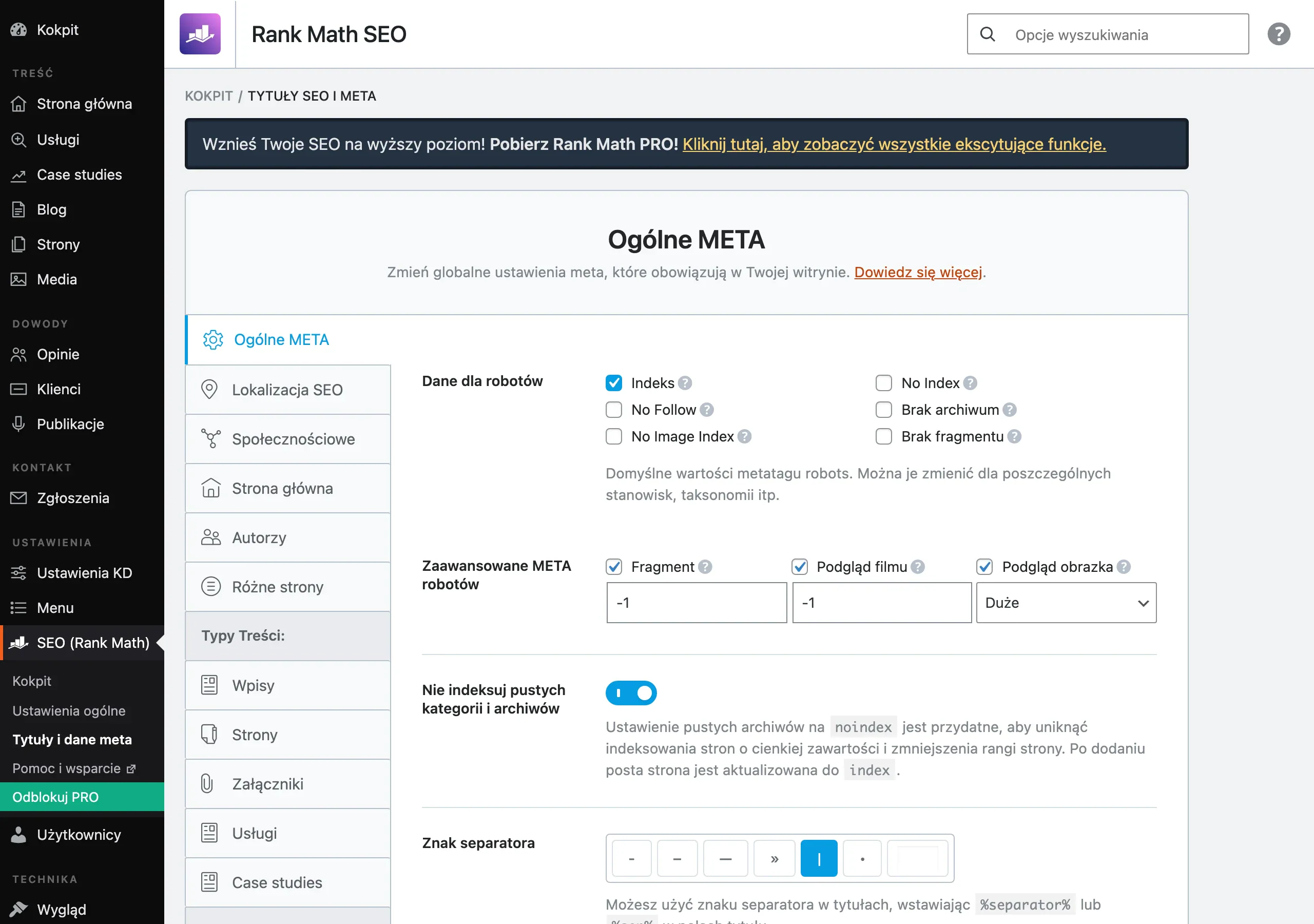
In practice, you check a few basic things: whether the link was added by the editorial team, a user or a system, whether there was a payment or other benefit, whether the destination page inspires trust, and whether the link naturally complements the material. If the editorial team genuinely recommends a valuable source, there is usually no need to add nofollow. However, when a link is commercial, affiliate-based or leads to a place you do not want to vouch for, it is worth applying the correct marking.
This approach only makes sense if it operates in an organised way. Articles, partner boxes, comments, user profiles and automated modules should have separate rules in the CMS and in the templates. The most common mistake is setting nofollow everywhere “just in case”, because that blurs the line between a natural citation and a link where trust should be limited.
A well-structured process comes down to a simple linking policy. It usually covers rules for the editorial team, moderation and e-commerce, a list of exceptions, and verification that the HTML code actually matches the adopted rules. This keeps decisions consistent and does not rely on the memory of one person publishing content.
- 01Continuous assessment processNot a one-off setting, but ongoing verification.
- 02Assessing context and sourceWho added the link and for what reason (editorial team, user)?
- 03Checking benefit and trustIs there payment, affiliation, or does the site inspire trust?
- 04Applying rel="nofollow"When there is no full editorial recommendation or the link is commercial.
The key is a conscious decision about recommendation, not automatic action for the whole site.
Google’s current guidelines on nofollow links
Google’s current guidelines indicate that nofollow is a hint, not an absolute ban on taking the link into account. This is an important practical change, because today it is not about technically “cutting off” the link from functioning, but about properly communicating its nature. It is worth basing the choice of attribute on the intention and responsibility for the link, rather than on attempts to manipulate rankings manually.
For sponsored and affiliate links, Google recommends rel=”sponsored” above all else. For user-generated content, rel=”ugc” is used, and when such material is not fully verified, ugc is often combined with nofollow in practice. This shows that nofollow alone is no longer the only solution today and is not always the most appropriate option either.
Google clearly separates link marking from managing indexing and the site architecture. Nofollow should not be used to hide subpages, “save” crawl budget or control which parts of the website are meant to be more important. If you want to improve internal SEO, it is better to work on the site structure, internal linking and indexing logic than to add nofollow to navigation links.
In practice, this also means that there is no point in sticking to one global rule for all content types. An expert section, sponsored articles, comments and user profiles differ in their level of editorial control, so they require different implementation rules. Especially on UGC-heavy sites, it is best to set the correct attributes systemically, because manually overseeing every link quickly stops being feasible.
Decision-making process when implementing nofollow links
The decision-making process when implementing nofollow links comes down to assessing each link in terms of its purpose, source and the scope of editorial responsibility. In practice, you do not start with the question “should I add nofollow”, but with the question “what kind of link is it”. This makes it easier to choose the right rel attribute without guessing and without multiplying random exceptions.
To begin with, it is worth making a simple inventory of the places where links appear across the site. These are most often articles, product descriptions, partner sections, comments, user profiles, reviews, forums, footers and automated modules. If you do not know where the links on the site come from, you cannot set a good policy for marking them.
Next, each link should be classified on the basis of a few questions: who added it, whether there is any payment or other benefit, whether the editorial team approves it, whether the destination page is trustworthy, and whether the link is a natural part of the content. It is a simple framework, but it effectively brings decisions into order. Thanks to this, editorial, SEO and the technical team work according to the same rules.
The final decision should result from the actual nature of the link. An editorial link to a trusted source usually remains without nofollow. A sponsored or affiliate link should have rel=”sponsored”, and a user-added link rel=”ugc”; if user content is not fully verified, it is often sensible to combine these markings with nofollow. Nofollow is not used to hide commercial intent, but to limit the recommendation signal where you do not take full responsibility for the link.
The next step is to implement the rules in the CMS and within the site’s components, rather than manually fixing individual posts. Sponsored sections, affiliate modules and comments should automatically assign the correct attribute. This reduces the number of mistakes and makes it easier to maintain the rules as the number of publications grows.
At the end, quality control is needed. It is worth reviewing the HTML code, checking a few random URL addresses and comparing the editorial policy with what actually ends up in the page code. Most often the problem does not result from flawed assumptions, but from the fact that the arrangements were not properly implemented in templates, form fields or UGC modules.
- 01Link analysisPurpose, source, responsibility.
- 02Source inventoryAreas where they appear.
- 03Link classificationWho added it? Paid?
The key is to assess each link, rather than guess every exception.
Practical uses of the nofollow attribute
The nofollow attribute is used when a link should not be read as a full editorial recommendation. In practice, this most often applies to commercial links, user-generated content and links to places that need to be referenced, but for which you do not want to vouch. The key is for the marking to result from context, rather than being a thoughtless automatic action.
In paid partnerships, sponsored publications, placements and affiliate marketing, the primary choice is rel=”sponsored”. This also covers situations where the benefit does not take the form of a classic payment, but still influences the fact that the link appears in the content. Nofollow alone is sometimes used, but when the link is sponsored in nature, it is better to use a label that says this directly.
In comments, user profiles, reviews and forums, the correct solution is rel=”ugc”. If the site does not have strong moderation or links appear automatically, it is worth additionally adding nofollow. User content should be covered by a system rule, because manually marking such links does not scale well and quickly turns into chaos.
Nofollow also makes sense for links to sources that you cite technically, but do not want to recommend. This may apply to poorly moderated directories, dubious sites, examples of breaches, or pages needed for context, but which raise quality concerns. Such a link may still be useful for the reader, but it does not have to be an editorial recommendation.
However, it makes no sense to mark natural editorial links to reliable sources, documentation, studies, neutrally described technology partners or pages you are genuinely citing with nofollow. Blanket adding nofollow to everything weakens editorial quality and blurs the line between ordinary citation and a link that requires reduced trust. If a link is a normal part of substantive content and you take responsibility for it, there is usually no reason to add nofollow.
Nofollow should also not be used for internal links solely to control the flow of “SEO juice”. It is a poor tool for patching problems with site architecture. If some subpages are poorly exposed, it is better to refine the navigation, internal linking logic, category structure and indexing rules, rather than covering the issue with the rel attribute.
A separate policy for different types of content works best. Expert articles, sponsored sections and UGC areas should not operate according to one single scheme. In practice, it is precisely separating these cases that most strongly reduces mistakes, compliance risks and unnecessary friction between editorial and SEO.
When to avoid using nofollow links
You should avoid nofollow links when the link is a natural, editorially controlled recommendation to a trustworthy source. If in an article you cite documentation, a study, an official announcement, a tool vendor or a technology partner described neutrally, there is no sense in weakening such a reference. Nofollow should not replace normal linking to sources for which you genuinely take editorial responsibility.
There is also little point in marking internal links with nofollow just to “set” SEO. It is a poor way of managing site architecture and usually misses the point. If you want to improve the visibility of important subpages, it is better to organise the navigation, hierarchy of content and internal linking logic.
Avoid nofollow as well when you add it en masse to all outbound links “just in case”. This practice blurs the distinction between a sponsored link, a user link and a plain source citation. As a result, the linking policy becomes unclear and difficult to maintain.
Nofollow is not for blocking indexing, hiding pages or managing crawl budget either. Other technical mechanisms are used for that, chosen depending on the objective and the type of subpage. When you use nofollow for tasks it was not created for, you can easily make the wrong decision and fail to achieve the expected effect.
- 01Editorial recommendationA credible, controlled source
- 02Internal linksPoor architecture management
- 03Mass taggingAvoid automation
Key takeaway: Nofollow does not replace natural linking, for which you take editorial responsibility.
Common mistakes and risks associated with nofollow links
The most common mistakes with nofollow links come from treating them as a default safeguard rather than a marker of a specific type of relationship. The problem usually does not lie in the attribute itself, but in the fact that it is implemented without clearly defined rules. Then the site stops distinguishing between editorial links, commercial links and user links.
- Failing to mark affiliate, sponsored or benefit-in-kind links.
- Adding nofollow to all outbound links without analysing their nature.
- Using nofollow instead of rel=”sponsored” or rel=”ugc”, even though the nature of the link is clear.
- Manually introducing exceptions where automation is needed in the CMS or in UGC modules.
- Inconsistency between the editorial policy and what is actually present in the page’s HTML code.
One of the more important risks is the incorrect classification of commercial links as ordinary editorial links. This applies especially to affiliate links, sponsored articles, ranking lists with commission and partner sections. If a link appears as a result of payment, a received benefit or agreed cooperation, it should be marked according to its actual nature, not according to editorial convenience.
The second risk is a drop in editorial quality resulting from excessive caution. When all links are treated identically, the reader and the team stop distinguishing which references are a deliberate recommendation and which are merely a technical safeguard. In practice, this quickly creates chaos in content publishing, especially when the site simultaneously runs expert articles, e-commerce and user-generated content sections.
In practice, many mistakes appear at the intersection of editorial and technology. The linking policy is written in a document, but the CMS does not assign attributes automatically, or does so only in selected sections. The safest implementation is one in which the rules are assigned to the type of content and the place of publication, rather than to the memory of the author or moderator.
You should also watch out for mixed cases, for example sponsored material that also contains natural external citations. Such a situation requires assessing each link separately, rather than applying one rule to the entire content block. This is exactly where it is easiest to assess whether the linking policy is mature or merely formal.