
Featured Snippets can lift CTR, but this only happens when they match the right intent and are based on well-crafted content. These are highlighted answer excerpts that Google displays above the standard results or very high up in the SERP. In practice, it is not about simply “winning the box”, but about ensuring the user sees a meaningful teaser and has a reason to click through to the page for the details. The biggest click uplift from a snippet comes above all with queries that ask for elaboration, comparison or instructions, rather than those that can be answered in a single sentence. That is why effective optimisation starts with selecting the right keywords, and only then with tidying up and restructuring the content. In this article we will focus on how to assess snippet potential and how to choose queries that can genuinely improve CTR.
What are Featured Snippets and how do they affect CTR?
Featured Snippets are highlighted answer excerpts that Google pulls from a specific part of a page and shows directly in the search results. They can take the form of a short paragraph, a list, a table or a simple step-by-step layout. For the site owner, this means clearly greater exposure than a standard organic result. For the user, it means quick access to the heart of the answer.
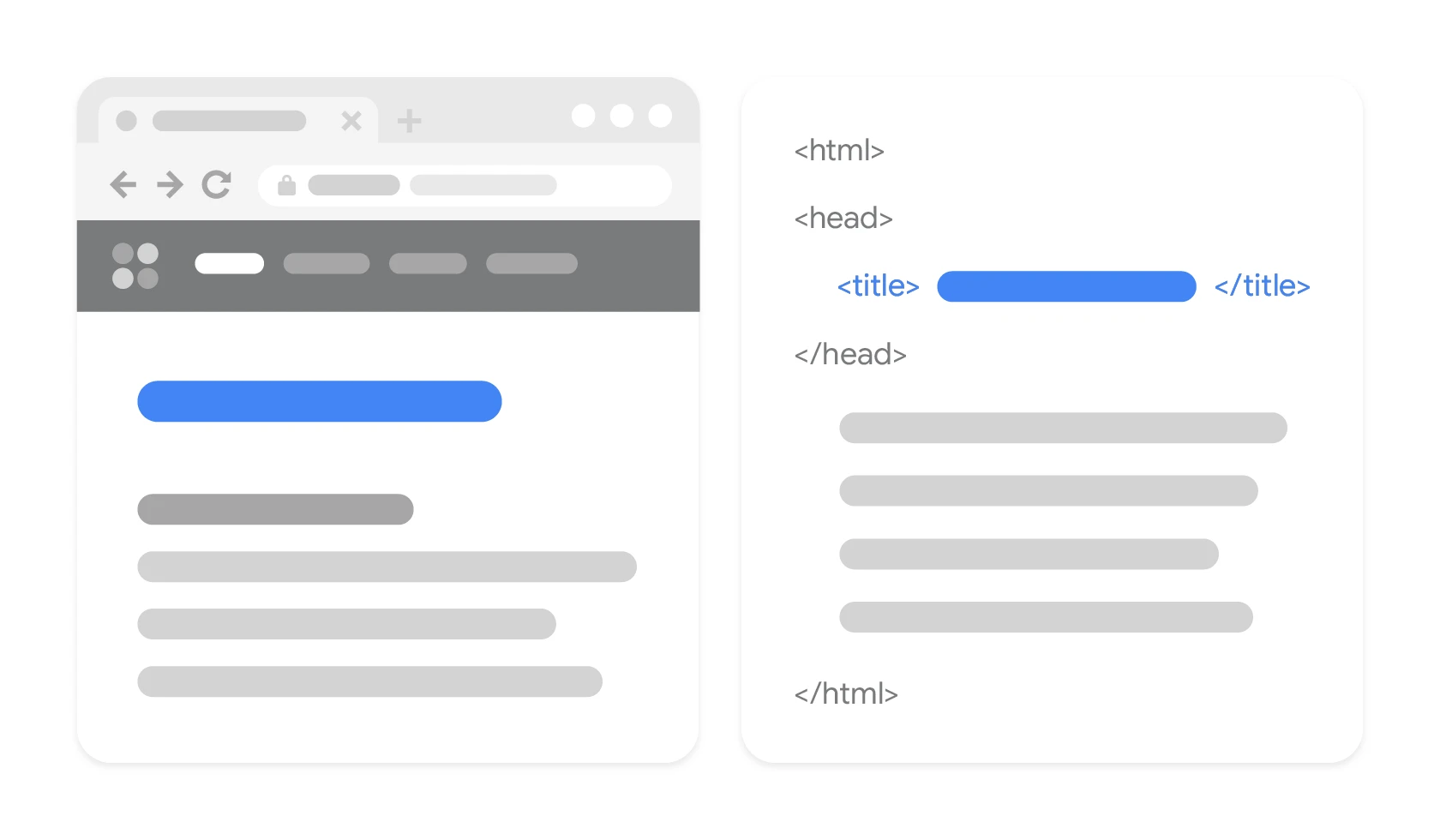
The impact on CTR comes from the fact that such a result is more visible and, already at SERP level, better matches the intent. When the query calls for clarification, expansion or a practical example, a snippet often acts as a strong click trigger. The best results are seen with informational, instructional and comparative keywords, where a short answer opens the topic but does not close it off.
However, a snippet does not always increase CTR. With very simple queries, the user can get a complete answer directly in Google and there is no reason to visit the page. This is a typical issue with definitions, simple numbers or short factual questions. That is why, before optimisation, it is worth assessing not only the chance of winning a snippet, but also whether a click will still be necessary for the user.
In practice, Google most often chooses a snippet from URLs that already have organic visibility and answer the specific query well. Simply adding a few sentences or implementing schema usually does not solve the problem. A clear section structure, the answer placed under the right heading and a format matched to what the SERP shows all matter. If Google displays a list and the page serves up a long-winded paragraph, the chance of taking over the snippet is noticeably lower.
CTR also depends on what is happening around the result in the search engine. The presence of People Also Ask, ads, videos, maps or other enhancements can draw the user’s attention away, even if the snippet is secured. That is why it is worth looking not only at the fact that the fragment appears, but at the entire SERP layout and user behaviour for a given type of query.
How to choose the right keywords to optimise for Featured Snippets?
The best keywords to optimise for Featured Snippets are those for which a fragment already appears in the results, your site has at least some visibility, and the user still needs to click through to get the full answer. This is a sensible starting point, because Google is already signalling that it prefers this way of presenting the information for that query. If you are additionally around the top positions, the chance of taking over the fragment increases. Starting with a keyword with no visibility at all usually means a weaker return on the work.
Queries that work best are informational, instructional, definitional and comparative. It is worth looking out for questions such as “how”, “what is”, “how does”, “what is the difference”, “when to use”, because these are exactly the cases where Google often displays a snippet. Not every keyword with a high number of impressions is a good one — more important is whether, after seeing the fragment, the user still wants to learn the details.
The safest way to select them is by using Google Search Console data and a manual SERP review. In Search Console, you pick out queries with a high number of impressions, a sensible number of clicks and positions that realistically allow you to think about moving up. You then check manually whether there is actually a snippet in the results, who owns it and in what format it is shown. Without such verification, it is easy to optimise content for the wrong answer layout.
- The keyword has a visible Featured Snippet in Google.
- Your page already ranks for that query or for very close variants.
- The intent does not end with one simple sentence in the SERP.
- The query can be assigned to a single, best-matched URL.
- The snippet format can be replicated in the content: paragraph, list, table or steps.
You also need to filter out keywords that only look good in a table. If the question has a trivially simple answer and the user does not need to compare or implement anything, the snippet may boost impressions but will not translate into clicks. A similar problem arises when several of your subpages answer the same question. URL cannibalisation weakens the chance of winning a snippet, because Google does not get a clear signal as to which page is the right one.
Finally, the choice of keywords should be tied to a specific section of a specific page. The unit of optimisation is not the whole article, but the fragment from which Google can directly pull the answer. That is why a good selection is closed off in the form of a map: keyword, intent, URL, snippet type and section rebuild plan. This structure later makes it easier to measure the effect at query level and CTR, instead of looking only at the overall traffic of the whole page.
Which content formats are most effective for Featured Snippets?
The best-performing formats are the ones that match how Google presents the answer for a given keyword: paragraph, list, table or a short Q&A layout. In practice, there is no single template that wins every time. First check the layout of the current snippet in the SERP, and only then rebuild the content. This usually delivers a better result than writing “for the snippet” without analysing the results first.
- Paragraph performs best for definitions, explanations and questions in the style of “what is” or “what does it involve”. The answer should be concise, precise and stated directly, without a marketing introduction or digressions.
- List works well for instructions, steps, checklists and questions such as “how”, “what are the steps” or “what to do first”. When the user expects a sequence of actions, a plain paragraph often gives way to a clear, structured list.
- Table works well for comparisons, parameters, costs, differences and feature round-ups. It is a strong choice when the user wants to quickly set several criteria side by side, instead of wading through continuous copy.
- Short Q&A layout helps with variations of the same topic and with longer keywords containing several clarifications. Such a structure organises the content and increases the chance that Google will match a specific section to a specific question.
The format itself is not enough if the answer is hidden deep in the section or preceded by a long introduction. The best chance comes from a short answer block placed directly under a heading that clearly answers the question. Only below that is it worth adding detail, examples, limitations and exceptions.
It also matters whether the snippet can realistically increase the number of clicks. For simple factual questions, the user may be able to get the full answer directly in the search results. Formats that signal there is something more waiting on the page usually work better for CTR: a guide, a comparison, selection criteria or the consequences of different decisions.
Step by step: how to optimise content for Featured Snippets?
Optimising for Featured Snippets means preparing one section of a page so that Google can easily extract a short, relevant answer to a specific query. It is not about “optimising the whole article”, but about working at the level of one keyword and one fragment of the URL. One keyword should lead to one best-matched section and one main address. This reduces keyword cannibalisation and makes it easier for Google to point to the right source.
- 1. Confirm the intent and format in the SERP. Check whether Google shows a paragraph, list, table, People Also Ask, video or other elements competing for attention for that keyword. If the user gets a full answer without clicking, assess whether that keyword makes sense from a CTR perspective at all.
- 2. Assign the query to one URL. If several pages answer the same question, choose the strongest one and organise the rest through consolidation, a change in content scope or internal linking. Without this, Google often rotates URLs or is unable to choose one consistently.
- 3. Change the heading to a question or a very clear statement. The section heading should precisely answer what the user is looking for. The less room for interpretation, the easier it is to associate a given content block with a specific keyword.
- 4. Place a short answer directly under the heading. First give the gist in 1 short paragraph, in a list or in a table, without an extended introduction or unnecessary embellishments. Google must be able to extract the answer without guessing what the author meant.
- 5. Expand on the topic only below. After the block prepared for the snippet, add details, examples, exceptions, conditions and follow-up questions. Such an expansion gives the user a reason to click, instead of closing the topic already in the SERP.
- 6. Structure the HTML and on-page signals. Make sure the heading hierarchy is logical, lists and tables are correct, the title and meta description make sense, and the anchor texts in internal linking are consistent. The content should be easy to read both for the user and for Google.
- 7. Check whether the section is technically blocked. Banners, pop-ups, advertising inserts and UX elements that break up the answer block can weaken the effect. Correct indexing, canonicalisation and the absence of duplicated sections on other subpages also matter.
- 8. Monitor the result at query level. In Search Console, track CTR, impressions, position and changes in the URL that gains or loses the snippet. Google often tests different formats and different sources, so post-publication adjustments are a natural part of the process.
The most common mistake is combining several intents in one block. A section that defines a concept, sells a service and explains a process at the same time usually loses out to a competitor’s simpler answer. It is better to split the content into short, unambiguous sections and assign a separate question to each one.
There is also no point treating structured data as a shortcut. Schema does not replace a well-written answer, the right format or a clear content structure. In practice, the result is more often determined by the document’s relevance, the quality of the section and whether the answer can be easily extracted from the code and the page view.
How to monitor and analyse results after implementing Featured Snippets?
Results after implementing Featured Snippets are worth monitoring at the level of a specific query and a specific URL, because that is where you can see whether the change has translated into more clicks. The key metrics are clicks, impressions, CTR and average position in Google Search Console. Improved visibility alone is not enough if the user gets the full answer already in the search results. The best benchmark is comparing data before and after implementation for the same keyword, rather than assessing the entire article.
In practice, start with a list of keywords covered by the optimisation and analyse them from two angles: query and page. If CTR rises with a similar number of impressions, it usually means the change worked. When impressions go up but CTR falls, it may be that the snippet gained more exposure, but does not encourage clicks or answers too comprehensively.
At the same time, it is worth observing the SERP itself, because a Featured Snippet can change. Google may replace the snippet owner, switch the answer format or turn the snippet off altogether for a given keyword. Without regular checks of the results view, it is easy to conclude that the content is at fault, when in practice the SERP layout has changed.
In the analysis, search intent also matters. For simple definitional questions, greater visibility does not always translate into clicks, because the user finishes the journey in Google. By contrast, for instructional, comparative and problem-solving keywords, CTR potential is often higher, because a short fragment usually only opens the topic rather than fully closing it.
A good sign is when, after implementation, clicks from related keywords increase rather than only from one main one. This is a signal that Google understands the section’s topic better and more often extracts it as an answer to different question variants. If the snippet appears but traffic stays flat, you usually need to fine-tune the first answer block and what the user sees as a reason to click through.
It is best to carry out the analysis at fixed intervals, for example weekly or every two weeks, instead of drawing conclusions after one day. Many queries have variable volume, and snippet rotation can be dynamic. A reliable assessment requires a short change history: when the content was improved, what format was implemented and how CTR behaved after publication.
If the results are weak, do not start by rewriting the entire page. First check whether the answer is placed high enough, whether it addresses the question directly, whether it does not compete with another section, and whether the format matches the current snippet in the SERP. Often it is enough to shorten the first sentences, refine the heading or turn a paragraph into a list or table.
Most common mistakes and pitfalls in optimisation for Featured Snippets
The most common missteps in optimisation for Featured Snippets are choosing irrelevant keywords, mismatching the answer format and measuring success solely by the presence of a snippet. In practice, not every keyword with a snippet is beneficial for CTR. If the user gets a full answer without visiting the page, greater exposure may not translate into a real gain.
A common problem is also trying to win a snippet for queries where the page does not yet have a sensible baseline position. Google usually selects a fragment from documents that are already visible in the organic results. It is better to start with keywords that have high impressions and a position near the top than with queries for which the page practically does not exist.
The second pitfall is an improperly constructed answer. The text is often too verbose, starts with a marketing introduction or hides the core point several paragraphs later. For Google, such a structure is harder to extract than a short, unambiguous answer placed under a heading and presented in a format matched to the query type.
Combining several intents in one block also often does harm. When a section defines a concept, sells a service and describes a process at the same time, the message becomes ambiguous. One section should answer one dominant question, because that makes it easier to get a relevant and stable snippet.
Keyword cannibalisation between URLs can also be a problem. If several subpages effectively answer the same question, Google may rotate sources or not trust any of them enough to choose them consistently. In such a situation, instead of polishing a single paragraph, it is better first to organise the keyword-to-URL map and clearly indicate the main page for a given intent.
Many people also overestimate the importance of schema and tags. Structured data help organise the content, but on their own they do not guarantee a Featured Snippet. The result is more often determined by the document’s relevance, the quality of the answer, clean HTML and matching the format to what Google already shows for the given query.
Another common mistake is a one-off implementation without later monitoring. A Featured Snippet can change owner, length and layout, which is why the content needs iteration. Optimisation for a snippet does not end at publication, but at the cyclical checking of whether Google still selects the right fragment and whether it still translates into clicks.
Finally, it is worth being careful not to over-“polish” the answer for the snippet itself at the expense of the user. If the block is artificially shortened, taken out of context or does not lead naturally into the rest, the page may lose usefulness. A well-performing snippet gives a quick answer, while still leaving a clear reason to visit the page for an expansion, comparison or instruction.
How to measure the success and effectiveness of Featured Snippets in practice?
The success of Featured Snippets should be measured at the level of a specific query and a specific URL, comparing changes in CTR, the number of clicks and the quality of traffic after the snippet appears or is lost. The key point is whether the additional visibility translated into more valuable visits, rather than just a higher number of impressions. The fact of winning a snippet is not yet a business outcome. For some keywords, the snippet will increase exposure, but it will not boost clicks because the user gets the answer already in the SERP.
In practice, the basic test is straightforward: compare the data before implementation and after implementation for the same keyword, the same page and as similar a period as possible. If CTR increases with a similar number of impressions, the change is usually doing its job. When impressions go up, but clicks remain unchanged, the snippet may be improving exposure without a real increase in traffic. The best point of reference is not the whole article, but the individual query for which the answer section was optimised.
Do not reduce the assessment of effectiveness to CTR alone, because this metric depends heavily on user intent and the layout of the search results. For informational queries, a lower CTR is often normal, even when the snippet is displayed high up. For how-to, comparison and problem-solving keywords, an increase in CTR is usually more likely, because the user expects further detail. If the intent requires further reading, the snippet has a better chance of increasing traffic, rather than just answering on the user’s behalf.
The second level of assessment is the quality of traffic acquired after the click. It is worth checking whether users from such queries read on, move to the next sections, complete micro-actions or convert better than before. If CTR rises but the traffic drops off quickly, that is a signal that the answer in the snippet promised something different from the page content, or that the section does not develop the topic well enough.
The third element is the durability of the effect. A Featured Snippet can be unstable, so the meaningful result is not a one-off appearance of the fragment, but keeping it for a longer period or returning to it regularly after updates. That is why it is worth monitoring whether Google changes the snippet format, chooses a different section of the page, or gives the fragment back to a competitor. Good snippet optimisation requires monitoring and iteration, because the SERP layout and the source of the fragment can change often.
Effectiveness is also about the profitability of the work in relation to the keyword’s potential. If a given optimisation requires a major content rebuild, and the keyword has low volume and weak click intent, the result may turn out to be of little value despite winning the snippet. By contrast, a keyword with a high number of impressions, a position close to the top results and a need to expand on the topic more often delivers a better return on the work invested. The most profitable are usually the keywords where the page is already visible, the snippet exists in the SERP and the user still needs to visit the page.
Finally, look at the effect as a whole, but make decisions locally. If one section wins a snippet and improves CTR, while another loses clicks because of an overly exhaustive answer in the SERP, do not treat both cases the same. Featured Snippets are not an end in themselves. They work when they increase useful visibility and deliver traffic that makes sense for the given page.
FAQ
Frequently asked questions
Which keywords are best suited to Featured Snippets to improve CTR?
Informational, how-to, definition and comparison queries work best. It is important that after seeing the snippet, the user still needs to visit the page for more detail.
Does a Featured Snippet always increase CTR?
No, because for simple questions the user may get a full answer already in Google. In that case the snippet increases visibility, but it does not always translate into clicks.
How can you check whether it is worth optimising a keyword for a Featured Snippet?
First, check whether a snippet already appears in the SERP and whether your page already has at least some visibility. Then it is worth assessing whether a click is still needed, or whether the answer closes the topic too quickly.
Which content formats are best for Featured Snippets?
Paragraphs, lists, tables and short question-and-answer layouts work best. The format should be matched to how Google shows the answer for a given keyword in the search results.
How can you improve a page’s content so that Google pulls a Featured Snippet from it?
You need to prepare one specific section with a short answer placed directly under the relevant heading. Only below that should you add expansion, examples and details.
How can you monitor the effects of optimisation for Featured Snippets?
It is best to track clicks, impressions, CTR and average position in Google Search Console at the level of a specific query and URL. It is also worth regularly checking whether the SERP layout itself and the snippet owner have changed.