
Featured Snippets are Google’s highlighted answers displayed above the standard organic results, which is why they are often referred to as “position zero”. For many websites, this is a way to gain greater visibility without increasing the advertising budget. However, you cannot get them simply by being in the index or by chance, just thanks to a well-written text. In practice, the page that wins is the one that answers a specific question most accurately in a form that Google can easily extract. This means analysing the query, the current results layout and the content on the page itself. In this article, I will show what really determines winning a Featured Snippet and where the most common pitfalls are.
What are Featured Snippets and how do they work in practice?
Featured Snippets are extracted answers from Google that appear above the classic organic results for selected informational queries. They most often concern questions such as what is, how to, why, when, or how does it differ. Google usually takes such a fragment from a page that answers the search intent well and contains a clear, concise response.
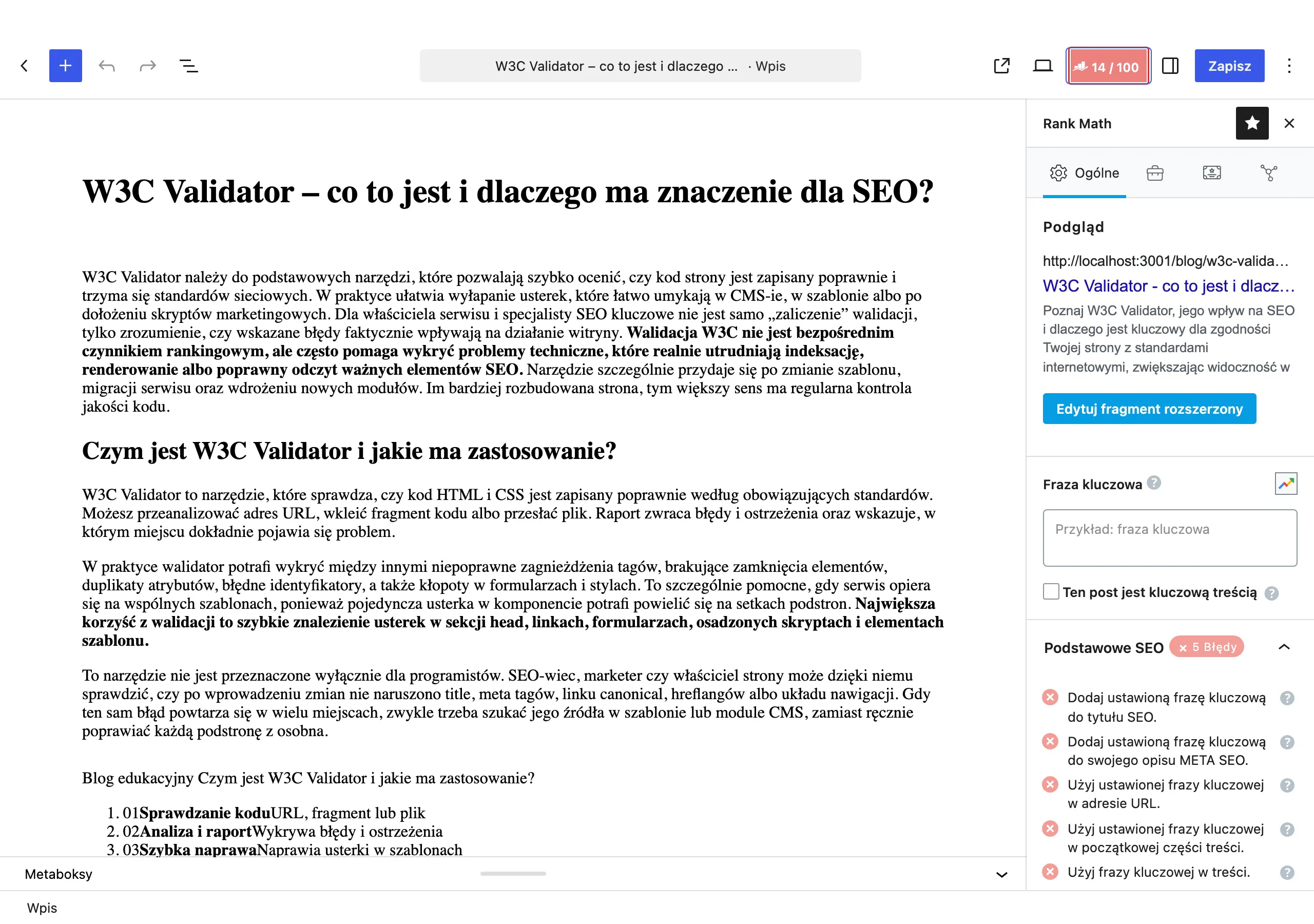
In practice, it is not only the page’s high ranking that matters, but also whether the crawler can easily identify a fragment suitable for showing as a ready-made answer. That is why the following matter: the placement of the answer within the content, its length, simple language and clear heading hierarchy. If a user enters a question and your page answers it only after several introductory paragraphs, the chance of a snippet usually decreases.
The form of the answer should match what Google currently presents in the results. For definitions, a short paragraph usually works best; for instructions, a step-by-step list; and for comparisons, a table or a structured set of items. This is important because Google does not choose only the best text in terms of topic, but also the fragment that can be conveniently displayed in the SERP.
Winning position zero more often resembles refining a specific section than generally “improving an article”. First, you select the keywords for which a snippet actually appears and where the page already has visibility. Next, you analyse the current snippet, rebuild the answer fragment and check whether Google begins testing the new version in the results. The best chances usually belong to URLs already present on the first page, not new subpages with no history.
Current challenges in securing position zero
The biggest challenge is that not every query offers a real chance of a Featured Snippet. If the intent is not clearly informational or Google is not currently showing such an element in the results, optimising for position zero may miss the point. For this reason, it is worth starting with an assessment of the current SERP, rather than with the keyword list from a tool alone.
The second problem is volatility in the results. Google can regularly change the snippet owner, test other sources and swap the answer format. In practice, this means that a one-off content tweak is not enough, and the effects need to be monitored after implementation. Position zero results from continuously adapting to the current SERP, not from a “reward” granted once and for all.
Many people also overestimate the role of structured data alone or isolated SEO tactics. Schema can help Google understand the page, but on its own it does not guarantee a snippet. The outcome is decided by the relevance of the answer, its format, the quality of the whole page and whether Google trusts the given URL within that topic area.
A practical challenge is also internal competition and choosing the wrong landing page. If several subpages answer the same question in a similar way, Google may struggle to identify the right URL. A common mistake is also trying to win a snippet on a new URL, even though another subpage is already ranking for similar keywords and it is that page that should be refined.
It is also worth remembering that the mere presence of a Featured Snippet does not always offer the best business opportunity. In some results, ads, maps, video or other expanded modules appear alongside the snippet, reducing the visibility of the classic results. Therefore, it is worth assessing not only the potential to gain position zero, but also whether, for a given query, it will translate into real clicks and valuable traffic.
Keyword selection strategies and analysis of current SERP results
Keywords for a Featured Snippet are selected by checking whether Google shows such an element for the query at all and whether your page has real visibility for it. The best candidates are informational queries where you already have a URL in the top 10, ideally on the first page. Most often, position zero is won by refining a subpage that is already visible, rather than publishing a new text from scratch.
Not every keyword is suitable for this kind of optimisation. If there is no Featured Snippet in the results, the intent is transactional, or the top of the SERP is taken up by other modules, the chances and click potential may simply be limited. That is why, before implementation, it is worth assessing not only the possibility of winning the snippet itself, but also whether that snippet makes business sense.
- check whether a Featured Snippet is actually displayed for the keyword,
- assess whether the query has informational intent rather than transactional,
- see which of your URLs is already ranking and in what position,
- determine the answer format in the SERP: paragraph, list, table or video,
- check whether there are so many other elements above the results that clicks will be limited.
Tracking rankings alone is not enough, because Google can often swap the snippet owner. You need to analyse the SERP continuously and break down the current competitor answer into its components: heading, snippet length, scope of information and content layout on the page. If Google shows a list of steps, a definition paragraph usually has no chance, even if it is solid from a content perspective.
In practice, it is a good idea to start with a group of keywords that lead to one strong URL. This reduces keyword cannibalisation and makes it easier to build one section answering the main question and several supporting sections that close off the side topics. When several subpages answer almost identically on the same topic, Google receives conflicting signals and has more trouble choosing the right fragment.
Practical steps for optimising content for Featured Snippets
Content optimisation for Featured Snippets comes down to preparing a short, unambiguous answer in a format aligned with what Google already shows in the SERP. Under the heading that answers a specific question, place a concise answer block, and only then expand on the topic below. First the core, then the details — this is one of the key patterns when fighting for position zero.
For definitions, a short paragraph works best; for instructions, an ordered list of steps; and for comparisons, a table or clearly listed differences. The answer should be specific and complete within its scope, but without a long introduction, digressions or marketing flourishes. Google must be able to extract the fragment without guessing which part of the text actually answers the question.
After the main answer, expand on the topic with conditions, exceptions, variants and clarifications. This matters because the short fragment alone should not be the only value on the page. A good snippet usually grows out of content that is, on the one hand, easy to quote and, on the other, broad enough semantically to confirm the quality of the whole subpage.
Headings should reflect real user questions, not just broad labels. A section “How to win a Featured Snippet?” works better than a heading such as “Content optimisation”. This structure makes it easier for Google to connect the question with the answer and reduces the risk that the right fragment will disappear in too broad a block of text.
Finally, verify the page from a technical perspective. The key fragment must be indexed, visible in the code after rendering, accessible on mobile and not hidden in elements that the crawler may interpret poorly. Structured data can organise content, but it will not by itself deliver position zero if the answer is poorly structured or the page has quality issues.
Once implemented, the work does not end; the testing phase begins. Observe whether the snippet format has changed, whether your URL has taken over the answer, how CTR behaves and whether keyword cannibalisation with another subpage has appeared. If the snippet does not appear, the most common fixes are adjusting the answer length, the section layout, the format match or the question heading itself.
The importance of semantic and technical alignment in the process
It is precisely semantic and technical alignment that determines whether Google will consider a given section a relevant answer and be able to extract it correctly. The mere presence of the keyword is not enough if the content does not answer the user’s question directly. Conversely, even a brilliantly written answer will not help if the crawler cannot clearly “see” it in the structure of the page. Google needs to be given one short answer, and straight underneath it broader, organised context.
Semantic alignment means that the section matches the intent of the query, not just its wording. When the user asks “how”, Google more often expects a set of steps. For a “what is” query, a short definition paragraph usually works better. In practice, it is also worth accounting for question variants, related concepts, conditions and exceptions, but without fragmenting the main answer into several unreadable snippets.
A snippet section most often starts with an unambiguous heading and a direct answer right below it. Only further down does it make sense to clarify the topic with details, examples and limitations. The most common semantic problem is an answer that is correct in substance, but too scattered for Google to quote easily.
The technical layer is just as important, because it determines whether the content can be evaluated and fetched at all. It is worth checking indexing, the canonical tag, correct content rendering, mobile accessibility and the absence of robots blocking. If the key fragment is hidden in a custom component, loads with a delay or exists in several URL versions, the chance of securing the snippet reliably drops significantly.
In practice, it is also worth assessing the relationship between a single answer section and the entire URL. The page should remain topically coherent, up to date and high quality, because Google does not extract answers completely in isolation from the rest of the document. Optimising a paragraph on its own will not replace a poor page, just as technique alone will not replace relevant content.
After implementation, the work does not end, because the snippet needs to be tracked over time. Google can change the “owner” of an answer after minor shifts in the SERP, which is why rank tracking, CTR and the format of the result itself all matter. Quite often, the effect is determined not by one correction, but by several iterations of answer length, section layout and the scope of information.
Most common mistakes and limitations when trying to win position zero
The most common mistakes when trying to win position zero include an answer that is too general, an unsuitable content format and the lack of a single, clearly separated section that Google can pull. Many pages try to “sound expert” with a long introduction, and the core message only appears after several paragraphs. For a Featured Snippet, this is usually an unfavourable structure, because the answer should appear quickly and without unnecessary embellishments.
Another common mistake is mismatching the format to what Google is already displaying for a given query. When the SERP is dominated by a step-by-step list, a plain text description will usually lose out to the competition. If the snippet is definition-based, an extensive list will not necessarily be the best choice. You do not optimise “for featured snippets” in general, but for the specific type of answer visible for a specific keyword.
The second major obstacle is duplication and cannibalisation. When several subpages answer almost exactly the same question, Google receives inconsistent signals about which URL it should promote. One main question should have one main, strongest answer section on one URL.
Many people also overestimate the importance of structured data or individual editorial tricks. Structured data can make a page easier to understand, but on its own it will not deliver position zero. Similarly, adding a few FAQ questions without restructuring the main content rarely changes the situation if the page does not precisely match user intent.
There are also limitations that you do not fully control. Not every query has a Featured Snippet, and some results are so heavily “built up” with other SERP modules that even winning position zero does not translate into much visibility or many clicks. That is why it is worth assessing not only the chance of earning the snippet, but also its real business value.
The last limitation is instability. A Featured Snippet is not a prize awarded once and for all, but an element of the results that Google can reshuffle frequently. Position zero is won through tests and maintained through constant monitoring, not through a one-off content edit.
Monitoring and adaptation after implementing the optimisation
Monitoring after implementation comes down to checking whether Google has actually started using your section as a Featured Snippet and how the visibility of a given URL changes for selected queries. This cannot be reliably assessed solely by an increase in traffic, because a snippet can appear, disappear or change “owner” without a clear change in the number of visits. The key is to observe the relationship between the query, the URL, the answer format and the presence of the snippet in the current SERP.
After publication, it is worth checking keywords more often than usual, especially in the first weeks after the changes are indexed. Google does not always react immediately, and for some queries it tests different owners of the answer. If the page was already high in the results, but the snippet still goes to another site, it usually indicates a problem with the section format, the precision of the answer, or the strength of the competing subpage.
In practice, it is worth observing several signals at once: the URL’s ranking, whether the snippet appears, CTR in Google Search Console and changes in the appearance of the results themselves. A ranking improvement alone does not yet guarantee winning position zero, and a drop in CTR does not necessarily mean failure if Google has rebuilt the SERP layout. For this reason, it is a good idea to regularly compare data from tools with a manual review of the results for a specific keyword.
Adaptation involves refining the answer section to match what the SERP actually shows, rather than automatically adding more paragraphs. When Google features a list and your answer takes the form of a long block of text, you usually need to change the content layout. If the competition answers more briefly and directly, it makes sense to shorten the first answer and only then expand on the details below. Usually, it is not longer content that wins, but content that is easy to extract.
A common reason for no effect is also the scattering of answers across several subpages. In such a situation, Google does not get one strong URL for a given question, but several similar candidates. If you see different URLs taking over rankings for the same keyword in turn, you need to reduce cannibalisation and strengthen one main page. One clear answer on one correct URL usually gives a better result than several partly similar sections.
Not every optimisation leads to winning the snippet after the first change, which is why this process is worth running in test mode. Sometimes it is enough to move the answer higher, simplify the heading or turn a paragraph into a list. In other cases, a deeper rebuild of the entire section is needed, because the problem is not the fragment itself, but the page’s mismatch with the query intent. If there is no effect after implementation, there is no point shooting in the dark — it is better to go back to the SERP and check what Google is rewarding now, rather than what worked a few weeks ago.
FAQ
Frequently asked questions
How do you get a Featured Snippet in Google step by step?
First check whether a snippet appears for the keyword at all and whether your site already ranks in the top 10. Then adapt a short answer fragment to the format visible in the SERP and monitor whether Google starts displaying it.
Is good content alone enough to win position zero?
No, because it is not only content quality that matters, but also its format, the placement of the answer and its fit with the current results layout. Google must be able to easily extract a specific fragment as a ready-made answer.
Why does Google choose some pages for Featured Snippets and not others?
Google chooses the page that best matches the search intent and has an answer that is easy to show in the results. The length of the fragment, simple language, heading hierarchy and the URL’s authority on the topic also matter.
When is it worth optimising a page for a Featured Snippet?
When a snippet actually exists for the keyword and the query has informational intent. It is best to start with a URL that is already visible on the first results page.
What should be included in an answer to have a chance of appearing in a snippet?
The answer should be short, unambiguous and placed immediately under the heading with the question. Only further down is it worth adding details, exceptions and clarifications.
Do structured data help in winning position zero?
They can help Google better understand the content, but they do not guarantee a snippet on their own. The result is determined primarily by the relevance of the answer, its format and the quality of the whole page.