
Geotargeting and geolocation can increase sales when location genuinely affects the customer’s decision. In practice, this is not just about “showing an advert in a given city”, but about tailoring the offer, message and fulfilment method to where the user is located or which area you cover. This is especially clear where delivery time, click and collect, availability in the nearest store or contact with a local branch matter. The best results come from combining data on location with purchase intent and the company’s real logistics. When these elements do not align, a campaign can rack up clicks but fail to deliver sales. For that reason, it is worth treating geotargeting as part of the whole sales process, rather than just an option to tick off in the ad panel.
What geotargeting and geolocation are in practice
Geotargeting means directing adverts, offers and content to users from a specific area, while geolocation is the use of their current or declared location to show the right sales information. In practice, geotargeting determines who sees the message and where, whereas geolocation decides exactly what the user will see depending on location. This could be the nearest store, product availability, a local price, delivery time or the branch phone number.
The biggest sales value appears when location changes the buying conditions. A customer makes a decision faster if they immediately see that the product is available in a shop 2 km away, that they can collect the order today, or that delivery to their postcode will take one day. Simply knowing that the user is in Warsaw or Kraków adds little if it does not translate into a concrete benefit.
In practice, this is not a single campaign, but an entire way of working. It includes splitting areas, segmenting audiences, preparing local creatives, setting delivery rules, matching landing pages and measuring results separately for each location. If an advert promises fast delivery, but the page after the click does not confirm this for the given area, sales usually fall.
Geotargeting works both in e-commerce and in local businesses. An online store can promote fast-delivery zones or collection points in specific locations, while a service company can direct the user to the nearest branch or a local contact form. The key is that location should be linked to a real fulfilment process, rather than just the reach of the campaign.
The current operational context of geotargeting
Today’s implementation reality for geotargeting comes down to the fact that effectiveness is determined not only by ad settings, but also by the quality of location data, the consistency of information and the company’s operational capabilities. Location data is not always as precise as is often assumed. GPS can be very accurate, but IP-based location may be only approximate, and a location declared by the user needs to be verified on the sales or delivery side.
This has a direct impact on running campaigns. If the radius is set too narrowly, or the message relies on data that does not reflect the user’s actual position, the advert may appear at the wrong time or reach the wrong person. That is why it is safer to build campaigns so that they also work with less precise area targeting. In practice, this translates into, among other things, regional messages, city selection on the page and a store locator.
Another key condition is consistency in what the user sees across different places. The address, opening hours, phone number, product availability and delivery terms should match in the advert, business profile, map, website and sales system. The most common problem is not the advert itself, but inconsistent local data across channels. Such discrepancies increase abandonment and reduce trust exactly at the point of purchase decision-making.
Measuring results also requires a different approach than in standard campaigns. An online order is only part of the outcome, because local activities often also lead to a phone call, directions click, visit to the branch or click and collect. If a company analyses only online sales, it may wrongly conclude that local campaigns are weaker, even though in practice they genuinely support offline revenue.
It is also worth taking into account the limitations resulting from privacy and user consent. In some cases, the scope of location data will be smaller than it used to be, so the campaign plan should allow for variants based on less detailed areas. Ultimately, geotargeting works best today not as a “technological trick”, but as a well-organised process that combines advertising, data and customer service.
How the geotargeting process works step by step
The geotargeting process starts with the sales goal, then includes area segmentation and offer matching, and ends with measuring results by location. In practice, it is a sequence of decisions designed to connect the place where the user is located with a real opportunity to buy. The most important thing is that ad settings should stem from logistics, availability and customer intent, not just from the map in the ad panel.
- 1. Define the sales objective. At the start, decide whether the priority is online orders, visits to a location, calls to a branch, or in-store collection. This determines the targeting approach, the creative format and the measurement model.
- 2. Build a map of the real reach. Set out the areas by store, warehouse, delivery zones and operational constraints. If the company cannot serve a given area efficiently, it is better not to direct budget there.
- 3. Segment audiences locally. A permanent city resident behaves differently, someone temporarily near the shop behaves differently again, and so does a customer returning for another purchase. This kind of segmentation makes it easier to match the message to the context, not just the address.
- 4. Match the offer to the location. In one zone, information about next-day delivery will work best; in another, about same-day collection; and in another, about contacting a local advisor. The location should improve the convenience of purchase, not be merely a cosmetic addition to the advert.
- 5. Configure campaign delivery. Set cities, radiuses around locations, regions or custom areas, and then immediately exclude unprofitable locations. Align the advert schedule with opening hours, call centre operating hours and periods of peak demand.
- 6. Adapt the creative to the place. The advert should clearly communicate what the customer gains here and now in their location. Concrete elements work well: the city name, distance to the location, delivery time, a local phone number or a call to get directions.
- 7. Send users to the right landing page. After the click, the user should land on a local subpage, a store page, a map of locations or a basket with the correct delivery method set. If the advert promises local availability, the landing page must confirm it without requiring any extra searching.
- 8. Measure results separately for online and offline. Online orders show only part of the picture. It is worth monitoring calls, route clicks, visits to a location, reservations and in-store collections in parallel, because only then can you see the real impact of location on sales.
- 9. Optimise by area profitability. Compare cost per acquisition, conversion rate, order value and lead quality between locations. The budget should grow where the location improves the business result, not just boosts traffic.
- 10. Keep the data up to date. Opening hours, addresses, delivery areas, stock levels and local promotions must be consistent in adverts, on the website and in the sales system. Even a well-set campaign loses effectiveness when local information is no longer current.
The effectiveness of the process is also influenced by the quality of location data. GPS can be accurate, IP-based location is approximate, and data provided by the user should be checked against the real delivery or service area. That is why it is worth planning for a less precise option as well, for example selecting a city, postcode or store locator.
What to do operationally to use geolocation
To implement geolocation in a practical way, it is best to start with the areas where the company genuinely delivers value and can show that clearly in the advert and on the website. First choose cities, locations and delivery zones with good accessibility, efficient service and proven demand. This reduces wasted budget on clicks from places where the customer does not have a convenient way to buy.
It is worth designing the campaign structure so that locations can be compared, rather than throwing everything into one basket. Separate campaigns or groups for cities, radiuses around locations or delivery zones quickly reveal where conversion is higher and where acquisition cost starts to rise too much. Without this kind of segmentation, it is hard to make sensible decisions about bids, budget and exclusions.
Location alone will not do the job if you do not combine it with purchase intent. A user near the shop may just be passing by, not ready to order. That is why geotargeting works best alongside high-intent keywords, remarketing, returning-user segments or campaigns aimed at people at a specific stage of the funnel.
The message should arise from the context of the place. Near a sales location, an emphasis on speed often works better, for example collection today or travel in a few minutes. In delivery zones, information about fulfilment time, delivery cost, product availability and a simple way to place an order can be more effective.
It is also worth measuring the quality of local traffic, rather than focusing solely on the number of clicks. In practice, analyse calls, route clicks, reservations, in-store collections, orders from a given area and behaviour on local landing pages. If a location generates traffic but does not translate into contact, visits or sales, the problem usually lies in a poorly matched offer or inconsistent data.
Consistency of information between the advert, map, profile, website and sales system is extremely important. If the advert promises collection at a location, but that location is not on the website or the product is unavailable, the user will quickly give up. The same problem applies to outdated opening hours, incorrect phone numbers and a mismatch between stock levels and the advertising message.
In practice, it is also necessary to regularly exclude areas with low profitability and test the level of targeting precision. Too broad a reach reduces relevance, while too narrow a reach can limit scale and make campaign learning harder. The most common mistake is directing adverts beyond the real service area or without a local landing page that fulfils the advert’s promise.
Finally, it is good to have a contingency plan for less accurate location data and privacy limitations. In such situations, regional messages, user-selected cities, postcode filters and store or pick-up point locators work well. This way, the campaign remains useful even when it is not possible to rely on very precise location-based delivery.
What key decisions affect sales effectiveness
The effectiveness of sales from geotargeting is determined above all by whether the campaign area overlaps with the real delivery range, product availability and customer service capability. This is a fundamental decision, because even an ad with a good click-through performance will not translate into sales if, after landing on the site, the user sees no delivery, an unavailable location or an unacceptable lead time. In practice, it is better to divide areas not according to the convenience of settings in the ad panel, but from the perspective of logistics and profitability.
The second important decision concerns the level of targeting precision. An area that is too broad reduces message relevance, while one that is too narrow often suppresses scale and makes campaign learning harder. It is best to test several levels in parallel: city, radius around a location and delivery zone, and then compare acquisition cost and conversion quality.
It also matters greatly who you are speaking to, and with what offer, in a given location. A message aimed at someone 500 metres from the store will work differently from one aimed at a customer in a city where fast home delivery may be key. If location does not affect the value proposition, geotargeting becomes merely a technical filter rather than a sales tool.
The next decision concerns the choice of landing page and the path after the click. A local ad should lead to a place that immediately confirms the context: the nearest location, delivery time, branch contact details or the appropriate collection method. The fewer steps a user has to take to confirm that the offer applies to their location, the higher the chance of a sale.
Budget and measurement decisions are just as important. Budget should be directed where location adds the highest value, rather than simply where the cost per click is lowest. Results should be assessed separately for online orders, calls, route requests, store visits and in-person collections, because these goals have different dynamics and different profitability.
The most common mistakes in geotargeting and how to avoid them
The most common mistakes in geotargeting stem from the fact that companies target ads by user location, but do not adapt the offer, logistics or measurement to it. As a result, the campaign looks correct in the settings, but does not deliver sales. Usually, the problem lies not in the technology, but in the lack of consistency between the ad, the site and the operation.
The first typical mistake is serving ads outside the real service area. This applies to ads displayed in places where the company does not deliver, has no product availability or does not handle enquiries quickly enough. How can this be prevented. You need to update zones regularly, exclude unprofitable areas and build campaigns based on stock, locations and delivery data, not solely on potential demand.
The second mistake is delivering the same message to all locations. One creative for the city centre, the suburbs and the delivery area usually misses the mark, because users buy in a different context. Near the store, immediacy works better, while over a larger radius convenience, delivery date or in-store collection often wins.
The third mistake is the lack of local landing pages or a poor experience after the click. The user sees an ad with the city name, but lands on a general page without local contact details, opening hours, a map or availability information. This increases drop-offs and undermines trust, so the page should immediately answer the local need instead of forcing further searching.
The fourth mistake is looking only at clicks and online orders. In many local campaigns, calls, route clicks, store visits, bookings and in-person collections are highly significant. If you do not separate online and offline measurement, it is easy to switch off locations that appear to convert poorly, when in reality they are delivering sales through another channel.
The fifth mistake is overlooking the quality of local data. Inconsistent opening hours, an incorrect phone number, an out-of-date address or no information about product availability quickly reduce effectiveness. In practice, it is worth implementing a simple data control process between ads, the profile, the map, the site and the sales system, because consistency of local information often determines whether a click turns into a transaction.
The sixth mistake is too much faith in location accuracy. GPS data can be precise, but IP-based location is often only approximate, and user-declared data is not always up to date. That is why it is good to have a plan B: city selection on the site, a location finder, filtering by postcode and regional messages rather than overly precise promises.
How to measure the effectiveness of geolocation campaigns
The effectiveness of geolocation campaigns should be analysed separately for each location, not only at the overall campaign level. The average result for the whole account often masks a situation where one zone sells very well and another merely generates cost. The most important thing is to compare results by city, radius, delivery zone or point of sale. Only then can you see where location really increases sales.
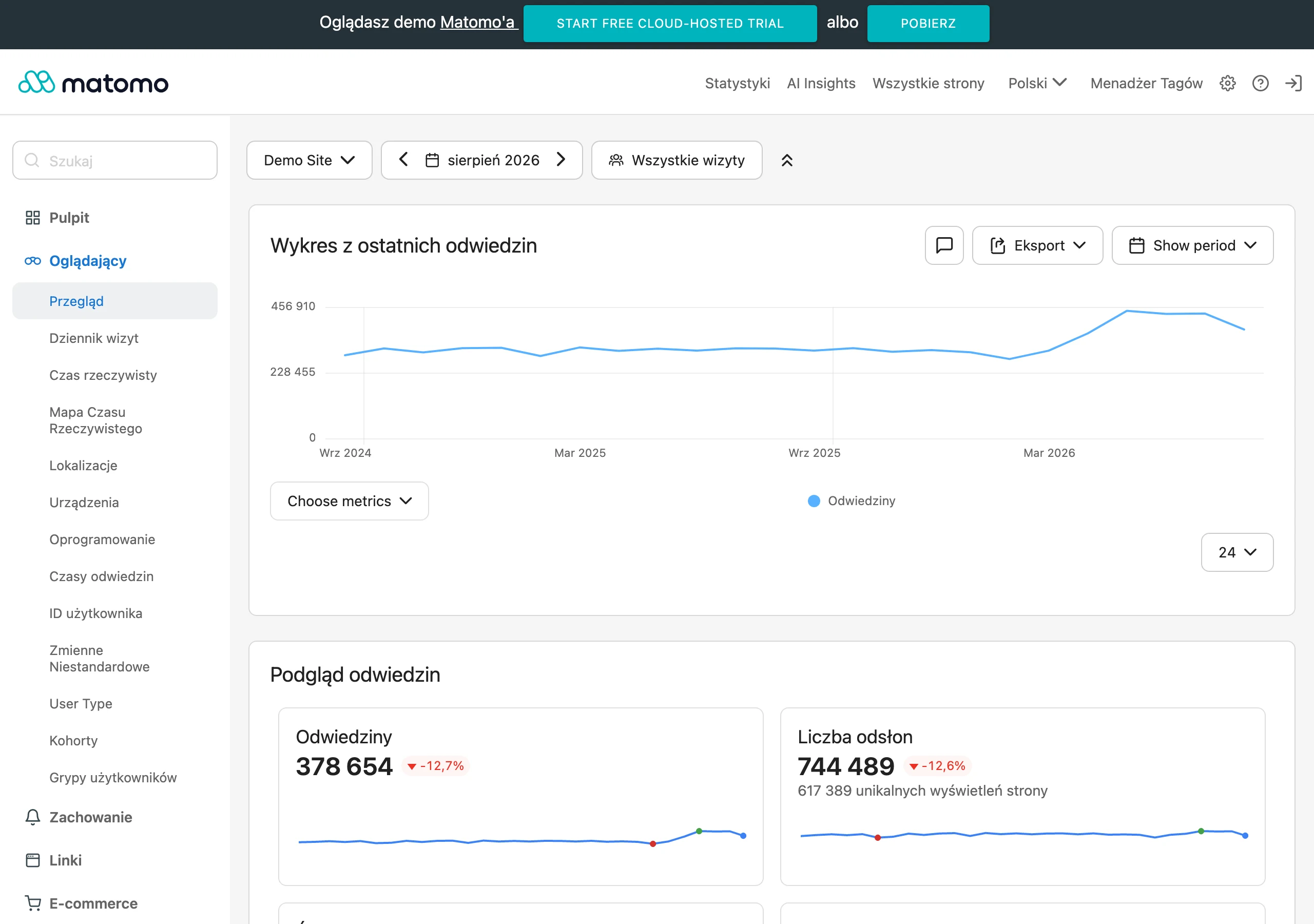
You need to separate online and offline goals, because these are two different types of sales effect. An online order, form submission, branch phone call, route click and in-person collection do not mean the same thing. If you put all actions into one bucket, optimisation will start rewarding the easiest clicks rather than the most valuable results. That is why it is worth assigning a separate goal, and if possible a separate value, to each action.
In practice, measurement is based on four groups of metrics: acquisition cost, conversion rate, sales value and the quality of traffic from a given area. In e-commerce, the most commonly analysed metrics are the number of orders, cost per order, revenue and average basket value broken down by location. In local services, phone calls, forms, bookings and actual visits to the premises often come to the fore. A good location is not the one with the cheapest click, but the one that delivers profitable sales or a valuable lead.
For measurement to be genuinely useful, traffic needs to be tagged correctly and a coherent data flow built. The ad should direct users to the right local page or location listing, and analytics must recognise which area the user came from and which goal they completed. It is worth monitoring not only purchases, but also clicks on the phone number, map opens, store selection or availability checks. If you do not measure intermediary actions, it is easy to cut off a campaign that is genuinely driving offline sales.
When interpreting results, you need to take the operational context of a specific location into account. Lower conversion in one city may result not from poorer advertising, but from a longer delivery time, limited product availability or less favourable opening hours. Similarly, a higher cost per click does not have to be a problem if a given area brings a higher order value or better customer quality. That is why local results should be compared with logistics, availability and real service capacity.
In local campaigns, the analysis time window also matters. Some areas generate quick purchases, while others more often end in a phone call or a visit after a few days. A too short horizon can understate the effectiveness of locations where the decision takes longer to mature. It is safer to compare results week on week and month on month rather than judging an area after 2-3 days of delivery.
You also need to be cautious about the quality of the location data itself. GPS can be very precise, but IP data is only an approximation, and the location declared by the user can be out of date. As a result, some traffic is better analysed by area rather than point by point. The less precise the location data, the more important it becomes to measure results at the level of a region, delivery zone or selected city.
The most practical working model is simple: measure results locally, compare them with actual sales and regularly shift budget to where the location delivers the highest return. When a given area generates a lot of clicks but few orders, it is worth checking the landing page, offer, availability and delivery terms rather than focusing solely on the ad. If another area brings less traffic but clearly better profitability, it usually pays to scale it cautiously and keep an eye on whether the result holds over time. Such measurement is the basis for decisions, not just for reporting numbers.
FAQ
Frequently asked questions
How does geotargeting help increase sales locally?
It makes it possible to tailor the ad, the offer and the fulfilment method to the place where the user is. It works best where fast delivery, in-store collection or contact with the nearest branch matters.
Is the user’s location enough for a campaign to sell better?
No, a city alone does not add much if it does not translate into a concrete buying benefit. Location must affect the offer, availability, delivery time or service.
Why can geotargeting drive clicks but not increase sales?
This happens when the campaign is set up correctly, but the offer, page or logistics do not match the user’s location. A mismatch between the promise in the ad and the real buying option reduces effectiveness.
Which location data is worth considering in geolocation?
GPS can be very accurate, but IP-based location is only approximate, and user-declared data needs verification. Campaign planning also needs to account for less precise variants, such as choosing a city or postcode.
When does geotargeting work best in e-commerce and local businesses?
It works best when the business can genuinely serve a given area and clearly show that in the ad and on the page. In e-commerce it helps with fast delivery zones and point collection, and in services with directing users to the nearest branch.
How do you measure the effectiveness of geotargeting campaigns beyond online sales?
You need to analyse not only online orders, but also calls, click-to-route actions, store visits, bookings and in-store collections. Only then can you see the full impact of location on business results.