
The funnel in services should be simple. It is simply a way of organising the customer journey: from the first visit to the website or profile, through the conversation and quote, all the way to the sale. However, it only works when it is tailored to the company’s real operating model, not to generic “lead generation”. The problem in services is that issues rarely start with a lack of traffic; more often, enquiries get lost along the way or land on the wrong desk. The simplest and most effective setup is a funnel based on one service, one type of client, one main traffic source and one contact goal. That structure can be measured without gymnastics and improved quickly. This makes it immediately clear whether the bottleneck is the ads, the website, the form, the phone answering, the quote or the follow-up.
What is a simple marketing funnel for a service company?
It is an operating system, not a decorative extra. A simple marketing funnel for a service company is a way of acquiring and handling enquiries that leads the customer from first contact with the offer to the sale and post-service actions. This is not about the advertising itself, nor about the website itself. The funnel covers the entire process: where the user came from, what they saw, how they got in touch, how they were qualified and whether someone effectively closed the deal. The question is: where exactly the chance to sell is leaking away.
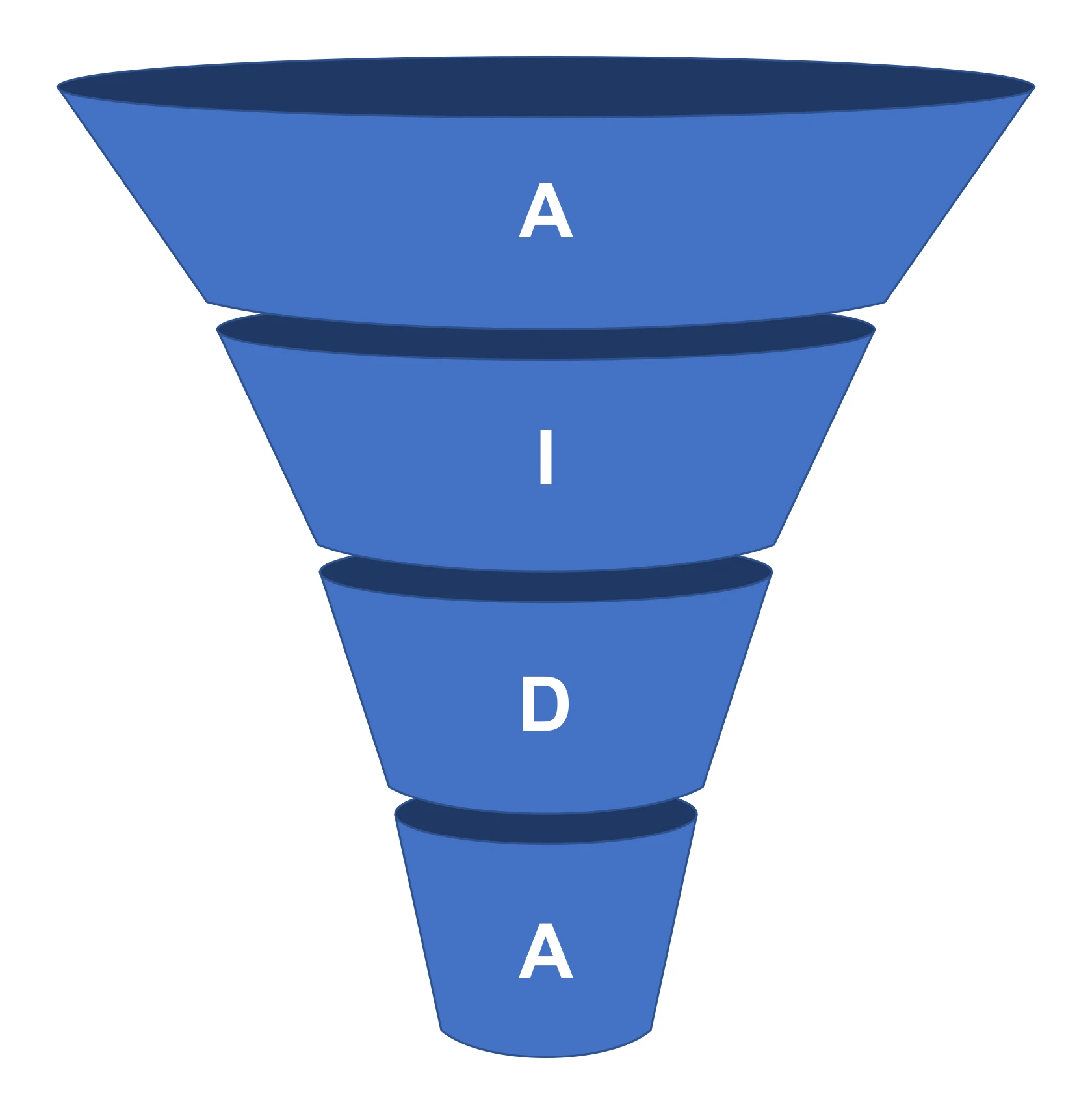
At the start, less is more. In the simplest version, the funnel is based on one main service, one customer profile, one landing page and one main CTA, i.e. one contact method. That can be a phone call, a form or booking an appointment. The fewer variables you have at the start, the easier it is to establish what really works and what only creates chaos. Instead of branches and exceptions, you have one route and one clear result.
A lead is only the beginning. In a service company, the funnel does not end when a lead is generated, because the contact itself has limited value if nobody answers quickly, checks the fit and prepares a sensible quote. What matters is speed and accountability, not the number of enquiries. That is why qualification, callback, follow-up, closing and post-sale actions, such as asking for a review or making contact again after a few months, are also part of the funnel. Without that, the funnel is a nice diagram rather than a working process.
The devil is in the operational elements. This means the offer, the traffic source, a message matched to the user’s intent, trust signals, the contact mechanism and the process of handling enquiries once they come in. On top of that, there is a CRM or a simple pipeline so you do not lose leads and can see their status. If a company does not know which source a contact came from and at which stage it lost them, in practice it is not managing a funnel, it is guessing. And guessing in marketing costs twice: budget and time.
Operations have their limits. Such a funnel has to take account of the company’s execution constraints: service area, appointment availability, the minimum scope of service, the type of jobs that are profitable and the way quotes are prepared. An enquiry may look great on paper, but the question is whether it can actually be delivered without blowing up the schedule. This matters because many contacts “work” from a marketing point of view, yet do not fit operationally and in practice only take up the team’s time. Instead of chasing every phone call, it is better to filter out what does not make sense anyway.
The practical value of a simple funnel is brutally straightforward: it shows where the money is leaking away. One company is already bleeding on the advertising side because it is attracting the wrong traffic. Another has visits and clicks but barely any contacts, because the offer is vague or the form is as long as a census questionnaire. Yet another is generating leads but not closing sales, because it calls back too late, sends quotes that are impossible to decode or simply does not do follow-up.
How does a marketing funnel work in practice?
In practice, a marketing funnel is a sequence of stages that lead from “I saw it” to “I’m buying”. The user comes in from an acquisition channel to a conversion point, leaves their contact details, goes through qualification, gets a call or a quote, and at the end the purchase decision is made. Each step has a different function and a different risk of collapse. And the problem is that when one element underperforms, the whole thing starts losing effectiveness like a house of cards.
- First, the company captures attention from a specific source, for example local SEO, a Google Business Profile in Maps, paid ads, referrals or social media.
- Then the user lands on the service page, landing page or profile, where they should understand the offer in a minute and see a clear CTA.
- Next, they leave a lead: by phone, form, messenger or booking calendar.
- The next step is qualification, i.e. a quick assessment of whether the enquiry fits the company’s offer, service area and operating model.
- After qualification comes the sales conversation or quote preparation.
- Then the client accepts the terms, books a date, signs a contract or pays a deposit.
- After the service has been delivered, the company collects a review, a recommendation or initiates contact again.
At the top of the funnel, one thing matters: matching the traffic source to the user’s intent. In local services, a large share of people are looking for a provider “right now” or comparing several companies at once, often on a phone. That is why down-to-earth details win, not fireworks: a clear service name, a visible phone number, opening hours, the service area and fast loading of the website or profile.
When a user lands on a conversion point, there is no time for guesswork. They need to get quick answers to a few questions: what the company does, who it is for, where it operates and how to get in touch. A good service page should not swell with content “just in case”, but instead lead towards a decision. In real terms, the best results come from: clear headings, a short description of the problem, the service scope, trust signals, reviews, case studies and one clear call to action. If the user has to guess whether the company handles their case, they often just go back to the search results.
The moment of capturing a lead should also be as simple as possible. The form should collect only the data needed for an initial assessment, for example the type of service, location, deadline and contact details. For phone enquiries, it is crucial to answer the call or ring back quickly. Why. Because in many industries the client is writing and calling several companies in parallel, and then chooses the one that responds first and clearly.
Once contact has come into the company, the stage begins that many teams still put outside “marketing”. Yet this is exactly what can determine the result. Qualification boils down to a simple test: does this enquiry fit the offer and is it worth pursuing at all. On the table are the scope of work, location, urgency, profitability, completeness of data, and sometimes also the budget. This prevents the team from grinding through leads that cannot be handled sensibly anyway.
If the lead is a fit, you move into the conversation and quote. Here discipline matters, not improvisation. A repeatable call script, a similar set of questions and a clear way of presenting the offer do the job, because they bring order to the chaos on both sides. In practice, the best approach is a short, concrete quote with clear terms, a deadline and the scope of work. The client then has less resistance to making a decision.
Closing the sale is rarely only about price. More often, speed of response, a clear service scope, simple formalities and the feeling that the company has things under control win the day. And the problem here is that even a good offer can lose to silence. If the client does not get a reminder or nobody follows up after a few days, part of the sale simply disappears from the funnel.
The funnel really only ends once the service has been delivered. Only then does the post-sale stage begin. This is the moment to gather reviews, recommendations or propose an additional service, rather than pretending the relationship ends with the invoice. In local services, this matters a great deal, because good reviews strengthen the next visits from search and maps. And repeat contact genuinely lowers the cost of acquiring the next customer.
At the same time, measurement has to work across the whole process. Without it, you are flying blind. You need to know which source the lead came from, whether it was valuable, whether someone contacted it, whether it received a quote and whether it ultimately bought. Without connecting data from forms, calls, analytics and CRM, it is easy to optimise traffic that looks good in the ad dashboard but does not generate real sales.
What are the key stages of the marketing funnel?
The key stages of the marketing funnel are: capturing attention, landing on the conversion point, contact, qualification, quoting, selling and post-service actions. Sounds simple. In practice, each of these steps has a different job and at each one the company can lose the customer for a completely different reason. That is why it is not enough to count website visits or form fills alone, because that is only half the story about effectiveness. The most important thing is whether the contact moves smoothly to the next step and ends in real sales.
The first stage is the user coming from the right source. Most often this will be Google, maps, local advertising, a recommendation or social media. The key is matching intent to the service, location and message, because this is where the quality of the “fuel” in the whole funnel is decided. If you attract people from outside your service area or looking for something other than what you offer, the rest of the funnel will look poor. And that is regardless of how good the website is.
The second and third stages are unforgiving. This is the moment of moving to the service page or profile and making contact, so the user should immediately see: what you do, who it is for, what area you cover and how to contact you. In service businesses, the conversion point should shorten the path to the phone, form or booking, not force long reading and searching for information. And this is where many implementations break down. The most common failures are pages with an unclear heading, a hidden CTA or a form so long that it puts people off before the first question.
The fourth stage is lead qualification. In other words, a quick check of whether the enquiry actually fits the company’s offer and working model. You need to establish the basics: type of service, location, deadline, scope, profitability and whether the data is complete. It sounds simple, but practice can be brutal. A well-set qualification saves sales and delivery time, because it immediately separates sensible enquiries from those that simply cannot be handled.
The fifth and sixth stages are selling in its purest form. The sales contact, the quote and the close. Here response time, the way you talk, the clarity of the offer and the simplicity of the next steps matter, because every additional obstacle lowers the chance of a decision. If the lead is good and the company calls back after a few hours or sends an unclear quote without specifics, the problem is not marketing, but service. The question is whether the process is meant to support the client or test them. In a simple funnel, it is worth having a ready-made call script, an offer template and clear follow-up rules, rather than improvising each time.
The final stage is what happens after the service. A review, a recommendation, a repeat contact or the sale of an additional service. This part of the funnel is often overlooked, because “the work is done”, and then people are surprised that new enquiries are not increasing. The problem is that this is exactly where the next wave of demand is built, especially in local services. A good review after delivery lowers the cost of future acquisition, because it strengthens the profile, the website and trust in the brand.
What should be implemented in a simple marketing funnel?
In a simple marketing funnel, it’s not about fireworks, but about consistency. You implement one set-up: an offer for a specific service, one main traffic source, one conversion point, a lead handling process and basic performance measurement. That gives you control, and control quickly shows what works and what is blocking sales. Instead of ten directions at once, one direction and clear conclusions. When a company starts with several services, several landing pages and several sources at the same time, it is usually harder to identify the cause of the problem, because everything gets mixed into one noise.
At the beginning, prepare the operational foundations. The website or landing page should clearly show the scope of the service, the service area, the most common customer problems, trust signals and one clear CTA, without hiding key information in the footer. The key thing is that the user should not have to guess. If the main channel is phone, the number must be visible straight away. If it is a form, it should collect only the data needed for qualification and nothing more, because every additional field is another reason to give up.
The second element is tools. But note, in the simplest possible version, without building a monster from the outset. You need a form with integration, event analytics, a simple CRM or pipeline and a confirmation system after the contact is submitted, so that the lead does not fall into a black hole. If a lot of enquiries come in by phone, it is worth implementing call tracking as well, or at least a solid call log and results register. Without connecting forms, phone calls and CRM, you cannot assess which source is generating sales and which is only generating apparent leads. And then, instead of data-driven decisions, you are making gut-based decisions.
The third element is a minimal data set for each contact. In practice, a few fields are enough: acquisition source, service, location, lead status, contact owner, call outcome and sales outcome. It sounds trivial, but it is exactly these entries that reveal whether traffic quality, qualification, response time, or perhaps quotation effectiveness is the weak point.
The fourth element is the handling process. Who answers the phone, who calls back, how much time the company has to respond, when it sends the quote and when it does follow-up — this should be established before the first lead appears. The problem is that in many service businesses the biggest loss does not come from advertising, but from the lack of an “owner” for the contact. A lead can disappear between the inbox and the phone, and then everyone is surprised by the result. Who is supposed to take responsibility if it is not clear whose job it is.
Finally, implement improvements step by step. First check whether the traffic source is attracting the right people, then whether the website or profile is turning visits into contacts, and only later break down the effectiveness of quotes and closing sales. The most common mistake is changing the ad, website, form and sales process all at the same time, because then it is impossible to tell what actually improved or worsened the result.
What tools are needed for an effective funnel?
For an effective funnel, you need a conversion point, a contact method, measurement and a lead handling system. Nothing huge in theory, but it has to work as one process, not as a jumble of apps. In a service business, more important than the number of tools is whether the contact immediately reaches the right person and whether you can establish, without argument, which source it came from. The best start is a simple, technically connected set-up, not a “large marketing stack” with lots of unnecessary features.
- service page, landing page or a well-completed Google Business Profile, if the main goal is a call or a quick enquiry,
- contact form, call button and e-mail or SMS confirmation that the enquiry has been sent,
- event analytics and traffic source tagging, for example through UTMs and recording clicks on the phone, form or booking,
- CRM or a simple pipeline with stages such as: new lead, to contact, in qualification, quote sent, won, lost,
- call tracking, if the phone is the main acquisition channel,
- a booking calendar, if the client can choose a slot themselves without an additional quote.
It is also crucial what data you record for each contact. The minimum is: acquisition source, service, location, status, lead owner, contact outcome and sales outcome. Without these fields, you cannot distinguish a channel that only generates enquiries from one that generates real jobs.
If the funnel is based on phone calls, you need not only the number on the website, but also a proper call handling process. What matters is information about missed calls, the ability to call back quickly and clear contact hours, because the customer will not guess when it is “appropriate” to call. The data is clear: many companies lose leads not because of advertising, but because they do not respond within the first few minutes or hours. And then it is not marketing that loses, but organisation.
In a simple funnel, automation should help, not get in the way. There is no need for fireworks. Templates for replies, follow-up tasks, quote reminders and short confirmations for the customer that the enquiry has been received are enough. First connect the form with the CRM and set lead statuses, and only then add more advanced automations.
What are the typical mistakes in a marketing funnel?
Typical mistakes in a marketing funnel are bad traffic at the top, a weak contact point, no qualification and no closing once the lead comes in. It sounds banal, but it works like a leaking pipe. The problem is almost never in one ad or one form, but in a chain of small missteps. Each one hurts a little on its own; together they can drag down the result of the entire process by several levels.
At the start of the funnel, the classic sin is sending everyone to one generic page with multiple services and no single, clear CTA. The user does not immediately understand whether the company operates in their area, exactly what it does and how to get in touch, so they leave. The more specific the service, service area and next step, the fewer random enquiries and the fewer drop-offs.
Many companies lose leads already at the contact stage. And quickly. The form is too long, the phone number is not very visible, and after submitting the enquiry the customer receives no confirmation, so they start looking elsewhere. Then comes the lack of qualification, which means the salesperson or owner calls back people outside the service area, for jobs that are too small, or for enquiries that from the outset do not fit the service model.
The next group of errors concerns customer service. There is no mercy here. Nobody owns the lead, the reply comes too late, quotes are inconsistent, and the follow-up ends after one contact, as if the client were meant to guess the rest. In local services, response speed matters enormously, because the client often asks several companies at once and chooses the one that “was first”. If there is no clear responsibility for receiving and then handling the enquiry, the funnel will leak even with good traffic.
A very common mistake is also poor measurement. The company looks at the number of forms or ad clicks, but does not record the lead source, lead quality and sales outcome in the CRM, so it adds budget blindly where it is noisy, not where it is profitable. The result. Money goes into a channel that generates a lot of contacts, but few profitable jobs. The most important report does not show how many leads there were, but which sources turn into sales and at what quality of service.
At the end of the funnel, companies often forget about actions after the service is delivered. That is where the cheapest growth lies. They do not ask for a review, do not record consent for repeat contact and do not offer an additional service at the right moment, even though the client is then most “warmed up”. It is a mistake, because this is precisely where it is easiest to reduce the cost of the next acquisition and strengthen local visibility without adding a new advertising budget.
What data should be measured in the marketing funnel?
Without measurement, a marketing funnel is guesswork. You therefore need to track data on the entry source, conversion, lead quality, contact handling and final sales outcome, because only this set shows what really works. Traffic alone or the number of forms is not enough, because in a service business what matters is whether the contact matches the offer and whether it ends in a real sale. The most important rule is simple: measure not only the number of leads, but the whole process from entry to a closed job. This immediately shows whether the problem lies in the ads, the website, answering the phone, the quote or the follow-up.
The start of the funnel is merciless to myths. Measure where users come from and which conversion point they land on, because otherwise you are comparing incomparable things. In practice, this means recording the source, medium, campaign, landing page, device and location, if it matters for the company’s area of operation. If the company operates locally, separate traffic from the Google Business Profile, organic results, ads, social media and referrals, because these are often completely different intents. Without proper source tagging, it is impossible to fairly assess which channel brings sales and which only generates traffic.
Most losses happen in the middle of the funnel. At the contact stage, measure all the main conversion actions: form submission, clicking the phone number, making a call, sending a message and booking an appointment. Clicks alone are, however, too imprecise, so call tracking is useful for telephone enquiries, and for forms you should record the full enquiry details and acquisition source. Add to this the number of missed calls, abandoned forms and response time after the enquiry comes in, because these are the pain points of the process. In many service businesses, the biggest loss does not occur on the website, but between the lead coming in and the first contact from the company.
One lead is not the same as another. After capturing a lead, measure its quality and qualification outcome, because only then does marketing stop “delivering” and start delivering sales. The minimum is: service, location, lead status, contact owner, call outcome, reason for rejection and information on whether the lead moved on to a quote. This makes it possible to distinguish a large number of cheap but poor leads from a smaller number of contacts that genuinely fit the offer and end in sales. If the CRM does not show why a lead was rejected, the company is usually optimising blindly.
At the finish line, what matters is the result, not the noise. At the sales and commercial stage, measure how many leads moved on to a conversation, how many received a quote, how many offers were accepted and which sources produced the closed sales. In addition, track quote preparation time, the number of contact attempts, the effectiveness of the follow-up and the length of the process from the first enquiry to the client’s decision, because this is where the real bottlenecks emerge. Only this data shows the real effectiveness of the funnel, not just marketing activity. The most useful report combines the lead source with its final status: sale, no contact, rejected, won later or lost.
The end of the funnel is by no means the end. It is worth measuring post-sale data as well, because that is what drives further acquisition and, in practice, closes the entire cycle. This is primarily about the number of reviews after delivery, repeat contact from the client, referrals and the sale of additional services. In local services, these metrics work not only on retention, but also on the company’s visibility and on genuinely reducing the cost of future leads.
Start simple. Build a minimal data model that can be maintained day to day, instead of an ambitious system that will die after a week. In practice, it is enough to record consistently: source, campaign, service, location, contact date, lead status, qualification outcome, quote information and sales outcome. That set already shows where the process is breaking down. The question is whether the problem is weak traffic, a low contact rate, poor lead quality, or simply ineffective customer service on the company’s side.
FAQ
Frequently asked questions
How does a simple marketing funnel work in a service business?
It leads the customer from the first contact with the offer to the sale and actions after the service is delivered. It covers the traffic source, conversion point, contact, qualification, quote and closing the sale.
Should a marketing funnel in services be elaborate?
No, the article emphasises that in services the funnel should be simple. It works best when built around one service, one type of customer, one traffic source and one contact goal.
Why do enquiries disappear in a service business despite traffic to the site?
Because the problem more often does not start with a lack of visits, but with leads not being answered, qualified or closed. Enquiries can also land on the wrong desk or get stuck in the follow-up process.
What should be on a service page in a simple funnel?
The page should clearly show what the company does, who it works for, what area it covers and how to get in touch. Specific headings, a short description of the problem, the scope of the service, trust signals, reviews and one clear CTA also work best.
What are the key stages of the marketing funnel?
These are gaining attention, visiting the conversion point, contact, qualification, quoting, sales and actions after the service is delivered. Each stage has a different task and at each one the company can lose the customer for a different reason.
What is worth measuring in a simple marketing funnel?
You need to know which source the lead came from, whether it was valuable, whether someone contacted it, whether it received a quote and whether it bought. Without connecting forms, phone calls, analytics and CRM, it is hard to assess what really drives sales.