
Educational and sales marketing are not fighting each other. They simply serve different stages of the customer’s decision, and that changes everything. The first helps to understand the problem, structure the choice and take some of the uncertainty out of people’s heads. The second delivers the specifics when the audience is already one step away from buying or getting in touch. The most common mistake in practice is that companies try to sell too early or educate for too long without showing the next step. The result is predictable: weaker SEO performance, poorer user experience and fewer valuable leads. One thing is key. You need to connect content, CTA, analytics and the sales process into one sensible journey.
What is the difference between educational and sales marketing
The difference is simple, but often ignored. Educational marketing builds understanding and trust, while sales marketing shortens the path to decision and conversion. Education answers questions, breaks the process down into its component parts, shows the selection criteria and helps the audience name their own problem before they even start looking for a provider. Sales works differently: it leads the user to the next step, meaning sending an enquiry, booking a call, ordering a demo or making a purchase.
In practice, you can see this in the content format itself. Educational marketing most often relies on guides, FAQ, checklists, webinars, educational newsletters and materials comparing different scenarios. Sales marketing is based on service pages, landing pages, forms, offer arguments and high-intent CTAs such as a quote, consultation or appointment booking. And this is not just a cosmetic difference. It is the difference between “I’m reading” and “I’m acting”.
This is even clearer when you look at user intent. Educational content usually serves informational intent, while sales content serves commercial or transactional intent. If someone is only just getting to know the topic, an aggressive sales CTA usually will not work because it is simply too early. If someone is already comparing providers, a general article without a clear offer and terms of cooperation will not do its job either. So the question is: where is the audience really in the journey.
The results of both approaches are also measured differently. In education, what matters is traffic quality, engagement, movement to subsequent content, sign-ups, downloads and user returns, that is, signals that the topic has “clicked”. In sales, the game is about turning visitors into leads or transactions, the number of conversations, the quality of enquiries and the effectiveness of moving between funnel stages. This matters because an educational article does not have to generate sales immediately, but it should prepare the audience for them. Not the other way round.
In a services model, educational marketing very often prepares the ground for a sales conversation. It helps the client understand the implementation options, what to be wary of, what to ask and how to assess the offer before the first “please send a quote” is even said. Sales marketing closes that process: it shows the scope of the service, the process, limitations, terms of cooperation and the simplest first step. But be careful, this is where it is easiest to stumble. The best results come not from separating these activities, but from combining them into one logical user journey.
The current implementation context in educational and sales marketing
Today’s implementation context is simple. The mere presence of content online no longer delivers results, because matching intent and the real usefulness of the material play an increasingly important role. It is becoming harder and harder to win search traffic with generic content that only skims the surface of the topic. Educational content needs to be specific, grounded in decisions and written so that after reading it you really know what to do next.
The same applies to sales content. Users rarely land on an offer and buy straight away these days, especially with services or products that need comparing. Most often the journey looks different: first an article, then a return visit from the newsletter, then checking the service page and only at the end the form. In practice, this means that content, SEO, UX and sales need to be measured together, rather than treated as separate silos.
The biggest friction appears in measurement. Tracking limitations and privacy-related changes mean that the “last click sold it” model increasingly distorts reality. The data makes one thing clear: you need to take into account micro-conversions, clicks to the offer, assisted visits, returning users and lead quality later assessed by the sales team. Without this, it is easy to assume that education is ineffective or, on the other hand, overestimate the role of the sales page.
The level of content competition has also changed. Generative tools have multiplied similar articles, so the advantage now comes not from “more text”, but from expertise, freshness and better information structure. On top of that, there are materials that actually close the decision: FAQ, calculators, document templates or specific implementation scenarios. The more the content helps make a real decision, the greater its business value.
In service websites, stitching content together with the information architecture has become especially important. An educational article should lead on: to the service page, process description, scope of cooperation, indicative pricing, form or downloadable material matched to the stage of decision. If these links are missing, the user gains knowledge but does not get a convenient route to contact you. And the company loses part of the effect it has already worked for.
How educational and sales marketing work step by step
The mechanism is the same. It is about matching the content, CTA and measurement to the customer’s stage of decision, instead of throwing everything into one bucket. First, you decide whether the material is meant to build understanding of the problem, qualify traffic, collect leads or bring about a conversation or purchase. That depends on the type of service, the length of the buying process and how much the audience already knows. Do not start with the content format, but with the objective and the funnel stage.
In the next step, the user intent is broken down into its components and topics are mapped to the right pages. This is not a detail, but the foundation. Informational queries need content that explains and organises the topic, comparison queries need material that makes choosing easier, and transactional queries should land on a service page, an offer or a form. For such a map, it is best to use hard signals from Search Console, CRM, sales conversations, support and on-site search. If the query intent is informational, a sales landing page usually loses out to explanatory content.
Then the transitions between stages are designed, meaning the real path from education to action. This is the moment of truth. A how-to article should lead to the next step: comparing options, a calculator, a brief, a consultation or a service page, rather than ending in a void. In practice, contextual linking delivers this, along with “what next” modules, soft CTAs for beginners and hard CTAs for people closer to a decision. The most common point of loss is the transition from the article to the offer, not the lack of traffic itself.
Only on this basis do concrete pieces of content come into being. Without an intent map and designed transitions, it is easy to produce text that “exists” but does not work. Educational materials stay focused on the problem, selection criteria, mistakes, implementation scenarios and questions asked before purchase. Sales materials, on the other hand, must clearly show the scope of the service, the cooperation process, the conditions for starting, limitations, offer FAQs and the next step — not the user’s guesswork.
At the end, the effect is measured separately for both types of activity, but within one user journey. And this is where the numbers begin. For education, what matters is entrances, traffic quality, clicks through to the offer, sign-ups, downloads and user returns. For sales, what matters is forms, calls, booked conversations, transitions between stages and lead quality assessed by salespeople. The problem is that “lots of traffic” can mask a lack of traffic deeper into the funnel. If an article generates traffic without moving people on, the CTA, linking and bridge content need improving. If an offer has traffic but no enquiries, objections, credibility, form length and the match between the traffic source and the page need to be checked.
What to implement in educational and sales marketing
In practice, separate roles are implemented for educational and sales content, but they are tied together into one user journey. Not two parallel motorways, but one sensible route. The best starting point is a simple matrix: customer problem, question, intent, funnel stage, format, CTA and success metric. This structure immediately shows which topics are meant to educate and which are meant to sell, and it cuts out the temptation to mix objectives on one page.
On the educational side, it is worth building a set of entry materials that answer real customer questions. Not “nice” topics, but the ones that keep coming up in conversations. These are most often guides, explanations of terms, checklists, materials about implementation mistakes, answers to objections and comparisons of approaches. Every educational piece should have one sensible next step. The question is: what should the user do after reading it. It could be signing up to the newsletter, downloading a brief, using a calculator, booking a consultation or going to the service page.
On the sales side, you need to refine what actually moves the decision forward. The user should immediately know who the service is for, what it includes, what it does not include, what the process looks like, what data is needed to get started and which contact method is the easiest. It sounds banal. And yet in many companies it is precisely the lack of these specifics that kills conversion more effectively than any copy tweaks.
At the same time, it is worth separating the KPIs and joining data from several sources. There is no point assessing educational content solely by the number of leads, because its role is often different: it is meant to prepare the user for a later decision. Do not assess a sales page by traffic alone, because what matters here is the quality of enquiries and movement to the next stage, not just visits. Do not assess education by leads alone, and do not assess a sales page by traffic alone.
Also watch out for typical implementation mistakes. The most common are simple, and hurt the most: CTAs that are too sales-driven in content for beginner users, no CTA in articles with high intent, no connection between content and the offer, and publishing without an update plan and without measuring transitions. And there is one more quiet sabotage. Too many generalities, because the user gets an answer that is correct, but completely useless for making a decision.
The scope of work depends on the complexity of the service and the maturity of the organisation. The longer the sales cycle, the more people influence the decision and the weaker the CRM data, the greater the importance of a solid intent map, linking architecture and regular feedback from sales. This is the moment when “nice content” stops being enough and process engineering begins. In the most useful implementation package, you would usually find: a content plan divided into educational and sales content, a CTA library by funnel stage, content briefs, a list of UX/CRO changes, a metrics dashboard and an update schedule.
Key decision-making elements in sales marketing
The key decision-making elements in sales marketing are the information and mechanisms that help the audience move from interest to contact, a quote or a purchase. At this stage, the user is no longer looking for a broad lecture, but for an answer to a simple question: is this solution for me, on what terms, and what do I need to do now. The question is whether the page removes doubts or multiplies them. If a sales page does not remove decision-making uncertainty, traffic alone rarely turns into leads.
The most important thing is to clearly define who the offer is for. A good sales page shows who the right customer is, in what situation the service makes sense, and when it is better to choose another solution. It does not sweep “for everyone” under the carpet, but sets boundaries. This does not reduce sales; it improves the quality of enquiries and limits random traffic.
The second element is the precise scope of the service. The audience should quickly understand exactly what the cooperation covers, what it does not cover, what the delivery variants are and what data is needed to get started. Without this, fog sets in, and in the fog people do not make decisions — they put the topic off. Lack of boundaries in an offer usually lowers trust, because the user does not know what to realistically expect.
Description of the process makes a difference. In consultancy services, the decision is more often blocked not by the price itself, but by uncertainty about the next steps, implementation time and the level of involvement on the client side. That is why it is crucial to show the collaboration stage by stage, even if you later refine it for a specific case.
- clear indication of who is a good client,
- the exact scope of the service and its limitations,
- a transparent collaboration process,
- CTA matched to the recipient’s level of readiness,
- credibility elements and answers to objections.
The CTA must match the level of intent. For more expensive or more complex services, an invitation to a call, consultation or brief works better than an aggressive prompt to buy immediately. The question is whether the recipient is already at that point. A CTA that is too forceful at too early a stage often does not speed up the decision — it stops it.
There is a separate layer of information that builds credibility. And this is not only about testimonials, but also service FAQ, answers to common objections, collaboration rules, timelines, billing method or an indicative budget level, if possible. The fewer questions the user has to ask before first contact, the greater the chance they will move on instead of backing out.
In practice, an effective sales page does not operate in a vacuum. It feeds on traffic prepared earlier by educational content, and that changes the rules of the game. That is why it should be logically linked to articles, comparison materials and content that explains the selection process. The best results come not from “a sales page or content”, but from their deliberate combination into a single decision path.
Typical mistakes and limitations in educational and sales marketing
Mistakes in educational and sales marketing rarely stem from a lack of willingness. The problem is that they most often result from a mismatch of intent, mixing up content goals and over-simplified measurement. A company publishes articles that lead nowhere, or builds sales pages that try to sell to people who are not yet ready to decide. In both cases, the channel itself is not to blame, but rather its use at the wrong stage of the customer journey.
A common mistake in educational marketing is content that is too general. Such material can attract visits, but it does not help the audience make a specific decision, because it does not organise the selection criteria, does not answer real concerns and does not indicate the next step. If education does not lead to the next action, it only builds traffic, not progress in the funnel.
On the sales side, an overly fast push for conversion is often visible. Particularly where the client needs time to compare options, have an internal consultation or simply understand the implementation. When bridge content, FAQ, scenario examples and process descriptions are missing, performance can drop noticeably, even with good traffic.
The mistake is twofold: technical and strategic. Separating content from the offer means that an educational article without a link to the service, a form, a downloadable resource or a “what next” section often ends in a dead end. On the other hand, a service page left without support from informational content has less chance of SEO visibility and finds it harder to build trust before the first contact.
The second trap is measurement. Many companies assess education only by leads, and sales only by traffic, so optimisation starts to resemble shooting in the dark. The problem is that one metric cannot describe the whole journey. In practice, you need to look more broadly: at clicks to the offer, returning users, micro-conversions, the quality of enquiries in CRM and feedback from salespeople.
Another difficulty results from current limitations in attribution and tracking. A user may read an article, return from a newsletter, then later enter the offer from a brand ad, and only send the form after a few days. So what does the report show then. That is why simple “last click” reporting underestimates the role of education and can falsely promote closing channels instead of those that earlier built demand and intent.
Not every company also starts from the same level. The more complex the service, the longer the decision cycle and the more people on the client side involved in the decision, the more explanatory content, support materials and smoother handover of data between marketing and sales are needed. Instead of “let’s write something for the blog”, it becomes “let’s build a set of answers to real objections”. A limitation may be the lack of an expert to create materials, poor data quality in CRM or simply the lack of a content update process.
The most costly mistake. Treating educational and sales marketing as two separate worlds that pass each other in the corridor. In practice, one is meant to prepare the decision, and the other to make it easier and close it. If these two areas are not connected through linking, CTAs, measurement and a shared definition of lead quality, results will be weaker regardless of budget.
How to measure the effectiveness of educational and sales marketing
The effectiveness of these two areas is measured differently. Educational and sales marketing operate at different stages of the customer’s decision, so there is no point forcing them into a single “success” metric. Education wins when it attracts the right traffic, builds understanding and moves the user further along the journey. Sales wins when it turns intent into contact, a lead, a conversation or a transaction. The most common mistake is evaluating both types of content with one number, usually just leads or just traffic.
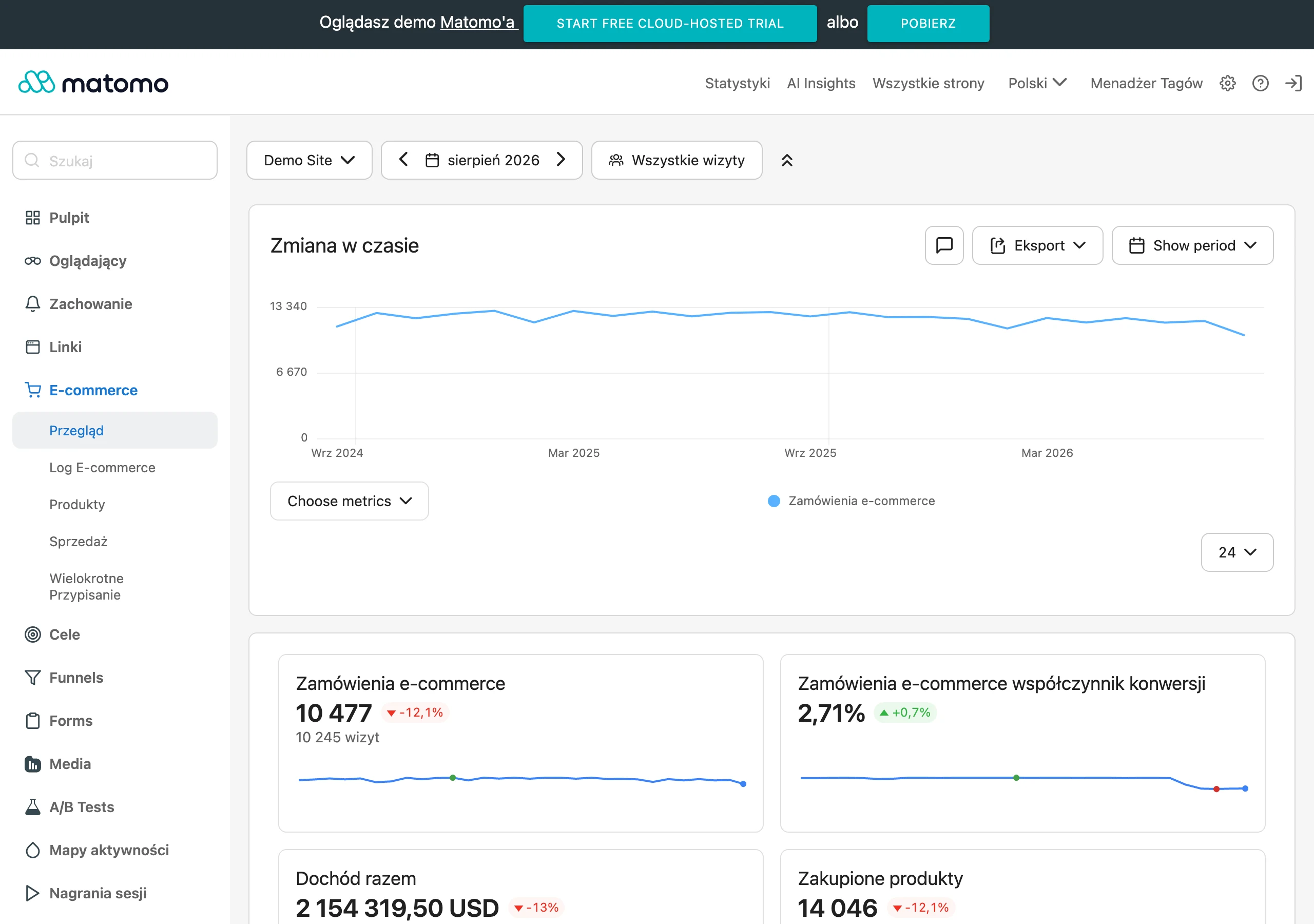
In educational marketing, the quality of interest matters, not attendance itself. That is why in practice it is worth tracking visibility in search, visits from matched queries, engagement time, returning users, clicks to service pages, newsletter sign-ups, material downloads and other micro-conversions. Pageviews alone mean very little if the user does not take any next step. Good educational content does not have to sell straight away, but it should clearly increase the chances of later contact.
In sales marketing, one thing matters: whether someone takes action. Effectiveness is most often measured by hard signals, that is, submitted forms, calls, booked consultations, quote requests, bookings, demos and further stages in the CRM, such as SQL or a real sales opportunity. A website may generate leads and yet still fail commercially, because the problem is not only conversion, but also the match between the message, traffic source or lead qualification. A lead without quality is not a good result, even if the form converts well.
One chart from one tool is not enough. The most useful measurement combines data from several places: web analytics, Search Console, CRM and sales feedback on which queries were sensible and which arrived by chance. In multichannel journeys, the user often first reads a guide, then comes back from an email, and only later submits a form, so the last-click model systematically understates the role of education. The question is: what actually “worked” towards the decision before the lead appeared. If you do not measure assisted visits and micro-conversions, you will only see the end of the process.
In practice, it pays to separate the dashboard into two KPI groups and link them with one view of transitions between stages. For education, you check which content attracts the right intent and passes traffic to offers, instead of ending with traffic alone. For sales, you look at which pages and traffic sources turn into valuable conversations, not just completed forms. This setup quickly reveals whether the problem is lack of demand, a weak bridge between education and the offer, or perhaps an underdeveloped sales page.
The result on the chart is not yet a conclusion. Interpretation is often more important than the number itself, because only it shows what to improve in practice and where the bottleneck is. If an educational article has traffic but does not move users further on, the usual fixes are CTA, internal linking or aligning the topic with intent. If a sales page gets visits but does not collect leads, it usually lacks information about the process, working conditions, service limitations or simply trust in the provider. The best measurement does not answer only “how much”, but above all “at which stage are we losing the user and why”.
FAQ
Frequently asked questions
What is the difference between educational marketing and sales marketing?
Educational marketing helps people understand the problem, organise their choice and reduce uncertainty. Sales marketing shortens the path to a decision and conversion, leading to an enquiry, a conversation or a purchase.
What types of content are typical for educational marketing?
These are most often guides, FAQs, checklists, webinars, educational newsletters and materials comparing scenarios. Such content answers questions and helps the audience name their own problem.
What types of content belong to sales marketing?
Sales marketing is dominated by service pages, landing pages, forms and high-intent CTAs. These are pieces of content designed to lead to a quote, consultation, booking or purchase.
Why is it not worth selling too early in content?
If the audience is only just getting to know the topic, a hard CTA usually does not work because it comes too soon. Such content can reduce effectiveness and harm the user experience.
How do you measure the effectiveness of educational and sales content?
For educational content, traffic, engagement, sign-ups, downloads, returns and clicks through to the next pieces matter. For sales content, forms, conversations, the quality of enquiries and progress to the next stage of the funnel are important.
What should connect an educational article with a sales page?
The article should lead to the next step, for example to a service page, a consultation, a calculator or a brief. Without that connection, the user gains knowledge but does not get a convenient path to contact you.