

A drop in Google rankings is often colloquially called a “filter”, but in practice this term covers different scenarios. Sometimes it is a manual action, sometimes a change in quality assessment made by Google’s systems, and sometimes simply a technical issue on the site’s side. The key is therefore not the drop itself, but accurately determining what caused it. The most common mistake is that a site owner immediately assumes a penalty from Google, even though the real problem is indexing, content, links or a botched implementation of changes. It is worth approaching the issue operationally: what dropped, when it dropped, how large the scale of the phenomenon is and what signals can be seen in Search Console. Only then is it possible to choose actions that actually deliver results.
What are Google filters in practice?
In practice, “Google filters” is a shorthand for a drop in visibility after a negative assessment by Google’s systems or after a manual action has been applied. There is no single official feature called a “filter”; it is more a convenient label for a situation in which a site suddenly loses positions, clicks or reach for important keywords. From a site owner’s perspective, more important than the terminology is answering the question of whether the source of the problem is a breach of guidelines, low site quality, or a simple technical failure.
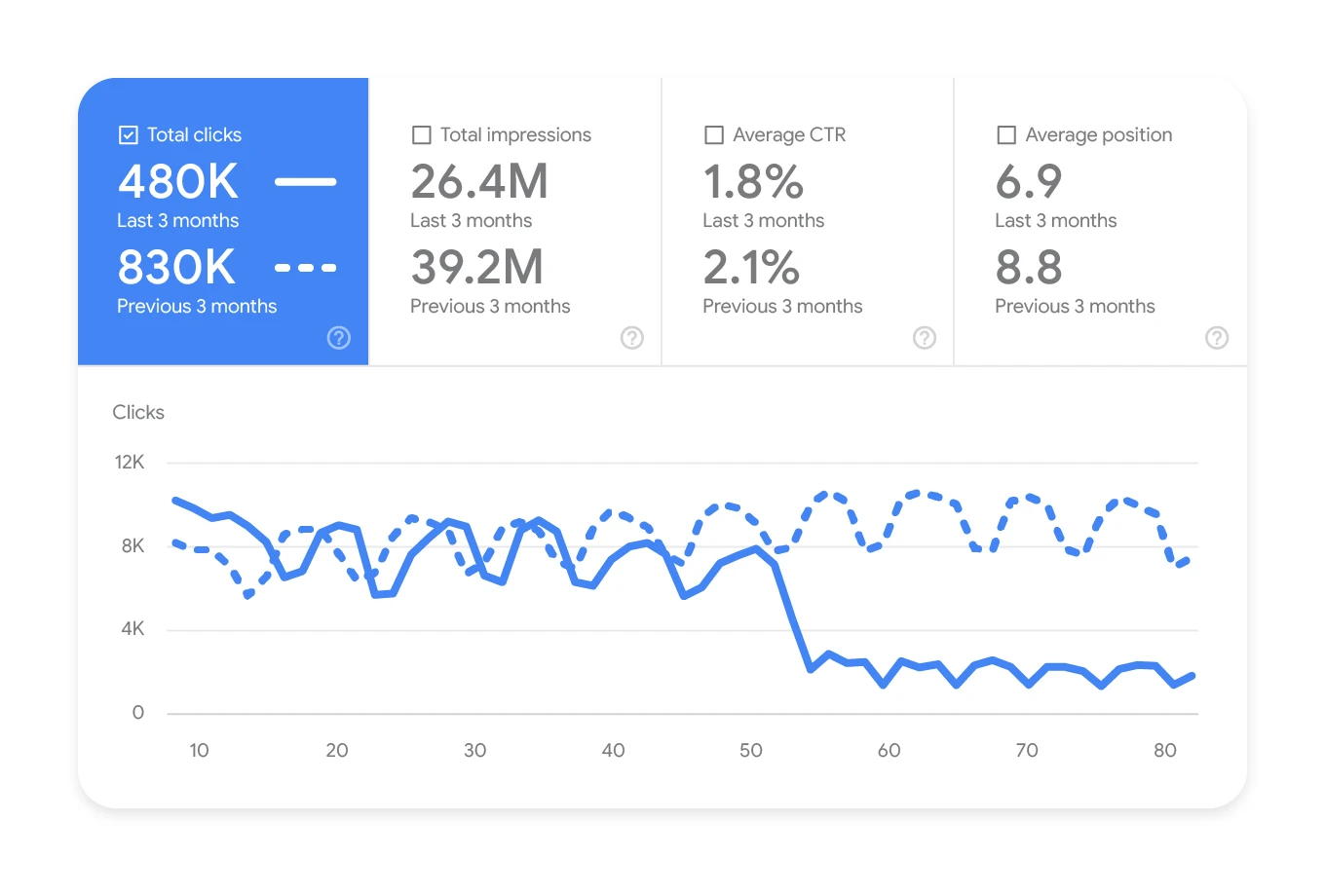
The basic distinction concerns a manual action versus an algorithmic drop. A manual action can usually be confirmed in Google Search Console, because a notice about the breach appears there. If there is no information about a manual action in Search Console, that does not mean there is no problem, but it does change the diagnostic approach.
An algorithmic drop is identified using different methods. You need to check the moment of the decline, compare it with changes on the site, and then analyse query types, landing pages and the scope of the loss of visibility. In practice, it often turns out that it is not “the whole domain got a filter”, but rather a specific section, page template or group of keywords related to a particular type of content has weakened.
Not every drop in rankings means a penalty. Similar effects can be caused by badly configured redirects, a robots.txt block, a noindex tag, incorrect canonicals, lost links, content duplication, keyword cannibalisation or a drop in quality after a template rebuild. For a business, this distinction matters, because each of these causes requires a different recovery plan.
Misdiagnosis most often makes the problem worse. When someone removes valuable content without analysis, rewrites text en masse around keywords or nervously “saves SEO” with more links, they may only increase the scale of the losses. In practice, you first determine the source of the drop, and only then decide whether you need to improve content, technical aspects, site architecture or the link profile.
Current context of Google filters
At present, Google filters work in such a way that most visibility drops result more from a broad quality assessment of the site than from one simple penalty mechanism. Google takes into account content, usefulness, trust, site architecture, the way it is linked and compliance with guidelines. The site owner therefore sees a drop in rankings, but its cause is often a mixture of weaker signals rather than a single mistake.
The primary place for verification is still Google Search Console. That is where you can confirm manual actions, check security issues, track changes in the number of clicks and impressions, and assess whether Google has trouble indexing selected URLs. Search Console will not answer everything, but without it, diagnosing a drop usually feels like guesswork.
It is also important that Google system updates often roll out without any notification. A site may lose visibility because the competition better matches user intent, the content is too similar, the site has too many thin pages, or part of the website gives the impression of being untrustworthy. From the owner’s perspective, it looks like a “filter”, although in practice it is a change in quality assessment.
Particularly risky today are mass-produced content with no real value, aggressive linking, cloaking, excessive duplication and mistakes after migrations and template changes. Another issue can be support pages that exist solely to capture traffic from keywords, but do not solve a specific user problem. Google is increasingly adept at distinguishing genuinely helpful material from content that is merely an expanded SEO layer.
In practice, it is worth analysing not only the drop itself, but also its scope. Has the whole domain disappeared, a single section, only mobile traffic, just one country, or perhaps only informational or product keywords. Such a distinction often shortens diagnosis from many days to a few hours, because it makes it possible to narrow the work down to a specific type of page and the most likely source of the problem.
How to diagnose and fix problems related to Google filters?
Problems related to a Google filter are diagnosed by establishing the moment of the drop, its scope and the most likely cause. First, compare the drop date with the history of changes on the site: a migration, a new template, mass publishing, changes to internal linking, or edits to robots.txt, canonicals and noindex tags. If the drop started immediately after deployment, first assume a technical or content issue, not a penalty.
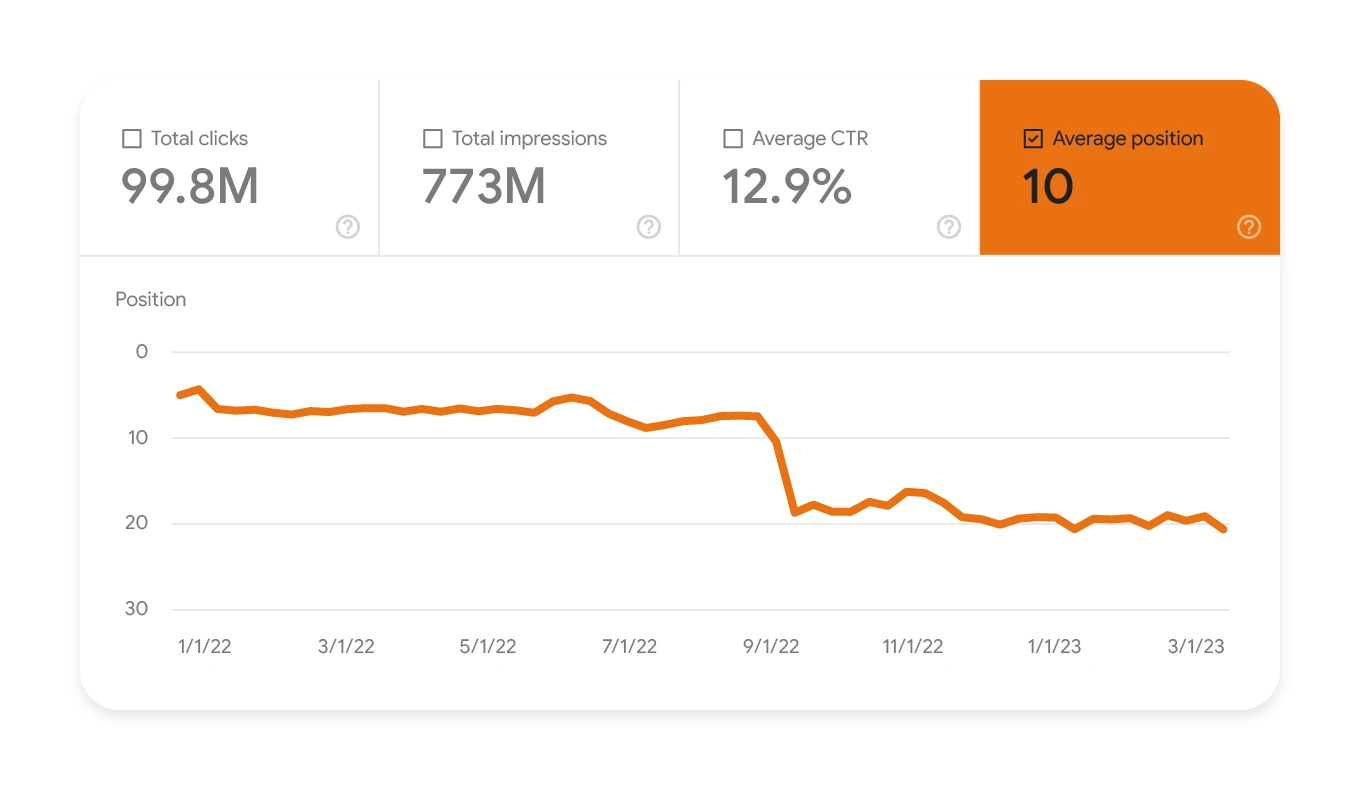
Next, check exactly what has lost visibility. A drop affecting the whole domain is approached differently from a problem limited to one directory, a specific type of subpage, mobile devices or queries from a selected country. This split quickly reveals the common denominator and narrows down the area to investigate as the cause.
The next step is Google Search Console. The Manual actions report lets you check whether Google has applied a manual restriction, while the indexing and security reports indicate whether the site has problems with availability, spam or malware. If you do not see a manual action message, the drop is most often due to an algorithmic assessment, an implementation error or quality issues.
Then move on to the technical side. Verify URL response statuses, redirects, meta robots, canonical tags, blocks in robots.txt, sitemaps, server errors and whether the key subpages are still in the index. A very common scenario is an accidental noindex, a wrongly set canonical or a redirect that cuts Google off from the correct version of the page.
If the technical layer looks fine, take a closer look at the content. Watch out for thin subpages, internal duplication, automatically generated texts, keyword stuffing and pages that poorly match user intent. In practice, it is better to consolidate several weak URLs into one strong page than to maintain a large number of subpages with no real value.
Analyse incoming links separately. Warning signs include a sudden increase in weak domains, a high share of exact match anchors, sponsored links without disclosure and profiles built mainly on low-quality sources. Do not delete links blindly; first assess whether the profile really looks unnatural and whether the drop affects sections supported by such links.
It is also worth looking more broadly at the quality of the entire site. Drops after updates often affect sites that are inconsistent, overloaded with ads, with weak transactional pages that do not build trust or make it difficult for the user to achieve their goal. In such a case, the problem does not concern one URL, but the overall assessment of the site.
The fix should follow the identified cause. In the event of a technical error, you restore proper indexing and accessibility; in the case of a content problem, you consolidate, update or expand weaker pages; and for risky links, you tidy up how they are acquired and phase out the most problematic actions. If Search Console shows a manual action, remove the indicated cause as broadly as possible, and only then submit a reconsideration request with a specific description of the changes made.
After implementing the changes, monitor performance at the directory, URL group and query type level. Do not draw conclusions after one or two days, because Google needs time to reprocess the page. First observe whether indexing and impressions return, and only then assess the positions themselves.
What should you do to reduce the risk of position drops in Google?
You can reduce the risk of position drops in Google through systematic monitoring, careful implementations and ongoing quality control of the site. A simple routine works best: you track Search Console, record more important changes on the site and quickly catch deviations before they affect a larger part of the website. Without an implementation history, even an accurate diagnosis often takes too long.
- regularly review performance, indexing, manual actions and security reports in Search Console;
- describe and archive major changes such as migrations, template modifications, массов publications, redirects and the restructuring of internal linking;
- before implementation, check noindex, canonical tags, robots.txt, redirects and the accessibility of key URLs for robots;
- merge or remove thin, duplicated and outdated subpages instead of merely increasing the number of URLs;
- supervise how links are acquired and avoid schemes based on automation and anchors overloaded with phrases.
The most problems arise with major changes. A migration, a new template, a menu rebuild or the mass creation of new pages should have SEO oversight before publication, not only after drops. In practice, this means checking indexability, the mobile version, redirects and the consistency of URLs on a sample of the most important subpages.
The second area of risk is content. It is better to have fewer pages, but clearly better, up to date and separated by search intent, than an extensive site with duplication and hundreds of almost empty subpages. Uncontrolled growth in the number of URLs often ends in a drop in visibility for entire sections.
The third area is links. Avoid activities that only look good on a spreadsheet with the number of domains: mass publications, uncontrolled link exchanges, repetitive exact match anchors and sponsored links without disclosure. A more stable profile is built by links from sensible, topically relevant sources, as well as by a brand that naturally appears across the web.
If a drop has already appeared, do not make nervous changes across the whole site. First determine whether the problem is technical, quality-related, link-related or the result of updates to Google systems, and then prioritise the pages with the greatest loss of clicks and business value. The worst reaction is mass deleting content or rewriting everything for keywords without understanding the cause.
The most common causes of position drops in search results
Most often, rankings drop because of technical errors, a fall in content quality, link issues or unsuccessful deployment changes. The first step is to check whether the drop affects the entire domain or only selected subpages, directories or devices. This immediately narrows down the list of possible causes. If the drop appeared straight after a deployment, first suspect an on-site error, not a Google penalty.
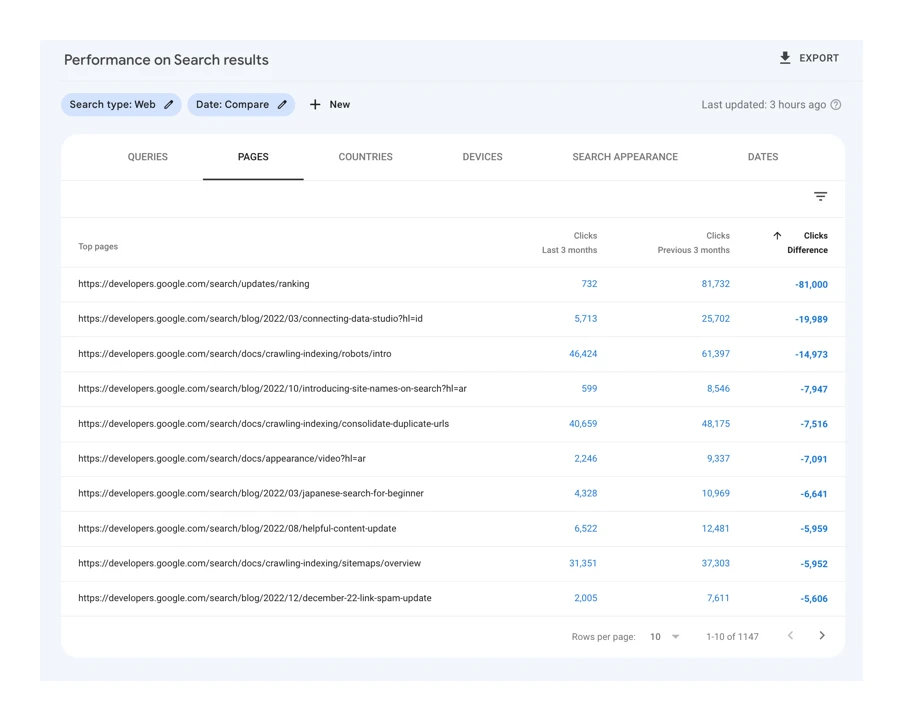
A very common source of problems is indexing and accessibility. It only takes a wrongly set noindex, an incorrect canonical, a block in robots.txt, a redirect loop or a change of URLs without proper mapping for visibility to drop sharply. Such mistakes regularly come to light after a migration, a CMS change, the rollout of a new template or tidying up the URL structure.
The second broad area remains content quality. Drops are caused by thin, duplicated, outdated pages or pages produced en masse without any real benefit for the user. Another issue can be a mismatch with search intent, for example when a sales page tries to rank for informational queries or vice versa. A large number of URLs does not help if most of them add nothing useful.
Another category of causes concerns link building. An unnatural link profile, a sudden increase in links from low-quality sources, overstuffed exact match anchors or incorrectly labelled sponsored posts can weaken visibility or lead to a manual action. It is not always about aggressive SEO from the past. Sometimes the problem is the result of years of neglect, automated publishing systems or campaigns run without sensible quality control.
Changes within the site can also trigger drops, even if they do not look threatening at first glance. Examples include removing important internal links, restructuring the menu, reorganising categories, combining content without redirects or breaking one strong topic into many weak subpages. Google assesses not only an individual text, but the entire logic of the site: navigation, consistency, trust and usability.
Finally, it is worth remembering that not every drop means an error or a filter. Sometimes the layout of the results changes, competition increases, a Google system update classifies a given content category differently, or demand for specific queries weakens. That is why you should always compare Search Console data with seasonality, changes in the SERPs and the history of your own deployments. A wrong diagnosis usually costs more than the drop itself, because it leads to fixing the wrong problem.
What corrective mistakes should you avoid when rankings drop?
When rankings drop, you should avoid chaotic changes without confirming the source of the problem. The worst-case scenario is rewriting content, changing the site structure, removing pages and rebuilding internal linking all at once, because then it becomes impossible to determine what actually helped and what made things worse. The recovery process should start with diagnosis and priorities, not panic and random actions.
A common mistake is mass deleting content simply because traffic has fallen. Not every weak page needs to be removed, because sometimes it is enough to merge it with a stronger URL, refresh it or place it better within the information architecture. Delete only when you know that the content is unnecessary, duplicated or beyond saving in terms of quality.
The second mistake is subordinating all content to keywords. After visibility drops, site owners often add more phrases, headings and repetitions, hoping for a quick recovery in rankings. In practice, this ends up as artificially sounding text, poorer readability and an even weaker match with user intent. It is definitely better to improve the completeness of the answer, the information layout and the usability of the page than to simply “stuff” it with phrases.
Ignoring the technical layer is equally damaging. It happens that the team focuses on copywriting or links, while the source of the problem lies in indexing, redirects, server errors or the mobile version. If Google cannot properly read, index or understand a page, even good content will not regain visibility.
There is also no point submitting a reconsideration request without a confirmed manual action and without actually removing the cause. Such a request is justified only when Search Console shows a manual penalty and you can specifically describe the fixes you implemented. In other situations, you need to wait for Google’s systems to recrawl the site and monitor the effects of the changes you have made.
The last common mistake is a lack of prioritisation. Do not start with random subpages or the least important directories if the biggest drop concerns a few key sections that were responsible for most of the traffic and sales. First fix the areas with the greatest business impact and the biggest loss of visibility, and only then tidy up the rest of the site.
FAQ
Frequently asked questions
how do you check whether a ranking drop in Google is a filter or a technical issue?
First compare the timing of the drop with the latest changes on the site and check the scope of the problem. Then verify Search Console and technical elements such as noindex, robots.txt, canonicals and redirects.
does every visibility drop mean a penalty from Google?
No, similar effects can be caused by indexing errors, duplicate content, lost links, poorly implemented changes or a technical failure. That is why you first need to identify the cause rather than assume a penalty straight away.
what most often causes a ranking drop after changes on the site?
Implementation errors are usually to blame, such as an accidental noindex, an incorrect canonical, a block in robots.txt or improper redirects. Drops can also result from a template rebuild or the removal of important internal links.
what signals in Search Console indicate a manual action?
In the Manual actions report, a violation message appears. This is the simplest way to confirm that Google has imposed a manual restriction.
why can Google lower the rankings of an entire site without a filter message?
Google assesses the overall quality of the site, so a drop may result from thin content, duplication, poor usability or an inconsistent architecture. In such a case there is no single message, because the problem affects the site’s overall assessment.
how can you reduce the risk of ranking drops in Google in the future?
Regularly monitor Search Console, record major changes and, before implementation, check indexability, redirects and meta robots settings. It also helps to tidy up thin and duplicate pages and acquire links cautiously.