
AI Overview is one of the more significant changes in Google results, because it reshapes not only the layout of the SERP, but also the way users “consume” an answer. For website owners, this means that organic position alone is increasingly no longer enough to assess actual visibility. In practice, the key point is that AI Overview can both reduce the number of clicks and open up new opportunities for content that develops the topic thoroughly and accurately. For this reason, it is worth looking not only at ranking, but also at CTR, search intent and whether, after reading the summary, the user still has a reason to visit the site. Above all, this article is meant to help you understand when an AI answer supports you, when it harms you and how to respond without acting blindly. Those who analyse specific queries and refine content around real user questions, rather than around the “AI” label itself, gain the most.
What is AI Overview and how does it affect visibility in Google?
AI Overview is Google-generated answer summaries that appear for some queries above the classic search results or between them. It is not a separate publishing format or a feature for which a page is submitted manually. It is a SERP element that draws on many sources and gives the user a short answer before they visit any website.
The impact on visibility mainly comes down to the fact that the AI answer takes up a significant part of the screen and draws the user’s attention to itself. In practice, that means less space and less exposure for standard organic results, especially on mobile devices. Even a high position can deliver a weaker result if the user receives a satisfactory answer without needing to click.
However, it is not always a scenario that is purely unfavourable for websites. When a topic is more complex, after reading the summary the user often looks for an expansion, a source, a comparison, instructions or confirmation. In such cases, content that answers the main question quickly, and then shows details, conditions, exceptions and next steps, gains an advantage.
This applies most strongly to informational, how-to queries and those that require combining several facts into a coherent answer. For this type of keyword, Google is more likely to decide that a short summary will be useful. Visibility in AI Overview depends indirectly on whether your site is a good source: relevant, comprehensive, up to date and readable.
This is an important difference compared with the simple view of SEO as a fight for position. Today, you need to assess whether a given piece of content answers the question clearly enough to feed the AI answer, or whether it is valuable enough to make the user want to go deeper. Being in the index and using keywords correctly will not solve this challenge on their own.
How does AI Overview work in the context of queries and the market?
AI Overview works selectively, because it does not appear for every query and does not function identically in every market. Its presence depends on the language, country, type of intent and whether Google considers such a summary genuinely useful. As a result, the same keyword can return a different results layout in different locations, on different devices or at a different time.
AI Overview most often appears where the user expects a quick explanation, a concise synthesis or a set of several steps in one place. This especially applies to questions such as “what is”, “how does it work”, “how to”, “what is the difference” and more complex multi-step queries. For some transactional queries or very simple navigational terms, its importance is limited, because the user still wants to go to a specific page or carry out an action.
In practice, there is no guarantee that a page ranking highly in organic results will be shown as a source for the AI answer. Google does not rely here on the simple assumption of “top 3 = citation”. That is why analysing position alone is no longer enough and you need to track CTR, traffic fluctuations and whether AI elements appear in the SERP at the same time.
The business impact is often ambiguous. Some keywords lose clicks because the SERP answer satisfies the need immediately, while others gain because, after a short summary, the user looks for a more detailed piece of content. The most practical approach, therefore, is to divide queries into those at risk of having clicks taken away and those that can still drive traffic to in-depth content.
This is also why you should not create content solely “for the model”. Classic SEO still matters: proper indexing, alignment with intent, usefulness and credibility of the material. There is no certain, separate way to “switch on” visibility in AI Overview; better results come from strengthening the quality of the source and matching the answer to the user’s real question.
How to analyse visibility in the context of AI Overview?
Visibility in the context of AI Overview is worth assessing at the level of specific queries, SERP layout and changes in clicks, rather than only through the prism of organic positions. First, you need to establish for which keywords the AI summary appears and for which it does not. Only then can you see which areas are actually exposed to a drop in traffic, and which can still generate visits. Organic position alone does not show the full picture if part of the answer is already delivered directly in the search results.
In practice, the starting point is a SERP audit. It is checked manually and with the use of tools which types of queries trigger AI Overview: definitional, how-to, comparative and multi-step. It is also important whether the summary takes up the top part of the screen, appears between results, and whether it immediately answers the user’s key question.
The next stage is to segment keywords by intent. Informational and how-to queries usually behave differently from local or transactional ones. When a user expects only a short definition, AI Overview can reduce the need to click. However, if they need a procedure, a comparison, selection criteria or a discussion of exceptions, a well-prepared page can still capture traffic after the summary has been read.
The analysis of data from Google Search Console at query and URL level is crucial. It is worth tracking whether CTR falls after SERP changes despite maintaining positions, whether the number of impressions rises without a proportional increase in clicks, and which subpages lose visits on the simplest questions. The most useful signal is not the fall in position itself, but the drop in clicks with similar visibility.
A good solution is to prepare a simple map of risks and opportunities. For one group of keywords, the priority will be defending clicks, because AI Overview takes over the basic answer. For another, it will be more important to capture traffic from in-depth questions that arise after the initial overview has been read. Such a map makes it easier to decide where to invest editorial time and where it makes no sense to rewrite content for the sake of it.
Analysing the SERP alone is not enough if you do not assess the quality of your own content as a source. You need to verify whether the page answers the question directly, whether it uses precise terms, whether it includes conditions, limitations and exceptions, and whether it does not hide the core message under an extended introduction. Google is more likely to use and promote sources that are consistent, clear and up to date.
- whether AI Overview appears for a given keyword regularly or only periodically,
- whether the user still needs an explanation, an example or instructions after the summary,
- whether your page gives a short answer high up in the content,
- whether the content covers supporting questions that naturally arise from the main query,
- whether the page is technically accessible: indexable, readable in HTML and free from duplication.
You should also not overlook the analysis of trustworthiness. In areas that require trust, authorship, update dates, factual consistency and sources that support the claims matter. If the content is correct but looks like an unverified draft without context and updates, it will be a weaker candidate as a source of an answer.
What steps should be taken to improve visibility in AI Overview?
Visibility in AI Overview grows through better alignment of content with the user’s question, greater clarity of the answer and stronger trust signals, rather than by “turning on” a separate feature. At the outset, it is worth choosing the pages and queries where the impact will be greatest. These are most often informational articles, guides and pages answering complex or multi-step questions. The best results come from working where AI Overview can take away a click or where the user naturally expects an expansion after reading the summary.
The first practical change is to reshape the way the answer is given. The key conclusion should appear high in the content, stated directly and without an extended introduction. Lower down, it is worth adding elaboration, concrete steps, exceptions, limitations and decision criteria that help the user move from general orientation to action. A page based solely on a definition is easy to replace with a summary in the SERP.
The second change concerns the organisation of the material. Headings should answer real questions, paragraphs should be short and the terminology should be consistent throughout the text. When the topic is comparative, the criteria for differences need to be shown clearly. If the question is “how”, the content should lead the user step by step. The answer format needs to match the intent, because the same topic can be described correctly but in a form that is of little use for a given query.
The third thing is to broaden topic coverage. A good source does not end with a single paragraph of definition. It should cover supporting questions, conditions of use, the most common mistakes, usage scenarios and next steps. These are precisely the elements that most often determine whether the user will click further after reading the AI summary.
At the same time, the credibility of the material needs to be strengthened. Current dates, clearly displayed authorship, consistency of information between subpages and sources where needed build the page as a point of reference. This is not about formalities for the sake of formalities. It is about making the content look like a reliable piece of material, not like text prepared solely for a keyword.
The technical layer must also not be ignored. The content has to be available in HTML, properly indexed, and free from rendering problems, duplication and canonicalisation issues. If an important answer is hidden in elements that are difficult to read, or if page versions compete with each other, the quality of the text alone may not be enough.
Implementation is best carried out in a specific order:
- choose informational and how-to keywords that are important for traffic,
- check which of them trigger AI Overview and what the SERP looks like there,
- rebuild key pages so that they answer faster and more fully,
- fill in missing questions, exceptions and decision conditions,
- improve trust elements and technical issues,
- monitor changes in CTR, clicks and visibility at query and URL level.
The most common mistake is improving only the form without strengthening the source content itself. Artificial FAQs, keyword stuffing and mechanical “beautifying” of headings do not solve the problem if the page still does not answer the user’s real question accurately. Schema and technical order can help organise the data, but they will not replace a good, specific answer.
At the finishing line, ongoing monitoring is needed, because the impact of AI Overview is not spread evenly across topics. Some keywords lose clicks, while others can gain when, after a short summary, the user starts looking for the source or a broader explanation. For this reason, it is worth closing the optimisation process with a list of priorities: which URLs to protect, which to expand, and which queries to track regularly.
What should you pay attention to when optimising content for AI Overview?
When optimising content for AI Overview, you first need to assess whether the page provides a quick, unambiguous answer to the main question and whether it develops the topic to a level that a short summary in the results cannot replace. The user often first scans the AI answer and only then decides whether it is worth going deeper. That is why the most important answer should appear high in the content, without a long introduction. Only lower down is it worth clarifying conditions, exceptions, consequences and next steps.
The key is still matching the content to the search intent, not just to the keyword. Material for a “what is” question should look different from content for a “how to” query, and different again from a comparison of two solutions. When one page mixes several intents without a clear structure, it becomes less readable for both the user and the search engine.
Completeness of the answer is also very important. Short definitions and general explanations are the easiest to “cover up” with an AI summary. Content gains when it also answers supporting questions: when something works, when it does not, what its limitations are and how to make a decision in practice. These are the elements that often determine whether the user clicks further.
The structure of the material itself is important too. Headings should directly name the topic of a given section, and paragraphs should get to the point as quickly as possible. A structure that works well is: short answer, development, examples, exceptions and the next step. This order makes the content easier to understand and reduces information overload.
Credibility cannot be overlooked. In areas where accuracy matters, the freshness of the content, consistency of facts, authorship and clear sources where needed are all important. If different subpages provide conflicting information, the domain loses value as a source. This is not only a reputational issue, but also a practical one from a visibility standpoint.
It is also worth making sure the content is technically accessible. If the key answer is hidden in elements that are difficult to read, renders poorly on the page, or appears in multiple duplicate versions, the content’s potential drops. Good text quality alone is not enough if the search engine has difficulty accessing its correct version.
- Does the answer to the main question appear in the first part of the content?
- Does the material address one dominant intent and have a logical structure?
- Does the content include conditions, exceptions, steps and practical application?
- Is the information current, consistent and credible?
- Are the key fragments provided in readable HTML and without repetition?
In practice, it is better not to optimise the entire site at once, but to start with content that already generates impressions for informational and how-to queries. That is where you can see fastest whether refining the answer helps maintain CTR or capture traffic from more detailed questions. The priority is not “writing for AI”, but creating a page that genuinely helps after reading the snippet in the SERP.
What are the most common mistakes and pitfalls when working with AI Overview?
The most common mistakes with AI Overview stem from improving the form without increasing the meaning, usefulness and credibility of the content. Many sites shorten paragraphs, add question sections or replace headings, yet still do not answer the user’s actual question directly. Such cosmetic changes rarely deliver lasting results.
A common trap is assessing the situation solely through the lens of organic rankings. A page may still remain high, and yet lose clicks because the user gets a significant part of the answer without visiting the site. In this area, you need to look at the query, the presence of SERP features, CTR and changes at the level of a specific URL at the same time. Without that, it is easy to conclude incorrectly that “nothing has changed”.
The problem can also be creating content that is too general. If the material ends at a basic explanation, it gives the user no reason to click further. Especially in guides and comparisons, selection criteria, the order of actions, limitations and specific scenarios matter.
Many sites also fall into the trap of artificially expanding pages around seemingly important optimisation signals. Paragraphs overloaded with keywords, unnatural FAQ sections and blocks created solely to “capture more queries” reduce readability. Google does not need more text blocks, but a better structured and more relevant answer.
Another mistake is assuming that structured data or the content schema alone will solve the issue. They can help organise information, but they will not replace the quality of the source. If the content is outdated, inconsistent or superficial, the technical layer alone will not remove the problem.
A separate pitfall is failing to separate objectives. Some pages should defend clicks on keywords that AI Overview may significantly limit, while others should capture traffic from more in-depth questions after the initial summary. When everything is treated the same, the team’s efforts become scattered and it is harder to assess which changes really work.
In practice, a lack of regular updates is also harmful. Topics that are changeable, multi-variant or highly competitive become outdated quickly, and discrepancies between articles build up over time. Even good content loses if it is not maintained and stops being the most reliable source of answers.
The most sensible approach is not to treat AI Overview as a separate channel that can simply be “switched on”. It is rather a new way of presenting results, in which pages that answer precisely, clearly and in a trustworthy manner gain. The biggest mistake is therefore optimising based on assumptions instead of real user questions and data from your own results.
How should you monitor the effects of activities related to AI Overview?
The effects of actions related to AI Overview are best tracked by combining query data with information on changes in CTR, clicks, URL visibility and observations of the search results layout itself. A rise or fall in organic rankings alone is not a sufficient signal, because the user may see the AI answer before the classic results. That is why it is worth checking, whether a given query still generates visits or has been partially “handled” already at SERP level. In practice, the foundation remains analysis in Google Search Console and a regular audit of results for the most important keywords.
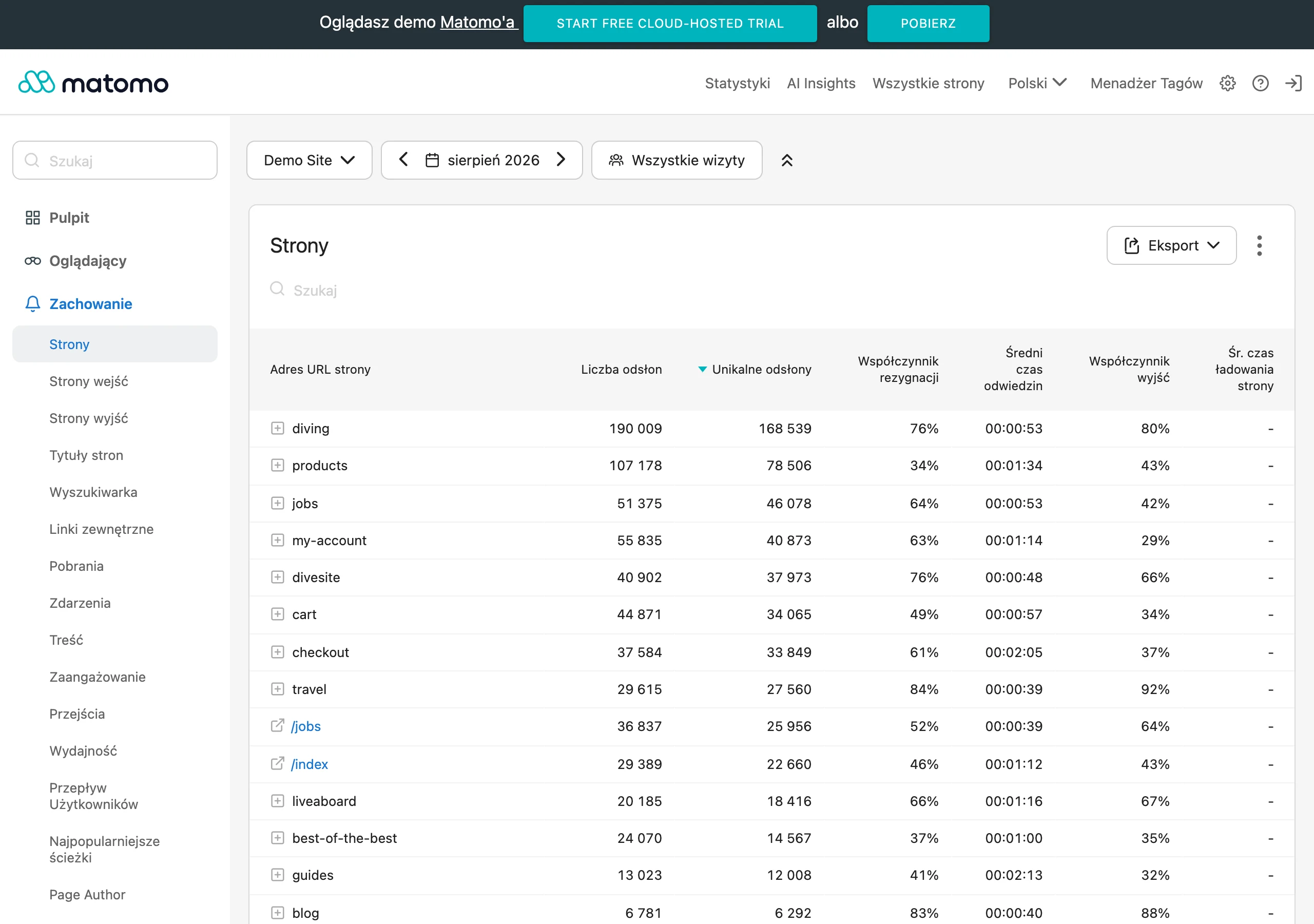
It is crucial to monitor data at query level, not only for the entire page or the entire section of the site. This is where you can most quickly see which phrases are losing CTR after AI Overview appears and which still generate clicks because the user needs broader context. If impressions rise and CTR falls, this is often a signal that the answer in the results is taking over part of the attention and part of the informational need. The reverse scenario is also possible: weaker CTR for simple questions and better results for more detailed queries.
At the same time, you should analyse data at URL level, because one piece of content may gain on more in-depth questions while losing on general ones. This approach helps distinguish a real problem from an apparent decline. A page does not have to be “losing” if it gives up some clicks from simple phrases, but at the same time takes traffic from queries that require a broader answer. The best picture comes from comparing: query, URL, CTR, clicks, intent and the presence of AI elements in the SERP.
It is also worth regularly checking which queries actually show AI Overview and what the generated answer looks like. There is no guarantee that it will be the same for every user, market and moment, so monitoring should be cyclical rather than one-off. A good practice is to prepare your own list of priority phrases and record whether an AI summary appears, what types of sources are visible and whether the user has a real reason to click through. Without observing the SERP itself, it is easy to misinterpret data from reports.
The analysis is worth splitting by query intent. Informational and how-to phrases usually behave differently from comparative, local or transactional ones. This makes it easier to assess where you need to defend clicks with a better answer on the page and where it makes more sense to develop content for secondary questions that the user asks after reading the summary. Such segmentation also helps set priorities for the content and SEO team.
To assess the effects reliably, you need a baseline from before the changes were implemented. The best approach is to compare the “before” and “after” periods of the content rebuild, taking into account seasonality, demand fluctuations and other site changes. When the topic is unstable or heavily dependent on current events, a quick comparison can distort the picture. For this reason, weekly and monthly observations are more reliable than conclusions drawn after a few days.
In practice, a simple monitoring model works well: a list of key queries, assigned URLs, current CTR, clicks, impressions and information on the presence of AI Overview. Such a spreadsheet immediately shows which materials need refinement and which are starting to take traffic from more difficult, more complex questions. The most common mistake is to analyse only the ranking position instead of checking, whether the page’s real share in the user’s decision to click has changed. This is the metric that most accurately shows the practical impact of AI Overview on visibility.
FAQ
Frequently asked questions
How does AI Overview affect a site’s visibility in Google?
It takes up a large part of the screen in the SERP and draws the user’s attention, so standard organic results have less space and less exposure. Even a high position may generate fewer clicks if the summary answer is enough without visiting the site.
Does AI Overview always reduce the number of clicks to a site?
Not always, because for more complex topics users often later look for elaboration, a source or instructions. In that case, well-prepared content can still capture traffic after the summary has been read.
Why is it no longer enough to look only at organic ranking?
Because ranking does not show whether the user already got the answer directly in the SERP. You also need to analyse CTR, traffic and whether AI Overview appears for specific queries.
Which queries most often trigger AI Overview?
These are most often informational, how-to, comparison and multi-step queries. They often concern phrases such as “co to jest”, “jak działa”, “jak zrobić” or “jaka jest różnica”.
Does AI Overview appear for every keyword?
No, it works selectively and depends on the language, country, intent and whether Google considers the summary useful. The same keyword may look different in different markets, on different devices or at another time.
How can you improve a piece of content’s chances of appearing in AI Overview?
You need to give a short answer high up in the content, and then add elaboration, exceptions, conditions and next steps. Clear structure, completeness, credibility and technical accessibility of the site are also important.