

Searching in Google is increasingly less about matching a page to a single keyword. Far more often, what matters is whether the content genuinely meets the user’s intent and whether it provides the answer in a form that is easy to absorb quickly. This is changing how SEO is planned, how content is created and how results are interpreted. Today, visibility is determined not only by the position of a single subpage, but by the whole setup: content quality, the technical performance of the site, trust in the brand and how the answer is presented in the results. For a site owner, that means less focus on individual phrases and more work on topics, audience needs and site structure. When this model is well put together, it is easier to maintain traffic despite changes in algorithms and the appearance of the results.
What is changing in Google search?
The change in Google search is that the search engine is increasingly able to read the meaning of a query, not just the words entered by the user. In practice, Google tries to determine what the person actually needs: a definition, a comparison, a local service, a product, instructions or a quick answer. For this reason, several similar phrases can now lead to almost the same results, even if they differ in wording.
For a site owner, this means that simply “using the phrase” in the title and in the content is no longer enough. What matters is how well the subpage matches the type of query and whether it answers it in an appropriate format. If the intent is transactional, a guide will rarely beat a well-built category or product page.
The change also covers the way Google displays answers. Users often get part of the information directly on the results list: in rich snippets, local modules, question sections, video materials or other SERP elements. This reduces the number of clicks to pages that publish general content without specifics, a sensible structure or clear added value.
At the same time, the importance of semantics and topical consistency is growing. Google recognises relationships between concepts, topics and subpages within a domain more effectively, so it assesses not only a single text but also the context of the entire site. Visibility is increasingly built at the level of an entire topic area, not one article.
This shifts SEO from simple keyword positioning towards managing visibility as a system. You need to keep an eye on indexation, information architecture, answer quality, internal linking, UX and the site’s credibility at the same time. Only such a setup gives you a chance of more stable results when Google changes algorithms or rebuilds the results layout.
What are the key factors influencing site visibility?
The visibility of a site is most strongly affected by: alignment with user intent, the quality of the answer provided, the technical accessibility of the content and the trust the site inspires. These are the elements that in practice determine whether Google will treat the site as a relevant answer to a specific query. The mere presence of a keyword is now only a small part of the bigger picture.
The first area covers intent and content format. Google checks whether, after landing on the page, the user gets exactly what they were looking for, and whether the way the information is presented fits the query. The same topic may require different types of pages: a guide, FAQ, service page, category, product or a local landing page.
The second area concerns the quality and usability of the content. The best-performing materials are those that answer the question quickly and then organise the topic through steps, conditions, examples, comparisons or instructions for action. Thin, duplicated, overly long or so general that the user quickly returns to the search results tend to perform worse.
The third area is technical and site structure. When important subpages are not indexed correctly, have canonicalisation problems, are buried deep in the site’s architecture or load slowly on mobile, it is hard for them to achieve stable visibility. Headings, a clear information layout, internal linking and structured data also matter where they genuinely help Google understand the content.
The fourth area includes site quality signals and credibility. Google pays attention to navigation clarity, the level of ad clutter, connection security, mobile accessibility and information about the company, the author and the sources. If a site feels random, inconsistent or anonymous, it is harder for it to compete even with content that is correct substantively.
The appearance of search results and its impact on CTR also matters. A page may rank highly and still lose clicks when local modules, zero-click answers, multimedia or more visually striking competitor results appear above it. That is why a site owner should monitor not only rankings, but also the types of results visible for key queries, and then tailor titles, descriptions and content structure to them.
Which technical elements are worth optimising?
First of all, it is worth refining indexation, crawling, performance speed, the mobile version, information structure and site quality signals. If Google cannot read the site efficiently or the user cannot quickly find the answer, even good content loses some of its potential. First you need to make sure that the key subpages are accessible to robots and are actually getting into the index.
In practice, this comes down to checking the sitemap, the robots.txt file, canonical tags, server response codes and the presence of duplicate URLs. A common problem is a situation where an important page exists, but Google encounters several variants of it or receives conflicting signals about which version should be treated as the correct one. On sites with filters, pagination and URL parameters, special care is needed to avoid generating unnecessary variants of the same content.
The second area covers information architecture and internal linking. Google can “read” a site more easily when subpages are connected in line with topic relevance and user intent, rather than being shaped by random generic boxes or an excess of links in the footer. A well-thought-out link structure makes it easier for both robots and the user to move on to the next step without returning to the search results.
The third area is technical usability: loading time, layout stability, mobile friendliness and the absence of elements obscuring content. Today, what matters is not only the result in a tool, but whether the user can immediately see the answer, the action button or the most important information. When a site runs slowly, “jumps around” or is overloaded with ads, the risk of the visit being abandoned increases.
It is also worth tidying up the semantic layer. A correct heading hierarchy, relevant page titles, structured data where it makes sense, as well as consistent naming, help Google understand what a given subpage is about and in which situations it is worth showing it. Structured data will not replace content quality, but it can make its correct interpretation easier and increase the chance of a better presentation in the results.
Finally, there is the security and technical trustworthiness of the site: HTTPS, correct redirects, no 404 errors on important paths, and clear contact and company pages. These are not decorative extras, but elements that affect the overall quality assessment of the site. The most common mistake is to polish individual keywords when the problem lies in indexing, the template or the structure of the entire website.
Which content formats best match different types of queries?
The best content format results from the intent behind the query, not solely from the keyword itself. Google increasingly promotes the type of page that most accurately matches the user’s goal: a guide, a category, a product, a local page, an FAQ or comparison content. That is why, first and foremost, it is worth establishing what the user really wants to achieve after entering the query.
The simplest mapping looks like this:
- informational queries — a guide, a definition, FAQ, a step-by-step article,
- transactional queries — a product page, service page, sales landing page, category,
- local queries — a location page, a service profile in a given city, contact details and directions,
- navigational queries — the brand homepage, a specific section of the site, login, contact,
- problem-solving and comparison queries — help centre, troubleshooting guide, option comparison, case study with a process.
For informational queries, content that gives a concise answer at the start, and only then adds conditions, exceptions and specific steps, works best. The user does not want to dig through several screens just to get the basics. When the answer is sketchy and adds nothing beyond what is already visible in the results, clicks and engagement usually drop.
In transactional queries, a clear offer and the shortest possible path to a decision matter. Such a page should immediately show what is available, for whom, at what price, on what terms and what the next step is. In such situations, an extensive article often loses to a well-designed category or service page, because it misses the purchase intent.
In local queries, the most important things are specific location details and credibility. A local page should contain the scope of the service, service area, contact details, opening hours, elements confirming the company’s presence, and content consistent with the actual offer in that location. Mass-producing many near-identical city pages without value usually weakens visibility rather than strengthening it.
It is also worth looking at what the search results themselves look like. If the SERP shows mainly step lists, question sections, videos or comparisons, that is a clue as to what format Google and users expect. The best choice is not to add “more text”, but to prepare the content in the format that dominates for a given intent.
How can you avoid typical mistakes in content creation?
The easiest way to limit typical mistakes is to create content for a specific user intent, rather than for a mere list of keywords. A common problem is publishing many very similar subpages just because the phrases differ by one word or word order. For Google, such pages often compete with one another and dilute the signal as to which answer is most important. It is better to focus on one strong, sensibly structured page than several weak variants on the same topic.
The second common mistake is writing too vaguely. When a user types in a specific question, they do not expect a long introduction, but a clear answer, conditions, steps and exceptions. Content that merely “goes around the topic”, but does not help complete the task or make a decision, increasingly loses to more practical materials.
Problems also arise when the page format does not match the query. A how-to article will not replace a service page, a product page will not replace a comparison, and a short category description will not fully answer a complex informational query. First you need to establish what the user is looking for in the results, and only then prepare the content.
In practice, it is worth avoiding a few recurring mistakes:
- creating separate pages for minor variants of the same intent,
- duplicating descriptions across subpages or rewriting what is already visible in the SERP,
- hiding the answer deep in the content instead of giving it upfront,
- creating texts without examples, procedures, comparisons and specifics,
- publishing materials without a plan for internal linking and without an assigned place in the site structure.
Problems with content structure also reduce effectiveness. When headings are arranged chaotically, paragraphs are too long, and key information is scattered across different sections, it is harder for Google to grasp the topic and harder for the user to find the answer quickly. Good content should answer briefly first, then develop the topic, and finally close with the details and next steps.
It also makes no sense to publish at scale purely to boost the number of URLs in the index. If a new subpage has no clear purpose, adds nothing new and does not connect with the rest of the site, it usually does not strengthen visibility — it just introduces additional chaos. Often better results come from organising, consolidating and updating existing materials than from adding more thin content.
Credibility is a separate issue. In areas requiring trust, authorship, freshness, sources, company details and consistency of information on the site matter. If content feels anonymous, out of date or does not show where the conclusions come from, stable visibility is harder to achieve.
How to monitor and measure the effectiveness of SEO activities?
Effectiveness of SEO activities is assessed by combining data on visibility, user behaviour and business results, not just by keyword position. Average position can be misleading because it does not show whether the page appears for the right queries, whether the result is clicked and whether the traffic has real value. That is why measurement should be carried out at the level of queries, page types and conversions.
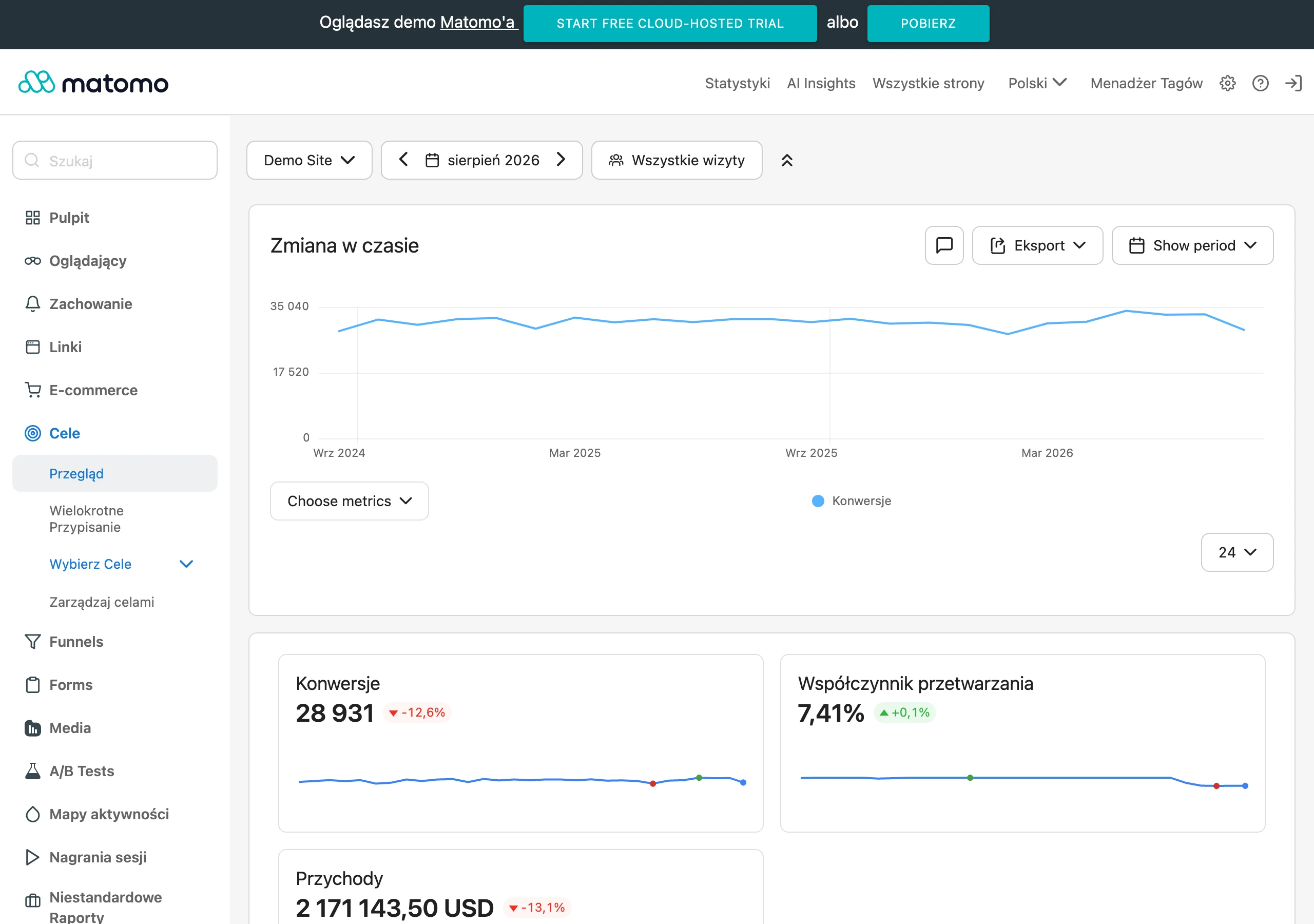
The basis is Search Console and an analytics system, for example GA4. Search Console shows impressions, clicks, CTR, queries and URLs that appear in search results. Analytics answers a different question: what the user does after arriving, whether they move on and whether they complete desired actions.
It is crucial to look at metrics in the right context. Growth in impressions without growth in clicks may mean Google is showing the page more widely, but the result does not match the intent or loses out on format in the SERP. A drop in clicks with a stable position often results not from the content itself, but from changes in the appearance of results, the appearance of answer modules or stronger competition.
In practice, it is worth constantly monitoring:
- impressions and clicks for key topics and page types,
- CTR for queries with a large number of impressions,
- the share of branded and non-branded queries,
- organic traffic on pages that fulfil a real business function,
- conversions, leads, sales or other goals from organic traffic,
- indexation status and technical issues affecting presence in Google.
Results are best analysed not at the level of individual keywords, but in groups of intents and subpage types. It is worth observing guides, service pages, categories, products and locations separately, because each of these groups behaves differently in the results. Such segmentation more quickly shows whether the source of the problem is content, format, technical issues or simply a change in the SERP.
A good habit is also to compare periods before and after implementing changes. If you improve titles, rebuild content or consolidate several URLs, assess the impact of that specific change on impressions, CTR, visits and conversions. Without such a comparison, it is easy to conclude that the SEO effect comes from an action that in practice had little significance.
You should not neglect the technical layer in monitoring. When an important URL loses traffic, you need to check whether it is still indexed, whether the canonical has changed, whether an response error has appeared and whether internal linking is still passing the appropriate authority to it. Quite often a drop looks like a content issue, when in fact it is the result of indexation problems or a site rebuild.
In the end, it is the business result that matters, not the SEO report itself. If visibility for broad keywords grows but enquiries do not increase, sales do not rise or lead quality does not improve, it means the site is attracting the wrong traffic or not closing the intent. Good SEO does not end with a visit from Google, but with whether the user got the right answer and took the next step.
FAQ
Frequently asked questions
How does Google assess content on a site today if not just by keywords?
The search engine increasingly recognises the meaning of a query and checks whether a page answers a specific user intent. The answer format, content quality and the context of the whole site also matter.
Is a title with the keyword phrase enough for a page to be visible in Google?
No, simply using the phrase in the title and content is no longer enough. What matters is matching the subpage to the type of query and whether it answers in the right format.
Which elements have the biggest impact on a site’s visibility in search?
The strongest factors are matching user intent, the quality of the answer, the technical accessibility of the content and trust in the site. The mere presence of keywords now matters much less.
Which technical issues can weaken SEO even with good content?
Problems include indexing issues, duplicate URL addresses, incorrect canonicalisation, slow mobile loading and poor information architecture. If Google cannot read the site efficiently, the content loses some of its potential.
How do you choose the right content format for the type of query in Google?
Informational queries are best served by guides, definitions and FAQs, while transactional queries call for product pages, service pages or categories. For local queries, location pages, contact details and directions are important.
How do you measure SEO effectiveness beyond the keyword position alone?
You need to look at impressions, clicks, CTR, queries and user behaviour after landing on the page. Average position alone does not show whether the traffic is valuable or whether the page matches the right intent.