

Until quite recently, many companies built visibility on general articles explaining the basics. Today that is increasingly not enough, because users’ simple questions are being intercepted by short automatically generated answers. Value only starts to grow where the definition ends and decisions, procedures, exceptions and responsibility for the recommendation begin. Expert content is not a “smarter-written” version of the internet, but practical material based on experience, proprietary sources and real implementation constraints. That shifts the emphasis in content planning, changes the role of experts and raises the quality bar. The question is what makes some content impossible for AI to cover with one simple answer.
What expert content is in practice
Expert content is not theory. It is material based on knowledge that cannot be reliably recreated from public sources alone. Its foundation is usually expert interviews, operational data, test results, process documentation, customer tickets, implementation analyses and real business decisions. And that is not a cliché, because it is precisely these sources that add the context that a general summary of the topic does not provide.
Inside such content, what stands is not the answer itself, but the rationale behind the recommendation. The reader should get not only information on what to do, but also why it works under specific conditions, when it does not work and what the input requirements are. If the material does not show conditions, limitations and exceptions, it can easily turn into a correct but not very useful description. And correctness without usefulness is exceptionally cheap today.
That is why expert content often includes elements that a simple AI answer usually does not provide responsibly. This is where error scenarios, solution-selection criteria, action sequences, operational checklists, legal or technical constraints and commentary from the person who stands behind the thesis with their name and role come in. That raises the entry bar for the author. But note, at the same time it dramatically increases usefulness for the audience.
The greatest value appears when the user is not hunting for a definition, but wants to make a decision or complete a task. It is about choosing a tool, implementing a process, assessing risk, interpreting data or avoiding an expensive mistake. The closer the user’s question is to real action, the greater the advantage of expert content over a simple answer. And no: not because it sounds “smarter”, but because it takes on the burden of consequences.
In practice, the output should not be only an article. Well-prepared expert content also includes a structure of evidence, expert quotes, answers to real customer questions, a risk section and an update plan. It is precisely this “user knowledge package” that makes the material help not only to understand the topic, but also to move more safely into action. Instead of a nice narrative, you get a working tool.
The current context of creating expert content
Today, something different matters in creating expert content than it did yesterday. Simple informational queries are increasingly being taken over by ready-made automatically generated answers, so simply having an article on a given topic is no longer an advantage. As a result, “there is a text” matters less, and whether it brings evidence, interpretation and implementation context matters more. Why should a user visit a site for content that can be summarised in a few sentences.
That shifts the burden from producing general articles to materials based on authorship, primary sources and real use cases. Trust signals are key: who the author is, what expertise they have, where the claims come from, when the material was updated and what limitations it has. Today, the advantage is built not by “writing quality” alone, but by credibility combined with usefulness.
Texts based solely on what is already publicly available become interchangeable. They can be easily paraphrased, shortened or used as fuel to generate a synthetic answer without the need to visit a specific site. The problem is that such material only wins until the first “what if”. That is why the best-performing content combines SEO, UX and operational knowledge: it answers the question, but also guides the user through the task step by step, all the way to correct implementation.
In practice, organisational requirements are also increasing. In many sectors you have to take into account legal review, expert approval, data anonymisation, compliance with product documentation and versioning of updates. These are not embellishments, but safety brakes that matter when the stakes are error risk. Even very good text quickly loses value if it does not have a subject-matter owner and an update process.
AI remains a tool in this process, not the author of responsibility. It can help with transcribing interviews, organising material, grouping questions or linguistic editing, i.e. where speed and repeatability matter. But note: it should not independently determine expert theses, exceptions or recommendations that require domain experience and awareness of the consequences of error. The question is not “does AI help”, but where help ends and risk begins. Today’s greatest advantage belongs to content that not only answers, but helps make the right decision in a specific context.
How the expert content creation service works
It is a staged process. The expert content creation service goes from topic selection, through extracting knowledge from proprietary sources, to publication and data-driven revisions. At the start, a topic is not chosen because it has search volume, but because the user has to make a decision based on it or implement something correctly. Look at it another way: a low-risk text is easy to replace with a short answer, so it is not length that wins, but substance. The most meaningful topics are those in which a lack of context leads to a bad decision, time loss or incorrect implementation.
Once the topic has been qualified, the knowledge asset audit begins. This is not a formality. Documentation, customer tickets, implementation notes, operational data, industry standards and material from people who really work with the process on a daily basis are collected. The problem is that without these sources the content quickly becomes generic and indistinguishable from what is already circulating publicly.
The next step is information gap analysis, in other words a test of what the user is missing in order to complete the task. The point is not to write “more” than the competition, but to close the missing conditions, exceptions, decision thresholds and consequences of mistakes. In practice, typical answers from across the web are compared with what the user needs to know before choosing a tool, implementing a process or assessing risk. The question is whether the text leads to a decision, or merely circles around the topic.
On that basis, the content format is chosen. And this is not a cliché. Sometimes an implementation guide will win, at other times a piece on “how to judge whether this solution makes sense at all” or “how to spot that the implementation is heading in the wrong direction”. Good expert content does not start with writing, but with deciding which format best helps complete a specific task.
Then comes the key moment: extracting expert knowledge. A conversation with an expert should not revolve around the basics, but should touch on edge cases, the most common mistakes, dependencies between elements of the process and those situations in which the standard recommendation stops working. That is where the substance of the piece is born. From such conversations come the most valuable fragments: selection criteria, warning signs, limitations and conditions of use that make a difference in real work.
Then every important claim must be anchored in a source. No debate. It may be an expert quote, a fragment of documentation, a test result, an implementation example or process data. Without an explicit link between the claims and the source, even a well-written text loses credibility, because the reader cannot see where the recommendation comes from.
Editing this kind of material is not just about smoothing the style, but about structuring the content for quick use. Instead of a wall of text — sections built around specific decisions, concise summaries, FAQ based on real questions, links to documentation and elements that make scanning easier. Let’s look at it differently: if the text is to support SEO, the structure must simultaneously answer the query and guide the user through the task, not just “cover the topic”.
Before publication, the material goes through substantive and compliance review. This is the stage at which it is easy to get burned. Simplifications, terminology, freshness, legal risks, sensitive data and consistency with the actual state of the product or process are checked. This is not worth shortening, because this is precisely where dangerous shortcuts in thinking and recommendations come to light — ones that sound good but fail in practice.
After publication, the work does not end. That is when the stage begins that usually decides the value of the material: analysis of incoming queries, user behaviour, drop-off points, questions from sales and support, and which sections trigger further interactions. This means the next updates are not cosmetic tweaks, but the addition of missing exceptions, examples and decisions that the user did not find in the first version.
And then something important becomes clear. The deliverable is not the article itself, because alongside it there is usually a source map, a record of expert conversations, a list of claims to approve, FAQ, UX components and an update plan. The best content is a product of operational knowledge, not a one-off text for publication.
What to do so that expert content has an advantage
The advantage appears only when the text genuinely helps. It is not about a “nice answer”, but about supporting a decision or completing a task better than a simple definition. That is why topics such as “how to choose”, “when not to implement”, “what to check before starting”, “how to assess profitability” or “how to spot an error” do the job, because the user is looking for criteria, constraints and next steps, not an encyclopaedic description.
First-hand sources are the currency here. If the material is not based on an expert, documentation, proprietary data or implementation experience, it is hard to build something that cannot be summarised in a few sentences. In practice, the advantage comes not from the writing style itself, but from access to knowledge that is not openly available in public circulation.
At the outset, it pays to define a minimum evidence package. Who approves the claims, which assertions require a citation, where the examples come from and where opinion ends and a fact derived from documentation or data begins. This brings order to the process and cuts off a common trick: a text that sounds confident, but is weak on foundations.
The advantage is built by executional elements, not just descriptive ones. The user really benefits from the material when they get a checklist, acceptance criteria, a template of questions for the supplier, a list of risks, symptoms of incorrect configuration or boundary conditions. Such a set turns content from “informational” into usable content and means people come back to it while working, not just when reading it for the first time.
It is also necessary to clearly separate the roles of AI and humans. AI is good at supporting transcription, organising material, grouping questions and language editing, but it should not independently establish expert recommendations or exceptions for which someone has to take responsibility. If the cost of error is real, responsibility for the claim must remain with the human.
Optimisation cannot end with the keyword. What matters is the user’s task: what they fear, what budgetary, technical, time or regulatory constraints they have and what stage of the process they are at. This means the content does not answer only the search engine query, but guides the user step by step through the choice, implementation or fixing of the problem.
Another issue is updating. Expert content loses value very quickly when the product, law, industry standard or internal process changes, and the material still sits there without revision. The key is to assign an owner for updates straight away, set a review frequency and define the signals that should trigger a content change.
The most common mistakes are, unfortunately, predictable. Rewriting publicly available information, no explicit sources, advice without conditions of use, ignoring exceptions and no expert review are classics of the genre. Add to that an overly broad scope with too weak a source base. The problem is that such a text looks “big”, but gives the user no decision-making advantage. Instead, it is better to publish a narrower but well-documented piece than a long article with no practical value.
The most common mistakes in creating expert content
The most common mistake is text that only pretends to be expert. In practice, it relies solely on public sources, so it is easy to replace with a simple summary, because it adds no original experience, data or responsible recommendation. If content does not include first-hand sources, exceptions, limitations and real usage scenarios, its advantage quickly disappears.
The second mistake keeps coming back. It is about the lack of conditions for applying recommendations, so the user gets “worth implementing” or “this is the best solution”, but does not know: for whom, at what budget, with what team and under what constraints it makes sense. The question is when that advice stops working. In expert content, what matters is not only the answer, but also a clear indication of the boundaries beyond which the answer becomes irrelevant.
The problem is also an overly broad topic. When a text tries to answer everything at once, it usually ends up as a set of platitudes with no practical value, in other words a nice story with no tools. It is better to describe one procedure, one selection process or one type of mistake very specifically than to publish a broad article with no decision thresholds.
Surprisingly often, expert review and explicit authorship are omitted. This weakens credibility, especially in technical, legal, medical, financial or product topics, where the cost of a mistake can be real. The reader should be able to see who is responsible for the claims, where the examples come from and which elements result from practice rather than editorial shorthand. And that is not a cliché. Without a byline and verification, the text becomes anonymous, and anonymity in “expertise” works like rust.
Another mistake is writing for a keyword instead of the user’s task. Then the article answers a search query, but does not help to make a decision, compare options, check risks or implement the solution correctly. Expert content should lead to action: a choice, configuration, cost-benefit assessment, problem diagnosis or avoiding a specific mistake.
In practice, the lack of executable elements is also harmful. A description of the phenomenon alone is not enough if the user needs a checklist, acceptance criteria, questions for the supplier, a sequence of steps or symptoms of an incorrect implementation. Data clearly show that the higher the risk of error, the more important concrete artefacts become, not the narrative itself. Instead of a story — instructions, criteria and tests that can be applied here and now.
The last, surprisingly common mistake only comes to light after publication. And then it goes quiet. No one feels ownership of updating the material, so the text is left to itself, even though the product changes, the process matures, new constraints appear and old assumptions stop matching reality. The effect can be perverse: content that was meant to help starts to mislead. Expert content without an owner of updates loses value over time faster than a standard informational article.
How to measure the effectiveness of expert content
The effectiveness of expert content is not measured by traffic alone. It is measured by whether it helps the user make a decision or complete a task. The number of page views means little if the reader does not go any further, does not use the material and still does not find an answer to the real problem. The question is what they do after entering the page, not just whether they entered it. The most important thing is the alignment between the purpose of the content and the user’s behaviour after landing on the page.
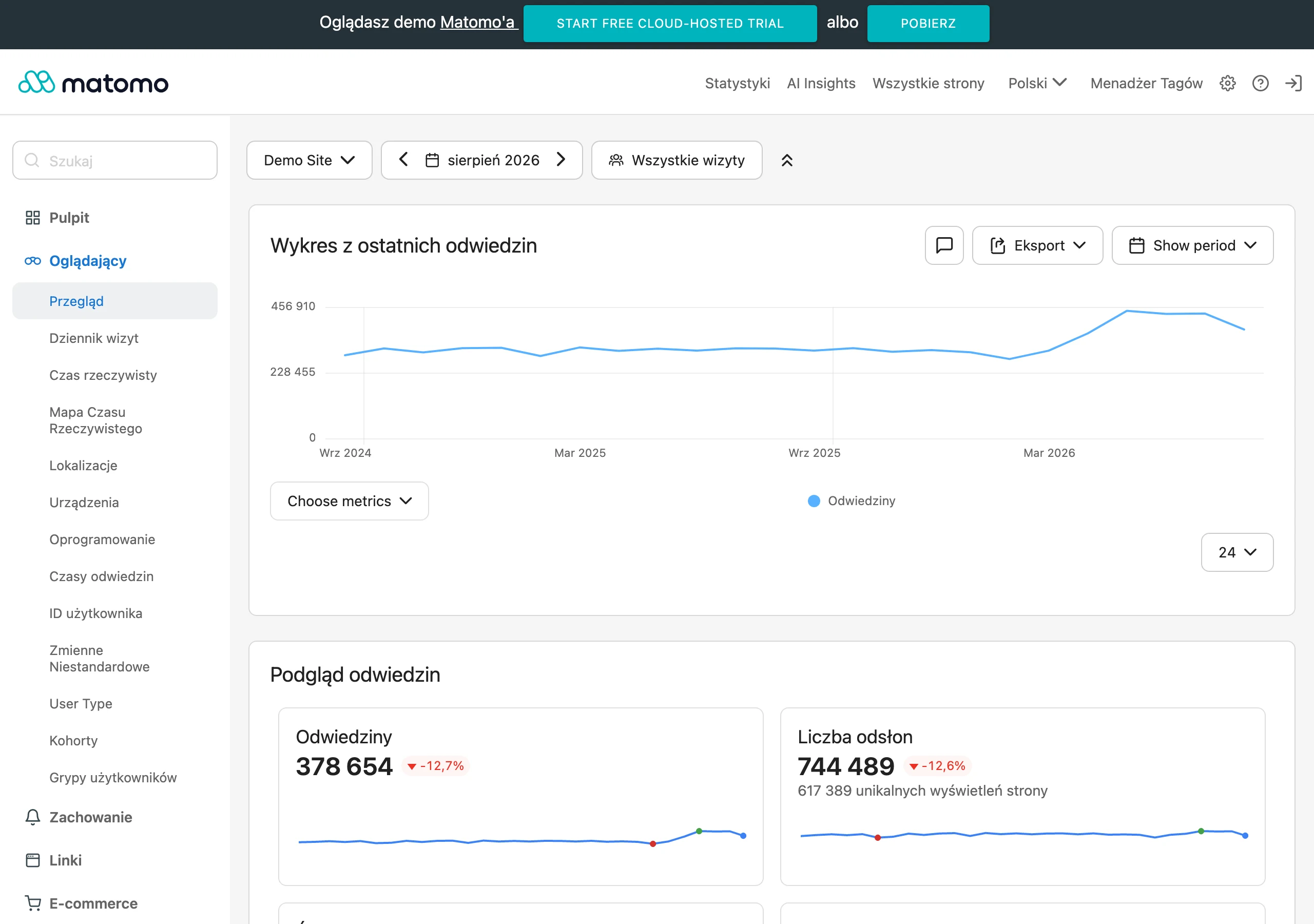
If the goal is SEO, let’s look at it differently. What matters is the quality of queries, not just their volume. Good signals include entries from high-intent keywords, visibility for problem questions, growth in traffic to deep sections and visits from queries that a simple automatically generated answer will not capture. It is also crucial whether users land exactly on the part of the material that genuinely helps them make a decision, rather than wandering through a “for everyone” paragraph.
If the goal is sales support or onboarding, the metrics must be closer to task completion. Not declarations, but traces of action. These can include clicks through to documentation, clicks on comparisons, checklist downloads, starting contact, using a supplier-question template or moving to the next step in the process. And here is a small trap: in such content, a good result is not always a long time on page. Sometimes a better signal is quickly finding the right answer and moving on, because the material has done its job.
It is also worth measuring indirect effects. They do not always show up in the site analytics. Well-prepared expert content can reduce the number of repetitive questions to salespeople, shorten conversations about the basics, structure customer expectations and reduce implementation errors. Data clearly show that these are very practical signals, because they show whether the material really relieves the team and improves the quality of decisions on the user’s side. That is not a cliché, but a daily cost or saving.
The best measurement starts even before publication. No fireworks. You need to establish what question the content is meant to close, which stage of the user journey it supports and how you will know that it has actually worked. Instead of chasing spreadsheets afterwards, it is better to identify up front the events that make business and product sense. Without setting the goal and the events to measure in advance, it is easy to end up with a report that shows traffic, but does not show value.
In practice, it is worth combining data from several sources: Search Console, GA4, CRM, heatmap tools, forms, chat and support tickets. This gives a fuller picture than a single chart. You can see not only how many people arrived, but also what intent they came with, which sections they read, where they dropped off and which questions still remain unanswered. The problem is that without such a mosaic, it is easy to confuse interest with usefulness. And once you have gathered that, you can expand the content exactly where the user needs more context, not where it “seems” they need it.
At the finish line, effectiveness is measured in the update cycle, not in a one-off “check” straight after publication. Expert content matures because it grows alongside users’ questions, product changes and fresh cases from practice. Because what does the launch-day result really tell you if the context changes in a month. The best results come from materials that are regularly expanded with exceptions, new examples, risk sections and refined decisions.
FAQ
Frequently asked questions
What content will AI not replace with a simple answer?
The strongest materials are those that require decisions, take into account exceptions, constraints and the real consequences of mistakes. A definition alone may be enough for a short answer, but not for implementation or risk assessment.
Why is expert content more important today than general articles?
Because simple questions are increasingly intercepted by automatic answers, so the advantage comes from knowledge with context and justification. Such content helps the user not only understand the topic, but also move safely to action.
What should be included in expert content besides the answer itself?
It should include conditions of use, exceptions, error scenarios, selection criteria and a risk section. Sources underpinning the recommendation and an update plan are also important.
How is an expert content creation service produced?
The process starts with choosing a topic, then knowledge is gathered from documentation, implementations, data and conversations with experts. Next, the information gap is analysed, the format is chosen, the content is edited and verified for substance and compliance.
When does expert content have the greatest advantage over a simple definition?
It has the biggest advantage when the user wants to choose a solution, implement a process, assess risk or avoid a costly mistake. The closer the question is to real action, the more context and weight of recommendation matter.
What are the most common mistakes in creating expert content?
Most often the problem is rewriting public information without your own sources, lacking conditions for applying the recommendation and omitting exceptions. Another mistake is an overly broad topic and the lack of expert review and clear authorship.