
Campaign effectiveness cannot be reduced to a single metric, because a performance marketer asks a different question than a business owner. ROAS shows how much revenue comes from ad spend, whereas ROI answers the question of whether the whole activity is actually worthwhile once all costs are included. In practice, most mistakes come from mixing these two perspectives and comparing data that is calculated according to different rules. The key point is that ROAS is used to optimise campaigns, while ROI is used to assess the real profitability of marketing. When you separate these roles, you will more quickly identify which campaigns are worth scaling and which only appear to be good. This is especially important today, when data from ad platforms increasingly has to be confronted with analytics and sales results.
What are ROAS and ROI in practice?
ROAS is a metric that shows how much revenue an ad generated relative to media cost, while ROI shows whether the campaign actually made money after deducting the full costs. The concepts are similar, but they answer two different questions. ROAS allows you to assess the effectiveness of ad spend, whereas ROI helps determine whether the whole activity makes sense from a business perspective.
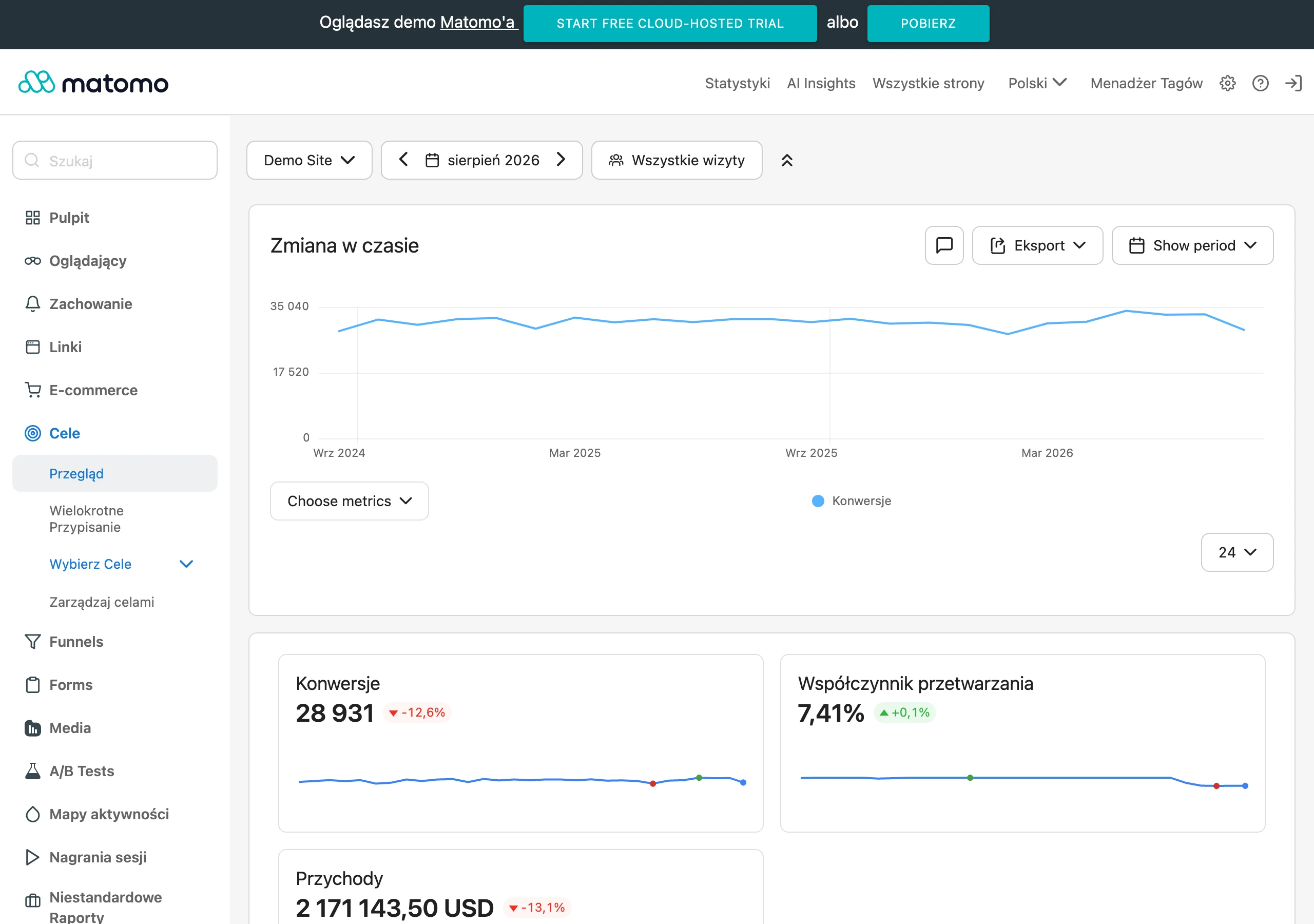
In practice, ROAS serves as an operational tool. It is used when making decisions at the level of channel, campaign, ad group, creative, offer or audience segment. If a given ad set delivers higher revenue at the same cost, ROAS will quickly reveal that and make it easier to shift budget.
ROI works more broadly, because it includes not only media budget, but also creative costs, team labour, tools, discounts, returns and other operating costs. For this reason, ROI is the right metric when you want to assess whether a campaign was profitable for the company, not just from the perspective of the ad platform. A high ROAS does not automatically mean positive ROI. This often happens with low margins, aggressive discounts or an expensive sales fulfilment process.
The unit of analysis does not have to be the whole campaign understood as one single entity. It also makes sense to measure specific conversion types, new and returning customers, attribution windows or traffic sources. The more precisely you define what you are comparing, the lower the risk of misinterpreting the results. This is especially important when one campaign effectively closes sales, while another merely initiates a contact.
Current context and the challenges of measuring campaign effectiveness
Measuring campaign effectiveness today is more difficult, because data from ad platforms does not show the full picture and often does not match the data in analytics and CRM. Each platform uses its own attribution model, its own conversion windows and its own way of assigning revenue. This means that the ROAS visible in Google Ads or Meta Ads will not always be consistent with what the sales system shows.
Privacy restrictions, cookie blocking and the reduced completeness of user data are also highly significant. Some conversions are not assigned correctly, some people get “lost” across devices, and some events reach reports with a delay or do not appear in them at all. That is why reliable measurement requires consistent tagging, first-party data and regular validation of events. Without this, even attractive-looking charts can lead you astray in budget decisions.
In e-commerce, a common trap is evaluating campaigns solely through the lens of gross revenue. Such a result may look attractive, while at the same time ignoring margin, returns, cancellations, delivery costs and discounts. As a result, a campaign may have a strong ROAS and at the same time low or negative ROI, because the sales were simply not very profitable.
In lead generation the problem looks different: a cheap lead does not have to be a valuable lead. A campaign may generate lots of forms and a great ROAS calculated on a simplified event, but in practice deliver poor contacts that do not pass sales qualification. For leads, you need to look beyond the form and combine ad data with CRM and closed revenue.
Measurement also looks different in subscription models and wherever sales appear with a delay. The result over a short horizon may look weaker, and customer acquisition cost only pays back after a few months. In such situations, it is better to separate the assessment of the short term from the customer lifetime value, rather than assuming that every channel will show full profitability immediately.
How does the ROAS and ROI measurement process work?
The ROAS and ROI measurement process is based on combining ad data with sales and cost data in one consistent evaluation model. First, you check whether the campaign delivers revenue relative to media cost, and then you verify whether, after deducting all costs, the activity still balances out. In practice, these are two levels of analysis: operational for campaigns and business-level for the whole marketing activity. ROAS helps you steer the campaign on an ongoing basis, and ROI decides whether it is worth continuing to fund it.
The first step is to define the campaign goal and the unit of analysis. You need to state clearly whether you are measuring sales, margin, qualified leads, new customers or profitability retention. Only then does comparing channels, campaigns, ad groups, creatives or audience segments make real sense. If the goal is not specified precisely, the metrics will be mathematically correct, but from a decision-making perspective they will remain useless.
The second step is to separate the data scope for both metrics. ROAS usually includes media cost and attributed advertising revenue, whereas ROI also needs to factor in creatives, tools, team labour, discounts, returns, cancellations and other operating costs. The most common mistake is assessing campaign profitability solely on the basis of revenue and the advertising budget. Such a result may look good in the ad platform, but perform poorly in the company’s actual result.
The next step is data normalisation. It is worth standardising attribution windows, currencies, time zones, campaign naming and the way conversions are counted. Without this order, you are comparing values based on different measurement rules, and that easily leads to misleading conclusions. This is particularly important when the ad platform reports different results to web analytics, CRM or the sales system.
In the end, what remains is interpretation and decision-making. First you analyse ROAS at channel or campaign level, and then ROI from a broader business perspective. If a campaign has a high ROAS but low ROI, the source of the problem usually lies beyond the media buy itself: in low margin, costly discounts, high fulfilment costs or poor lead quality. It is worth scaling the budget where a good ROAS genuinely translates into a positive and stable ROI, rather than only an attractive result in the dashboard.
Stages of data collection and analysis for effective measurement
Effective measurement means going through several stages: from defining the goal and conversion, through data validation, to interpreting the result. The process itself does not have to be complex, but it should be carried out consistently. If at any stage you change the definition of a conversion or the scope of costs, the final result loses comparability. That is why consistency is key, rather than multiplying reports.
The first stage is to specify exactly what you are measuring. In e-commerce this may be net revenue, margin or sales from new customers, and in lead generation the number of qualified leads or revenue closed in CRM. It is not worth ending the analysis at the form conversion alone if the business result is ultimately determined by the sale after contact from the sales team. The closer you set measurement to actual revenue, the more accurate the decisions you will make.
The second stage is to collect data from the relevant sources. You need at least media cost, the number and value of conversions, information about returns or cancellations, and additional costs affecting profitability. In many companies this means connecting advertising platforms with web analytics, CRM, the store system and financial data. If these sources are not brought together in one view, ROAS and ROI will be calculated on different slices of reality.
The third stage is data quality control. You need to check whether there are transaction duplicates, missing events, incorrect UTMs, date mismatches and inconsistent attribution models. This is particularly important today, when privacy restrictions, cookie blocking and shorter attribution windows reduce data completeness. In practice, first-party data, proper tagging and regular validation of events between the frontend, backend and CRM help.
The fourth stage is the actual analysis. First you calculate ROAS at channel, campaign and creative level to check where revenue is generated most efficiently in relation to spend. Then you calculate ROI for the full scope of activities to assess the actual profitability after accounting for all costs. This order makes it easier to spot situations where a campaign generates sales but performs poorly financially.
The final stage is drawing conclusions and implementing adjustments. When ROAS is low, you most often optimise the bid, audience, creative or offer. If ROAS looks good but ROI remains weak, you need to look at margin, discount levels, operating costs, the share of new customers and the quality of the leads acquired. Good measurement ends with a decision, not just a report.
Strategic decisions based on ROAS and ROI results
Strategic decisions based on ROAS and ROI stem from a simple division of roles: ROAS helps steer budget in campaigns, while ROI shows whether the overall marketing activity makes business sense. In practice, you first identify the channels and campaigns that effectively turn media spend into revenue, and then check whether real profit remains after adding full costs. This separation is crucial, because a campaign can look good in the ad platform while being financially weak for the business.
If ROAS is stable and at the same time supports a positive ROI, this is usually a signal to scale the budget. When ROAS is high but ROI is low or negative, the cause usually lies beyond click cost alone, for example in margin, discounts, returns, fulfilment costs or production costs for materials. In such a situation, you do not increase the budget automatically, but first refine the offer model, cost structure or traffic quality.
In e-commerce, decisions are better based not on gross revenue, but on revenue adjusted for returns, cancellations, discounts and delivery cost. This often changes the assessment of retargeting campaigns, which can have a very good ROAS while having little impact on growth of the business. The safest approach is to scale activities that deliver not only sales, but also acceptable margin and a share of new customers.
In lead generation, the cost per lead itself or the revenue attributed in the ad platform is not enough to decide whether to increase the budget. You need to check how many leads pass qualification, how many are eventually closed by sales and what revenue CRM confirms. A campaign with cheaper leads may perform worse than a more expensive one if it delivers weaker quality and places an excessive burden on the sales team.
With a longer buying cycle or in a subscription model, it is worth separating short-term decisions from long-term ones. ROAS calculated in a short attribution window may not show the full customer value, which means the campaign assessment can be too harsh. If sales appear with a delay, budget decisions need to be based on two perspectives at once: current performance and customer lifetime value.
Practical tips and the most common mistakes to avoid
The practice of working with ROAS and ROI comes down to comparing results under as close to identical conditions as possible, and to not making decisions on the basis of a single metric. If one campaign has a different attribution window, a different definition of conversion, or includes a different range of costs, such a comparison ceases to be valuable. The most common mistake is comparing numbers that look similar but were calculated according to different rules.
In ROI, you need to take into account the full cost of activities, not just media spend. Leaving out team time, tools, creatives, commissions, discounts, returns or operating costs often gives an overly optimistic picture of profitability. This is particularly important for campaigns requiring a lot of manual handling or expensive production of materials.
Many distortions stem from data quality. Discrepancies between the advertising platform, web analytics, CRM and backend are typical, but they should be monitored and explained on an ongoing basis. When duplicate transactions, missing events, inconsistent UTMs or incorrect revenue attribution appear, even a correctly applied formula will not lead to an accurate decision.
In practice, it is worth observing a few rules:
- compare campaigns using the same definition of conversion and the same attribution window,
- distinguish revenue from profit and monitor margin, not just sales value,
- analyse new and returning customers separately,
- in lead generation, measure not only the lead, but also qualification and closed sales,
- regularly validate data between platforms and sales systems.
A frequently made mistake is also evaluating retargeting and prospecting campaigns by the same success measure. Retargeting usually achieves a higher ROAS because it is based on warmer traffic, but it does not always translate into real growth. Prospecting may perform worse in the short term, while at the same time bringing in new customers who strengthen the company’s results in the long term.
The most accurate decisions come not from a single number, but from a whole set of metrics. Beyond ROAS and ROI, it is worth taking into account CPA, margin, the return rate, the share of new customers and lead quality. If several metrics point in the same direction, the decision is much safer than when you rely solely on the result from the advertising dashboard.
The importance of data quality and analytical consistency in campaign measurement
The quality of campaign evaluation is determined primarily by data and a consistent way of interpreting it. They decide whether ROAS and ROI show the actual result or merely a report that looks good. When the data is incomplete, duplicated or calculated according to different rules, the conclusions will be inaccurate regardless of how advanced the dashboard is. The most common problem does not lie in the metric itself, but in exactly what has been included in it. In practice, this means the need to organise measurement first, and only then compare channels, campaigns and budgets.
Reliable analysis requires consistent definitions throughout the reporting system. A conversion must mean exactly the same thing in the advertising platform, web analytics and CRM, and the period, currency, time zone and attribution window should all be set uniformly. If Meta reports sales in a 7-day post-click window, and in GA4 you analyse a different range, such a comparison is not on the same basis. The same applies to distinguishing net and gross revenue, segmenting new and returning customers, and accounting for transactions after discounts and after returns.
In practice, the most common distortions arise from minor technical and organisational issues. Missing purchase events, transactions sent twice, inconsistent UTMs, incorrectly attributed revenue or leads that were never verified by sales end up in reports. In lead generation, the problem is often treating every form submission as a success, even though only some contacts have real commercial value. In e-commerce, by contrast, the result is artificially inflated by failing to take account of returns, cancellations and delivery costs.
A good standard is regular data validation across sources. Results from the advertising dashboard are worth confronting with website analytics, the store backend and CRM, because each of these sources reveals a different slice of reality. The advertising platform works well for campaign optimisation, but it should not remain the sole basis for assessing profitability. When discrepancies are significant, you need to verify the attribution model, the sequence of events, the consistency of identifiers and the correctness of tag implementation.
- establish one definition of conversion for all reports,
- compare results only within the same period and the same attribution window,
- separate revenue reported by the platform from revenue confirmed by sales,
- identify duplicates, missing events and errors in campaign tagging,
- before a budget decision, make sure the data is comparable across channels.
The more strongly a company bases decisions on automation and rapid optimisation, the greater the importance of measurement discipline becomes. Without it, it is easy to scale a campaign that looks good only because the report inflates revenue or does not show part of the costs. Well-organised data, on the other hand, makes it possible to quickly identify whether the problem lies in the creative, offer, traffic quality, or the profitability of sales itself. That is precisely why data quality is not an add-on to analytics, but a condition for meaningful use of ROAS and ROI.
FAQ
Frequently asked questions
How do you distinguish ROAS and ROI when evaluating an ad campaign?
ROAS shows revenue relative to media cost, while ROI answers whether the campaign actually made money after all costs are taken into account. The first metric is used to optimise campaigns, the second to assess business profitability.
Does a high ROAS always mean a campaign is profitable?
No, because a high ROAS does not have to translate into a positive ROI. With a low margin, discounts, returns or high fulfilment costs, a campaign may look good in the dashboard but be unprofitable.
What costs should be included in ROI to make the result reliable?
In addition to the media budget, ROI should include, among other things, creative costs, team time, tools, discounts, returns, cancellations and other operating costs. Only this scope shows the real profitability of the activity.
Why can data from ad platforms differ from analytics and CRM data?
Each platform has its own attribution model, conversion windows and method of assigning revenue. In addition, privacy restrictions, cookie blocking and incomplete attribution of some conversions affect the results.
When is it better to analyse ROAS, and when ROI?
ROAS works best for ongoing campaign optimisation at the channel, ad group or creative level. ROI is appropriate when you want to assess whether the entire marketing activity is actually profitable for the company.
How should you measure the effectiveness of lead generation campaigns to avoid mistakes?
It is not enough to look at the number of forms or the cost per lead from the ad platform. You need to check lead quality, qualification, closed sales and revenue confirmed in the CRM.