

Topic clusters are a practical method of organising content so that it is clear both to the user and to the search engine. It is not about publishing more articles, but about designing a logical content ecosystem around key business topics. This structure makes it easier to plan future publications, organise archive materials and reduce clutter in the site structure. The greatest value of a cluster lies in the fact that it brings together content strategy, SEO and the audience’s real needs into one coherent operating model. This approach works well both on company blogs and in extensive knowledge bases or advice sections. When properly designed, it supports not only visibility, but also navigation, credibility and conversion.
What are topic clusters and how do they work in practice?
Topic clusters are a way of organising content in which one pillar page covers a broad subject, while related subpages expand on specific questions, problems and use cases. The pillar page structures the topic at a general level, while supporting content answers more precise search intents. The whole thing is held together by thoughtful internal linking.
In practice, a cluster is not a single article, but an organised content system. It includes choosing the main topic, mapping subtopics, decisions about URL structure, linking rules and an update plan. This matters because the strength of a cluster is determined by the coherence of the entire section, not the quality of one text taken out of context.
Building a cluster usually starts with an analysis of the niche and the offer. You need to determine what questions the audience asks, what they look for at individual stages of the decision-making process, and which content should support education, and which should support sales or lead generation. Only then does it make sense to group topics and assign them to specific subpages.
The next stage is an audit of existing content. At this point you verify which URLs are worth keeping, which to expand, which to merge and which to redirect, so that you do not multiply similar pages answering the same need. The most common mistake is adding new articles without checking whether a similar topic is already live and whether keyword cannibalisation is occurring.
The mechanism of a cluster is based on a simple principle. If a topic is broad and covers many separate questions, it gets a pillar page. If a given issue solves one specific problem or answers one intent, it should usually function as a separate supporting subpage. This way the user lands exactly where they should, and the search engine better understands the relationships between the content.
- 01Systematic organisationAn organised content system.
- 02Pillar page & subpagesBroad topic vs. precise questions.
- 03Thoughtful linkingConnects everything into a coherent network.
- 04Section coherenceThe strength lies in the whole system.
Clusters are not single articles, but a thoughtfully designed content system that builds authority.
What importance do topic clusters have for organic visibility?
Topic clusters have a strong impact on organic visibility because they signal to the search engine that the site covers the subject broadly, coherently and in line with user intent. This increases the relevance of the entire content section, not just individual subpages. As a result, it is easier to build a stable position for a set of related queries.
The key benefit lies in better alignment of content with the audience’s real needs. A user rarely ends their journey with one question, so a well-designed cluster leads them from the basics, through comparisons, all the way to implementation and decision-making. Visibility grows more often when a site answers the user’s entire line of reasoning, rather than only a single phrase.
Clusters also make it easier to reduce keyword cannibalisation and duplication of meaning. Instead of five similar texts competing with one another, you can rely on one strong pillar page and several precise supporting materials. In practice, one sensibly designed subpage often delivers a better result than several weak articles published without a plan.
Internal linking is also invaluable. When the pillar points to subtopics, the subtopics point back to the pillar and connect with each other where it is justified, the site becomes more readable and better organised semantically. This helps both search engine bots and the user, who can move more efficiently to the next answers.
It is worth remembering, however, that the cluster model alone does not guarantee results. The effect depends on content quality, alignment with intent, the condition of the current information architecture, publishing history and regular updates. If a cluster is based on poorly separated topics or ignores old URLs, it may only appear to organise the site.
How do you carry out niche analysis and topic mapping?
Niche analysis and topic mapping are a combination of business objectives, audience questions, search intent and an audit of existing content. The starting point is not “which phrases do we want to rank for”, but “what problems does the client want to solve and at which point should the content support the decision”. This makes it easier to separate topics that matter for traffic from those that genuinely support sales. The best cluster starts with the business importance of the topic, not with search volume alone.
In practice, it is a good idea to start by outlining 3 elements: the offer, typical customer questions and the stages of the decision journey. A user who is only just identifying the problem needs different content from someone comparing solutions or looking for an implementation method. If you throw these needs into one pot, you end up with broad texts that are not very useful. This is precisely the stage at which later keyword cannibalisation most often arises.
Topic mapping then comes down to grouping queries and challenges by shared intent, rather than solely on the basis of similar wording. Two phrases may sound almost identical, yet still signal different expectations on the user’s side. On the other hand, several different keywords can often be covered by one solid subpage if they all answer the same need. If the user is looking for the same answer, it is usually better to prepare one well-crafted URL than to create several similar articles.
At the same time, it is worth carrying out an audit of existing URLs. You check which content is worth keeping, which needs expanding, which should be merged, and which is better to redirect or remove from the development plan. Without this kind of order, a new cluster often only adds more texts to an already accumulated mess. A good topic map therefore includes not only new ideas, but also housekeeping decisions.
- Choose 1 main topic area linked to the offer and the business outcome.
- Collect audience questions from sales conversations, support, internal search and SEO results.
- Group topics by intent: education, comparison, problem solving, implementation, decision.
- Review the current content and assign each piece a decision: keep, merge, rewrite, expand, redirect.
- Build the map: pillar topic, supporting topics, content gaps and conversion-critical areas.
A properly carried out mapping exercise ends with a concrete working document, not a loose list of inspirations. It should include: topic names, planned URLs, dominant intent, the role of the content and the link to the offer. If the role of a given subpage cannot be described unambiguously, it usually means the topic still has not been mapped properly.
- 01Business priorityImportance for the business, not just volume.
- 02Journey and needs analysisMap out the offer, questions, decision stages.
- 03Search intent mappingSeparate traffic topics from sales topics.
- 04Content audit and decision supportWhere does the content support the decision?
Start with customer problems and business goals, not keywords. Match content to intent and stage.
How to design a topic cluster structure?
The structure of a topic cluster is planned around a pillar page that covers the main area, and supporting subpages that develop specific questions, applications and problems. The pillar page should provide a broad view of the subject and link out to more detailed materials. Supporting subpages must not duplicate the pillar page; they should complement it and add detail. This way, both the user and the search engine get complete yet organised coverage of the topic.
The key decision is what should get its own URL. It is worth creating a separate subpage when the topic has its own intent, can be sensibly expanded and does not repeat another piece of content. If a given issue is merely a part of a broader subject, it is often better to leave it as a section on the pillar page. A structure that is cut too finely weakens the cluster because it disperses authority and complicates internal linking.
The project should cover not only the topic area, but also information architecture. In practice, this means a logical URL hierarchy, consistent naming, breadcrumbs and a predictable section layout. The user should quickly understand where they are, what they have already read and where they should go next. If the site structure does not support this path, even very good content will perform less effectively.
Internal linking should be planned consciously. The pillar page leads to subtopics, subtopics point back to the pillar, and related content is connected wherever it helps understanding of the context or moving to the next stage of the decision. Anchor text does not have to be forcibly matched to a single keyword, but it should clearly indicate what the link refers to. Linking within the cluster is meant to guide the user through the topic, not just “pass SEO power”.
In a well-structured cluster, each subpage also has a defined conversion function. Some materials build trust and educate, others compare solutions, while still others direct users to a service, form or contact. If all content remains purely informational, the cluster may deliver traffic, but it will not support business goals. That is why, already at the planning stage, it is worth marking which URLs are meant primarily to answer questions and which are meant to close the decision.
Finally, you need an implementation plan: a brief for each piece of content, update rules and responsibility for maintaining the structure. Without this, the cluster quickly goes off track because subsequent publications fall outside the logic of the map. The most common mistake is not a bad start, but later adding new content without sticking to the cluster design.
How to properly implement on-page SEO for topic clusters?
Proper implementation of on-page SEO for a cluster comes down to assigning each subpage one dominant intent, one main topic scope and a clear role within the overall structure. The pillar page should cover the topic broadly, while supporting subpages should develop specific questions, problems or use cases. If two subpages answer the same need, you usually need to merge them or clearly distinguish between them. First define the role of the URL, only then optimise keywords and headings.
The page title, H1 and key sections should clearly communicate what the subpage is about and how it differs from the other elements of the cluster. It is not about stuffing in every keyword variant, but about precise alignment with the user’s question. The pillar page should signal a broad scope, while the supporting article should go deeper into one slice of the topic. This helps the search engine read the relationships between the content better, and helps the user get to the right place faster.
URL addresses, breadcrumbs and internal linking must reflect the structure of the cluster, not the arbitrary order of publication. A simple, consistent naming scheme works well, without unnecessary parameters and without mixing several logics within one section. Anchor texts should describe the content of the target page, rather than mechanically repeating the same keyword. The pillar should link to the most important subtopics, and the subtopics should link back to the pillar and connect with one another only where it genuinely makes sense.
The content itself also needs on-page structuring. The first paragraphs should quickly answer the core of the topic, and the following parts should develop the specific sub-problems that the user genuinely deals with at a given stage. It is worth adding elements that make decision-making easier, for example comparisons, instructions, responses to objections or FAQ, but only when they are consistent with the page intent. One subpage should not try to be a guide, a landing page for sales and a glossary of terms all at once.
On-page implementation is only complete once you take care of indexing and cluster maintenance. Weak, short or repetitive content is more often worth merging than keeping as separate URLs. If an old subpage duplicates a new one, it is usually more sensible to combine the content and redirect than to keep two versions in parallel. In practice, it pays to review cyclically which URLs are taking over visibility, where CTR is dropping, and whether the pillar still answers current user questions.
- 01URL roleOne dominant intent.
- 02Pillar vs supportBroad scope vs specific questions.
- 03Avoid duplicationMerge or distinguish.
- 04Role firstThen keyword optimisation.
- 05Clear communicationTitle and H1 precise.
The key is precise alignment of the content with the user’s question and a clear structure, not just keywords.
What are the most common mistakes and limitations in creating topic clusters?
The most common stumbling blocks in creating topic clusters are a pillar topic that is too broad, an inaccurate distinction of intent and a lack of decisions about what to do with content already present on the site. The result is a proliferation of similar articles that compete with one another instead of strengthening the whole section. Such a cluster looks good in a spreadsheet, but performs only average on the site. Most problems come not from a lack of content, but from a lack of clear structural decisions.
Very often, a pillar is built around a topic that is too broad for a single URL. In that case, the pillar page turns into a jumble of many threads, without a clear priority and without a real chance of matching a specific intent accurately. The opposite extreme is fragmenting one subject into several texts just because there are a few similar phrases. If the user expects one answer, one strong subpage will usually work better than three almost identical ones.
Another source of problems is skipping the audit of old URLs. When a new cluster is created alongside an earlier knowledge base, keyword cannibalisation, duplication of meaning and chaos in linking quickly appear. You need to decide which content stays, which needs expanding, and which should be merged or redirected. Without this, even a sensible topic strategy will break into many pages competing with one another.
It also happens that the execution layer fails. The team publishes texts, but does not tie together consistent URLs, anchors, related sections and the route to the service page or contact. As a result, the cluster can generate informational traffic, but it does not support the decision and does not lead the user onwards. Content that supports visibility should also have a business function assigned to it, even if it is not typically sales-oriented.
It is also worth being aware of the limitations of this approach. A topic cluster will not cover up a weak offer, technical issues, a slow-loading site, a lack of credibility or a shortage of editorial resources needed for updates. Not every niche needs an extensive grid of dozens of articles; sometimes a smaller, consistently maintained cluster built on real customer questions works better. Clusters organise and increase the relevance of content, but on their own they will not deliver growth if the rest of the site does not deliver quality.
What should you measure and how, in order to optimise topic clusters?
To optimise topic clusters sensibly, you need to measure them both at the level of the entire cluster and at individual URLs, rather than limiting yourself to the ranking of a single keyword. Three areas are key: search visibility, user behaviour and the impact of content on conversion. When you analyse only the traffic of one article, it is easy to overlook that the whole cluster is growing or that two URLs are competing for the same query. A properly set up measurement shows the relationships between the pillar, supporting subpages and sales pages.
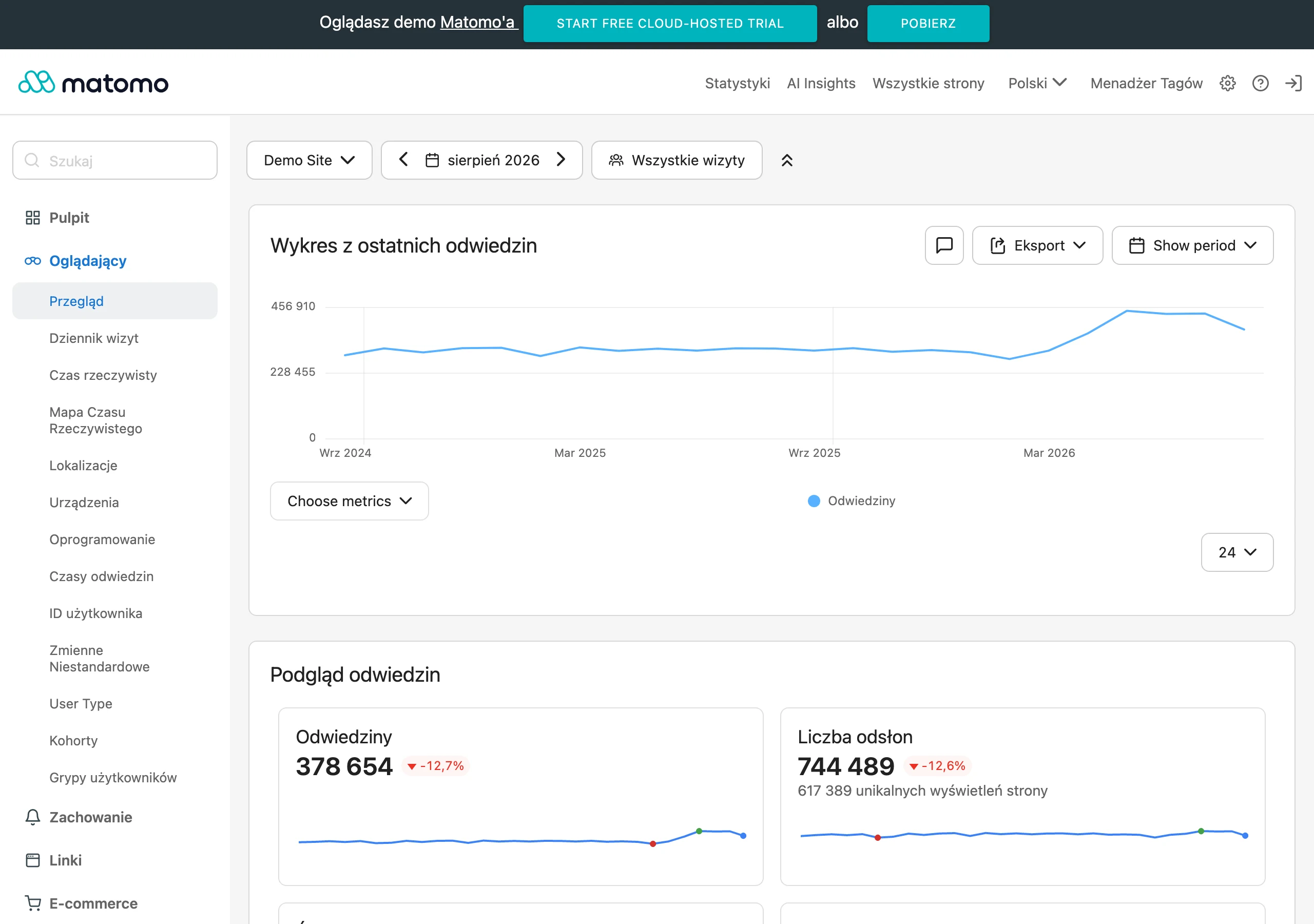
From an SEO perspective, the starting point is impressions, clicks, average position and the number of queries for which the whole cluster is visible. In practice, it pays to group data by topic, rather than by individual subpages. This way, you can immediately see whether the site is actually expanding topic coverage or merely shifting traffic between similar articles.
- whether the pillar captures broad generic queries while the subpages take over specific questions,
- whether the number of keywords grows as new content is published,
- whether keyword cannibalisation appears between URLs with similar intent,
- whether traffic from the cluster flows onwards to service pages, categories or forms,
- whether older content is losing visibility and needs updating or consolidation.
How users’ intent divides the data is highly important. Informational content is evaluated differently, comparisons differently again, and support pages for purchase decisions differently still. An educational article does not have to close the sale, but it should lead to the next step, for example reading the pillar content, visiting the service page or downloading a resource.
When analysing user behaviour, pay particular attention to the quality of internal paths. If a user lands on a supporting article and then moves on to the pillar, the FAQ or the offer page, the cluster is fulfilling its navigational role. If the traffic stops at the first subpage, it is worth checking whether the internal linking is sufficiently clear and whether the content really answers the query.
The technical health of the cluster should be monitored separately. This includes indexing of new URLs, the presence of orphan pages, correct breadcrumbs, URL consistency and the distribution of internal links. When good content is not properly connected to the rest of the cluster, its SEO potential usually does not translate into full effect.
In optimisation, a simple rhythm of actions works well: after publication you verify indexing and linking, after a few weeks you analyse the first queries and the match to intent, and then you assess what contribution the cluster makes to traffic and conversions. Not every subpage will grow at the same pace. Sometimes it is worth expanding the pillar, at other times combining two similar articles, and sometimes filling a missing link in the user journey.
The most useful report for a cluster does not answer the question “which text gets the most visits”, but “is this topic being covered more and more fully and does it lead the user towards the business goal”. This approach to measurement improves editorial decisions, organises priorities and reduces publishing content that multiplies the number of URLs but does not strengthen the whole system.
FAQ
Frequently asked questions
How does a topic cluster work in practice?
It is based on a pillar page that covers a broad topic, and subpages that develop specific questions and problems. The whole thing is connected by thoughtful internal linking.
Do topic clusters help with SEO?
Yes, because they show the search engine that the site covers the topic broadly, consistently and in line with user intent. This makes it easier to build visibility across a set of related queries.
How should you start analysing a niche before building a cluster?
You need to combine business goals, audience questions, search intent and an audit of existing content. First, it is worth establishing what problems the client wants to solve and at what stage of the decision-making process they are looking for information.
When should a topic get a separate URL, and when should it remain part of the pillar page?
A separate URL makes sense when a topic has its own intent and can be developed sensibly without repeating other content. If it is only an element of a larger issue, it is better to place it within the pillar page.
Why is internal linking important in a topic cluster?
Because it organises the relationship between the pillar page and supporting subpages and makes it easier to navigate the site. It also helps the search engine understand the topic structure more clearly.
What are the most common mistakes when creating topic clusters?
The most common problems are an overly broad pillar topic, poor intent differentiation and no decision on older content. This leads to similar articles competing with each other instead of strengthening the whole section.