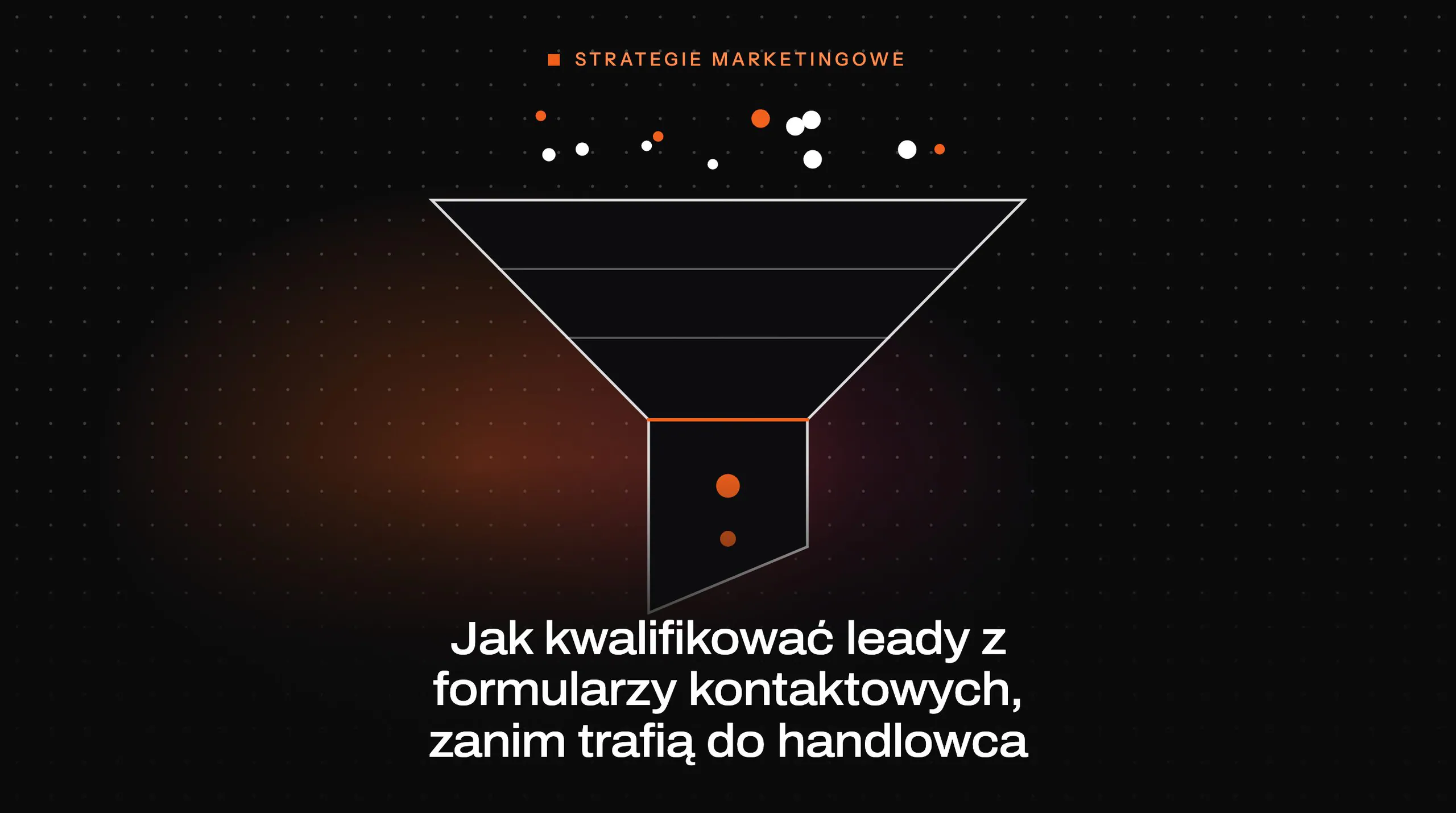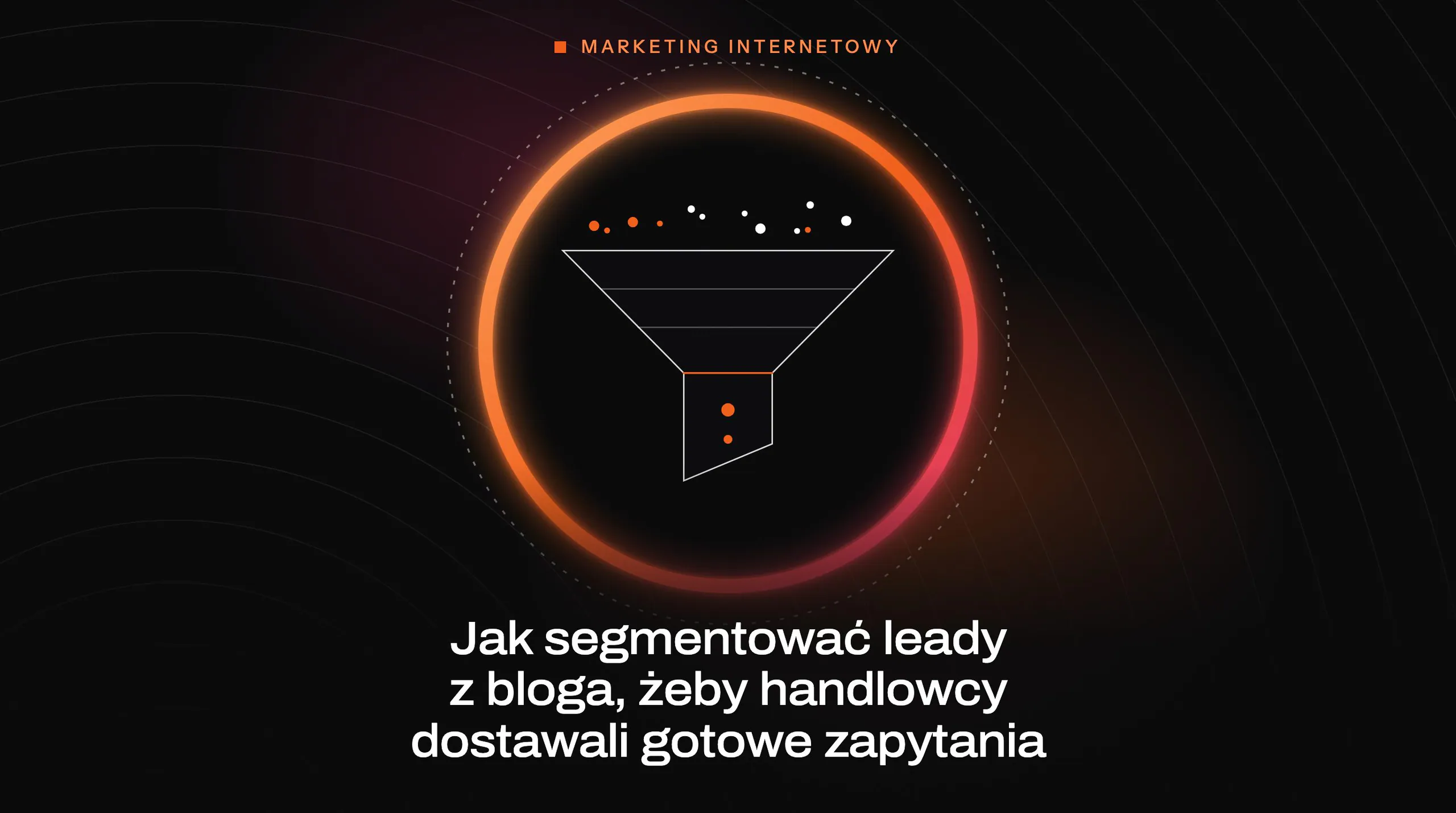

The blog usually attracts people looking for knowledge, comparisons and ready-made solutions at the same time, which is why forms alone are not enough to assess lead quality. Segmentation makes it possible to distinguish educational traffic from traffic with real purchase intent and pass sales only contacts that make business sense. Effective segmentation means that salespeople get fewer leads, but with a higher readiness to talk and full context. This shortens response time, reduces manual filtering and organises the marketing team’s further actions towards the rest of the database.
The purpose of segmenting leads from the blog
The purpose of segmenting leads from the blog is to separate readers at an early stage of the funnel from people who are actually moving closer to a purchase decision. In practice, this means sales do not receive every contact from the form, but only selected leads with high priority. The rest go into nurturing activities instead of burdening salespeople with unready enquiries. This split increases work efficiency and reduces the number of conversations with no real chance of progressing to the next stage.
The most important change concerns the quality of handover to sales. If the blog generates mostly educational traffic, passing all leads to the CRM quickly lowers trust between marketing and sales. Salespeople start ignoring submissions because many of them have no fit or purchase intent. Segmentation prevents this because it introduces clear priority criteria.
A well-designed process also shortens the response time to valuable enquiries. A lead that meets SQL conditions can be automatically assigned to the right salesperson as a specific task, rather than just another record in the database. This matters especially when, after reading an article, the user visits the offer, pricing or contact page. The faster the reaction to such signals, the greater the chance of a meaningful conversation.
Segmentation is not meant to increase the number of leads, but to improve the relevance of what reaches sales. This is an important distinction, because many teams still judge the blog only by the number of forms submitted. Meanwhile, the real goal is less manual filtering, a shorter sales cycle and a better match to the customer profile. Only then does the blog become a real source of pipeline, rather than just a traffic channel.
What input data is key for segmentation?
The key data for segmentation is a combination of visit source, the context of the content consumed, form data and user behaviour on the site. No single signal is enough, because a lead may arrive from an ad campaign, read an educational article and still not be ready for contact. Only the set of data shows whether we are dealing with a casual reader, someone researching options or someone close to a decision. In practice, segmentation works well only when this information is collected in a single lead profile.
The first group of data concerns attribution and content. You need to know the source, medium and campaign from UTM parameters, as well as the landing URL and the article’s topic cluster. This allows you to read the mindset the user arrived with and what kind of topic interested them. An educational article usually suggests an earlier stage than a visit to implementation-related content, case study or pricing.
The second group is declarative data from the form, both explicit and hidden. Explicit fields help assess the contact’s role, industry, company size or other elements of fit with the ICP. Hidden fields should pass context, for example the content cluster name or the conversion URL. This means the salesperson and automation can see not only who enquired, but also from where and after what interaction with the content.
The third group covers on-site behaviour, that is, what the user did before and after conversion. The number of sessions, return frequency, scroll depth, clicks on key links and visits to the offer or pricing page show the level of engagement. Particularly valuable are signals indicating active evaluation of the solution, for example downloading a BOFU asset or starting a contact form. Such behaviours usually mean more than simply viewing a few articles.
The final essential element is firmographic and demographic data, because intent without fit is not enough. A very active person, but one outside the target market, should not be routed to sales with the same priority as a decision-maker from a company matching the ICP. That is why segmentation must combine three perspectives: fit, intent and behaviour. If even one of them is missing, the risk increases of passing on leads that only look promising at first glance.
The importance of user intent in lead segmentation
User intent shows how close a lead is to a purchase decision, so it should strongly influence its priority. The same form submission can mean something different after an educational article and something else after visiting a case study or pricing page. That is why segmentation cannot treat all blog conversions the same. First you need to read what the user was looking for, and only then decide whether to hand them over to sales.
The simplest split is based on the stages of the content funnel. TOFU articles usually attract people who recognise the problem and are looking for a definition, context or initial guidance. MOFU content signals more conscious comparison of options, implementation methods or selection criteria. BOFU, by contrast, includes materials close to purchase, such as implementations, case study, demos or pricing information.
In practice, the clearest intent signals appear when the user goes beyond the article itself. If, after reading a post, they move on to the offer, contact or pricing page, the priority of that lead rises clearly. The same applies to downloading a BOFU asset or returning to the site several times in a short period. A lead from the blog only becomes valuable for a salesperson when content and behaviour together indicate active evaluation of a solution.
This also means that content clusters should be consciously assigned to funnel stages. Without such mapping, marketing sees only traffic and forms, but not intent. When each article has a defined lead goal and a logical next step, it becomes easier to distinguish an educational contact from a genuine enquiry. As a result, the blog does not end at capturing an email address, but leads the user to the right qualification stage.
How does fit with the ideal customer profile affect segmentation?
Fit with the ideal customer profile decides whether even an active lead should reach sales at all. High intent without ICP alignment often ends in a conversation that has no chance of progressing. That is why segmentation must assess not only interest, but also the business viability of the contact. It is precisely this filter that protects salespeople from seemingly promising enquiries.
Fit assessment usually covers industry, target market, company size, location and the contact person’s role. Each of these elements changes lead quality in practice. A decision-maker from a company aligned with the ICP has a different priority from someone with no influence over the purchase in an organisation outside the target market. Even a good buying signal should not automatically offset a lack of fit.
The biggest mistake happens when the team treats every strong behaviour as sales readiness. A user may visit pricing, return to the site and fill in a form, yet still not fit the offer. If the company is too small, operates outside the supported region or represents the wrong segment, sales receives a low-value lead. SQL should combine two conditions at once: real buying readiness and alignment with the customer profile.
For this reason, it is worth assessing fit early, already at the form and data enrichment stage. You do not need to ask many questions everywhere, but you do need to collect the minimum information required for qualification. Educational content can use shorter forms, while offer pages can include questions about the company and role. This setup reduces friction for the user, while still allowing marketing to filter out leads that should not burden sales.
Well-configured segmentation uses fit as a separate dimension of assessment, not an add-on to behaviour. This allows marketing to handle two similarly active leads differently. One will go to a salesperson because they match the ICP and show strong intent. The other will remain outside sales or be disqualified, even though they performed similar actions on the site.
The role of lead scoring in assessing lead quality
Lead scoring organises lead quality assessment by turning scattered signals into one practical action priority. Instead of reacting to a single action, the team evaluates the contact across three dimensions: fit to the ICP, intent derived from content, and on-site behaviour. This means marketing and sales work against the same criteria rather than on gut feeling. This is especially important for blog leads, where part of the traffic is purely educational in nature.
The best-performing model is a simple one, where Fit, Intent and Behaviour are scored separately. Fit covers alignment with the target market, company size, industry, location and contact role. Intent comes from the type of content consumed, so a definitional article is assessed differently from a case study or a visit to the pricing page. Behaviour strengthens the assessment when the user returns several times, moves from an article to the offer, downloads a BOFU asset or starts a contact form.
Scoring should also have a negative side, because not every form of engagement is valuable for sales. If someone visits the careers page, does not fit the ICP or shows signs of an unwanted lead, their priority should drop. This mechanism protects salespeople from false strong signals. Without it, the model inflates lead quality and quickly loses credibility.
Points alone are not enough if they do not lead to clear qualification thresholds. In practice, you need to define at what level a lead becomes an MQL and at what level it becomes an SQL. MQL means a contact that deserves further marketing actions, but not always a sales conversation yet. SQL should mean a lead with a high score and genuine fit, ready to be passed to sales.
The most common mistake is building a model that is too complex for anyone to understand or update later. If scoring has dozens of exceptions and difficult rules, it stops supporting operational decisions. A simpler system that can be recalibrated regularly based on CRM data is better. What determines the model’s quality is not the number of rules, but whether it helps distinguish promising leads from those that only look promising.
How to manage operational lead segments effectively?
Operational segments are managed effectively when every lead, after assessment, is placed into one clearly defined segment with an assigned action. A segment cannot be just a label in the system, because then it changes nothing in practice. It must decide who takes ownership of the contact, what the next step is and whether the lead requires any sales response at all. It is precisely at this stage that you can see whether segmentation really relieves salespeople.
The simplest and most useful breakdown includes four segments:
- lead for nurturing: good fit, but low buying readiness,
- MQL: qualification threshold passed, requiring further marketing actions,
- SQL: high scoring and fit, ready to be passed to sales,
- disqualified lead: spam, competitor or clear lack of fit.
This structure organises the work, because each segment has a different handling logic. A lead for nurturing should not go to a salesperson, but to an educational sequence. An MQL requires further trust-building and behaviour monitoring. An SQL should trigger handover to sales, and a disqualified lead should be cut off from unnecessary operational actions.
Effective management of segments also requires clear entry and exit criteria. If a lead enters nurture once, but later returns to the offer page and reaches the SQL threshold, its status must change automatically. If, on the other hand, data appears indicating a lack of fit, the contact should be removed from the priority path. The segment must result from current data, not from a one-off action taken weeks earlier.
In practice, it is worth ensuring that the segment is visible throughout the entire process, not only in the marketing tool. Marketing needs to know which contacts to continue warming up, while sales should see only those that truly meet the SQL conditions. As a result, the number of unnecessary handovers decreases and trust in leads from the blog grows. When segmentation works operationally, the blog stops producing just forms and starts delivering structured enquiries of real value.
Typical mistakes in lead segmentation and how to avoid them
The most common mistakes are handing over too many leads to sales, a lack of shared definitions, and losing behavioural context. In practice, each of them lowers salespeople’s trust in the blog as a source of valuable enquiries. When sales receives random contacts, it starts ignoring even good leads. Segmentation therefore has to work not only in the system, but also in the teams’ day-to-day work.
The first problem is the lack of a written definition of MQL and SQL. If marketing treats every form submission as qualified, while sales expects real purchase readiness, conflict is inevitable. The solution is to jointly set scoring thresholds, ICP criteria and rejection reasons in the CRM. A lead should go to a salesperson only when it meets both the fit and readiness conditions.
The second mistake is overly complex scoring and ignoring disqualifying signals. A model with many exceptions is hard to maintain, so it quickly loses operational credibility. It is better to start with simple rules for Fit, Intent and Behaviour and add negative points for spam, competitors or the careers page. Such a model is easier to calibrate based on historical CRM data.
The third mistake appears during handover to sales without full context. An email address and a score alone are not enough. The salesperson needs to know which article the lead came from, what it viewed and which form it filled in. It is therefore worth passing the conversion URL, visit history, campaign source and current segment to the CRM, because this shortens response time.
FAQ
Frequently asked questions
How do you distinguish educational leads from those ready to talk to sales from a blog?
You need to combine the user’s intent, their behaviour on the site and fit with the ideal customer profile. The form alone is not enough, because the same contact after an educational article and after a pricing page may indicate a completely different level of buying readiness.
Should every contact from a blog form go to a salesperson?
No, because the blog also attracts people looking only for knowledge, comparisons or initial guidance. Only leads that meet SQL conditions and make business sense should be passed to sales.
Which data are most important when segmenting blog leads?
The most important are the visit source, content context, form data and user behaviour on the site. In addition, firmographic and demographic fit must be taken into account, because activity alone does not yet mean a valuable lead.
Why is ICP fit important even with high buying intent?
Because high activity does not guarantee that the contact fits the offer and has sales potential. If the company, industry, location or person’s role does not match the ICP, such a lead may not should be passed to sales with high priority.
When should a blog lead be passed to sales?
When the content and the user’s behaviour indicate active evaluation of a solution, and at the same time the contact fits the ICP. Strong signals include, among others, visiting the offer, contact or pricing page, downloading a BOFU asset or returning to the site several times.
What are the most common mistakes in blog lead segmentation?
The most common are the lack of shared MQL and SQL definitions, scoring that is too complex, and passing leads without full context. Another problem is ignoring disqualifying signals such as spam, competitors or a lack of fit.