

SEO · Częstochowa
SEO in Częstochowa
I help businesses from Częstochowa build visibility in the search results in an organised way that makes business sense. I do not base my work on generalities or empty promises. I start with how customers really search for services, check the state of the website, put the structure, content and local signals in order, and then plan the on-site and off-site implementation and the elements that also support visibility in AI-generated answers.
About the service
SEO in Częstochowa for businesses that want to grow from local demand
About the SEO in Częstochowa service
A few service details- Technical and content audit of the website
- Analysis of local search intent
- Optimisation of service and offer pages
- Developing the Google Business Profile
- Link building with an emphasis on quality
- Preparing content for AI and chatbots
Location
Local SEO: Częstochowa and the surrounding area
- City
- Częstochowa
- Region
- Silesian
- How we work
- Remote

Work process
What local SEO looks like, from analysis to implementation and growth
Local SEO makes sense when it follows from the real situation of the business, the market and the website. That is why I divide the work into three clear stages: first the diagnosis, then the action plan and implementation, and finally growing visibility based on data, content quality and consistent local signals. This makes it easier to take decisions and keep the project in order.
- 01/ 03
Initial diagnosis
At the beginning I check what we are starting with: what the website looks like, which pages have potential, where the technical gaps are, how the content is built and whether the business has consistent local signals. I also analyse the competition in the city and the way customers type in queries related to the service.
- 02/ 03
Plan and priorities
After the diagnosis I arrange the scope of work in a logical order. I indicate what is worth improving first, which pages need to be expanded, what content to add and how to combine local SEO with a better site structure. The plan covers both on-site and off-site activities, as well as the areas that affect trust in the website.
- 03/ 03
Implementation and growth
The next stage is implementing the changes and growing visibility. This includes technical fixes, content optimisation, tidying up the information architecture, local landing pages, work on the Business Profile and careful building of authority off the site. In parallel, I prepare content that is also clear to AI systems.
Starting the cooperation and the scope of work
The cooperation should not begin with a list of random keywords or with an automatic quote for an “SEO package”. First it is necessary to establish what role the website plays in acquiring customers, which services are the priority, whether the business operates only locally or more widely as well, and how far the current website is suitable for expansion. In the case of local SEO in Częstochowa, it also matters whether the offer is uniform or covers several segments that require separate pages, messages and entry paths from the search engine.
At this stage I put the scope of the project in order so as to avoid chaos later. I separate the necessary activities from those that can be implemented later, point out the dependencies between the technical side, content and local visibility, and check what resources are available on the business’s side. As a result, it is clear whether we start with fixing the basics, expanding the offer, rebuilding the architecture, or improving the content and local signals. This is the moment at which the project gains a direction, and not just a list of phrases to drop onto the page.
Input data and business priorities
Good SEO starts with understanding the business, not with the search engine itself. That is why I gather information about the services, the strengths of the offer, the way customers are served, seasonality, the area of operation and the typical questions that come up before contact is made. Data about the current website matters too: which pages already exist, which content is up to date, where duplication appears, whether the website has a logical structure and whether a user understands straight away, on arriving, what the business does and whom it serves.
Only from such material can a sensible SEO plan be put together. Business priorities help to decide which pages should be developed first, which keywords have real value and where visibility can support sales or contact. This is also the stage at which I establish how to combine SEO goals with the usability of the website, the sales content and the Google Business Profile. Without this data it is easy to create a project that looks good on paper but works poorly in practice.
Audit of the website’s current visibility
An audit is not just a check for a few technical errors. I look more broadly: how the website is indexed, whether it has a sensible hierarchy, whether individual pages are not competing with one another, whether the content answers specific intents and whether the local elements are well embedded. I also check how it works on a phone, whether the user easily reaches the key information, what the internal linking looks like and whether there are places on the site that limit the understanding of the offer by the search engine and by the visitor.
In a local context, a review of the external signals and of the consistency of information about the business is also important. I analyse whether the contact details, brand name, range of services and location are presented consistently, and whether the Business Profile supports the website instead of functioning alongside it. The audit makes it possible to catch not only typical SEO errors, but also problems with communication, architecture and the credibility of the content. The order of implementation follows from the audit, not the other way round.
Analysis of local keywords and intent
A list of keywords alone is of little use if it is not known with what intent the user types in a given query. In local SEO, what counts is the distinction between a person who is only just checking the options and someone who is close to a decision and is looking for a specific service in their area. That is why I analyse not only the main keywords but also query variations, combinations with the name of the city, districts, the type of problem, the scope of the service and the decision stage. This helps to plan content that fits real needs rather than an abstract table.
This analysis later affects the whole construction of the website. On its basis it is possible to decide whether separate service pages, question-and-answer sections, local landing pages or extended descriptions of the scope of work are needed. Well-mapped intents also help to create content that is more natural, clearer and more useful for systems that analyse the meaning of content rather than just individual words. This matters too when the user comes across the brand through AI answers and not only through a classic organic result.
Local, on-site and off-site implementation
After the analysis comes the most important part, namely implementation. On-site, it includes improving titles and descriptions, tidying up headings, developing the service content, refining the local elements, improving internal linking, and technical fixes that affect the clarity and usability of the site. In practice, the point is for every important page to communicate clearly the topic, the scope of the service, the local context and the next step the user can take after arriving on the page.
I carry out off-site activities carefully and with an emphasis on quality, not on the mass acquisition of random links. What matters are the signals that support brand credibility, the consistency of information about the business and a presence in places that make sense from the perspective of the industry and the local market. In parallel, I look after the development of the Google Business Profile and make sure the website is ready for traffic from different sources: classic results, maps, recommendations and answers created by AI tools, which choose content that is clear, specific and trustworthy.
Testimonials
What clients and the industry say
Feedback from clients and industry people I have worked with on SEO projects.

I had the chance to work with Kuba at Kulturalnie o SEO, an event I organise. Kuba did a great job as a speaker and received high marks from the audience. He showed professionalism and broad knowledge. In other projects at Vestigio, Kuba shows enormous commitment, a willingness to explore and implement new ideas, and excellent organisation of his work.

01 / 08
Local
SEO in your city
- SEO Białystok
- SEO Bielsko-Biała
- SEO Bydgoszcz
- SEO Bytom
- SEO Częstochowa
- SEO Dąbrowa Górnicza
- SEO Gdańsk
- SEO Gdynia
- SEO Gliwice
- SEO Gorzów Wielkopolski
- SEO Katowice
- SEO Kielce
- SEO Kraków
- SEO Łódź
- SEO Lublin
- SEO Olsztyn
- SEO Opole
- SEO Poznań
- SEO Radom
- SEO Ruda Śląska
- SEO Rybnik
- SEO Rzeszów
- SEO Sosnowiec
- SEO Szczecin
- SEO Toruń
- SEO Tychy
- SEO Warsaw
- SEO Wrocław
- SEO Zabrze
- SEO Zielona Góra
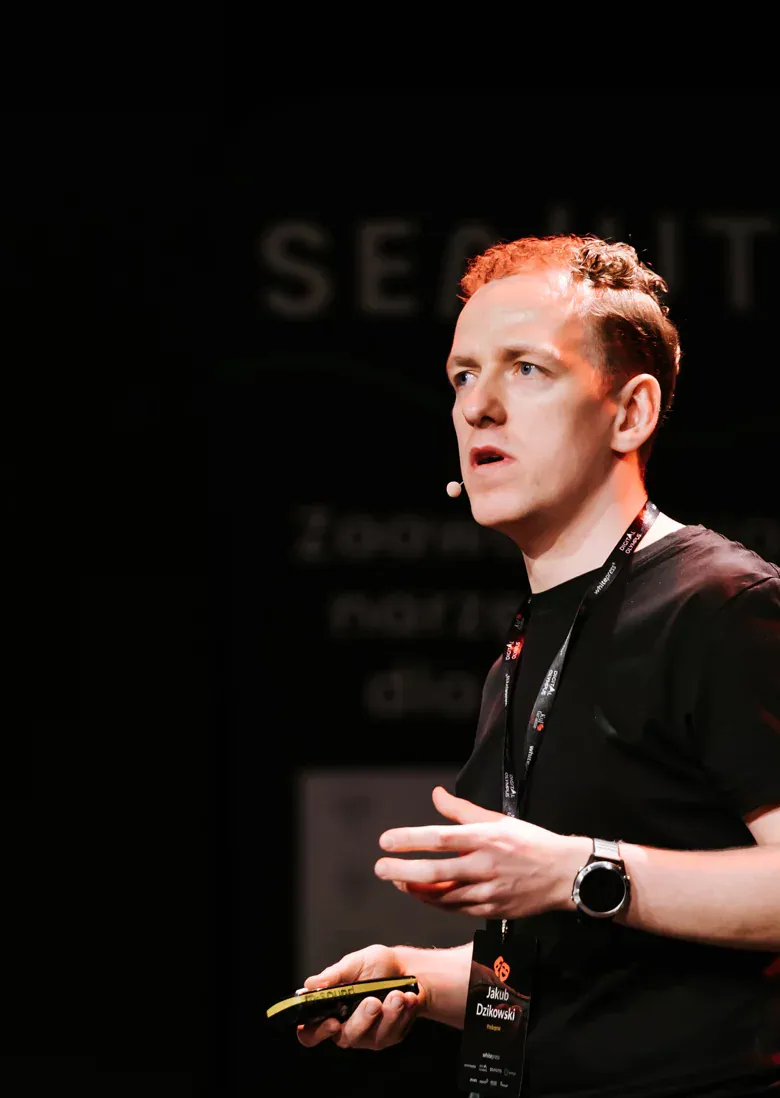
You talk to me, not a salesperson
Tell me what you want to achieve. I’ll reply personally
I work as a freelancer: the same person reads your message, prepares the quote and then runs the project. No sales team in between.