

SEO · Poznań
SEO in Poznań
I help companies from Poznań build visibility in Google in an organised and commercially justified way. I do not base the work on random checklists, but on an analysis of the market, the website, user intent and the real options for implementation. I work on on-site SEO, off-site activities, local presence and on preparing the content and structure of the site so that they are readable both for the search engine and for systems that generate answers.
About the service
SEO in Poznań based on strategy, content and sensible implementation
About the SEO service in Poznań
A few service details- Analysis of the local market and competition
- Technical and content audit
- Optimisation of service and category pages
- Expanding content to match intent
- Off-site activities and local signals
- Preparing for visibility in AI
Location
Local SEO: Poznań and the surrounding area
- City
- Poznań
- Region
- Greater Poland
- How we work
- Remote

Work process
How I run SEO in Poznań, from analysis to implementation
I start by establishing the business priorities, the scope of the website and the local context. I then organise the input data, check the technical condition, analyse visibility and prepare an action plan. Only on this basis do I move on to implementation: from architecture and content to local optimisation, internal linking and selective off-site activities.
- 01/ 03
Diagnosis and priorities
At the beginning I check what already works, where the site is losing potential and what the realistic goals in the local market are. I am interested not only in the website’s ranking, but also in the quality of the traffic, the layout of the offer, the way the services are presented and whether the website answers the questions of customers from Poznań and the surrounding area.
- 02/ 03
SEO action plan
After the analysis I prepare a specific plan: which pages need improving, which keywords make business sense, which content is worth adding and where technical changes are needed. As a result, the work is organised, and the decisions come not from guesswork but from a logical sequence of actions.
- 03/ 03
Implementation and growth
The next stage is implementing changes on and off the website. This includes improving on-page elements, developing content, tidying up internal linking, local activities and strengthening the credibility of the site. In parallel, I make sure the website is also understandable for AI-based systems.
Start of the cooperation and scope
At the beginning I establish exactly what the SEO in Poznań is to cover and which part of the offer is the priority. The work is planned one way for a single local service, another way for a company with several categories, and another way again for a site that combines sales, lead generation and extensive content. I am interested in the geographical scope, the customer acquisition model, seasonality, the audience’s typical questions and how the website currently performs. This stage aligns expectations and limits chaotic decisions later on.
In practice, this translates into defining the most important page types, the priority of implementations and a sensible division of the work. As a result, it is clear whether to improve the structure and the technical side first, or to strengthen the service pages straight away, expand the local content or put the brand’s presence outside the website in order. What matters to a business owner is that they see a logical plan from the outset and understand why given actions are needed, instead of getting general slogans about growth in visibility without any business context.
Collecting the input data
To run SEO well, I need a picture of the starting situation. So I check which pages already exist, where the current traffic comes from, which services are the most important, what materials are available for expanding the content and where technical or organisational constraints appear. Data on how customers are served matters too: whether contact takes place by phone, through a form or through a consultation, because this affects the layout of the content and the way the user is guided through the website.
I also gather information about the competition, but not in order to copy other people’s solutions. The point is to understand the market standard, the level of content saturation, the typical topics and the gaps that can be exploited. At this stage I also assess whether the site has the foundations for a better presence in rich results and in AI-generated answers. If the content is unclear, scattered or inconsistent, it needs to be put in order first, so that the search engine and language systems can correctly read what the page is about.
Audit of current visibility
An audit is not just a list of technical errors. For me it is an assessment of whether the website in its current form has a chance of competing for local queries related to the service and whether its content supports the purchase decision. I check indexing, the site structure, the quality of the landing pages, duplicate content, internal topical relationships and whether the most important pages are strong enough. I also analyse whether the website distracts the user and whether it clearly communicates the scope of the service, the location and the strengths of the offer.
In parallel, I assess visibility from the perspective of the information that can be used in rich results and AI answers. If the site lacks a clear structure, logical headings, sections that answer questions and consistent data about the company, it is harder for it to build a wider presence in the search ecosystem. The aim of the audit is not to present the longest possible list of problems, but to point to the changes that will genuinely improve the usability of the website, the clarity of the offer and the potential for local visibility.
Analysis of local keywords and intent
Not every keyword with the name of the city is valuable, and not every one without it should be ignored. I analyse queries in terms of intent: whether the user wants to find a contractor quickly, compare options, ask a question, read advice or check the price list. In the case of Poznań, it is also important to distinguish between strictly local keywords, service keywords with a broad reach and queries that signal readiness to get in touch. This makes it clear which content is meant to support sales and which is meant to build reach and trust.
Such an analysis makes it possible to design the structure of the website better and to avoid creating pages that have no clear role. It often turns out that one well-prepared service page with strong local context delivers more than several weak pages based on similar keywords. I also look at the questions that may come up in AI-based tools, because what counts there is not only an exact match of words, but also a clear answer, industry context and an understandable information structure.
Designing the website architecture
Site architecture determines whether the user and the search engine understand which pages are the most important and how they connect to one another by topic. I design a layout in which service pages, local pages, how-to content, FAQs and contact sections support one another instead of competing for the same queries. I take care of logical naming, a consistent heading layout, sensible internal linking and a clear separation of topics. This is especially important where the offer is broader and information chaos comes easily.
A well-planned architecture helps not only in classic SEO. It also makes the content easier to interpret for systems that generate answers on the basis of many sources. If the site has clearly described services, area of operation, cooperation process, answers to questions and credible information about the company, the chance that it will be treated as an organised source of knowledge increases. This does not mean any guarantee of appearing in AI Overviews or chatbot answers, but it definitely improves the foundations for such visibility.
On-page and local implementation
At the implementation stage I focus on the elements that genuinely improve how the website is received and how readable it is for the search engine. This includes changes to titles and descriptions, improving headings, developing the content on service pages, refining internal linking, tidying up contact details and removing content that duplicates a topic or distracts the user. If the project requires it, I also create a plan for local sections, FAQs, content that supports sales and materials that answer the most common customer questions.
A significant part of the work also concerns local external signals and the consistency of information about the company. The point is for the brand to be presented consistently, and for the data about the offer, location and means of contact not to differ between the website and external sources. This supports local visibility, builds trust and helps different search systems understand the site better. Instead of random actions, I prefer an organised working model in which every change has a clear goal and follows from earlier analysis.
Testimonials
What clients and the industry say
Feedback from clients and industry people I have worked with on SEO projects.

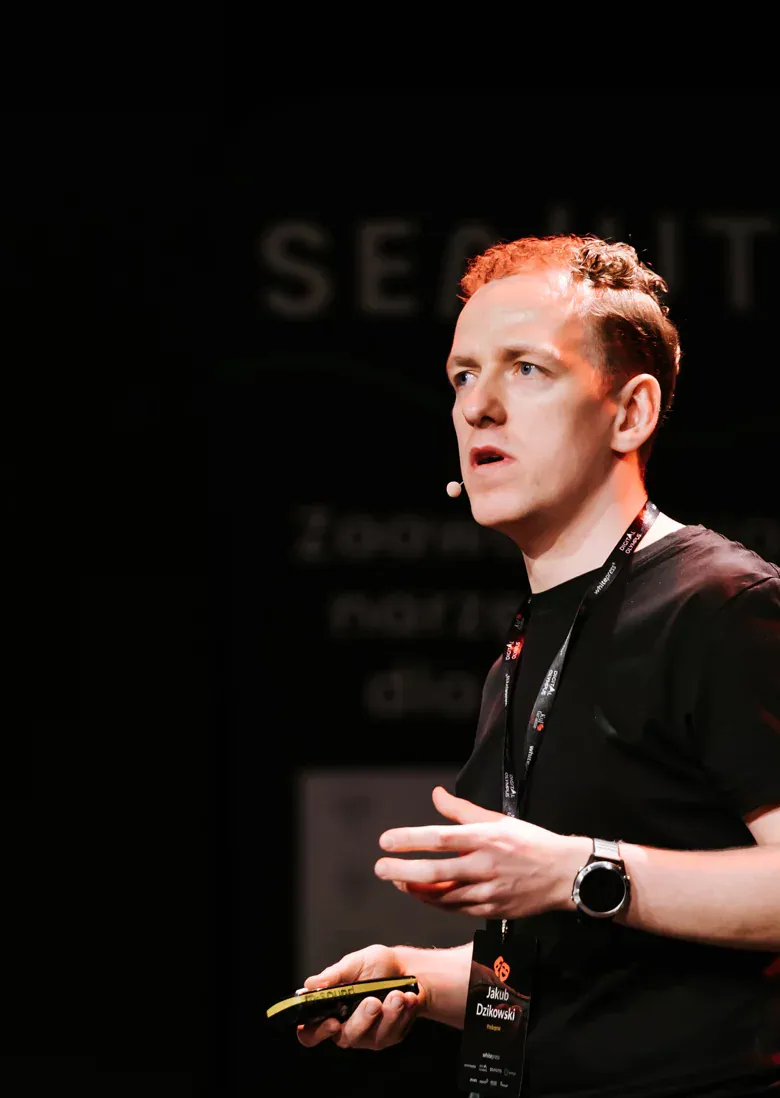
I had the chance to work with Kuba at Kulturalnie o SEO, an event I organise. Kuba did a great job as a speaker and received high marks from the audience. He showed professionalism and broad knowledge. In other projects at Vestigio, Kuba shows enormous commitment, a willingness to explore and implement new ideas, and excellent organisation of his work.

01 / 08
Local
SEO in your city
- SEO Białystok
- SEO Bielsko-Biała
- SEO Bydgoszcz
- SEO Bytom
- SEO Częstochowa
- SEO Dąbrowa Górnicza
- SEO Gdańsk
- SEO Gdynia
- SEO Gliwice
- SEO Gorzów Wielkopolski
- SEO Katowice
- SEO Kielce
- SEO Kraków
- SEO Łódź
- SEO Lublin
- SEO Olsztyn
- SEO Opole
- SEO Poznań
- SEO Radom
- SEO Ruda Śląska
- SEO Rybnik
- SEO Rzeszów
- SEO Sosnowiec
- SEO Szczecin
- SEO Toruń
- SEO Tychy
- SEO Warsaw
- SEO Wrocław
- SEO Zabrze
- SEO Zielona Góra
You talk to me, not a salesperson
Tell me what you want to achieve. I’ll reply personally
I work as a freelancer: the same person reads your message, prepares the quote and then runs the project. No sales team in between.