

SEO · Lublin
SEO in Lublin
I treat SEO in Lublin as work on a real local market, not a set of automatic actions. I start by checking how the website answers clients’ questions, where it loses visibility and which pages have the greatest business potential. I combine order on the site, refined content, local signals and sensible off-site work, so that the website is more visible both in the classic search results and in the answers generated by AI systems.
About the service
SEO in Lublin for companies that want to grow from local traffic
About the SEO service in Lublin
A few service details- Technical and content audit
- Analysis of local and service keywords
- Architecture design for SEO
- Optimisation of offer pages
- Off-site work without spam
- Preparing content for AI discovery
Location
Local SEO: Lublin and the surrounding area
- City
- Lublin
- Region
- Lublin
- How we work
- Remote

Work process
How I run local SEO and grow visibility in Lublin
I work in stages, so that SEO is easy to combine with the day-to-day running of the company. First I put the data and priorities in order, then I set the direction on the basis of the audit and the query analysis, and finally I move on to implementation and content development. As a result, you know what is being done, why, and which elements have the greatest impact on local visibility.
- 01/ 03
Initial diagnosis
At the beginning I check the current state of the website: structure, indexing, content, the profile of the services, local signals and the competition in the results for queries related to Lublin. This is the stage at which I separate technical problems from content gaps and establish what needs fixing quickly.
- 02/ 03
Strategy and plan
After collecting the data, I put together an action plan matched to the site and the client acquisition model. I point out the priority keywords, the pages needed, the direction for expanding the content and the off-site activities that make sense for a local brand and do not pull the business communication apart.
- 03/ 03
Implementation and development
The third stage is work on the website and around it: improving on-page elements, sharpening the offers, developing local sections, publishing new content and tidying up the linking. In parallel I make sure the information is also readable for systems that generate answers, not only for the classic search engine.
Starting the cooperation and the scope
The first stage is not about dropping the website into a template of actions, but about establishing why we are doing SEO at all and what business weight it should carry. Working with a company that wants to bring order to local queries around a single service is different from working with a brand that has several specialisations, several client groups and a large site. At the start I talk about the offer, the model for winning contacts, seasonality, the area served and whether what matters most is phone leads, forms, visits to the premises or recognition in a given category. Only on that basis does it become clear where it is worth starting and what does not make sense to do straight away.
This is also the moment to establish the realistic scope of work on the company’s side and on mine. Some businesses mainly need corrections to existing pages; others require a rebuild of the offer, new sections, descriptions of processes and refined local messaging. If the scope is set well, later decisions are simpler: it is clear which content has priority, which implementations will be needed and whether the site needs a quick repair of the basics or rather calm development. Such a start limits chaos and makes it possible to take decisions on the basis of specifics, not just a list of keywords.
Materials, access and input data
For SEO to make sense, I need not only access to the website but also as full a picture of the offer as possible. The key information concerns the services, specialisations, the area served, the substantive advantages, the most frequent client questions and how the company actually talks to the market. In many cases it is the input data that is the biggest limitation: the website exists, but it does not explain what exactly is offered, how the individual services differ or which problems the client can solve by working with the company. Without this it is hard to build content that is natural, local and useful at the same time.
In practice I collect materials from the existing website, offer documents, publicly published price lists, sales replies and notes from the owner or the person who knows clients’ questions best. I am also interested in earlier content, comments from users, FAQ sections, descriptions of completed projects without going into unconfirmed success stories, and any information that helps to name the services better. Such a stage puts the brand’s language in order. As a result, the subsequent implementations are not random but grounded in a real way of selling and communicating that can be defended both to the client and to the search engine.
Audit of visibility and technical problems
An audit is not a document for its own sake, but the basis for a sensible action plan. I check whether the website is indexed correctly, which pages have a real chance of working for visibility and where the site gets in its own way. I analyse the URL structure, the relationships between pages, headings, titles, descriptions, content duplication, technical errors, problematic redirects, the quality of the mobile version and whether important sections are hidden behind navigation that is too weak. For the business this means a simple answer: what is blocking growth and which fixes are worth implementing first.
In a local audit, elements that seem minor but affect how the search engine understands the company are also important. These include, among other things, the consistency of contact details, a clear indication of the area served, naming the services in line with how users search for them, and a logical connection between the home page and the offers and local pages. I also check whether the website mixes topics and tries to rank a single page for too many different intents at once. The aim of the audit is not only to find errors, but to put the whole site in order so that further work has a stable foundation.
Analysis of local keywords and intent
Good keyword analysis is not about pulling out a list of words with the name of the city, but about understanding how people actually search for a given service. Some users type a simple combination of service plus Lublin; others add a problem, urgency, price or type of client, or compare different variants of the offer. There are also informational queries that do not end in contact straight away but build the path to a decision. That is exactly why I analyse not only the words themselves but also the intent: whether someone wants to call quickly, compare providers, check the scope of the service, understand the process or find a solution to a specific problem.
On this basis I create topic groups and assign them to the appropriate pages. Some queries should lead to the main service page, others to separate specialist pages, and others still to a guide section or FAQ. This matters, because a well-chosen architecture limits keyword cannibalisation and makes it possible to write content more naturally. Instead of squeezing the same keyword into many places, we build a site that answers the different stages of the purchase decision. In a local market this is especially important, because the user often moves quickly between question, comparison and contact, and the website should keep up with that movement.
Designing the page and content architecture
Once it is clear what users are looking for and what the limitations of the site are, I move on to designing the architecture. The point is for every important service to have its place, for every group of queries to be served by the right type of page, and for the navigation to lead the user without unnecessary shortcuts and guesswork. In practice this means deciding whether separate service pages are needed, supporting pages for specific problems, local sections, an extensive FAQ, articles answering pre-purchase questions or content that strengthens expertise. Such an architecture puts the site in order and gives the individual elements clear roles.
A well-designed structure helps not only the classic search engine but also the systems that generate answers. If the content is divided into readable sections and contains clear definitions, specific answers, consistent service names and information about who a given offer is intended for, the chance that the site will be interpreted correctly increases. In this context the elements that build trust are also important: contact details, information about the area served, logical linking, sensible subheadings and well-organised structured data where it is justified. This is not decoration, but practical preparation of the website for a new way of discovering content.
On-page and off-site implementation, and development
At the implementation stage I work on the content layer and the technical layer at the same time. I improve titles and headings, tidy up the service descriptions, simplify the contact sections, strengthen internal linking and refine the elements that help to assign a given page to a specific intent. Often it is also necessary to fill in missing content, separate topics that were previously lumped together on one page, or build a new hierarchy of importance in the menu and in the content. For the company this means a more readable site that is easier to develop without creating chaos with every new page.
I treat off-site as support, not a substitute for the quality of the website. It is about sensibly building external signals, taking care of the consistency of information about the brand, and being present in places that make sense for local credibility. In parallel I observe how the content performs in the search results and whether it is suitable for quoting or summarising in environments based on AI Overviews and other automatically generated answers. I do not promise ready-made results through shortcuts, but I prepare the site so that it is easier to understand, better organised and better set up for the long-term growth of visibility.
Testimonials
What clients and the industry say
Feedback from clients and industry people I have worked with on SEO projects.

I had the chance to work with Kuba at Kulturalnie o SEO, an event I organise. Kuba did a great job as a speaker and received high marks from the audience. He showed professionalism and broad knowledge. In other projects at Vestigio, Kuba shows enormous commitment, a willingness to explore and implement new ideas, and excellent organisation of his work.

01 / 08
Local
SEO in your city
- SEO Białystok
- SEO Bielsko-Biała
- SEO Bydgoszcz
- SEO Bytom
- SEO Częstochowa
- SEO Dąbrowa Górnicza
- SEO Gdańsk
- SEO Gdynia
- SEO Gliwice
- SEO Gorzów Wielkopolski
- SEO Katowice
- SEO Kielce
- SEO Kraków
- SEO Łódź
- SEO Lublin
- SEO Olsztyn
- SEO Opole
- SEO Poznań
- SEO Radom
- SEO Ruda Śląska
- SEO Rybnik
- SEO Rzeszów
- SEO Sosnowiec
- SEO Szczecin
- SEO Toruń
- SEO Tychy
- SEO Warsaw
- SEO Wrocław
- SEO Zabrze
- SEO Zielona Góra
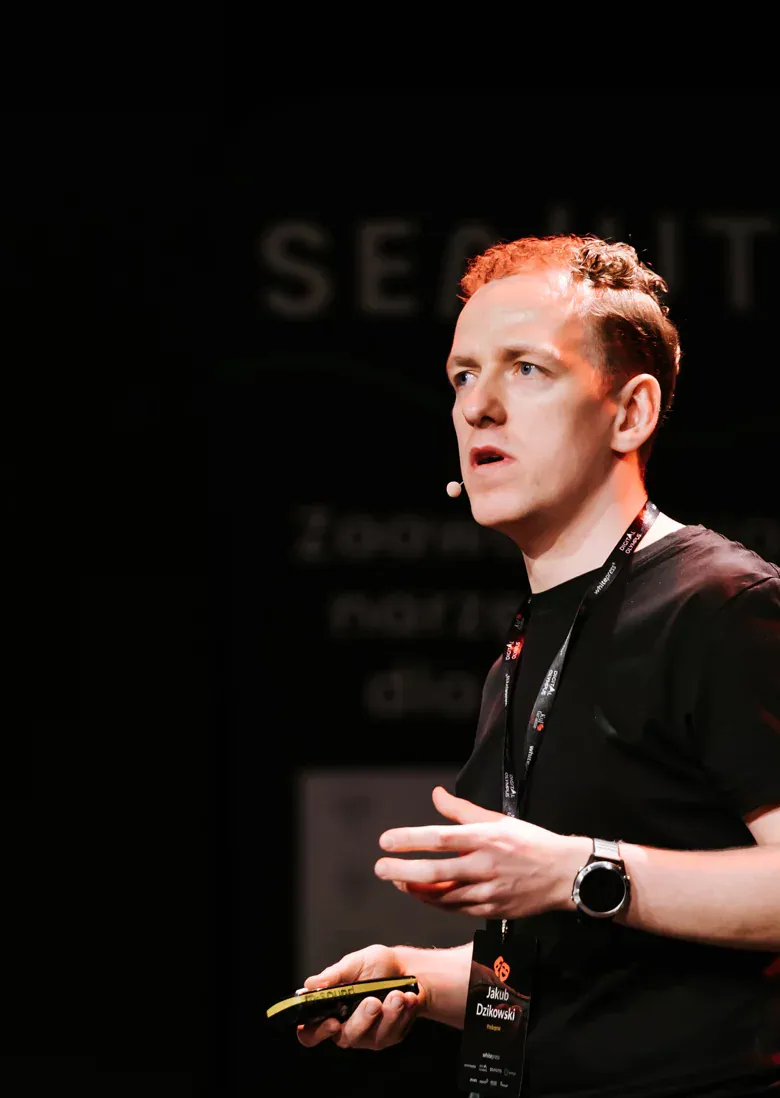
You talk to me, not a salesperson
Tell me what you want to achieve. I’ll reply personally
I work as a freelancer: the same person reads your message, prepares the quote and then runs the project. No sales team in between.