

SEO · Bielsko-Biała
SEO in Bielsko-Biała
I treat SEO in Bielsko-Biała as work on a company’s whole presence in search, not just on individual keywords. What counts is the technical health of the website, content quality, a sensible structure, local context and credible external signals. It is also becoming increasingly important whether the site is readable for answer-generating systems such as AI Overviews, ChatGPT, Gemini, Claude or Perplexity.
About the service
SEO in Bielsko-Biała focused on real local visibility
About the SEO service in Bielsko-Biała
A few service details- SEO strategy for local demand
- Technical audit and tidy indexing
- Optimisation of content and service pages
- Expanding the structure for local keywords
- Off-site activities and link profiles
- Content for search engines and chatbots
Location
Local SEO: Bielsko-Biała and the surrounding area
- City
- Bielsko-Biała
- Region
- Silesian
- How we work
- Remote

Work process
What local SEO looks like, from diagnosis to implementation and growth
I start by putting the basics in order: the business goal, the state of the website and the real visibility potential. I do not work to a rigid template, because a local service company has different needs from a shop, and a brand operating in several cities has different needs again. The process is meant to lead to sensible decisions, a better site structure and regular implementations that strengthen the presence in search results.
- 01/ 03
Diagnosis and priorities
At the beginning I check what the current visibility, or lack of it, results from: how the website is built, which pages make business sense, where keyword cannibalisation appears and what is blocking indexing. The outcome is a list of priorities that makes it clear what to fix first and why.
- 02/ 03
SEO and content plan
The next stage is arranging the architecture of the activities: selecting local keywords, assigning intent to pages, the content plan and the scope of on-page and off-site optimisation. As a result, the website starts to respond not only to users’ queries, but also to the way search engines organise information.
- 03/ 03
Implementation and growth
Once the plan is agreed, I move on to changes on and off the website: improving content, headings, internal linking, local pages and external signals. In parallel, I look after the readability of the information for generative systems, so that the site is easier to understand and cite.
Starting the collaboration and scope
The first stage is calmly establishing what the SEO is really meant to cover. For one company the starting point will be a few main services in Bielsko-Biała; for another, separate pages for different client groups or a combination of local activities with regional visibility. At this stage I clarify the offer, the area of operation, seasonality, the model for acquiring contacts and the role the website is meant to play: to sell, collect leads, build trust or support a salesperson. Without this it is hard to plan SEO sensibly.
Establishing the constraints and resources is just as important. I check whether changes can be implemented on the website without delays, whether new content will be needed, who on the client’s side knows the offer best and what the existing materials look like. This makes it clear from the start whether we are working on correcting the existing site or on a deeper tidying-up of the architecture, navigation and communication. A start like this brings order to the collaboration and helps avoid activities that look good on a task list but do not solve the real problem.
Input data and business goals
SEO makes sense when it is grounded in the company’s actual goals, not just in a list of keywords. That is why I collect information about the offer, high-margin services, competitive advantages, the way clients are served, typical questions and what most often decides the choice of a provider. In local SEO this is particularly important, because different services have different search intent. A client may be looking for immediate contact, a comparison of offers, an answer to a problem or a specific specialist from a given area.
Based on this data it is easier to choose which areas of the site to develop first and which content will make the most sense. Sometimes the better move is to refine the service pages and the contact section, and sometimes to expand the body of guide content that supports visibility at earlier stages of the decision. This stage is also important from the perspective of new search models, because answer-generating systems better understand content that is consistent, specific and set in a clear business context.
Audit of current visibility and technical state
Before rankings start to improve, you need to understand what already works and what is limiting growth. In the audit I check indexing, URL structure, content duplication, internal linking, speed in real-world use, the state of the metadata, headings, sitemaps and the logical arrangement of pages. I am interested not only in whether the website is technically correct, but also in whether it supports a specific user journey: from arriving from the search engine to getting in touch or sending an enquiry.
I also look at which pages are really working for visibility and which dilute the topic or compete with one another. A common problem is sites that have many similar pages without a clear role, so the search engine does not get a clear signal as to which of them should answer a given query. The audit also helps assess whether the website is prepared for broader interpretation by AI systems, i.e. whether it contains clear definitions of services, organised sections and content that can easily be matched to specific user questions.
Analysis of local keywords and intent
In local SEO, a list of popular keywords alone is not enough. What matters more is understanding how the user phrases their need and what stage of the decision they are at. So I analyse not only the obvious queries containing the city name, but also service, problem and comparison variants and long-tail queries related to a specific specialisation. This makes it possible to build visibility more broadly: from highly transactional queries to those that only prepare the ground for contact at a later point.
Good intent analysis directly affects the architecture of the website and the way content is written. A single page should not try to answer everything at once, because it then becomes general and unconvincing. It is better to assign specific topics to specific places on the site: separate service pages, areas of application, client questions, educational content and local information. This approach helps both in classic SEO and in visibility in generated answers, where the precision of the answer and a clear match between content and question matter.
Designing the page architecture and content
If a website is to grow in visibility, it needs a sensible construction. The architecture design covers putting in order the main sections of the site, the relationships between services, local pages, guide posts and trust elements. The point is for the user to quickly understand what the company does, where it operates and how they can get in touch about a specific matter. For the search engine it is equally important whether the site clearly shows the hierarchy of topics and whether each page has its own role instead of duplicating others.
In practice this often means rebuilding the menu, improving internal linking, splitting overly broad topics into separate pages and refining the elements that support the client’s decision. A well-designed structure helps not only with local SEO, but also with the interpretation of content by systems that answer users’ questions. When services, locations, specialisations and answers to typical doubts are described consistently, the site becomes more useful and easier to understand across different content discovery channels.
On-page, off-site and AI visibility implementations
After the analysis stage I move on to implementations that really change the quality of the website. On-page covers improving titles, descriptions, headings, service content, internal linking, contact details, local sections and elements that support conversion. If the website has several important areas of the offer, I make sure each of them has its own, clearly profiled page. As a result, the user lands more precisely where they should, and the search engine recognises the topic and intent of the page more easily.
I treat off-site activities as support, not a substitute for a solid website. What counts is the quality and sense of the external signals, the consistency of information about the company and the natural strengthening of the domain’s authority. In parallel, it is worth thinking about AI visibility, i.e. whether the content is prepared in a way that is clear, factual and worth citing in generated answers. This cannot be guaranteed, but the readability of the site can be increased through precise descriptions, clear service names, organised sections and content that answers specific client questions.
Testimonials
What clients and the industry say
Feedback from clients and industry people I have worked with on SEO projects.

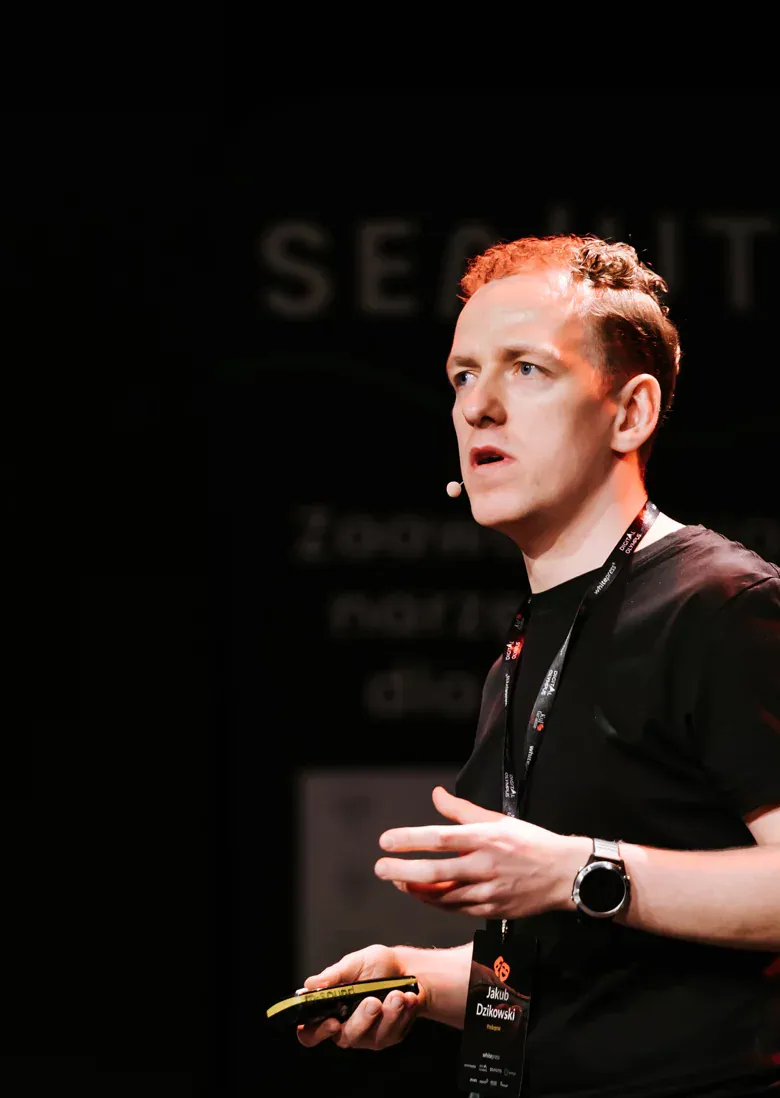
I had the chance to work with Kuba at Kulturalnie o SEO, an event I organise. Kuba did a great job as a speaker and received high marks from the audience. He showed professionalism and broad knowledge. In other projects at Vestigio, Kuba shows enormous commitment, a willingness to explore and implement new ideas, and excellent organisation of his work.

01 / 08
Local
SEO in your city
- SEO Białystok
- SEO Bielsko-Biała
- SEO Bydgoszcz
- SEO Bytom
- SEO Częstochowa
- SEO Dąbrowa Górnicza
- SEO Gdańsk
- SEO Gdynia
- SEO Gliwice
- SEO Gorzów Wielkopolski
- SEO Katowice
- SEO Kielce
- SEO Kraków
- SEO Łódź
- SEO Lublin
- SEO Olsztyn
- SEO Opole
- SEO Poznań
- SEO Radom
- SEO Ruda Śląska
- SEO Rybnik
- SEO Rzeszów
- SEO Sosnowiec
- SEO Szczecin
- SEO Toruń
- SEO Tychy
- SEO Warsaw
- SEO Wrocław
- SEO Zabrze
- SEO Zielona Góra
You talk to me, not a salesperson
Tell me what you want to achieve. I’ll reply personally
I work as a freelancer: the same person reads your message, prepares the quote and then runs the project. No sales team in between.