

SEO · Olsztyn
SEO in Olsztyn
I start SEO in Olsztyn by checking how your company is being searched for today and whether the website answers the real needs of customers in the local market. I don’t base the work on a template. I combine keyword analysis, on-site optimisation, content development, off-site work and preparing the site for better visibility not only in Google but also in answers generated by AI systems.
About the service
SEO in Olsztyn for companies that want to grow locally and sensibly
About the SEO in Olsztyn service
A few service details- Analysis of local demand and intent
- Optimisation of content and site structure
- Expanding service and local pages
- Off-site work without artificial scale
- Putting brand trust signals in order
- Preparation for visibility in AI
Location
Local SEO: Olsztyn and the surrounding area
- City
- Olsztyn
- Region
- Warmian-Masurian
- How we work
- Remote

Work process
How I run local SEO from diagnosis to implementation
I work in stages, so that it is clear from the start what has the greatest impact on visibility and which actions make business sense. First diagnosis and priorities, then putting the site in order and developing content and external signals. No random tasks and no actions carried out just to “be doing something”
- 01/ 03
Assessing the situation
At the start I check the site’s current visibility, the quality of the pages, the content profile, the local signals and how the company presents itself in the search results. I am interested not only in keyword rankings but also in whether the site really answers the questions and needs of customers from Olsztyn and the surrounding area.
- 02/ 03
Plan and priorities
After the analysis I arrange the scope of work in a logical order. I establish what needs technical improvement, which pages need expanding, which topics have local potential and where it is worth strengthening the site’s authority. As a result, it is clear what to implement first and what can deliver the best effect in terms of quality.
- 03/ 03
Implementation and growth
The next stage is on-site implementation, work on content, tidying up the structure and off-site work matched to the situation of the domain. In parallel I look after the clarity of the information, the consistency of the offer and better preparation of the site for discovery by search engines and by systems that generate answers to users’ questions.
Starting the cooperation and setting the scope
Well-run SEO starts with establishing what you really expect from the website and what role it is to play in sales or in generating enquiries. SEO is planned differently for a service company operating locally, differently for a brand that wants to combine local traffic with general queries, and differently again for a business that has several service lines and different audience groups. At this stage the goal, the offer, the market advantages and the implementation constraints need to be put in order, because without that it is easy to get into activity that looks busy but does not build a sensible direction.
In practice I establish which areas are to be developed first, which pages are critical and where the earliest barriers may appear. I am also interested in the way of working on the client’s side: who is responsible for content, who can implement changes and how quickly the site can be put in order. This matters because effective SEO is not a list of disconnected recommendations but a process based on the company’s real capabilities. The better the start is set up, the less chaos and the fewer random decisions in the following stages.
Input data needed for the strategy
To prepare a sensible SEO plan, I need to understand not only the website itself but also the offer, the customers’ language and how the company operates in the local market. In Olsztyn many queries have a clear situational context: the user is searching quickly, comparing several options, and wants to know whether a given service is right for them and whether it is worth getting in touch. That is why materials matter that show how the company talks about its services, which questions it hears most often and which elements of the offer are really profitable or strategic.
At this stage, existing content, service descriptions, sales replies, lists of customer questions and any information that helps capture the language of the market are useful. This is often a better starting point than looking at keywords in isolation from real sales. It makes it possible to build a content and structure strategy that not only improves how well the site matches searches but also puts the brand’s message in order. This is particularly important to me because, as a freelancer, I prefer to work with specifics rather than unfounded assumptions.
Audit of current visibility and barriers
An audit should not be a catalogue of random technical remarks. Its purpose is to understand why the site is not using its potential or why it is growing more slowly than it could. So I check not only the technical foundations but also the quality of the information architecture, the way services are grouped, topic cannibalisation, how well the content matches intent and the overall clarity of the site. Local elements matter too, such as consistent messaging about the area of operation, the presence of specific contact information and the link between the offer and the local context.
An important part of the audit is assessing whether the site provides data that is clear, organised and credible enough to be interpreted well not only by the search engine but also by answer-generating systems. If the content is general, duplicated or scattered across many pages, it is harder to build lasting visibility. That is why I treat the audit as a tool for setting priorities: what to fix, what to expand, what to merge and what to remove, so that the site becomes more logical and useful.
Analysis of local keywords and intent
A list of keywords alone is not enough if it is not clear what lies behind the query. In local SEO it is important to distinguish between transactional, informational, comparative and brand keywords. For a company operating in Olsztyn, both queries directly related to the city and more natural searches — in which the user does not type a location but expects a local result — will matter. That is why I analyse the topic more broadly: what people call the service, what doubts they have, what they look for before getting in touch and which language variants are worth including in the content structure.
A well-executed keyword analysis helps to make specific decisions: whether to create separate service pages, how to divide the topics, which questions to cover in FAQ sections and where supporting content is needed. It is also the moment when gaps in the current site can be caught and growth planned without multiplying unnecessary pages. From a business perspective, what matters most is that the keywords translate into a sensible architecture and communication, not just into a document full of words that nobody later knows how to use well.
Designing the site architecture and content
One of the most common problems with local websites is that the offer is described too generally or arranged in a way that makes the site hard to understand. That is why I treat designing the architecture as a key stage of SEO. The point is for the user and the search engine to understand quickly what the company does, what its service areas are, which pages are the most important and how they fit together. A good structure puts the menu, headings, internal linking and the relationships between service, local and guide pages in order.
The content plan is just as important. It is not about publishing texts in bulk but about building a set of pages that answer the audience’s specific needs at different stages of the decision. Sometimes that will mean expanding the main services, sometimes preparing supporting pages, and sometimes tidying up content that already exists but is poorly named or cannibalises itself. Such an architecture helps not only in classic SEO but also increases the chance that AI systems will correctly read the site’s topic, scope and credibility.
On-page, local and off-site implementation
At the implementation stage, what matters most is the quality of execution and a sensible order. I start with the on-page elements that affect how the site is understood: titles, headings, service descriptions, main content, internal linking, supporting sections and key contact information. In local SEO it also matters whether the site clearly communicates the area of operation and whether the user sees straight away that they have found a company that operates where they need it. It is not about artificially repeating the city but about setting the offer naturally in the local context.
In parallel, work can be done on the off-site area and on preparing the site to be better interpreted by tools based on answer generation. Clear content, unambiguous service definitions, organised company data and consistent information published online build a better picture of the brand. This can support discoverability both in the classic search results and in environments such as AI Overviews or answers generated by various chatbots. However, I treat this as the result of a well-prepared website, not as a separate, unfounded promise.
Testimonials
What clients and the industry say
Feedback from clients and industry people I have worked with on SEO projects.

I had the chance to work with Kuba at Kulturalnie o SEO, an event I organise. Kuba did a great job as a speaker and received high marks from the audience. He showed professionalism and broad knowledge. In other projects at Vestigio, Kuba shows enormous commitment, a willingness to explore and implement new ideas, and excellent organisation of his work.

01 / 08
Local
SEO in your city
- SEO Białystok
- SEO Bielsko-Biała
- SEO Bydgoszcz
- SEO Bytom
- SEO Częstochowa
- SEO Dąbrowa Górnicza
- SEO Gdańsk
- SEO Gdynia
- SEO Gliwice
- SEO Gorzów Wielkopolski
- SEO Katowice
- SEO Kielce
- SEO Kraków
- SEO Łódź
- SEO Lublin
- SEO Olsztyn
- SEO Opole
- SEO Poznań
- SEO Radom
- SEO Ruda Śląska
- SEO Rybnik
- SEO Rzeszów
- SEO Sosnowiec
- SEO Szczecin
- SEO Toruń
- SEO Tychy
- SEO Warsaw
- SEO Wrocław
- SEO Zabrze
- SEO Zielona Góra
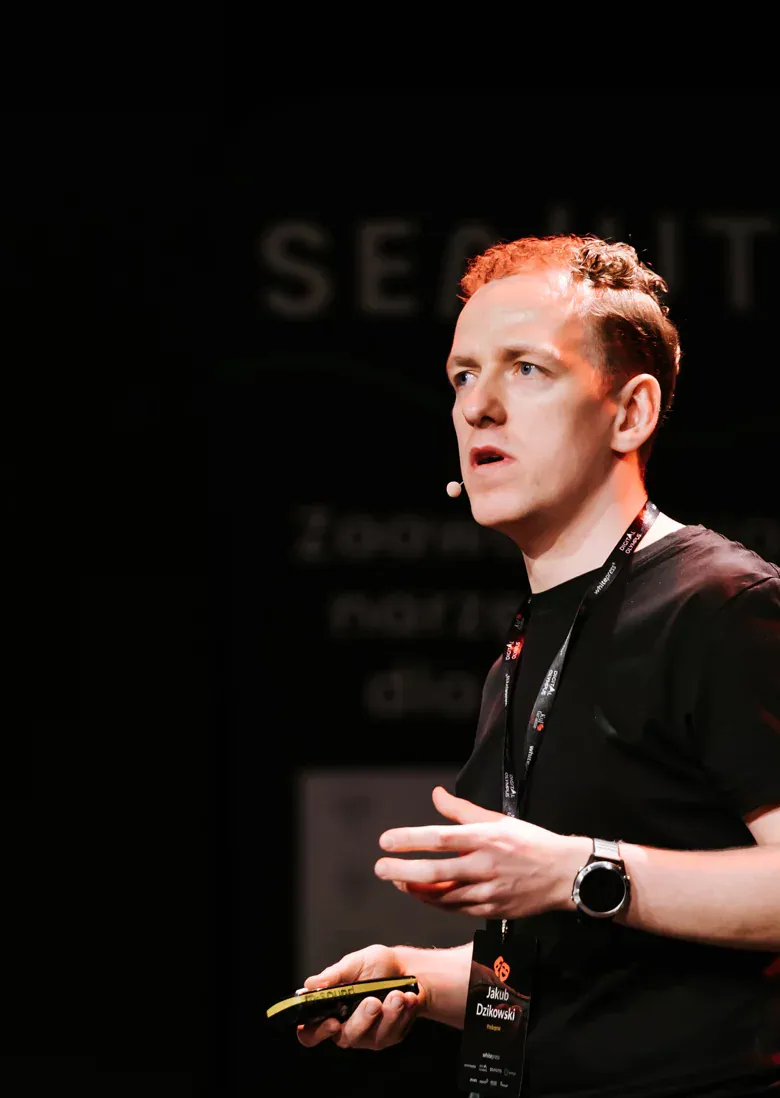
You talk to me, not a salesperson
Tell me what you want to achieve. I’ll reply personally
I work as a freelancer: the same person reads your message, prepares the quote and then runs the project. No sales team in between.