

SEO · Tychy
SEO in Tychy
I treat SEO in Tychy as work on a business’s real visibility in the local market, and not just on a list of keywords. I combine an audit, on-site optimisation, off-site activities and a solid content structure, so that the website is clear to Google and helpful to customers. I also take care of preparing the site for AI Overviews and for content discovery by tools such as ChatGPT, Gemini, Claude and Perplexity.
About the service
SEO in Tychy for businesses that want to grow from local visibility
About the SEO in Tychy service
A few service details- SEO audit and action priorities
- Technical and on-page optimisation
- Local keywords and content structure
- Growing links and mentions
- Preparation for AI and chatbots
- Implementation support and consultations
Location
Local SEO: Tychy and the surrounding area
- City
- Tychy
- Region
- Silesian
- How we work
- Remote

Work process
How I run local SEO step by step and without guesswork
I start by checking what the current situation of the website looks like and where opportunities are slipping away: in the technical side, the content, the local pages or the link profile. Then I arrange the action plan according to business impact and feasibility of implementation. As a result, SEO is not a collection of random changes but an organised process.
- 01/ 03
Starting point
At the beginning I check the website, its current visibility and competitors with a similar profile. I am interested not only in which keywords the site already appears for, but also in whether the user easily finds the offer, the contact details and the pages that answer specific local needs.
- 02/ 03
Plan and priorities
After the analysis I arrange the action plan in a logical order. I separate urgent fixes from content development, architecture changes and work on off-site signals. This makes it clear what is worth implementing first, where the greatest potential lies and which elements will reinforce one another.
- 03/ 03
Implementation and growth
The next stage is implementation and the regular refinement of the website. This covers content, internal linking, local pages, technical elements and external signals. In parallel, I prepare the site so that it is better understood not only by Google, but also by answer-generating systems.
Start and defining the scope
I start every cooperation with a conversation about the business, not with a list of keywords alone. I want to know which services really make money, what queries come up in conversations with customers, what area the company operates in and where it is currently losing opportunities. In local SEO it is also important to establish whether the goal is visibility in Tychy alone, or also in the surrounding towns and for more specific service topics. This avoids a situation in which the website grows on queries of little business relevance and misses those that can lead to real enquiries.
At this stage I also establish the scope of work and the order of activities. Sometimes the priority will be fixing technical problems, sometimes rebuilding the offer, and sometimes putting the local pages and expert content in order. If the site is to be better prepared for visibility in AI-generated answers, I take this into account in the structure of the project from the start. This makes it clear straight away whether we are focusing on a strong SEO foundation, content development, work on local signals or a combination of these areas in a single plan.
How I collect input data
To run SEO well, I need an organised picture of the current situation. If they are available, I analyse data from tools showing traffic, visibility and user queries, but the company’s internal materials are just as important. I am interested in which services are actually the most important, which pages matter for sales, what earlier changes were made to the website and whether there are constraints on the side of the CMS or the developer. Without this it is easy to propose activities that are correct from an SEO perspective but poorly matched to the way the company really operates.
I also collect information that later proves useful in creating the content and the site architecture. This can be customers’ questions, the most common objections, the differences between service variants, the area of operation, sales materials and the way the company itself describes its competences. Such a data set helps to prepare the website not only for keywords, but also for the user’s language. This is particularly important when we also want to build visibility in systems based on answer generation, which cope better with a clear and consistent description of a topic than with chaotic texts full of SEO insertions.
Audit of current visibility
For me an audit is not a document to be put on a shelf, but a stage that is meant to reveal the real blockers and put decisions in order. I check how the website is indexed and whether there are problems with duplication, incorrect redirects, orphan pages, an unclear URL structure or weak internal linking. I also look at the mobile version, speed, the basics of HTML semantics and whether the most important elements of the offer are actually clearly visible to the user and the crawler. It is often at this level that problems emerge which limit further growth regardless of the amount of new content.
The second part of the audit concerns visibility itself and how well the site matches local intents. I check whether the site has sensible service pages, whether it answers the questions of users from the region, whether it makes use of the brand’s potential and whether it mixes topics in a way that makes the website harder to understand. I also analyse external signals: the Google Business Profile, the consistency of contact details, mentions and the overall picture of the brand in the search results. Such an audit makes it possible to assess not only rankings, but also whether the company is presented online clearly and credibly enough to be referred to in AI answers as well.
Analysis of local keywords and intent
A list of keywords alone is not enough if we do not understand what the user is looking for at a given stage of the decision. That is why I run the analysis of local keywords broken down by services, problems, locations and type of intent. I separate general queries from the more specific, comparison, urgent and transactional ones. In practice this means checking whether it is better to build one strong service page, several precise pages, or additional sections answering frequent questions. In local SEO it is also important not to create content artificially just to add the city name to every keyword.
I also look at how users phrase questions in a more natural way, especially when they use voice search or generative tools. Phrases such as price, reviews, when to choose, what the difference is, where you operate or how to contact the company quickly can be just as important as classic service queries. Such an analysis helps to design content that better answers the real needs of the audience. As a result, the website is not a collection of random paragraphs written for SEO, but a coherent information resource that is easier for the user, the search engine and the answer-generating system to use.
Designing the site architecture
A well-arranged site architecture organises not only the navigation, but also the way the search engine understands the company’s offer. If the site is to grow locally, it needs a logical division into services, variants, areas of operation and content that supports the customer’s decision. I design the structure so that every important intent has its place and the user can move from the general description to the specifics without getting lost. Sometimes this means rebuilding the menu, sometimes changing the layout of the services, and sometimes creating new local or topical pages that bring order to the chaos accumulated over the years.
In the architecture, the relationship between content, internal linking and the semantics of the information is also important. The arrangement of headings, URLs, breadcrumbs, auxiliary sections and related pages affects whether the crawler reads the hierarchy of the site correctly. This matters not only for classic SEO, but also for the wider discoverability of the website in systems that try to understand a topic and summarise it in an answer. When the structure is consistent, it is easier to build the authority of specific pages, strengthen the most important areas of the offer and create content that does not duplicate itself but develops the topic step by step.
On-page, off-site and AI implementation
On-page implementation covers everything that improves the clarity and quality of the website from the inside. I work on titles, descriptions, headings, content, internal linking, local elements, images and the sections that answer users’ specific questions. If necessary, I also tidy up duplication, indexing, the page structure and the way contact details are presented. The point is not to stuff in keywords mechanically, but to create a site that communicates the offer clearly and leads the user to the next step. Good on-page implementation should work at the same time for visibility, usability and a better understanding of the website by algorithms.
The off-site part, in turn, is about building a credible environment for the brand beyond the website itself. It can include tidying up mentions, data consistency, developing the Google Business Profile and earning sensible links from related sources. At the same time it is worth making sure that the content is prepared in a way that answer-generating systems can understand. AI Overviews, Perplexity, Gemini, ChatGPT and Claude offer no simple guarantees of visibility, but a clear structure, precise service descriptions, strong informational sections and a credible brand context can increase the chances of the site being discovered beyond the traditional list of results as well.
Testimonials
What clients and the industry say
Feedback from clients and industry people I have worked with on SEO projects.

I had the chance to work with Kuba at Kulturalnie o SEO, an event I organise. Kuba did a great job as a speaker and received high marks from the audience. He showed professionalism and broad knowledge. In other projects at Vestigio, Kuba shows enormous commitment, a willingness to explore and implement new ideas, and excellent organisation of his work.

01 / 08
Local
SEO in your city
- SEO Białystok
- SEO Bielsko-Biała
- SEO Bydgoszcz
- SEO Bytom
- SEO Częstochowa
- SEO Dąbrowa Górnicza
- SEO Gdańsk
- SEO Gdynia
- SEO Gliwice
- SEO Gorzów Wielkopolski
- SEO Katowice
- SEO Kielce
- SEO Kraków
- SEO Łódź
- SEO Lublin
- SEO Olsztyn
- SEO Opole
- SEO Poznań
- SEO Radom
- SEO Ruda Śląska
- SEO Rybnik
- SEO Rzeszów
- SEO Sosnowiec
- SEO Szczecin
- SEO Toruń
- SEO Tychy
- SEO Warsaw
- SEO Wrocław
- SEO Zabrze
- SEO Zielona Góra
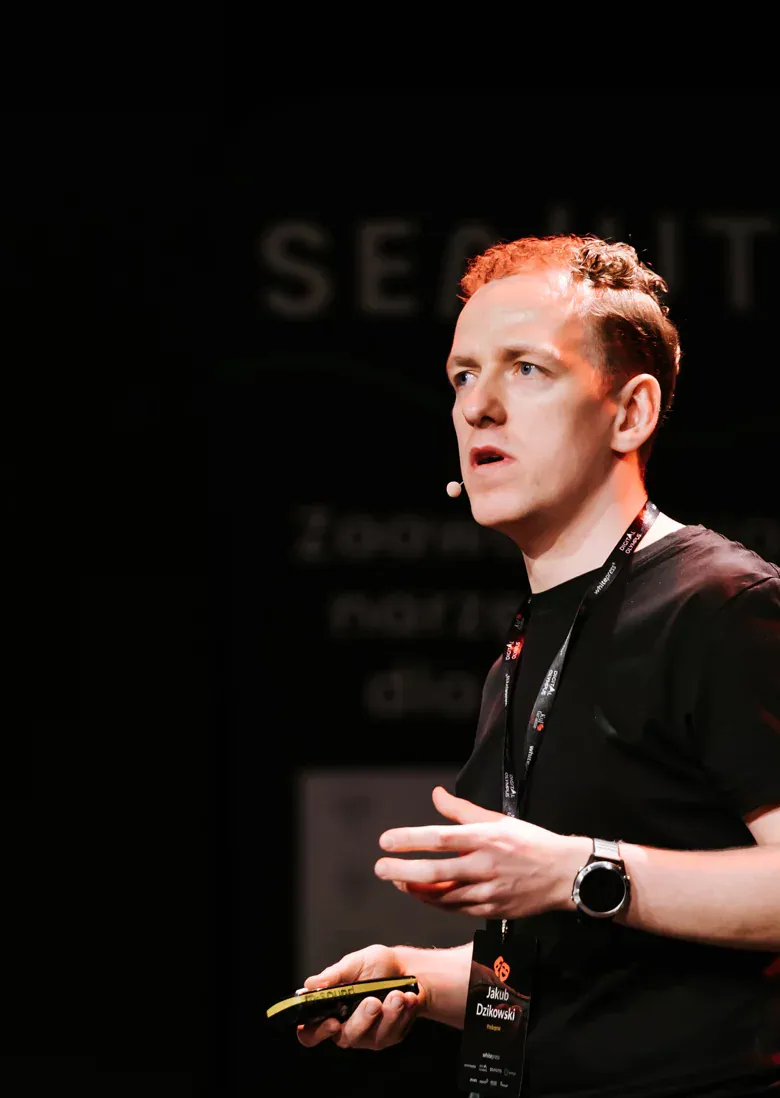
You talk to me, not a salesperson
Tell me what you want to achieve. I’ll reply personally
I work as a freelancer: the same person reads your message, prepares the quote and then runs the project. No sales team in between.