

SEO · Gdynia
SEO in Gdynia
I treat SEO in Gdynia as work on a business’s real visibility in the local market, not as a collection of random activities. I focus on making the website answer customers’ intents better, on keeping it technically tidy and on giving it a clear content structure. This covers on-site work, off-site activities, local SEO and preparing the site for the way information is used today by answer-generating systems as well.
About the service
SEO in Gdynia for businesses that want to grow locally and sensibly
About the SEO in Gdynia service
A few service details- SEO audit and action priorities
- Content and architecture optimisation
- Local SEO for services and locations
- Growing visibility beyond the website
- Preparation for AI Overviews
- Implementation support and consultations
Location
Local SEO: Gdynia and the surrounding area
- City
- Gdynia
- Region
- Pomeranian
- How we work
- Remote

Work process
How I work on local SEO and search engine visibility
I do not start with promises of rankings, but with establishing where the website is today and what is really blocking growth. I organise the work in three stages: diagnosis, implementation and visibility growth. This makes business decisions easier, and gives the SEO work a logical order and purpose.
- 01/ 03
Diagnosis and direction
I start by assessing the website, its current visibility and the local context. I check how the site communicates the offer, where it is losing chances of visits from search and which pages have real potential. On that basis I set the priorities, the order of work and the scope of the changes.
- 02/ 03
Structure and implementation
I then put the foundations in order: the information architecture, titles, headings, content, internal linking and the technical elements that affect indexing and how the site is understood. If the project requires local landing pages or an expanded offer, I prepare a clear implementation plan.
- 03/ 03
Visibility growth
Once the website is in order, I work on further growth: I develop the content, strengthen local signals and take care of sensible off-site activities. In parallel, I prepare the site so that the information is clear not only to Google, but also to systems that build answers from content drawn from many sources.
Where the cooperation starts
The cooperation starts with establishing the business goal, not just with a question about rankings. Work on a local services website is different from work on a site with many categories, and different again for a business that operates from a physical location while also serving customers on site. At the start I want to understand which services are the priority, where enquiries come from today and which elements of the offer matter most for sales. Only then does SEO begin to make sense as a tool that supports growth, and not as a separate channel detached from the realities of the business.
For a local market it is also important to clarify the area of operation and the way customers look for a provider. Some queries will be strictly city-based, others will cover districts, nearby towns or more specific needs related to the service. At this stage I also establish what content already exists, which pages are worth developing and whether the site only needs adjusting or rather a rebuild of its architecture. This makes it possible to avoid random activities and to work on priorities from the start.
How I collect input data
Good SEO does not start with guessing keywords. First I gather information about the offer itself, the company’s advantages, the way it serves customers, seasonality and operational constraints. I am interested not only in what the company wants to promote, but also in what users are actually searching for and how they describe the problem in their own words. This makes it possible to avoid a common mistake, namely building content solely around industry vocabulary that sounds correct but does not match how searchers really behave.
Collecting data from the website itself is just as important. I check which pages make business sense, where there are gaps in the content, what the navigation structure looks like and whether the site distracts the user. I also analyse the elements that affect trust: the company description, contact details, information about the area of operation, the range of services and the consistency of communication. All of this matters not only to the user and to Google, but also to answer-generating systems, which better understand organised, precise and credible sources of information.
Audit of current visibility
I treat an audit as a tool for making decisions, not as a document for its own sake. I am interested in which areas of the site really limit visibility: a faulty title structure, duplicated or thin content, weak internal linking, indexing problems, service pages that are too general, or a lack of pages answering specific local intents. I also check whether the website is trying to talk about everything at once, with the result that no service is clear enough either for the user or for the search engine.
In local SEO, the audit also covers signals related to the company’s presence beyond the website itself. I assess whether the brand data is consistent, whether the business profile supports the organic strategy and whether the site has elements that help connect the offer with the local market. I also look at whether the content is prepared in a way that makes it easier for AI systems to cite and summarise it. The point is not to write for a fashionable format, but to make sure the most important information is clear, specific and set in a logical structure.
Analysis of local keywords and intent
Keyword analysis makes sense when it connects the user’s language with the model of the company’s offer. I do not limit myself to the main keywords of the service-plus-city type, because they show only part of the market. Problem queries, comparison queries and service queries that specify the scope are important too, as are keywords related to urgency, location and the way the service is delivered. This makes it possible to build a site structure that answers both broad queries and the more specific needs of customers who are closer to a decision.
When analysing intent, I pay attention to whether the user is looking for general information, a specific service, a provider nearby or quick contact. This affects the type of content, the layout of the sections, the length of the descriptions and the role of individual pages. In practice, good local SEO requires combining transactional keywords with content that supports the decision, such as explanations of the process, the scope of work or the most frequently asked questions. Such a structure helps in the organic results, but it also increases the chance that the content will be useful to tools that answer queries in the form of ready-made summaries.
Designing the site architecture and content
If the analysis shows that the website mixes services, locations and auxiliary topics, the next step is to put the information architecture in order. I design the layout of the pages so that each has a clear role: the home page builds the brand context, the service pages answer sales intents, and the supporting content dispels doubts and captures additional queries from an earlier stage of the customer journey. A well-designed architecture makes it easier for the user to move around the site and strengthens internal linking, which still has great importance in SEO.
The quality of the service description itself is just as important. I create or organise content so that it is specific, natural and grounded in the customer’s real language. I avoid inflated claims and overly general formulas, because such texts perform poorly both for sales and in the search engine. I also pay attention to the structure of the information: headings, question sections, organising elements and the connections between topics. This matters not only for rankings, but also for discoverability in environments where content is processed and served to the user in a shortened form by language models.
On-page, local and off-site implementation
At the implementation stage I focus on what can realistically be improved on the site and around it. This covers optimising titles and descriptions, refining headings, improving service content, tidying up internal linking, building out missing pages, adjusting local elements and making technical corrections that affect indexing and how the website is understood. If the company operates locally, clear contact information, the service area, consistent data and content that shows specialisation without artificially stuffing the city name into every paragraph are important too.
In parallel, I develop activities beyond the website, but without schemes focused purely on the number of links. What counts is the quality of the placements, the topical context and the naturalness of the signals. Well-run off-site work can support the brand’s authority and make it easier for algorithms to connect the company with a given service and location. In this area I also take into account how the brand is described and cited online, because this matters to systems such as AI Overviews, Perplexity and ChatGPT, which use many sources and prefer content that is consistent, precise and credible.
Testimonials
What clients and the industry say
Feedback from clients and industry people I have worked with on SEO projects.

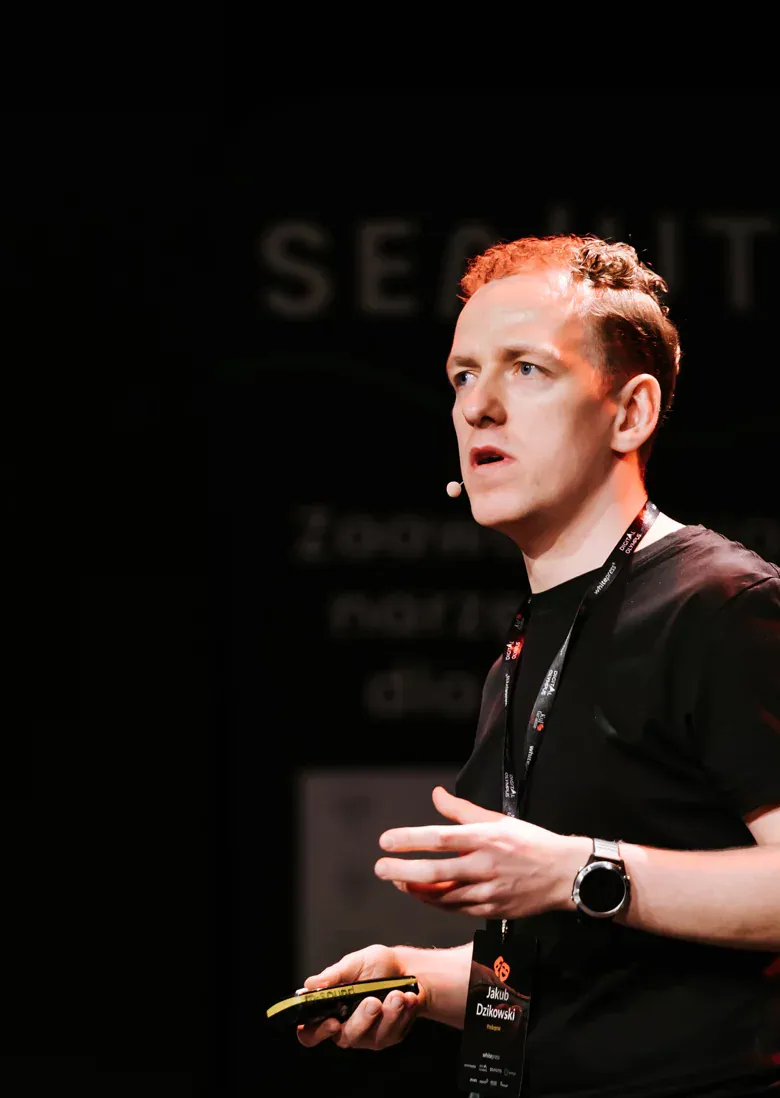
I had the chance to work with Kuba at Kulturalnie o SEO, an event I organise. Kuba did a great job as a speaker and received high marks from the audience. He showed professionalism and broad knowledge. In other projects at Vestigio, Kuba shows enormous commitment, a willingness to explore and implement new ideas, and excellent organisation of his work.

01 / 08
Local
SEO in your city
- SEO Białystok
- SEO Bielsko-Biała
- SEO Bydgoszcz
- SEO Bytom
- SEO Częstochowa
- SEO Dąbrowa Górnicza
- SEO Gdańsk
- SEO Gdynia
- SEO Gliwice
- SEO Gorzów Wielkopolski
- SEO Katowice
- SEO Kielce
- SEO Kraków
- SEO Łódź
- SEO Lublin
- SEO Olsztyn
- SEO Opole
- SEO Poznań
- SEO Radom
- SEO Ruda Śląska
- SEO Rybnik
- SEO Rzeszów
- SEO Sosnowiec
- SEO Szczecin
- SEO Toruń
- SEO Tychy
- SEO Warsaw
- SEO Wrocław
- SEO Zabrze
- SEO Zielona Góra
You talk to me, not a salesperson
Tell me what you want to achieve. I’ll reply personally
I work as a freelancer: the same person reads your message, prepares the quote and then runs the project. No sales team in between.