

SEO · Rybnik
SEO in Rybnik
I treat SEO in Rybnik as work on real local demand, not on a random list of keywords. I start by checking how customers search for services, where the site is losing visibility and what can actually be improved on the website. I combine solid on-site optimisation, off-site work and preparing content and structure for search engines, maps and AI-generated answers.
About the service
SEO in Rybnik for businesses that want to grow from local traffic
About the SEO in Rybnik service
A few service details- Analysis of local competition and intent
- Technical and on-site optimisation
- Expanding service and local content
- Link building and off-site signals
- Preparation for AI and chatbots
- Ongoing implementation priorities and consultations
Location
Local SEO: Rybnik and the surrounding area
- City
- Rybnik
- Region
- Silesian
- How we work
- Remote

Work process
How I work on local SEO and a company’s visibility in Rybnik
I work in a simple model: first I establish the starting point and the business priorities, then I design the scope of the changes, and finally I move on to implementation and iterations. This makes it clear what we do straight away, what requires a decision on the company’s side and which elements matter for local visibility.
- 01/ 03
Diagnosis and scope
At the beginning I check the website, the business profile, the area served and what the competition looks like in the local results. We also establish which services matter most, which pages already exist and where quick fixes are needed instead of an extensive project.
- 02/ 03
Action plan
After the diagnosis I prepare a plan: which keywords and page types make sense, how to organise the site architecture, what to improve in the content, metadata and internal linking, and which off-site activities are worth pursuing to strengthen the credibility of the domain and the brand.
- 03/ 03
Implementation and adjustments
The next stage is implementation and refining the details. I work by priorities, so first we put in order the elements with the greatest impact on visibility and usability. Later we develop the content, finalise the local signals and adjust the direction based on search engine data.
Starting the cooperation and scope
I begin work on SEO by establishing how the company really operates: which services it sells, in which area it wants to be visible, which queries are valuable and what constraints it has on the side of the website, resources or the sales process. This is especially important locally, because SEO is designed differently for one service in one city than for a company handling several service categories and several travel areas. Without that understanding, it is easy to get into work that looks correct but does not support the customer’s buying decision.
At this stage I also establish the scope of responsibility and the pace of work. Some companies first need to put their existing pages in order, others should start by creating missing service sections, and others still by improving the technical foundations. As a freelancer I prefer to say clearly what makes sense to implement straight away, what requires preparation and what is not worth doing just because it often appears on general lists of SEO tips. As a result, the cooperation has a realistic plan and clear priorities.
Input data and access
For SEO to make sense, I need a reliable picture of the starting position. What counts is information about the offer, seasonality, the area served, the existing website, the publication history and how users reach the company and what they look for before getting in touch. Access to the content management system, the hosting, the Google Business Profile and the sources of data on traffic and queries is also helpful. The better I understand the starting point, the easier it is to separate technical problems from content gaps and from issues related to local competition.
If there is little such data, it does not block the cooperation, but it changes the way of planning. In that case I put greater emphasis on analysing the site’s visibility, the site structure, the content and the publicly available local signals. It is also important to establish who on the company’s side can implement changes, update the offer and approve new content. Local SEO does not happen in a vacuum: even a well-prepared plan will be ineffective if it does not take into account the real decision-making flow, the technical constraints and the company’s day-to-day work.
Visibility and technical audit
An audit is not a document for its own sake, but a way of finding the points that really limit visibility growth. I check whether the site is indexed correctly, whether it duplicates content, whether the important pages are easy to find and whether the site architecture is diluting authority across too many similar URLs. I also look at the headings, the metadata, the internal linking, the readability of the URLs, the mobile version and whether the user can quickly understand the offer and get to the contact details without wandering around the site.
The second part of the audit concerns the quality of the content and its match with search intent. Often the problem is not the lack of keywords as such, but the fact that the page does not answer the user’s question directly, is too general or mixes several topics at once. In local SEO I also analyse whether the site communicates the area served properly, whether the address and contact information is consistent and whether the business profile and the site support each other. Such an audit makes it possible to set out a plan of work without guessing and without doing everything at once.
Local keywords and intents
For me, local keyword analysis consists of mapping topics to customers’ real needs, not of creating a very long list of terms without context. For one company, strictly service-related keywords with the name of the city will be important; for another, queries about a problem, urgency, a specific type of job or a comparison of solutions before making a decision. In practice I divide the queries into those that should lead to the main service pages, those supporting the local sections and those that are better served by a guide or a questions and answers section.
This is also the stage at which I make sure not to overdo the mechanical use of the city name. A good local page does not have to repeat the location in every paragraph if it clearly shows the context of the business, the local offer and a sensibly built structure. More important than keyword density is matching the content to user intent, distinguishing between services and connecting the pages correctly with internal links. As a result, the site has a better chance of being clear both to the search engine and to a person who wants to find a specific answer quickly.
Page architecture and content
A well-designed site architecture helps SEO, but above all it makes it easier for the user to move around the offer. If the company has several services, each of them should get its own logically described page instead of being crammed onto one general home page. In local projects it is often also necessary to distinguish between service pages, pages about the area served, pages that support the decision and content answering frequent customer questions. Such a structure brings order to the communication and provides a solid basis for strengthening visibility further.
I prepare the content so that it is useful in the classic search results and, at the same time, understandable to the systems that analyse page content. Clear headings, readable sections, specific answers, consistent naming of services, contact details in predictable places and sensible use of structural elements all help with this. This gives no guarantee of appearing in AI Overviews or chatbot answers, but it increases the chance that the site will be more easily interpreted and cited as a sensible source of information about the company and its offer.
Implementation, links and development
After the planning stage I move on to on-page implementation. It usually covers improving titles and descriptions, refining headings, rebuilding the key service pages, better internal linking, adding missing sections, tidying up the URLs and making the site clearer on mobile devices. In parallel, I look at the local elements of the company’s online presence, such as the consistency of contact details, the description of the business, the logic of connecting the business profile with the right pages and the visibility of the most important services in the places where the user decides to get in touch.
I treat off-site work as support for credibility, not as artificially pumping up signals. What counts is the quality of the links, a sensible context for brand mentions and the company’s presence in places that are natural for the industry and the local market. At a later stage I also develop the content so that it better answers the questions asked in the search engine and in conversational tools. As a result, the site can improve its discoverability not only in the classic results, but also where the user is looking for a shorter, synthesised answer and only then goes on to the website.
Testimonials
What clients and the industry say
Feedback from clients and industry people I have worked with on SEO projects.

I had the chance to work with Kuba at Kulturalnie o SEO, an event I organise. Kuba did a great job as a speaker and received high marks from the audience. He showed professionalism and broad knowledge. In other projects at Vestigio, Kuba shows enormous commitment, a willingness to explore and implement new ideas, and excellent organisation of his work.

01 / 08
Local
SEO in your city
- SEO Białystok
- SEO Bielsko-Biała
- SEO Bydgoszcz
- SEO Bytom
- SEO Częstochowa
- SEO Dąbrowa Górnicza
- SEO Gdańsk
- SEO Gdynia
- SEO Gliwice
- SEO Gorzów Wielkopolski
- SEO Katowice
- SEO Kielce
- SEO Kraków
- SEO Łódź
- SEO Lublin
- SEO Olsztyn
- SEO Opole
- SEO Poznań
- SEO Radom
- SEO Ruda Śląska
- SEO Rybnik
- SEO Rzeszów
- SEO Sosnowiec
- SEO Szczecin
- SEO Toruń
- SEO Tychy
- SEO Warsaw
- SEO Wrocław
- SEO Zabrze
- SEO Zielona Góra
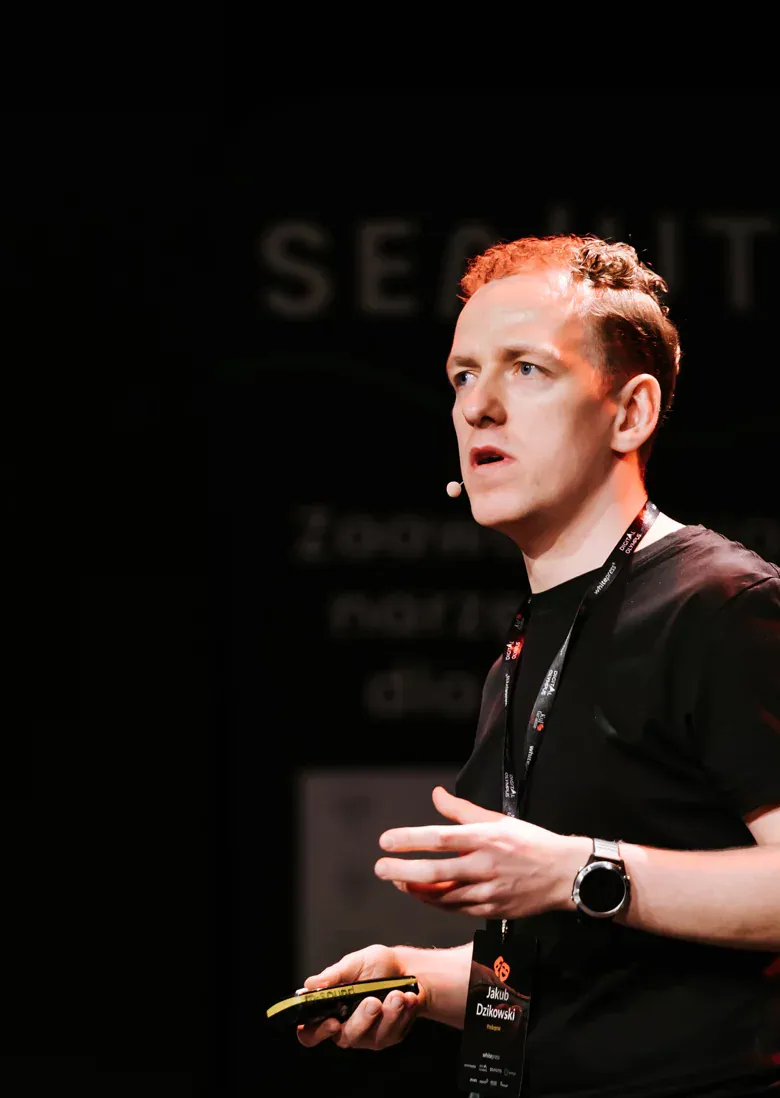
You talk to me, not a salesperson
Tell me what you want to achieve. I’ll reply personally
I work as a freelancer: the same person reads your message, prepares the quote and then runs the project. No sales team in between.