
In many industries, companies are now moving along the same track. The same channels, similar ads, similar SEO content and almost identical offer pages. The effect is simple: mere presence in Google, social media or paid campaigns increasingly rarely delivers a real advantage. The customer sees several nearly identical options and compares them on the fly, often only scanning headings, prices, proof and forms. Marketing advantage arises when the offer is easier to understand, more relevant and requires less decision-making effort from the customer. In practice, this is therefore not about doing more activities, but about better alignment of the message, the offer, UX and measurement. These details determine whether the user goes further or returns to search results and chooses someone else.
How do you build a marketing advantage in standardised channels?
You build a marketing advantage in standardised channels through alignment, not gimmicks. Better messaging, a better offer and a better post-click experience do more than using “different tools” from the competition, when everyone is standing on the same platforms anyway. If everyone publishes similar content, runs ads in the same systems and sends traffic to similar landing pages, then the difference is made by the quality of operational decisions. The customer does not choose the channel. The customer chooses what explains their problem fastest and leads them along a more certain path to a solution.
The first step is mundane, but ruthless. Check what the audience actually sees before they even get in touch with the company: search results, ads, page headings, CTAs, forms, post-sign-up emails and the sales response. The question is: can all of this be understood in a dozen seconds, or does it require reading into assumptions. The most common mistake is assessing your own marketing from the inside, rather than from the perspective of someone comparing several offers within a few minutes. Only such an audit shows where the brand is just another “similar option”.
The second step is to identify the places where the market speaks the same language. Usually these are generic promises, broad target groups, vague benefits and standard CTAs such as “contact us” or “learn more”. The problem is that when communication is interchangeable, the customer is given no reason to choose this particular company. In that case, advantage should not start with a bigger budget, but with narrowing and sharpening: who the offer is for, what problem it solves and why it does it differently. First clarity, then scale.
The next stage is changing the logic of the customer’s choice. In practice, this means better SEO, stronger proof, a simpler offer and a shorter route to decision. If the ad promises one thing, and the page after the click serves up generalities, the advantage disappears immediately. Consistency between channels matters more today than the sheer number of publications or campaigns. Instead of multiplying messages, close one coherent chain from promise to proof.
At the end of the day, one thing matters: measurement that enables decisions. The sheer number of leads solves nothing if you do not know which of them are valuable, where users are dropping off and what in the journey is unnecessarily lengthening the decision. The question is whether we measure only “how many”, or also “why”. In practice, you need quantitative and qualitative data at the same time, because analytics will show the drop-offs, and sales conversations, surveys, chats or session recordings will only then reveal the cause. Scaling traffic before tidying up the message, offer and UX usually only reproduces the existing inefficiency.
Key elements of brand differentiation
Brand differentiation does not happen in headings, but in structure. The audience segment, the specific problem, the value proposition, proof of effectiveness, the offer and the way of moving from interest to decision are the points where the customer sees a real difference. Not in the mere fact that the company “is” in SEO, Google Ads or social media, because almost everyone is there today. The more closely these elements are aligned with user intent, the lower the risk that the brand will be treated as a substitute from the shelf next door.
- Audience segment — the more precisely the group is defined, the easier it is to build a message that sounds specific rather than generic.
- Customer problem — advantage grows when the brand names the real problem and decision moment, instead of talking only about broad benefits.
- Value proposition — a good proposition states clearly what result the customer is meant to achieve and why this path is more relevant than the alternatives.
- Proof and validation — testimonials, implementation examples, the way of working, process transparency and concrete arguments build credibility faster than ad copy.
- Offer and cooperation model — package names, scope, entry threshold, demo, consultation or trial often differentiate more than a slogan on the homepage.
- Conversion path and UX — a simpler form, a better order of information, sensible FAQs and clear CTAs reduce friction and help people make a decision faster.
The most important thing is not to try to differentiate everything at once. That is a straight road to a message that supposedly says everything, but in practice does not stay in the mind. Instead of A — B: instead of five “advantages”, choose one main level of advantage and organise the rest around it. For one company, it will be specialisation in a narrower segment; for another, a simpler buying model; and for yet another, stronger proof or a faster time to value. A slogan without changing the offer, the contact process and the user experience only gives the appearance of differentiation.
These elements have to work as a team, not solo. A well-phrased promise will not work if the landing page is chaotic, the form too long and the salesperson speaks a different language from the advert. The problem is that many companies treat differentiation as a creative workshop, when in fact it is operational work, to be tightened up to the last detail. The winner is not the brand that shouts the loudest, but the one that most clearly guides the customer from first contact to a confident decision.
Market analysis and identification of copying areas
There is no room here for guesswork. Market analysis and identifying areas of copying means breaking down competitors’ communication to first principles and checking at which point the customer sees too little difference between the offers. It is not about a vague sense that “everyone sounds similar”, but about spotting recurring patterns in headlines, promises, CTAs, page layouts and the way the offer is presented. Only then does it become clear which parts of the market have simply become interchangeable. If several companies are relying on the same arguments and following a similar contact path, the customer starts choosing mainly on price, availability or the first decent impression.
Start with what the user actually sees before a salesperson gets in touch. This is most often search results, ads, landing pages, service pages, forms, the email after an enquiry is submitted, and retargeting. And here the key is not only comparing the content, but also the logic of the decision: what the company promises, how quickly it moves towards the sale, what proof it shows and how much “friction” it adds for the user along the way. In other words, where the promise ends with a click and real experience begins.
- headlines and subheadings on pages and in ads,
- the main value proposition and benefit-led language,
- CTAs and the moment at which the call to action appears,
- the scope of the offer, packages, naming and entry points,
- proof of effectiveness: reviews, case patterns, figures, references,
- FAQ, forms, onboarding and response speed after contact.
Observing the competition alone is not enough. It will not show you how the audience actually makes decisions, where they hesitate and what stops them. That is why the analysis needs to be combined with user behaviour data: queries from Search Console, session recordings, heatmaps, CRM, sales notes, chat and support questions. Analytics will show where the user drops off, and qualitative sources will fill in what they were missing and which words they were looking for. Most often, the advantage does not come from a more eye-catching message, but from a better fit with the customer’s real questions and objections.
The most valuable outcome of this work does not look like a company ranking. It is a map of “no-difference zones”, meaning places where everyone is relying on similar claims, broad target groups and vague promises such as “comprehensive”, “effective” or “individual”. The problem is that in such zones a brand does not win on the quality of the story, but on the size of the budget or by chance. Once these areas are named, it becomes easier to decide where it is really worth differentiating and where there is no point fighting for artificial originality.
A good analysis can also ruthlessly point out where the problem lies. Is it the communication, the offer itself, or the post-click experience. Sometimes the ads are almost identical, but one company wins with a simpler form and better onboarding. At other times all the pages look similar, but one addresses a specific industry problem more precisely and adds stronger proof. This matters, because differentiating the slogan without changing the offer and the conversion path usually creates only a superficial advantage.
Strategic decisions in differentiating the offer
Strategic decisions in differentiating the offer come down to one thing: a conscious choice of one or two areas in which the company is to be clearly better, or simply more relevant, than the rest of the market. You cannot effectively “differentiate everything”. When you try, the message balloons, drifts and stops promising anything. That is why it is crucial whether the advantage is to come from the client segment, a specific problem, the solution mechanism, the collaboration model, proof of effectiveness or the simplicity of purchase.
The safest direction is narrowing down. Not broadening. In practice, this means choosing an audience whose pain points you know inside out, and describing the solution with more specificity than the competition. Instead of speaking to “companies”, it is better to speak to a defined type of organisation. With a specific growth stage, operational constraint or buying need. The more the customer sees that the offer is for their situation, the less energy they need to spend comparing alternatives.
The second decision is just as firm: the mechanism of advantage. What is it really meant to be, not just on a slide. Sometimes industry specialisation will work, sometimes a shorter route to the result, and sometimes a different collaboration model, for example a simpler start, an audit instead of a full implementation, or a demo before a long sales process. Such a change is meant to reshape the customer experience, not just the wording of the headline. Because if everything after the click looks the same as with others, the market quickly “levels out” the difference.
Offer differentiation also has to be translated into the message architecture. Otherwise it stays at the level of declaration. The main promise should be supported by secondary messages, proof, answers to typical objections and a CTA matched to the stage of the decision. A different message works with SEO traffic, another with retargeting, and yet another with a lead who already knows the brand and is looking for confirmation of credibility. And that is where the operational advantage emerges: in consistency between the ad, the page, the form and the follow-up contact.
A very common mistake is choosing too ambitious a strategy with weak execution. It sounds good, but performs badly. The company declares a unique approach, but does not change the package naming, does not tidy up the page, does not strengthen the proof and does not shorten the contact path. As a result, the audience still sees a standard offer, just described more creatively. A differentiation strategy only makes sense when it affects the content, the offer, UX, the funnel and the measurement of results.
In the end, what remains is the order of implementation. And that is often what determines the outcome. First refine the positioning and the message, then simplify the offer and the conversion path, and only then increase traffic and advertising budgets. This approach is simply practical, because it protects you from scaling something that is still too similar to others and therefore converts poorly.
UX and conversion optimisation for better performance
UX and conversion optimisation is about removing friction from the path to decision. The aim is for the user to grasp the offer straight away, understand the difference and see the next step without getting lost on the page. In practice, the site that wins is not the one with more sections, but the one that answers four questions fastest: who it is for, what problem it solves, why it is worth trusting, and what to do now. If the user has to piece the offer together from guesswork, the advantage disappears before they even contact the company.
The hierarchy of information matters most. First comes the heading: it should name a specific problem and audience, rather than sound like yet another polished slogan from the same category. Then you show how it works, the scope of the service or product, and what makes the solution genuinely different from typical alternatives on the market. Briefly, clearly, without marketing fog.
Very often the problem is not the traffic itself. It is the mismatch between the advert, the search result and the landing page. The user clicks the promise from the ad, and upon arrival gets a broad company page that starts talking about everything at once. Consistency of the message between the entry channel and the destination page usually delivers a bigger effect than adding more sales messages. First consistency, then the fireworks.
At the decision stage, proof and risk reduction matter. Instead of multiplying declarations, it is better to put concrete information on the table: sample use cases, the scope of cooperation, the process flow, answers to objections, timelines, limitations and launch conditions. The more complex the offer, the greater the need for order. Then comparing options, a short FAQ and a clear explanation of what will happen after submitting the form or booking a call make a difference.
The form, CTA and micro-conversion steps must match the audience’s level of readiness. A sales prompt that comes too early, or a long form at the first contact, often lowers effectiveness, even if the traffic is valuable. It works well to shorten the first step: fewer fields, a more precise CTA and an alternative for people who are not yet ready for a sales conversation. That is not a concession, just smart user guidance.
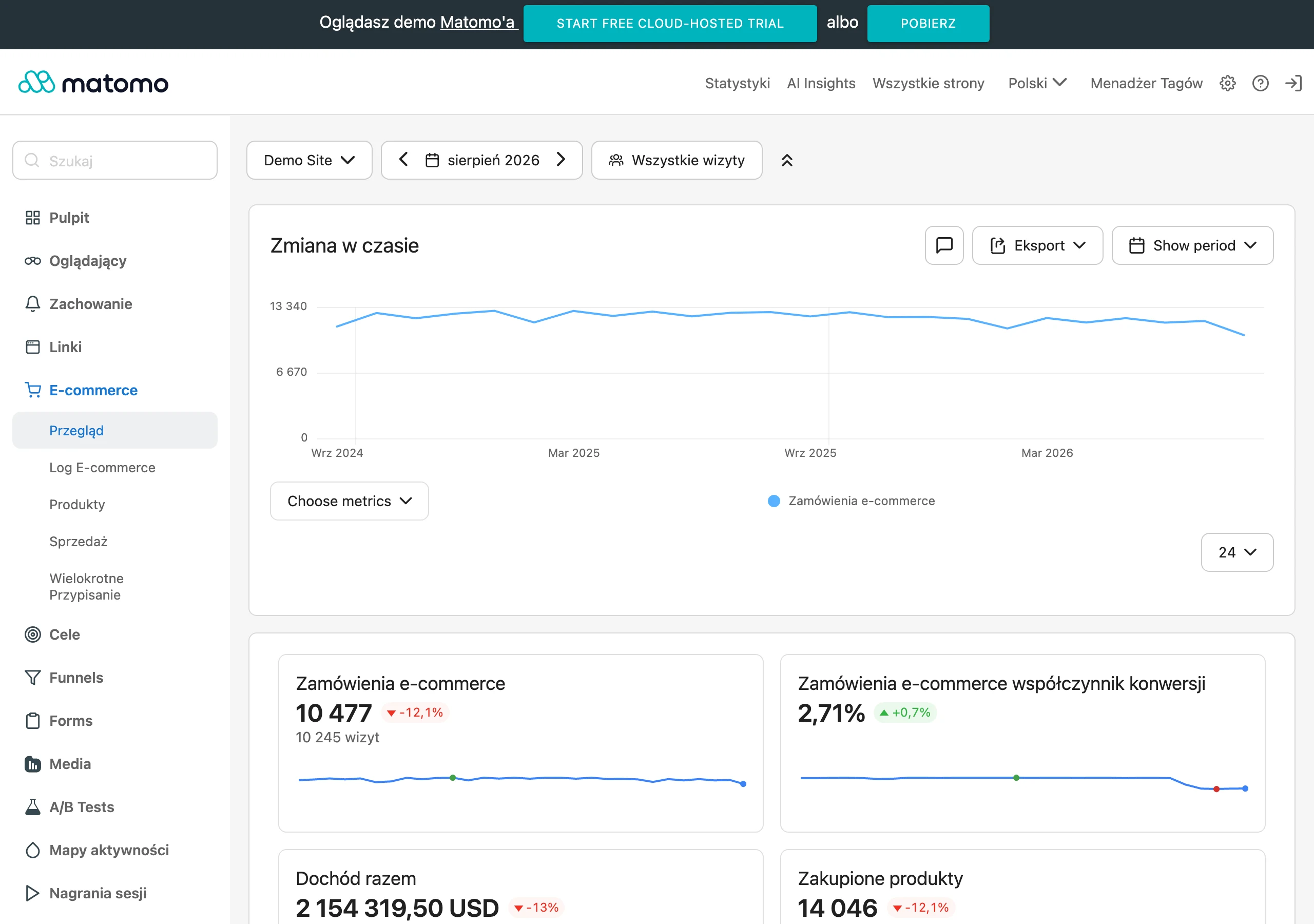
Optimisation should not rely solely on guesswork. Hard signals matter: session recordings, heatmaps, form analysis, sales call recordings and customer questions. They show where the user gets stuck, what throws them off rhythm and what they are missing to make a decision. Only combining these observations with conversion data allows you to distinguish a real UX problem from a temporary drop in performance. And then you act on the cause, not the symptom.
Implementing changes and measuring results
Implementing changes and measuring results is phased work, with control over whether not only the number of conversions grows, but also their quality. The safest approach is to start with the message and the offer, then improve the funnel and UX, and only at the end increase media budgets. Scaling traffic before tidying up the offer and conversion path usually only replicates inefficiency faster. First the foundation, then the boost.
Order matters. Good implementation starts with a clear sequence of changes: first you determine which segments and intents are a priority, then you write new messages for the pages, campaigns and sales, and only at the end do you adapt forms, follow-up, retargeting and onboarding. Otherwise the company says one thing in the ad, another on the website, and a third in a conversation with the lead.
Measurement must cover the entire process. Not only the final sale, but also what happens along the way: micro- and macro-conversions, transitions between stages, lead sources, time to response, time to decision and drop-off moments. What is the point of the number of forms alone if most contacts do not fit the offer or get stuck after the first conversation.
The problem is that the data usually sits in several places. It needs to be connected: from web analytics, CRM, ad systems and information from sales or support, because only then can you see where the funnel really breaks. If marketing counts clicks and sales receives poor leads, the problem is usually not a lack of traffic, but poor message fit or a flawed qualification model. Such a picture allows you to check more quickly whether the change has genuinely improved the logic of customer choice.
In practice, a simple decision rhythm wins. The team regularly looks at a few key metrics, selects 1-2 hypotheses to implement and, after a set time, assesses their impact, instead of changing everything at once. It is less flashy, but it clearly maintains operational advantage better, especially when competitors quickly copy the most visible elements of the communication.
The cost of bad decisions can be brutal. Poorly configured events, no contact attribution, broken form tracking or inconsistent stage naming in the CRM can produce a false picture of effectiveness and drag the company into optimising appearances. If the measurement does not show where good leads come from and where weak ones drop off, the company is optimising chance, not advantage.
FAQ
Frequently asked questions
How do you build a marketing advantage when competitors use the same channels?
Advantage comes from aligning the message, offer and post-click experience, not from simply choosing different tools. When everyone is active on the same platforms, the quality of operational decisions matters.
Does being present in Google and social media still give you an advantage?
No, because in many industries most companies are already present in the same channels. The outcome is more often determined by how quickly and clearly the offer explains the customer’s problem.
Which brand elements differentiate an offer most strongly from the competition?
The strongest differentiators are the target audience segment, the specific problem, the value proposition, proof of effectiveness, the offer and the conversion path. Mere presence in SEO, Google Ads or social media is not enough.
Why is consistency between an ad and the landing page so important?
If the ad promises one thing and the page shows generic statements, the advantage disappears immediately. A consistent line from promise to proof makes it easier for the customer to make a decision.
How should you analyse competitors to find areas of copying?
You need to break down rivals’ communication into its component parts and check headlines, promises, CTAs, page layouts and how the offer is presented. It is also worth comparing this with user behaviour data to see where they really drop off.
When is it worth narrowing the offer instead of trying to speak to everyone?
Narrowing is better when the message becomes too general and interchangeable with competitors’ offers. A company wins when it chooses one or two areas where it aims to be clearly more relevant than the rest of the market.