
Promotions can give sales a boost. At the same time, they can undermine a brand if they are poorly designed. The problem rarely lies in the discount itself, but in who you show it to, how often you repeat it and what you communicate more loudly than the product’s real value. Customers quickly learn pricing rituals, compare offers across channels and spot every inconsistency. That is why a good promotion does not start with the question “how much discount should I give”, but with the business objective and the risk to the brand. The most important thing is that the promotion supports demand without teaching the market that the regular price does not matter. In practice, this means working in parallel on the mechanics, communication, segmentation and measurement of results.
What a promotion that does not damage brand image involves
A promotion that does not damage brand image is a sales campaign that increases interest in the offer without lowering perceived quality, trust and the reference price. It is not about “selling more at any cost”, but about delivering a specific result while keeping brand consistency under control. In practice, a promotion has a defined role. It can acquire new customers, reactivate a database, increase basket value or speed up the sell-through of selected products.
The starting point should not be an automatic percentage discount. First, you need to assess what customer behaviour you want to trigger, and ask yourself: can this be achieved in some other way than a straightforward price cut? This is particularly important when a brand is built on quality, expertise, design or limited availability, because frequent and broad discounts undermine that message. Instead of building tension around the product, you start building it around price.
A well-designed promotion takes into account the brand’s positioning, the history of previous campaigns, margin, product mix structure and customer behaviour. Add to that the cold shower of cannibalisation risk, meaning a situation in which the customer would have bought anyway, but now buys at a lower price. If the promotion takes away full-price sales instead of creating new demand, the short-term result may look good, but from a business perspective the campaign will be weak. And it is precisely that disconnect that can cost the most.
Context also matters — the context in which the offer appears. The same benefit can be safe or harmful depending on who you show it to, how long it runs and how you justify it. A promotion for programme members, new customers or a specific segment is usually safer than broad communication to the whole market. Not “everyone at once”, but “the right people at the right time”.
Aesthetic creative alone will not protect brand image. You need hard operational rules: which products can enter the campaign, how prices should be presented, which claims to avoid, what the minimum communicated price is and what exclusions apply. This is especially important in e-commerce, where the customer sees the ad, the landing page, the basket, the mailing and the app, and every inconsistency, even a minor one, reduces credibility. Here the brand does not lose because there is no discount, but because of chaos in the details.
The result of good promotional work is not just a banner with a slogan and a discount code. It is a chain of specific decisions: the promotion mechanics, the audience group, the distribution channels, automations, the measurement method and the campaign closure conditions. A promotion without damage to the brand is always managed, not merely launched.
Which promotion mechanisms support sales and protect the brand
Sales and the brand are best supported by mechanisms that give the customer a real benefit without directly knocking down the value of the whole offer. That is why conditional, segment-based or value-added solutions win more often than a broad discount for everyone. The choice of mechanism must follow the objective. One form will increase average basket value, another will reactivate the database, and yet another will help you test a new category.
A basket threshold can be a safe move, meaning a benefit unlocked at a certain order value. This mechanism not only protects the average selling price, but also naturally encourages customers to add more products. Bundles and sets work in a similar way — the customer buys “more sense” in a package, rather than simply a cheaper single product.
Purchase bonuses, freebies, additional services or free delivery above a threshold also work well. They build a sense of gain, but they do not shift the reference price as strongly as a simple percentage discount does. This is particularly important for flagship products that build the brand’s prestige and should not be permanently marked down on the front end.
If a brand has a customer base or a loyalty programme, it makes sense to use promotions with restricted access. Early access to the offer, a limited purchase window, a benefit for members only or conditions visible after logging in — all of this works because it sells and at the same time strengthens belonging. Instead of teaching the whole market to wait for markdowns, you reward the relationship.
Segment-based promotions are also effective. You show a different incentive to new users than to people abandoning a basket, high-value customers or users who have been inactive for several months. The better you match the offer to the stage of the customer relationship, the less need there is to give a broad, costly discount.
In premium and quality-led brands, the key is the justification for the promotion, not the fact of it. It is better to package it around the season, a product launch, a limited stock pool, a functional benefit or an advantage for a selected group than to shout about a “total clearance sale”. The question is: does this sound like an opportunity aligned with the brand, or like a nervous rescue move? The problem is that the market quickly senses the difference.
Not every price cut is bad, but it has to be kept on a short leash. If a discount is genuinely needed, limit its scope to selected categories, segments or a short time window — instead of broadly marking down the entire range. That way the promotion delivers the operational objective, and the brand does not lose consistency or pricing credibility.
The worst thing you can do is choose a mechanism that is convenient for the team but completely mismatched to the brand. Ads based solely on price can temporarily increase clicks and conversion, but at the same time they push quality, experience and the offer’s real advantage out of the communication. And then, instead of building value, we teach the market to hunt for discounts. That is why every promotion should be assessed not only by revenue, but also by whether it leaves behind healthy full-price sales and a stable perception of the brand.
Current context and challenges in brand promotion
The context is simple. Promotion today operates under the pressure of price comparison, low customer patience and the instant spotting of inconsistencies. Customers see the same brand in ads, marketplaces, comparison sites, emails and social media, so they pick up differences in price, messaging or offer terms almost instinctively. If a brand says “quality” but constantly plays the discount game, it is cutting the branch it is sitting on. The biggest problem is not the reduction itself, but the fact that the market very quickly learns when it is not worth buying at the regular price.
Price transparency has stopped being a slogan and has become part of everyday life. Customers sign up for alerts, track price history and compare offers across channels, which is why an artificially inflated pre-promotion price or a different price in the ad than in the basket damages not only conversion, but above all trust. And this is not a detail to be “explained in the terms and conditions”. In practice, it means one thing: promotion must be operationally consistent at every touchpoint.
The audience has also changed, and so has the way it is worth reaching them with offers. A blanket discount for everyone is the easiest to launch, but often the most expensive for margin and brand image. Segment-based promotions, built on first-party data, are safer because they let you show the incentive only to the people for whom it makes concrete business sense. A new user needs a different nudge, a customer abandoning a basket needs another, and a person buying regularly without a discount needs yet another. The question is: why subsidise the discount where they would have bought anyway.
On top of that come performance channels, which by nature reward a simple, price-led message. Ads built solely around a discount may increase clicks in the short term, but at the same time push out messages about quality, product use and brand advantage. The algorithm will help scale the campaign, but it will not fix a badly chosen promotion mechanic. If the offer attracts mainly bargain hunters, sales quality usually falls, even when the result in the ads dashboard looks “green”.
That is why it is crucial to measure not only revenue, but also side effects. In practice, what matters is: the share of full-price sales, average selling price, returns, code usage, repeat purchases, customer service enquiries and customer reactions in comments. Only then does it show whether a promotion builds brand value or burns it. A promotion that delivers turnover but at the same time reduces the share of full-price orders and increases the number of post-purchase issues is not neutral for the brand.
The biggest risk begins when a promotion is too broad, too frequent or simply lacks a sensible rationale. This hits premium, expert and quality-led brands especially hard, because their position rests on trust in price, standards and selectivity. Promotion is meant to support value, not dilute it. If such a brand starts speaking the language of a discounter, rebuilding perceived value can be difficult and usually expensive.
How to implement promotions effectively without harming brand image
Promotions can be implemented effectively and without damage to brand image. The key is to combine the right mechanic, limited reach, consistent communication and hard measurement rules. The starting point should not be “what discount”, but “why are we doing this at all”. You set one goal operational and hold on to it like a handrail: higher conversion, a bigger basket, reactivating the database, stock rotation or support for a specific category. The more precise the goal, the lower the risk that the brand will reach for an incentive that is too strong and too broad.
Then comes choosing the mechanic suited to the goal and the brand’s position. Without that, chaos sets in. If you want to increase basket value, a spend threshold, bundle or benefit after reaching a certain amount will usually work better than a straight discount across the whole range. If you want to protect a flagship product, limited access, a purchase bonus or an offer for the CRM base may be safer than a markdown visible to everyone. And that is the essence: a good mechanic should support sales, but it must not teach customers that the regular price is only a starting point for negotiation.
A lot depends on scope. And that is not a cliché. You need to decide which products are excluded, how long the campaign runs, who can see it and whether a condition must be met. The most damage is done by promotions without boundaries: on everything, for everyone and with no clear end. They lower the reference price fastest, and then — step by step — they condition customers to wait.
Promotional communication should show the benefit, but it cannot hide the brand’s identity. Instead of shouting, it is better to explain. It is better to justify the offer with the season, a launch, a bundle, a limited allocation or a member benefit than with aggressive language such as “last chance” if the brand normally communicates calm, quality and trust. The question is whether the customer should remember the product or the red percentage. The creative should still showcase the product, its use, the experience and the brand style, not just the discount on the banner.
Before launch, it is worth checking a few operational elements, because this is exactly the stage at which the effect of even a well-thought-out campaign most often falls apart.
- price consistency in the ad, on the landing page, in the basket and in email marketing,
- the operation of codes and promotion conditions on different devices,
- product availability and actual stock levels,
- consistency of the terms and conditions, exclusions and end dates of the campaign,
- customer service readiness for questions about the offer terms.
After launch, it is not enough to stare at ROAS and revenue. At the same time, you need to keep your finger on the pulse: the share of promotional and full-price sales, margin, returns, newsletter unsubscribes, code usage and whether the number of questions and complaints is rising. Because what is the point of sales going up if their quality is falling. Then the response must be quick, not “tomorrow”: narrowing the segment, shortening the duration, adjusting the message or replacing the discount with another form of value.
Good practice also means writing up lessons learned after every campaign. You need to know which segments respond to a bonus, which to free delivery, and which buy without any incentive and should not be discounted just because “there has to be a promotion”. The best promotions are not the most spectacular ones, but the ones that can be repeated without eroding price, margin and trust in the brand.
Practical tips for safe brand promotion
Safe brand promotion is about controlling the goal, scope, message and measurement. Before you launch an activation, establish what you cannot afford to damage: margin, reference price, perceived quality, relationships with customers buying without a discount, or consistency across channels. This brings order to decision-making and immediately filters out mechanics that are too risky. Promotion is meant to trigger a specific customer behaviour, not simply lower the price.
The safest way to start is with the operational objective. If you want to increase basket value, a purchase threshold or bundle will often work better than a simple discount across the entire range. If you want to reactivate a base, an offer only for inactive customers is often more effective and less intrusive for the brand than a broad markdown visible to everyone. This logic protects regular sales and limits the market being “trained” that it always pays to wait.
It matters greatly who you show the promotion to and how you justify it. Segmentation lets you give a different stimulus to new users, a different one to abandoned baskets, and yet another to high-value customers. The narrower and better matched the segment, the lower the risk that the promotion will reduce the value of the whole brand. The justification matters too: seasonality, a bundle, a launch, a member benefit or a limited allocation sound more credible than yet another general “mega deal”.
In promotional creative, price should not drown out brand value. If an advert shows only the percentage off and ignores quality, use, experience and offer advantages, the customer starts comparing mainly on price. A good promotion still sells the brand, not just the discount. That is why you need to control the tone of communication, the hierarchy of information and the fact that the promotional design should not look like it belongs to a different, cheaper category.
The launch starts with order on the site. The price in the advert, on the landing page, in the basket, in email marketing and in the terms and conditions must match down to the penny, and the code conditions should work without “exceptions” only discovered at the end of the journey. On top of that comes stock availability, delivery availability and customer service readiness for questions about the rules of the campaign. Technical inconsistency damages trust faster than the size of the discount itself.
After the promotion starts, do not stare only at revenue. Look at the share of full-price sales, average selling price, returns, code usage, repeat purchases and the number of support tickets, because they show whether the activation is building the business or just inflating the counter. If traffic grows but sales quality falls, it is better to narrow the segment, shorten the duration or change the mechanic rather than pour in more media budget. The question is: what is the goal, volume or profitability. It is worth ending a promotion according to previously agreed decision thresholds, not only when it starts to do harm.
Most common mistakes and risks associated with promotions
Mistakes come back like a boomerang. An overly broad discount, lack of segmentation, inconsistent communication and assessing the campaign solely by a temporary sales spike are the classic set that derails strategy faster than you can count the margin. The effect is predictable: the reference price falls, and with it customers’ willingness to buy at the regular price. The problem is that it is rarely about one banner or one code, but about a repeatable pattern of behaviour that the market reads immediately. When a brand returns to markdowns too often, customers learn to wait, not buy.
The first major risk is putting too large a part of the range on promotion, especially flagship products. It sounds simple, but it is costly, because when you discount what builds prestige and serves as a benchmark for the whole brand, you undermine your own positioning. Instead of a broad cut “on everything”, bonuses, bundles, limited access or benefits for the CRM base can be safer. Such a discount sends a message that is easy to understand, but leaves a long mark on price memory.
The second mistake is more insidious. It is an aggressive sales narrative that clashes with the brand’s character, because a premium, expert or quality brand should not speak in the language of permanent clearance. It is not the customer who should adapt to the promotion, but the promotion to the brand; otherwise it undermines the promise made everywhere else. The customer does not have to be able to name it, but they will sense the mismatch between the brand style and the form of the promotion. The result can be twofold: lower trust and poorer-quality traffic.
The third risk is chaos across channels. If the advert promises one set of conditions, the landing page shows another, and the basket calculates something else again, the customer starts to suspect not so much “cleverness” as manipulation or plain confusion. And after all, we live in a world of price comparison sites, alerts and marketplaces, where such inconsistencies come to light faster than the campaign can die down. This is especially dangerous for brands that previously built their message on transparency and high service standards.
The fourth mistake becomes apparent in analytics and in “after the campaign” decisions. The mere fact that a campaign increased sales says nothing if margin fell at the same time, returns increased, and the share of full-price orders shrank. In that case, the promotion can look great in the media report and poor in the business. A lack of such evaluation ends up repeating mechanics that, over the longer term, simply eat away at brand value.
The most expensive mistakes are the ones repeated over and over. Too many campaigns, no control of product exclusions, promotions launched “because that is how it is”, and on top of that adding budget to campaigns just because clicks are cheap. The effect. Instead of customers coming back for value, you attract deal hunters who disappear when the discount disappears. That is why every new promotion must be compared not only with previous sales, but also with how it affected the brand, price and customer behaviour after the campaign ended.
How to measure promotion effects without hurting sales quality
Promotion effects are measured by more than revenue. The key issue is whether sales after the campaign are still healthy for margin, reference price and customer behaviour. Higher conversion alone is not enough if the share of low-margin orders rises, customers buy only with a code, or full-price sales fall. The most important rule is this: a promotion should improve the business result, not just temporarily lift turnover.
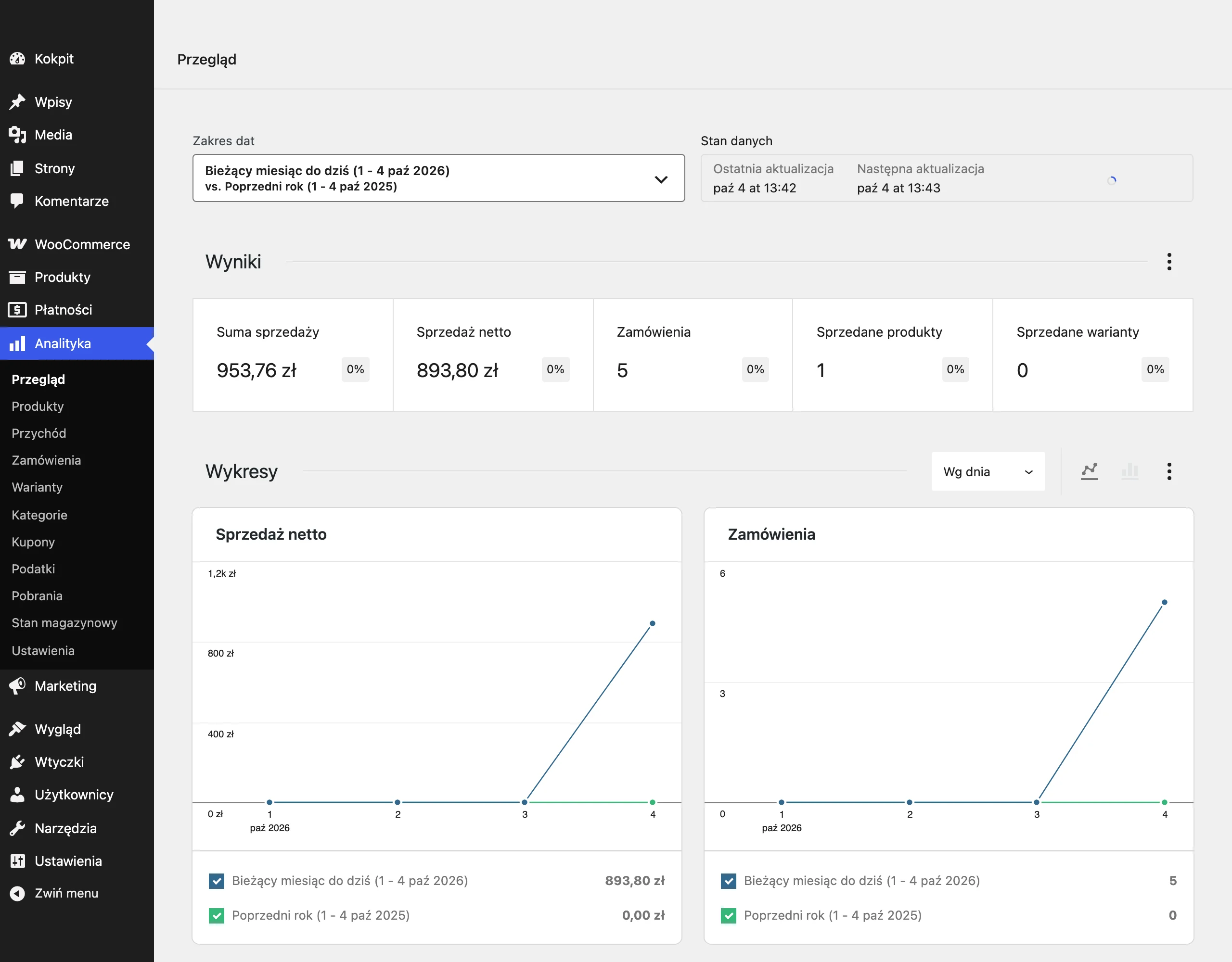
In practice, you look at the short-term result and the side effect at the same time. In the short term, you care about sales, code usage, average basket value and acquisition cost. In the long term, you check whether the average selling price, retention, share of orders without a discount and trust in the brand message start to slide after the action. The question is: does the discount build a habit, or does it foster promotion dependence.
The basic mistake is assessing a promotion only by ROAS or campaign revenue. This reading often masks cannibalisation of regular sales, i.e. a situation where the customer would have bought anyway, only now buys more cheaply. Let’s look at it differently. Compare not only sales “in promotion”, but also what happens to full-price products before the action, during it and after it ends.
- the share of promotional sales versus full-price sales,
- average order value and average selling price,
- margin after the discount, media costs and delivery costs,
- returns, cancellations and complaints after the action,
- repeat purchases after 30, 60 or 90 days,
- use of discount codes by segment and channel,
- newsletter unsubscribes, questions to customer support and comments about “permanent promotion”.
Good analysis always breaks down results by customer segments and channels. New users behave differently, loyal customers behave differently, and reactivated people after a longer break behave differently again. The same applies to channels: a promotion may deliver results in CRM while at the same time undermining brand perception in broadly targeted performance campaigns. Not “either-or”, but the full picture — and only then do you make a decision.
Measure the impact of the campaign cold. Compare the results against a benchmark: the period before the promotion, its duration and a few weeks after. Even better if you can leave part of the base without the offer or test two mechanics in parallel, because then you can see black on white what really improves sales quality and what merely cuts the price.
Quality metrics are just as important as sales metrics, because they are the first to show the risk to the brand. And that is not a cliché. If, after launch, the number of questions about the promotion terms rises, complaints about prices appear, negative comments increase or there is a mismatch between the advert and the basket, the problem is usually that the mechanic or communication has failed, not the media itself. The question is: do you treat that as a warning, or as “noise”. Such signals are operational data, full stop.
Measurement only makes sense if it leads to a decision. Decide in advance at what level of margin, returns, share of full-price sales or retention the campaign is deemed safe, and at what level it requires adjustment. If a promotion increases volume but worsens sales quality, it is better to narrow the segment, shorten the duration or change the incentive than to add ad budget. Instead of chasing the result with costs, cut what damages the economics.
Finally, write up the conclusions. Not only for the whole campaign, but also for specific products, segments and messages. That way, next time you know which mechanics increase the basket without damaging price, which groups respond without excessive discount sensitivity and which communication elements are safe for the brand. The fact is this: that is what distinguishes controlled promotion from constantly firefighting the effects of an overly broad markdown.
FAQ
Frequently asked questions
How do you create a promotion that does not damage brand image?
First, you need to define the business objective and the risk to the brand, and only then choose a discount or another benefit. Segmentation, consistent communication and post-launch performance monitoring are also important.
Is a simple percentage discount safe for the brand?
Not always, because a broad and frequent markdown can undermine the reference price and train customers to wait for promotions. The article points out that conditional, segmented or value-added solutions can be safer.
Why can frequent promotions harm a premium brand?
Because premium, expert and quality-led brands rely on trust in price, standards and selectivity. When they start speaking the language of discounting, rebuilding perceived value is difficult and costly.
When is it better to show a promotion only to selected customers?
When the offer only makes sense for a specific segment, for example new users, cart abandoners or inactive customers. This approach reduces cost and lowers the risk of damaging the brand image.
Which promotion mechanisms protect brand price?
A basket threshold, bundle offers, freebies, extra services, free delivery from a threshold and limited access for selected groups work more safely. They give the customer a benefit without cutting the reference price as sharply as a simple discount.
What should be checked before launching a promotion in e-commerce?
You need to check price consistency in the advert, on the landing page, in the basket and in email marketing, the functioning of codes, product availability and the consistency of the terms and dates. The article also emphasised customer service readiness for questions about the offer’s conditions.