
The transition from around 10 to 50 customers a month turns marketing from an add-on to sales into one of the main growth mechanisms. At this stage, referrals, the owner’s intuition and random campaigns are no longer enough. The company needs a repeatable system that can be measured, improved and scaled without chaos. This requires putting the offer, data, acquisition channels and lead handling process in order at the same time. The biggest mistake is to add more activities before you know where the real bottleneck is.
What does the transition phase mean for a company?
The transition phase means that the company is moving out of survival mode and has to turn ad hoc sales into a predictable customer acquisition system. Until now, growth often relied on referrals, the founder’s relationships and quick decisions. At a larger scale, that model stops being enough because it does not give control over the number of enquiries or their quality. If the company wants to grow steadily, it must know where leads come from, how much they cost and which ones turn into sales.
In practice, this means changing the way marketing is thought about. The goal is no longer visibility alone or the number of activities, but building a steady sales pipeline. Marketing is meant to deliver leads in a predictable way, and sales must be able to handle and qualify them quickly. Without this, the company increases activity, but does not increase revenue proportionally to the effort.
At this stage, three typical decisions appear. You need to decide whether it is better to scale one proven channel or launch additional acquisition sources. You also need to identify the real growth constraint: too little demand, weak conversion on the website, or an inefficient lead handling process. This diagnosis has direct implications, because each of these problems requires a different investment and a different order of actions.
Why is defining the Ideal Customer Profile (ICP) crucial?
Defining the ICP is crucial because it determines customer acquisition cost, lead quality and communication effectiveness. When a company speaks to everyone, it usually does not reach anyone precisely. The result is simple: ads become more expensive, content becomes too generic, and salespeople receive contacts with a low chance of closing. A well-defined ICP narrows the focus and makes it possible to build the offer around the real needs of a specific segment.
The best ICP does not come from assumptions, but from data about customers who already deliver the best business results for the company. It is worth analysing not only who bought, but who bought quickly, with few objections and stayed longer. This allows you to distinguish customers who are easy to sell to from customers who are truly valuable. It is equally important to define whom the company does not want to acquire, because such a customer raises service costs and reduces profitability.
When creating an ICP, it is worth checking primarily:
- customers with the highest LTV,
- segments with the shortest sales cycle,
- groups with the highest win rate,
- cases with the smallest number of objections,
- disqualification criteria such as lack of budget, poor technology or low growth potential.
This distinction affects everything that follows: the offer, the website, content, ads and outbound. If the ICP is too broad, the company creates a message full of generalisations and starts overpaying for traffic that does not convert. If the ICP is accurate, it is easier to put together a specific value proposition, prepare better landing pages and choose channels with the highest ROI potential. That is why refining the ICP is not a branding exercise, but the foundation of sensible scaling.
How do you position the value proposition effectively?
Effective positioning of the value proposition means making one specific promise to one customer segment. The customer must immediately understand what result they will get, who the service is for and why this particular company is a good choice. When the message is broad, the website attracts random traffic and salespeople waste time explaining the basics.
In practice, it is worth building a separate value proposition for each important segment, rather than one slogan for the whole market. This usually means dedicated landing pages for industries, services or problems that the customer wants to solve. On such a page, the features of the service need to be translated into business benefits, not an internal description of the process.
One main promise per segment simplifies marketing, improves conversion and makes it easier to test channels.
Positioning only becomes credible when the promise is backed by evidence. Case studies, concrete data, process descriptions, FAQs and testimonials work best because they reduce the buyer’s perceived risk. If the customer cannot see what the cooperation looks like and what to expect, they are more likely to delay the decision.
Which marketing channels best support growth?
Growth is best supported by channels matched to the ICP, the length of the sales cycle and the customer acquisition cost. At this stage, one channel rarely wins, but it is equally rare for it to pay off to launch too many at once. The safest approach is to build a mix in which each channel plays a different role in the funnel.
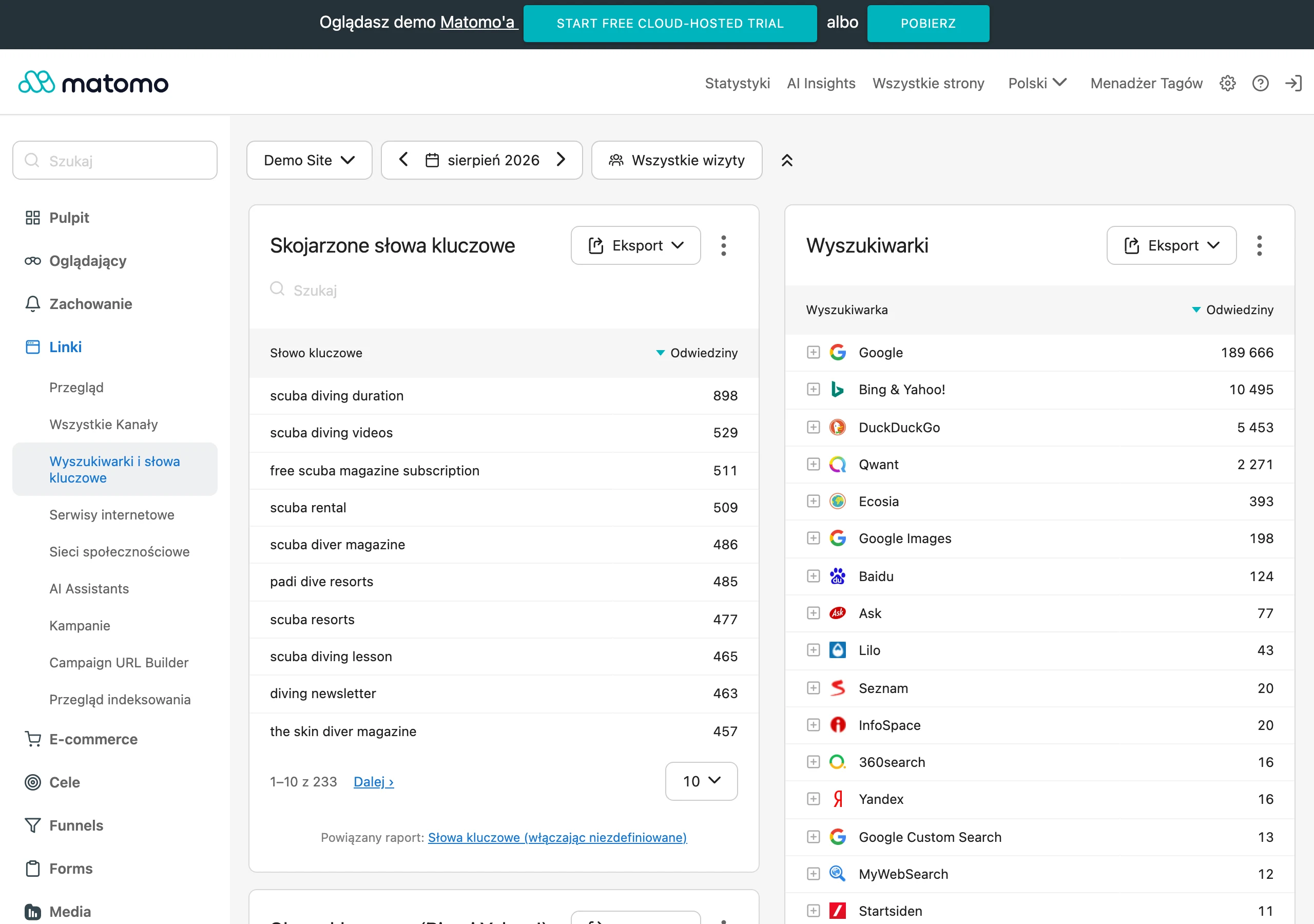
In practice, the following division of roles usually works best:
- Inbound, i.e. SEO and content, builds long-term demand and scalability, but takes time.
- Performance Ads quickly test the offer and generate leads, but are sensitive to cost and page quality.
- Outbound provides precise targeting if the ICP and outreach process are well refined.
- Referrals and partnerships usually convert well, but without a system they are hard to scale predictably.
The decision to scale or diversify should be based on which channel delivers clients with the highest LTV and acceptable CAC. If one channel is already working, it is usually better first to remove its constraints than to spread the budget thin. Diversification makes sense when the company knows the economics of the current channel and wants to reduce the risk of dependence on a single source.
Do not choose channels based on fashion, but on client quality, acquisition cost and the team’s ability to handle a larger number of leads.
The role of the channel in the buyer journey also matters. SEO and content often prepare the decision, ads accelerate offer testing, and outbound reaches precisely selected companies. When these channels work separately, the company sees activity; when they work together, it is easier to build a predictable pipeline.
What role does content marketing play in acquiring clients?
Content marketing acquires clients when it guides the audience from the problem and objections to a specific purchase decision. In a growing company, it is not about publishing alone, but about creating content that supports sales at different stages of the funnel. The greatest value usually comes from materials close to purchase, because they answer people who are already comparing options. If content does not have a clear path to a service, demo or contact, it often builds traffic, but not revenue.
In practice, it is worth starting with BOFU and MOFU, and only then investing more broadly in informational content. Case studies, implementation pages, comparisons, FAQ and selection guides help the client assess risk and solution fit. This is where questions about cost, implementation time, the course of cooperation and differences versus alternatives most often arise. Well-prepared content shortens the sales conversation, because it disarms some objections earlier.
The most effective content is not a collection of random topics, but a cluster around the problems of a specific ICP. Such a structure organises the site architecture and makes it easier to link to service pages and proof materials. A problem-focused article should lead to a solution, a checklist to a consultation, and an ROI calculator to a conversation with a sales rep. This way, content serves as a quality filter rather than just a click magnet.
The execution on the site also matters a great deal. A logical heading structure, clear CTAs and strong internal linking make the decision path feel simpler to the client. If content is detached from the offer, the user has to look for the next step themselves and often drops off. Content works best when it combines education with movement towards a specific conversion.
How do you measure the effectiveness of a marketing strategy?
The effectiveness of a marketing strategy is measured by the number and quality of clients and by revenue, not by marketing activity alone. Views, reach or the number of publications may be helpful, but they do not show whether the company is growing profitably. At the transition stage, you need to see the full journey from the source of the visit to the closed sale. Without this, it is easy to scale a channel that generates lots of leads, but few real clients.
The foundation is one coherent measurement system connecting the website, channels and CRM. Each channel should use the same UTM taxonomy, and all key conversions must be tracked as events. This applies not only to forms, but also to phone calls, emails, chat and demo requests. If a lead lands in the CRM without information about the source and campaign, marketing loses the ability to optimise sensibly.
In practice, it is worth looking at data in layers. First, check how many leads a channel delivers and what its cost is. Then assess how many of those contacts become MQL, SQL and ultimately clients. Only at the end can you fairly calculate CAC, channel revenue, the LTV to CAC ratio and the payback period.
Such measurement helps identify the real bottleneck. When traffic grows but the number of enquiries stays flat, the problem may be the offer or on-site conversion. When there are plenty of leads but sales do not close, you need to check qualification and contact handling. Good data does not only answer what works, but also why the result stalls at a specific stage.
Attribution models are also useful for analysing the customer journey. First-Touch shows what initiated the relationship, while more advanced models help assess the contribution of several touchpoints. This is especially important when a client first reads content, then returns from an ad, and finally converts after outbound contact. A company that measures only the last click usually underestimates the role of SEO, content and actions supporting the decision.
What are the most common marketing mistakes during the transition phase?
The most common mistakes are scaling chaos: overly broad activity, weak measurement, no priorities and an incomplete sales process. The company sees activity growth, but not revenue growth, because it mixes experiments with a system. At this stage, the problem is rarely a lack of ideas. The problem is choosing the wrong order and ignoring the real bottleneck.
Most often it looks like this:
- publishing posts and campaigns without a clear revenue goal,
- increasing ad budgets before improving pages and forms,
- launching multiple channels at once without mastering any of them,
- treating poor lead handling as a marketing problem,
- believing that CRM or automation will fix an unclear process.
These mistakes are costly because they amplify what is already not working. If a lead lands on a poor page or waits too long for contact, adding more traffic only increases CAC. Likewise, a new tool will not improve results when the company has no definition of MQL, SQL, response time and follow-up rules. A more sensible path is first to refine the ICP and the offer, then fix measurement, conversion and lead handling, and only afterwards scale the channels.
FAQ
Frequently asked questions
How does a company's marketing change when it grows from 10 to 50 clients a month?
It is no longer enough to rely on referrals, instinct and ad hoc campaigns. The business needs a measurable, repeatable client acquisition system that can be scaled without chaos.
Why is defining the ICP so important when scaling marketing?
Because it affects acquisition cost, lead quality and communication effectiveness. The better a company knows who it is speaking to, the easier it is to prepare a relevant offer and avoid overpaying for traffic.
How do you build a value proposition so it sells better?
It is best to combine one specific promise for one customer segment. Such a message should immediately show the result, who the service is for and why it is worth choosing this company.
Which marketing channels work best in the transition phase?
The best fit is a mix of channels matched to the ICP, the sales cycle and acquisition cost. SEO and content build long-term demand, ads quickly test the offer, and outbound lets you reach selected companies precisely.
What role does content marketing play in acquiring customers?
It should guide the audience from the problem and objections to the buying decision, not just generate traffic. The most value comes from content close to purchase, such as case studies, comparisons, FAQs and buying guides.
How do you measure marketing effectiveness in a company that wants to grow?
You need to look at the number and quality of customers as well as revenue, not just page views or reach. It is important to track the whole journey from the visit source through MQL and SQL leads to closed sales.