
Finding a bottleneck in service sales requires looking at the whole process, not a single marketing channel. An increase in organic traffic or rankings does not yet mean more clients. First, you need to establish which stage is actually limiting revenue and margin, because only then does optimisation make business sense. In practice, this means combining data from SEO, analytics and lead handling. Only this kind of picture shows whether the problem lies in demand, visibility, traffic quality, conversion or sales.
How to define the business goal in the context of sales growth?
The business goal in the context of sales growth needs to be defined through financial results and sales quality, not through traffic on the website. The most important metrics are revenue, number of sales, lead value, LTV, CAC and win rate. If a company sells several services or operates in different locations, the goal needs to be broken down separately for those segments. Otherwise, it is easy to hide a problem in one area with growth in another.
Such a definition of the goal immediately changes the way diagnosis works. When traffic grows but lead value falls, the problem usually lies in traffic or offer fit. When there are plenty of leads but few sales, you need to check lead qualification and the quoting process. When CAC rises faster than revenue, growth becomes expensive and may only look good in marketing reports.
A common mistake is to set a “more leads” goal without defining their quality. In a service company, a lead matters only when it progresses to SQL, receives an offer and has a real chance of ending in a sale. That is why the goal should combine quantity with quality, and ideally also with margin. If a metric does not help assess sales or profitability, it should not drive decisions.
How to integrate the marketing-sales funnel in bottleneck analysis?
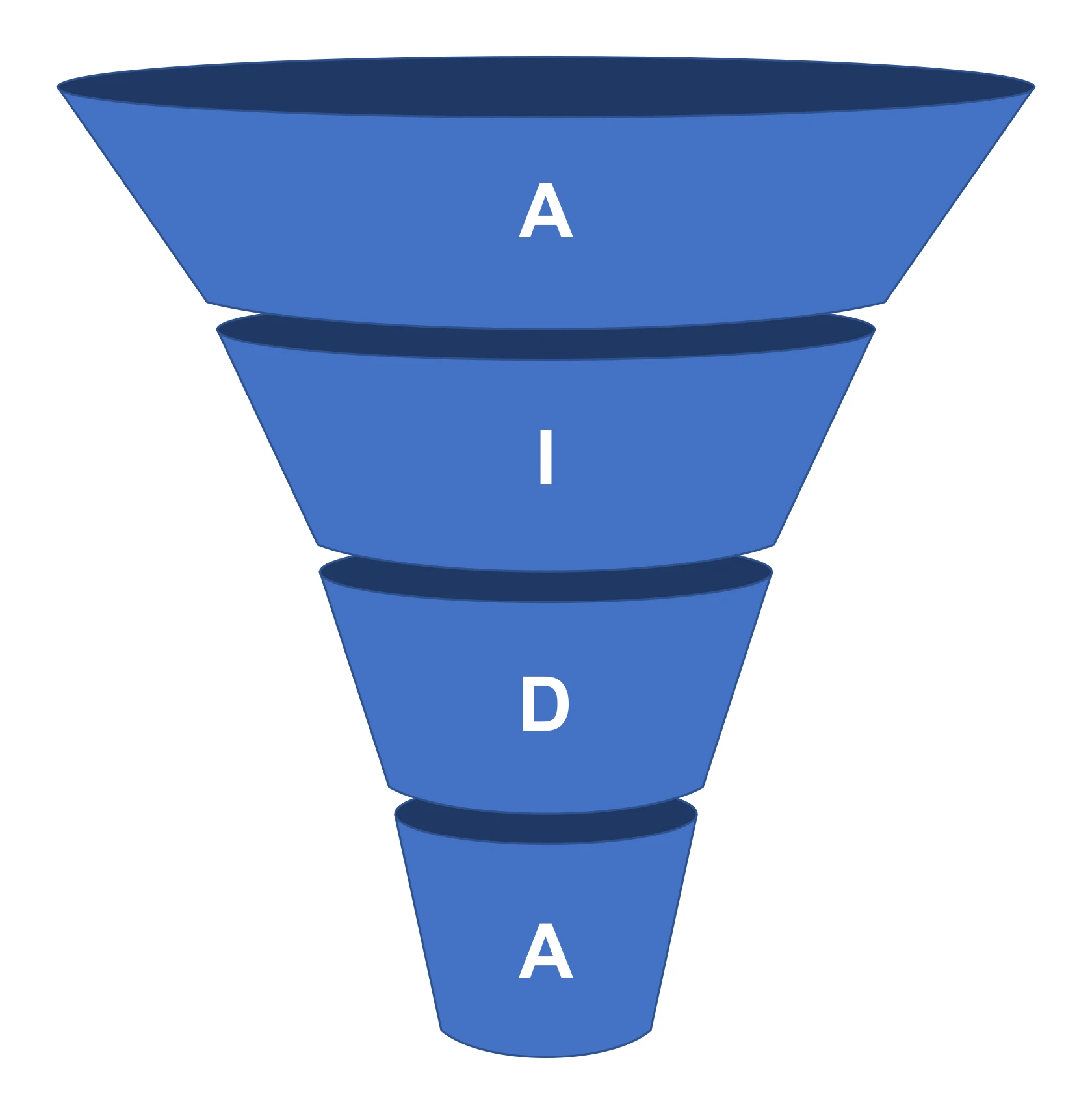
The marketing-sales funnel needs to be analysed as one continuous flow from demand to sales. In practice, it includes demand, visibility, traffic, leads, qualification, offer and sales. The bottleneck is where the conversion drop is greatest or the throughput is lowest. Sometimes it is not about a percentage drop, but about an operationally overloaded stage.
To see this, you need to combine data from Google Analytics, Search Console and CRM. Lead sources should be marked with UTM, phone calls measured with call tracking, and offline sales imported into GA4. Then you can see which keywords, service pages and channels generate not only contact, but also sales. Without such measurement, it is easy to optimise for clicks that have no business value.
The most common signs of a bottleneck are concrete:
- a large drop between traffic and leads, or between leads and offers,
- a long time before the first contact or before sending an offer,
- a large number of low-quality leads despite growing visibility.
Such symptoms need to be assessed separately for services, locations and the MQL and SQL stages. This segmentation shows whether the problem is global or affects a specific offer. This matters because the corrective actions are different for weak visibility, different for poor traffic quality, and different again for the sales process. The integrated funnel is meant to point to one blockage, not confirm the assumption of a department chosen in advance.
Why is end-to-end measurement key to identifying bottlenecks?
End-to-end measurement is crucial because it shows which stage is really blocking revenue, rather than only where the weakest marketing metric appears. When data on traffic, leads and sales are separated, a company often fixes symptoms instead of causes. As a result, the number of sessions or forms increases, but sales do not. Without linking data on lead source, lead quality and final sales, diagnosing a bottleneck becomes guesswork.
In practice, you need to measure the full journey: entry from a specific query or channel, the visit to the service page, contact, qualification, offer and sales outcome. A macro conversion alone is not enough, because in services a large part of the value appears earlier, at the level of micro-events and phone calls. If analytics only sees forms, while sales closes mainly by phone, the funnel picture will be distorted. That is why UTM, call tracking and importing offline data into GA4 have a direct impact on the accuracy of decisions.
Good measurement also needs to distinguish quantity from quality. Before changes, it is worth establishing a baseline, and then comparing not only lead volume, but also their progression to SQL, offers and sales. Cohort analysis and regular qualitative evaluation of leads by sales help here. If CRM, GA4 and tags in GTM are not passing consistent data, you first need to fix the measurement, because every optimisation will be based on a flawed picture.
How do demand and offer fit influence sales growth?
Demand and offer fit affect sales growth, because they determine whether the company addresses a real customer problem and whether that problem is actively being searched for. If demand for the service is low or the communication does not match buying intent, better SEO will not translate into more transactions. In service businesses, a common mistake is to describe the company’s competencies instead of the specific outcome for the customer. Such an offer may look professional, but it will not generate valuable enquiries.
First, you need to check what customers are actually searching for and what the search results look like for key commercial phrases. Search volume, the share of brand and non-brand traffic, and CTR in the SERPs show whether the market is looking for this service and whether the offer is presented attractively. If there are impressions but few clicks, the problem may be a weak match between the message and intent. If there are clicks but leads do not move from MQL to SQL, the company is most likely attracting the wrong cases or too broad an audience.
In practice, it helps to build separate service pages for specific services and locations, and content around customer problems, not around general industry slogans. The page should clearly show the scope of the service, the process of cooperation and who the offer is for. The better the message matches user intent, the lower the risk that marketing will deliver lots of contacts with no sales potential. It is also worth regularly collecting feedback from sales, because lost deals quickly show whether the problem lies in demand, offer fit or market expectations.
How to improve organic visibility in order to increase sales?
Organic visibility is improved by removing technical barriers and building service pages around keywords with buying intent. If Google does not index key subpages or shows them for the wrong queries, sales growth will be limited. That is why you first check the number of indexed service pages, impressions in Search Console and the average positions of commercial keywords. These data show whether the problem lies in a lack of presence or in weak competitiveness of the results.
In practice, you need to start with technical SEO, because it unlocks the entire further potential. Server log analysis shows whether bots are actually visiting important pages rather than wasting crawl budget. Also important are keyword cannibalisation, information architecture and internal linking, because without them even good content competes with itself. On top of that come titles, H1, proper HTML semantics, Core Web Vitals and structured data, which help the search engine understand the service.
Technique alone is not enough if the site does not cover the topics that a ready-to-buy customer is searching for. Service pages should respond to specific problems, locations and the scope of cooperation, rather than just describing the company in general. If impressions grow but the share of service keywords and sales enquiries does not, visibility is only improving on the surface. Only then is it worth strengthening authority with links, highlighting expert experience and adding clear information about the process, prices and scope of the service.
Visibility is also increasingly affected by how content is presented for AI-supported search. Clear sections about the service, FAQ, consistent company and expert entities, and Schema.org increase the chance that the brand will be treated as a reliable source. This does not replace classic SEO, but it changes priorities. When CTR falls despite rising impressions, you need to assess not only positions, but also whether the content answers buying questions better than the competition and AI responses.
How to assess traffic quality in the context of conversion and sales?
Traffic quality is assessed by whether users move from entry to lead, qualification and sale. A large number of sessions does not matter if visitors are not looking for the service or do not fit the offer. That is why you need to combine data from GA4, Search Console and CRM at the level of source, landing page, service and location. Only then can you see which visits have real business potential.
The most common problem is that traffic grows mainly from informational content rather than sales pages. A warning sign is a high bounce rate on service pages, few transitions from the blog to the offer, and low engagement time where contact should be appearing. The second sign is leads that formally exist, but move poorly from MQL to SQL. This means that marketing is attracting attention, but not necessarily the right customers.
Traffic quality assessment should therefore start with search intent. Commercial and transactional keywords usually bring fewer visits, but more often lead to a sales conversation and an offer. Purely informational keywords make sense when they are connected to a logical path to the service. If a user reads a guide and does not get a clear next step, the traffic ends at content consumption.
Improving traffic quality requires hard decisions about priorities. It is worth focusing on actions that most often change the result:
- priority for keywords with buying intent, not just high volume,
- stronger CTAs and linking from informational content to service pages,
- matching content to the funnel stage,
- excluding from the plan keywords that generate traffic with no sales potential.
Good-quality traffic is not the traffic that delivers the most visits, but the traffic that increases the share of valuable leads and does not overload sales with poor-quality enquiries. This is especially important in services, where every contact costs the team time. If lead quality drops after traffic increases, the problem is usually the choice of topics, the message or the CTA, not the lack of conversion on the website itself. lead quality
How to avoid typical diagnostic errors when analysing a bottleneck?
Typical diagnostic errors are avoided by assessing the entire funnel on shared data and by relating every observation to sales. When a company looks separately at SEO, forms and sales results, it is easy to confuse the symptom with the cause. This is when marketing activity most often increases, but the number of won deals does not improve. If a given stage does not improve revenue, lead value or win rate, it is not yet evidence of growth.
In practice, you need to be especially careful about several errors that regularly distort the diagnosis:
- assessing effectiveness only by the last click,
- lack of regular feedback between marketing and sales,
- optimising for keywords important to the company, not the customer,
- ignoring segmentation by service, location and source,
- drawing conclusions from a small data sample,
- investing in SEO when the blockage lies in lead handling or quoting.
Particularly costly is the lack of a link between lead quality and its source. Marketing may deliver a high volume of contacts, but sales sees a low share of SQLs or a poor win rate. Without such feedback, the company reinforces channels that only burden the team. Ignoring segmentation is equally misleading, because one service may grow while another is in fact holding back performance.
To make the diagnosis reliable, first establish the baseline, then analyse changes using the same measurement method. Compare not only the number of leads, but also response time, the number of quotes and final sales. When the data is incomplete or inconsistent, it is better to pause conclusions than to optimise blindly. The safest approach is to fix one key blockage at a time and check whether it has unblocked the next stage of the funnel.
FAQ
Frequently asked questions
How do you find the bottleneck blocking sales growth in a service business?
You need to analyse the whole process from demand to sales, not just one marketing channel. The bottleneck is where the drop in conversion is greatest or throughput is lowest.
Does more organic traffic mean more sales in a service business?
No, traffic growth or ranking improvements alone do not guarantee more customers. If revenue and lead quality are not increasing, the problem may lie in traffic fit, the offer or sales.
Why do you need to combine data from SEO, analytics and CRM when diagnosing sales?
Because only then can you see the full journey from user entry to final sale. Without that connection, it is easy to optimise for clicks that have no business value.
How do you tell whether the problem lies in traffic quality rather than conversion itself?
If traffic is growing mainly from informational content, but leads are converting poorly into SQL, the traffic quality is probably too low. Other signals are high bounce rates, low engagement time and few visits to the offer pages.
When does organic visibility improve sales, and when does it only create a false impression?
Sales increase when the site is visible for keywords with purchase intent and sends users to service pages. A false impression appears when impressions grow, but the share of service keywords or sales enquiries does not.
What mistakes most often make it harder to find the real bottleneck?
The most common issues are judging performance only by the last click, lack of segmentation, and no ongoing feedback between marketing and sales. It is also a mistake to invest in SEO when the real blockage lies in lead handling or quoting.