

Measuring SEO results only makes sense when it shows not just growth in visibility, but also a real impact on traffic and the business outcome. In practice, the biggest mistake is judging SEO through the lens of a single metric, usually rankings or the number of visits. SEO effectiveness is verified by the quality of traffic and whether that traffic achieves the site’s goals. For this reason, it is worth comparing data from Google Search Console, the analytics tool and, if possible, CRM or e-commerce. Segmentation is equally important, because branded and non-branded traffic, mobile and desktop, as well as individual sections of the site can behave completely differently. Without this breakdown, it is easy to draw false conclusions and optimise areas that in reality do not determine the outcome.
What effective SEO measurement is
Effective SEO measurement is a coherent system that combines data on visibility in Google, organic traffic, user behaviour and business results. Its purpose is to answer a simple question: do SEO activities bring in valuable traffic, and does that traffic translate into sales, leads or other key outcomes. An improvement in rankings or an increase in impressions alone is not enough if users do not click, do not interact and do not convert.
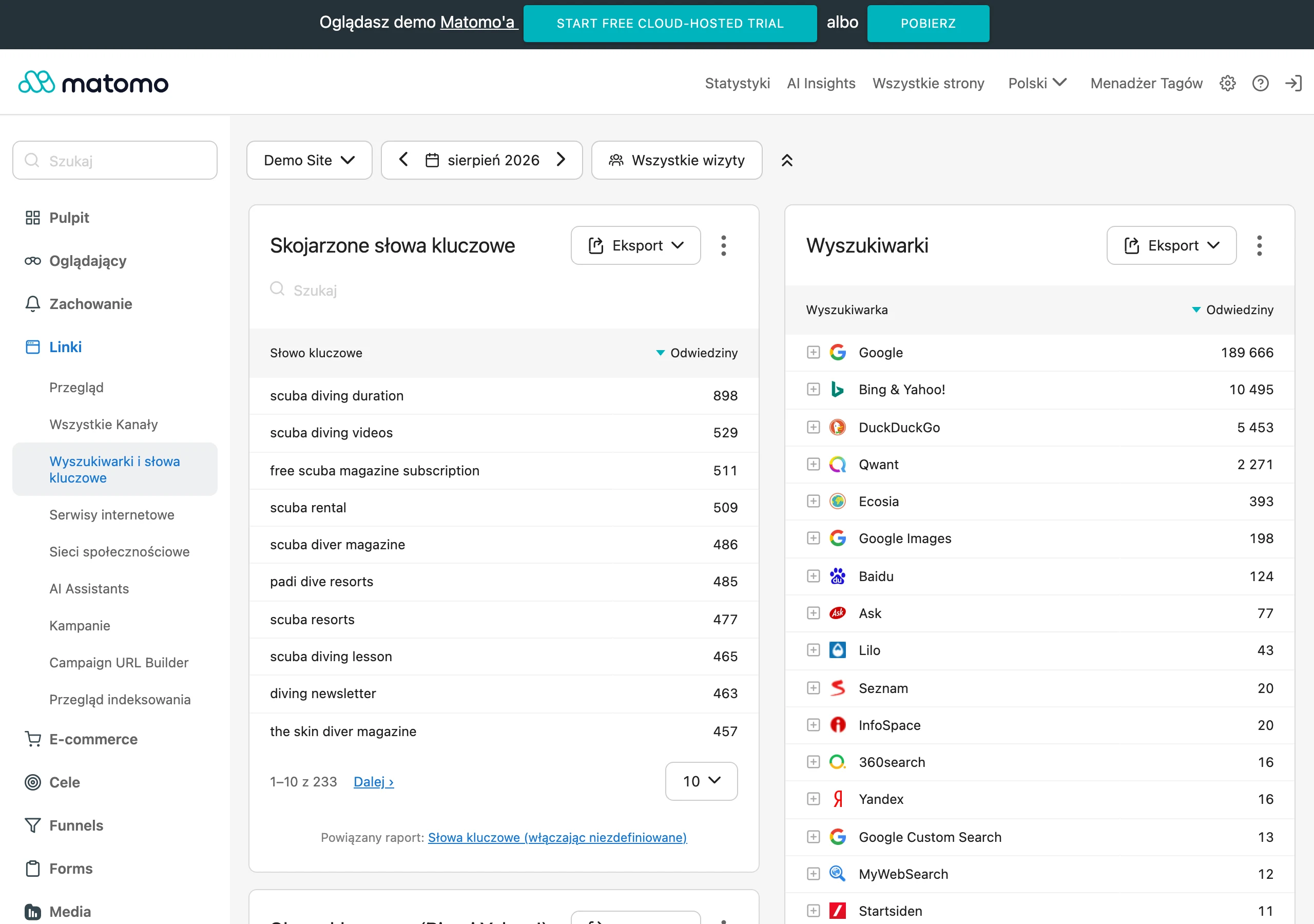
In practice, it rarely makes sense to assess SEO solely at domain level. The data needs to be segmented; otherwise the picture becomes too averaged and can be misleading. The key split is usually branded and non-branded traffic, because growth in traffic on the brand name can mask the lack of improvement on commercial keywords. In addition, it is worth examining country, device, directory, page type and groups of queries with similar intent.
The best object of analysis is usually not the whole domain, but a specific landing page or topic cluster. It is at this level that you can see which content is growing, which is losing and which genuinely supports business goals. Alongside queries and landing pages, it is worth tracking conversions, the quality of visits and the technical signals explaining changes, such as indexing, URL errors or rendering issues.
A good measurement system does not end with a report, but with decisions. It should provide a baseline, a KPI dashboard, interpretation of increases and declines, and a list of possible causes together with actions to implement. If the report does not make it easier to determine what to improve in content, architecture or technical setup, then it is still not effective SEO measurement.
The current context of SEO measurement
The current context of SEO measurement is that popular metrics can be misleading when analysed without broader context. Average position does not work as a main KPI, because it mixes different keywords, locations, devices and search result types. Similarly, CTR does not always reflect the quality of SEO work, because it depends heavily on the SERP layout, ads, maps, rich results and zero-click answers.
Google Search Console shows how a site performs in search results, but it does not answer directly whether that traffic had real value. For that, analytics data from the site itself is needed, although that too can be incomplete. Consent mode, cookie blocking, tagging errors or changes in the attribution model can underreport or shift the number of sessions and conversions, so the results should be read with caution.
A common source of false conclusions is combining branded and non-branded traffic. When users search for the brand more often as a result of campaigns, PR activity or seasonal growth in recognition, SEO metrics may look better, even though visibility for key commercial keywords has not risen at all. That is why assessing SEO results without separating branded from non-branded traffic is simply unreliable.
Results are also affected by context unrelated directly to SEO. Seasonality, site migration, new content, a template change, product shortages, technical issues or updates to the search results layout can affect clicks and conversions independently of optimisation quality. For this reason, it is more sensible to compare year-on-year data or before and after implementation than to base the assessment solely on month-on-month changes. The most useful SEO measurement always takes into account what has changed on the site, in the business and in Google’s results themselves.
How SEO results measurement works in practice
Measuring SEO in practice involves combining data on visibility, traffic, user behaviour and business outcomes into one coherent analytical process. At the start, you need to be clear about the result SEO is meant to deliver: sales, leads, enquiries, registrations or phone calls. Without such an assumption, it is easy to focus on a rise in clicks that does not translate into any measurable effect. The most important starting point is defining the main conversion and the way it is measured.
The next stage is selecting primary and secondary metrics. Primary KPIs most often relate to conversions, revenue or the value of leads from organic. Secondary metrics show where the result comes from: clicks from Google, non-branded traffic, the effectiveness of landing pages, CTR, and the share of high-intent keywords. This makes it possible to see not only that the result has changed, but also why.
For such measurement to make sense, you need to combine data from several sources. Google Search Console shows how the site performs in search results, while GA4 or another analytics system describes what the user does after entering. If the company generates leads or sells online, it is worth including CRM or e-commerce data as well, because only then can you assess the quality of the traffic, rather than just its volume.
Before the analysis begins, the quality of the measurement should be checked. In practice, this means verifying conversions, the organic channel, filtering out branded traffic, and the accuracy of data for countries and devices. If the input data is inconsistent, even a report that looks good will lead to wrong decisions.
The next step is to build a baseline and split the data into segments. Comparing the entire domain rarely gives the full picture, because growth in one part of the site can mask decline in another. Most often, the data is split into brand and non-brand, directories, page types, content clusters, mobile and desktop, as well as local and international markets.
Proper analysis starts with landing pages and queries, not with a general traffic chart. It is worth checking which pages are gaining impressions, which are generating clicks, and which are attracting traffic without conversions. This makes it easier to distinguish genuine SEO growth from a situation where only exposure for low-value keywords is increasing.
After visibility data, it is time to assess the quality of visits. At this stage, organic sessions, engagement, movement between pages and paths to conversion are analysed. If users land on the site but leave quickly or do not move on, the cause often lies in the match between content and intent, page layout, the offer or the form, rather than in SEO itself.
Finally, you need to check what may have been behind the technical and business changes. Traffic drops can be the result of deindexation, faulty redirects, template changes, rendering issues, content removal or simple seasonality. A good practice is to compare year on year and before and after implementation, rather than assessing SEO month by month only.
The result of such a process should not be just a report, but a concrete decision. If the problem is a low CTR, you work on titles, descriptions and better alignment with intent. If clicks are growing but conversions are not, the priority becomes the landing page, UX, the offer or the quality of the traffic being acquired. A well-planned SEO measurement ends with a backlog of actions with clearly set priorities, not just a set of charts.
What to measure and how to make decisions in SEO
In SEO, the first thing to measure is whether organic traffic delivers business value, and only later the indicators that explain where the result comes from. The key metrics are conversions from organic, revenue or lead value, and the number of landing pages that are genuinely driving results. A growth in visibility alone is not enough if it does not translate into more valuable visits or sales.
- Main KPIs: conversions from organic, revenue from organic, lead value, conversion rate, number of effective landing pages, non-brand traffic.
- Supporting KPIs: organic clicks, impressions, CTR, share of high-intent queries, visibility of content clusters, results for specific directories and page types.
- Diagnostic KPIs: indexing of valuable URLs, technical errors, sitemap status, internal linking issues, duplicate content, Core Web Vitals, the impact of implementations and migrations.
The best unit of assessment is usually not the whole domain, but a specific landing page or content cluster. This kind of split makes it possible to quickly see which content is genuinely generating traffic and which can turn that traffic into results. Assessing the entire site is often too broad and frequently masks both real growth and costly declines.
When impressions rise and clicks stay flat, the first thing to look at is CTR and the nature of the queries. The problem may be weaker title and description alignment, but just as often it is changes in the search results themselves, for example more ads, maps, zero-click answers or rich results from competitors. In such a situation, there is no point assuming straight away that the content has lost quality.
If clicks increase but conversions do not, you need to verify the page’s alignment with user intent. Quite often it turns out that the content attracts broad informational traffic that does not lead to action. In that case, the decision concerns not only SEO, but also the page layout, the call to action, the form, the offer, speed or the quality of non-brand traffic.
When organic traffic falls, it is crucial to separate external factors from real SEO problems. First, you compare year-on-year data, then check implementations, migrations, indexing, template changes, product availability and the loss of important content. Without separating seasonality from technical errors, it is easy to fix something that is not the cause of the decline at all.
Sound SEO decisions also require basic data hygiene. You need properly configured conversions, access to GSC and the analytics system, a consistent definition of brand and non-brand, and a history of changes on the site. Without these elements, it is hard to honestly assess whether the result was improved by content, internal linking, technical factors, or simply by increased brand awareness.
The most common mistake is assessing SEO with a single figure, most often rankings or traffic. That is not enough, because average position mixes different keywords and locations, and traffic can grow on queries that do not sell. The most useful decision-making model is a simple structure: visibility, clicks, quality of visits, conversions and the reason for the change.
The most important KPIs for SEO analysis
The most important KPIs for SEO analysis are those that simultaneously show the value of traffic, its source and the reasons for fluctuations. In practice, the most telling are conversions from organic, revenue or lead value, and non-brand traffic. They answer the question of whether SEO brings in users who actually complete the site’s goal. Visibility or clicks growing on their own are not enough if there is no business effect.
A very practical KPI is the number of effective landing pages, meaning those that consistently attract traffic and deliver conversions. This metric makes it possible to assess whether the result depends on a few strongest URLs or rather stems from healthy, broad topic coverage. When only the domain “in general terms” is growing, it is easy to miss that key directories or specific page types are not improving the result at all.
Supporting metrics include organic clicks, impressions, CTR and the share of high-intent keywords. These data help explain why the business result is growing or staying flat. For example, an increase in impressions without an increase in clicks most often points to a CTR issue, intent mismatch or a change in the search results layout, rather than automatically to weaker SEO.
It is worth measuring KPIs also at the landing page, content cluster, country and device level. The best unit of assessment is rarely the entire domain, because the overall result mixes different query types and can mask the real sources of change. It is worth tracking informational content, offer pages, categories and locations separately, because each of these groups follows different rules.
The final group consists of diagnostic KPIs, which are not an end in themselves but help explain rises and falls. These include the number of valuable indexed URLs, indexing errors and issues with redirects, canonicalisation, rendering and Core Web Vitals. If the business result suddenly drops, it is often the technical indicators that show the cause fastest, before the problem affects sales or leads.
The most common mistakes and challenges in SEO measurement
The most common mistakes and challenges in SEO measurement come from assessing the channel on the basis of overly simple data and from incomplete conversion tracking. Usually the problem starts with looking only at rankings, clicks or traffic across the whole site. Such a view is too broad and easily leads you astray when assessing what is actually working.
One of the more common mistakes is treating average position as the main KPI. This metric blends different queries, locations, devices and result types into a single number, so it can look good or bad without any real business change. A drop in average position does not have to mean a problem, just as an increase does not have to mean a rise in traffic value.
The second recurring mistake is mixing brand and non-brand traffic. When branded queries increase, the whole organic channel can seem to be “going up”, even though visibility for commercial or informational keywords has not improved. In practice, it is worth analysing separately the traffic from people who already know the company and, separately, the traffic acquired through real SEO work.
A major challenge is also the quality of analytics data. GA4, CRM and e-commerce systems do not always show the full picture because of consent mode, cookie blocking, tagging errors or a change in the attribution model. If conversions are poorly defined or are not passed correctly between tools, even a solid SEO analysis will be based on data with limited reliability.
The assessment of results is also affected by context, which is usually not taken into account in reports. Seasonality, a migration, a template change, the rollout of new content, product removal or a restructuring of internal linking can significantly change the result. That is why year-on-year comparisons and pre- and post-implementation analysis are usually more reliable than a simple month-on-month comparison.
In practice, the easiest way to reduce errors is through a simple structure: consistent KPI definitions, brand/non-brand segmentation, verification of conversion accuracy and a history of site changes. Such discipline helps to separate the real impact of SEO from noise in the data more quickly. Without it, it is easy to make decisions based on a symptom instead of getting to the real cause of the problem.
How to interpret changes and optimise SEO activities
Changes in SEO are worth interpreting by combining data on visibility, traffic, the quality of visits and the business result, rather than relying on a single chart. First, you need to establish exactly what has changed: clicks, impressions, CTR, sessions, conversions or organic revenue. Only then do you look for the cause in a specific segment, for example in non-brand traffic, a product category, the blog or a selected market. The best analysis starts at the landing page or topic cluster level, because data for the entire domain often hides the real problem.
Month-on-month comparisons can be too weak if they ignore seasonality, changes in the offer and site deployments. In practice, the most useful are year-on-year comparisons, pre- and post-implementation analyses, and comparisons between similar segments. If the result has dropped, you need to check whether it applies to the whole section, only mobile, only the local market, or perhaps only informational keywords. Without segmentation, it is easy to mistake normal fluctuation for an SEO problem or, conversely, miss a real loss.
When impressions rise but clicks stay flat, the problem is most often related to CTR, intent match or changes in the SERP itself. In that case, it is worth checking which queries the page has started appearing for, whether the title and description match what the user is looking for, and whether the result has not been pushed down by ads, maps or zero-click answers. In such a situation, optimisation usually covers meta data, heading structure, better alignment of the content with intent and increasing the chances of a more attractive snippet.
If clicks rise but conversions stay flat, SEO may be bringing in traffic that does not match the site’s goal, or it may be directing users to too weak a landing page. In such a situation, it is worth verifying the quality of non-brand traffic, the match between the offer and the queries, the form layout, page speed, trust-building elements and whether the user gets an answer to their need straight away. An increase in traffic without a rise in leads or sales usually points to an issue with intent, UX or the offer, not with visibility itself.
When organic traffic drops, the first step is to separate market factors from strictly SEO issues. You need to check whether there has been a migration, template changes, an indexing block, canonicalisation problems, redirects, internal linking, or the availability of important URLs. If the drop affects only part of the site, that is where you should look for the cause, rather than analysing the whole domain “in bulk”. A sudden drop after a deployment almost always means that a technical review is needed first, and only then an assessment of the content.
Optimisation makes sense when it stems from a specific diagnosis and has a clearly set priority. With a low CTR, the first step is to improve the visible result in search and the match to queries. With weak conversions, the work should move towards the landing page, the user journey and traffic quality. If there is no growth despite new content, you need to look at the information architecture, internal linking, indexing and whether the new URLs have any real chance of gaining visibility at all.
In practice, it is a good idea to maintain a backlog of actions with a description of the problem, the expected impact and the method of measuring the effect. This makes it possible, after implementation, to check whether clicks, conversions and the performance of specific pages have changed, rather than just overall traffic. Good SEO optimisation is a cycle: diagnosis, implementation, comparison of results and a decision on what to scale, improve or stop.
FAQ
Frequently asked questions
How do you measure SEO results to show a real business impact?
You need to combine data from Google Search Console, your analytics tool and – if possible – CRM or e-commerce. You assess not only visibility, but also conversions, revenue, lead value and traffic quality.
Is the average position alone enough to assess SEO?
No, because average position mixes different keywords, locations, devices and types of search results. It can look good despite no real improvement in business performance.
Why should brand and non-brand traffic be analysed separately?
Because growth in brand queries can improve the performance of the whole channel, even if visibility for commercial keywords does not change. Without separating this data, it is easy to draw the wrong conclusions.
When should you compare SEO data year on year instead of month on month?
When seasonality, migrations, template changes, new content or other factors unrelated to SEO are involved. A year-on-year comparison usually shows the true direction of change more clearly.
What should be the main KPI in SEO?
The most important are organic conversions, organic revenue or lead value. They best show whether SEO brings traffic that actually delivers the site’s goals.
Which metrics help explain a drop or increase in SEO results?
Helpful metrics include clicks, impressions, CTR, the share of high-intent keywords and technical metrics such as indexation, URL errors or rendering issues. They make it easier to establish the cause of changes and decide what to improve.