

The decision between a first in-house specialist and an agency only makes sense if you look at it as a choice of operating model. It is not just about the monthly cost, but about who will better translate business goals into implementation. The best model is the one that allows you to deliver the SEO backlog regularly, rather than just plan and report on it. In practice, it is not the cheapest option that wins, but the one that fits the company stage, market complexity and available resources. If these elements are assessed poorly, even a good specialist or a good agency will not deliver the result.
Key decision factors when choosing an SEO collaboration model
The choice between an in-house specialist, an agency and a hybrid model is driven primarily by company maturity, execution capability and the real scope of SEO needs. In the channel testing phase, an agency or freelancer usually works better. This model makes it possible to assess potential without building a full internal role. As the company grows and SEO starts to affect sales, an in-house specialist or a hybrid setup often becomes necessary.
Execution capability changes more than the supplier choice itself. If no one can implement recommendations, the collaboration model will not solve the problem. The most important operational conditions are usually very specific:
- developer time reserved in sprints,
- autonomy in managing the CMS and content,
- access to analytics, GSC and technical data,
- an owner of the SEO backlog with the right to prioritise.
Product and market complexity affect how deeply you need to understand the business. The more SEO overlaps with product, sales and content, the greater the advantage of someone close to the organisation. By contrast, audits, migrations and narrow technical issues more often justify agency support. In practice, you are not choosing between people, but between ways of building knowledge and delivering changes.
Total cost of ownership needs to be calculated more broadly than salary or retainers alone. With in-house, there is recruitment, onboarding, tools and the risk of a bad hire. With an agency, there is time spent on briefs, communication and quality control. On top of that, there is always the cost of delays, faulty implementations and lost growth if the model does not fit the company.
When is it worth choosing an in-house specialist?
It is worth choosing an in-house specialist when SEO becomes a permanent business process rather than a series of individual projects. The strongest signal is a regular backlog of tasks that requires daily work, not occasional consultations. The second signal is the need for close cooperation with developers, product and content owners. In such a situation, organisational proximity shortens decision-making and makes execution easier.
The in-house model also gains value when deep understanding of the business, customers and the expert knowledge needed to build E-E-A-T becomes critical. This cannot be fully replaced by an external relationship, even if it is well managed. Someone inside the company picks up priorities, dependencies and operational constraints more quickly. They also have a better chance of protecting and developing know-how rather than constantly importing it from outside.
A first in-house specialist should most often be a generalist with a T-shaped profile. Such a person combines strategy with basic execution and can work with an agency if the company operates in a hybrid setup. A narrow specialist only makes sense once a single critical problem has been identified, for example technical SEO in a complex site. A manager or strategist without execution only works once there is already a team in place or a complex collaboration model.
You also need to consciously accept the risks of the in-house model. One person can become a single point of failure if they leave or become overloaded. Without contact with the wider market, it is also easy to fall into a bubble effect and narrow the perspective. Then there are recruitment costs and more difficult access to very niche specialisms.
The impact of AI further strengthens the case for an internal role when the company wants to build authority and make good use of expert knowledge. Generative answers in search engines reward a better combination of content, technology and brand credibility. That is why an internal owner of the organic area is increasingly needed even when part of the work is carried out by an agency. If SEO is to be an important element of growth, the first specialist should be responsible for priorities and the backlog, not just reports.
Why can an external SEO agency be the optimal choice?
An external SEO agency is the optimal choice when you need broad expertise, project-based activity or are only testing the potential of the organic channel. This model works well when SEO is not yet a daily process in the company. It allows you to reach technical, analytical and strategic specialisms faster without building a full internal role. This is particularly important for an audit, a site migration or a problem requiring narrow expertise.
An agency has the edge where the scope of work is changing or temporarily very broad. Instead of recruiting one person, the company gains access to several competencies at once. In practice, this shortens the ramp-up period and reduces the risk that the first hire will not be able to handle technical or analytical tasks. It also makes sense when the company lacks the resources to run and develop an in-house role.
This model is also sensible in a testing phase when the SEO channel has not yet been validated commercially. If you do not know whether organic should be one of the main sources of growth, an agency offers greater flexibility. It is easier to start with an audit, priorities and initial implementations than to create a full-time role straight away. This lowers the entry cost, but it does not remove the need to implement recommendations efficiently.
An agency does not, however, solve the problem of weak execution inside the company. If the team does not have access to developers, the CMS or data, even accurate recommendations will remain on slides. There is also the risk of a superficial understanding of the business, turnover on the agency side and blurred accountability for results. That is why, before signing a contract, it is worth clearly agreeing the scope, the backlog owner, the prioritisation process and responsibility for implementation.
Advantages and challenges of the hybrid SEO model
The hybrid model is most often the best solution when SEO already matters commercially, but the company still needs external specialism and execution scale. It combines organisational proximity with the breadth of skills available in an agency. As a result, the strategy does not drift away from the company’s reality, and delivery does not depend on one person. This is usually the most scalable setup in a growth phase.
In practice, the division of roles should be simple and unambiguous. The in-house person is responsible for strategy, priorities, the backlog and understanding the business, including the E-E-A-T area. The agency delivers audits, specialist tasks, analytical support and scalable actions where one person is not enough. Together, you need to agree the roadmap, KPI and regularly review progress in the context of business goals.
The condition for success in a hybrid model is a strong owner on the company side, who can manage the agency and translate business goals into concrete tasks. Without such a role, a hybrid arrangement quickly turns into communication chaos. The agency then works alongside the company, not with it. The result is delays, inconsistent priorities and a lot of reporting instead of real implementation.
The most common challenge of this model concerns responsibility and the pace of action. When it is unclear who decides on the order of work, the backlog quickly grows, but little gets done. Another problem is the mistaken assumption that one in-house specialist will replace the agency’s entire team, or vice versa. A hybrid works well only when each participant has a clear role, access to data and influence over execution.
The importance of this model also grows with the rise of AI-generated answers in search engines. The company then needs someone close to the business to build authority and gather expert knowledge. At the same time, an external partner is useful for the technical structuring of data and scaling optimisation. That is precisely why, in more demanding organisations, hybrid is increasingly turning out not to be a compromise, but a deliberate operational choice.
How does a company’s marketing maturity affect the choice of SEO model?
A company’s marketing maturity determines whether SEO is still a test, a growth channel, or a permanent operational process. It is not about the age of the company, but about the repeatability of actions, the quality of data and the ability to implement changes. The more organic search affects sales and product, the less sense there is in relying solely on an external model.
In the testing phase, an agency or freelancer usually works better, because the goal is to validate the channel with low internal involvement. At this stage, the company often does not yet have a stable backlog, clear KPI and a daily need to work with developers. Employment on a full-time basis is then often premature, because the cost of recruitment and onboarding grows faster than the real number of tasks.
In the growth phase, the first in-house specialist or a hybrid model starts to have the edge, because SEO already requires constant coordination. This is the point when the backlog does not end after an audit, but keeps growing alongside content, the product and technical requirements. In most cases, a T-shaped generalist works best here, someone who can prioritise work and collaborate with the agency.
In a mature organisation, the in-house team becomes the foundation, while agencies play the role of project support and a provider of narrow expertise. Such an arrangement protects internal knowledge and at the same time gives access to audits, analytics and specialist tasks. With the growing role of AI answers, it is particularly important to combine brand authority, expert knowledge and technical optimisation.
The most common mistakes when hiring SEO specialists
The most common mistakes are poor matching of the specialist’s level to the role, a lack of conditions for implementation and unrealistic expectations of the cooperation model. In practice, the problem rarely lies in SEO itself, but in the fact that the company buys in competence without the ability to use it.
The most costly mistakes usually look like this:
- hiring a junior for the role of strategist and SEO owner
- expecting the agency to fix the lack of access to developers, the CMS and data
- confusing regular reports with real backlog delivery
- no single person who sets priorities and is responsible for the SEO backlog
- assuming that one full-time employee will replace the entire agency team
Each of these mistakes increases the opportunity cost, because it delays implementation and makes it harder to assess what really works. A junior without support will not build a strategy, and an agency without influence over execution will not improve results through reporting alone. Likewise, one specialist will not simultaneously take over technical SEO, analytics, content and link building at a high level.
It is safer to start by defining the backlog owner, the scope of decisions and the criteria for assessing the work. The model should be measured through implementation lead time, task completion within the quarter and the impact on non-brand traffic, leads or revenue. If you cannot indicate who makes decisions and who implements changes, the problem is not choosing between a full-time employee and an agency.
Measuring the effectiveness of SEO activities: key KPI
The effectiveness of activities in SEO should be measured with two groups of KPI: business and operational. The first show whether the organic channel supports company growth. The second check whether the team is actually delivering implementations. Only a combination of both perspectives allows you to assess whether a full-time employee, an agency or a hybrid model is better.
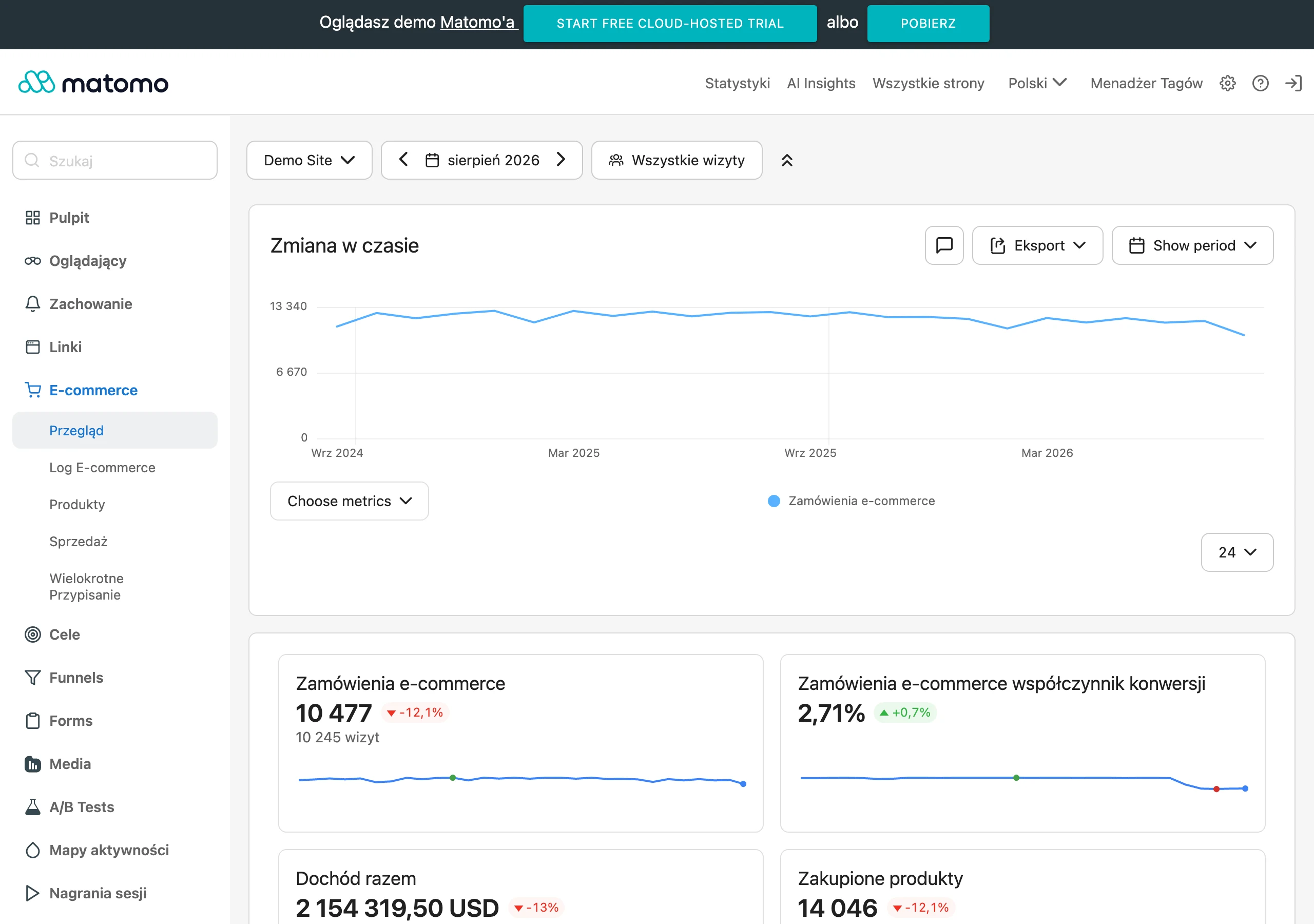
In practice, it is worth basing the assessment on a few fixed metrics. The most useful are those that can be linked to business priorities and the pace of delivery:
- growth in revenue or leads from the organic channel,
- growth in visibility for strategic keywords,
- growth in non-brand traffic to key categories,
- the speed of implementing recommendations, i.e. lead time,
- the percentage of tasks completed from the backlog in a quarter,
- the indexing status and Core Web Vitals metrics.
If traffic is growing, but the backlog is standing still, the result may be temporary and difficult to sustain. If implementations are fast, but do not translate into non-brand traffic or leads, the problem is prioritisation. A good collaboration model improves both operational efficiency and business performance at the same time, not just the quality of the report. This is what distinguishes real action from apparent activity.
The same KPIs should apply regardless of the chosen collaboration model. Compare an in-house specialist, an agency and a hybrid setup by results, not by the number of tasks completed. As the role of AI answers grows, it is also worth monitoring brand visibility in answers generated by search systems. This matters especially when SEO is meant to support authority, expertise and demand for key topics.
FAQ
Frequently asked questions
When is it worth hiring your first SEO specialist for a company?
When SEO becomes a permanent business process and there is a regular backlog of tasks to deliver. Especially when daily collaboration with developers, product and content people is needed.
Does an SEO agency work better at the start than an in-house role?
Yes, especially in the testing phase of the organic channel, when a company wants to assess SEO potential without building a full in-house role. This model also gives access to broader expertise for audits, migrations and other project tasks.
Why is a hybrid model often best in SEO?
Because it combines the company’s closeness with the breadth of an agency’s expertise, so the strategy does not drift away from business realities. It works particularly well when SEO already matters for growth, but the company still needs specialist support.
What conditions need to be met for SEO to deliver results?
Developer time in sprints, autonomy in the CMS, access to analytics and technical data, and an owner for the SEO backlog are needed. Without this, even good recommendations may remain only at the planning and reporting stage.
What kind of first SEO marketer is worth hiring for a company?
Most often, a generalist with a T-shaped profile works best, combining strategy with basic execution. Such a person can also work with an agency if the company operates in a hybrid model.
When is an SEO agency alone not enough?
When the company has nobody who can turn recommendations into implementation, because then the problem is not knowledge, but execution. An agency will also not solve a lack of access to developers, the CMS or data.